Building Bridges Across Borders MR Rangaswami | Founder, Indiaspora
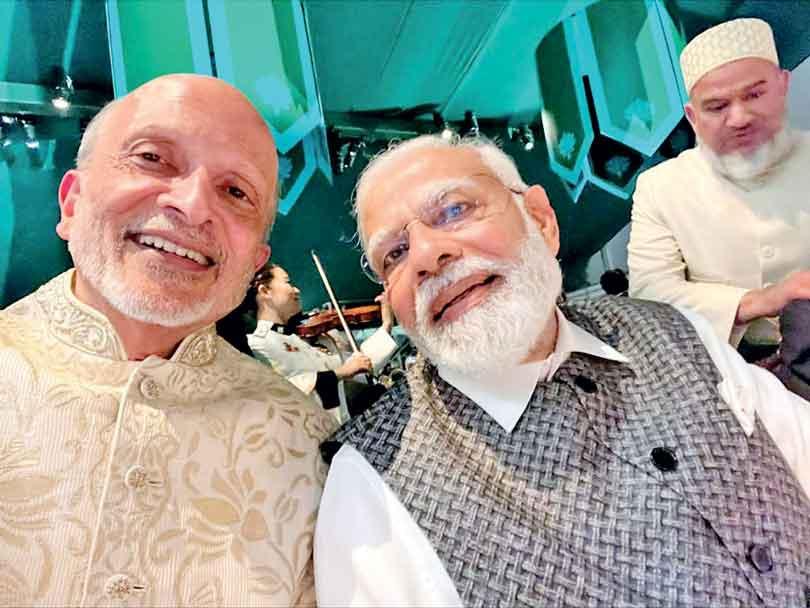
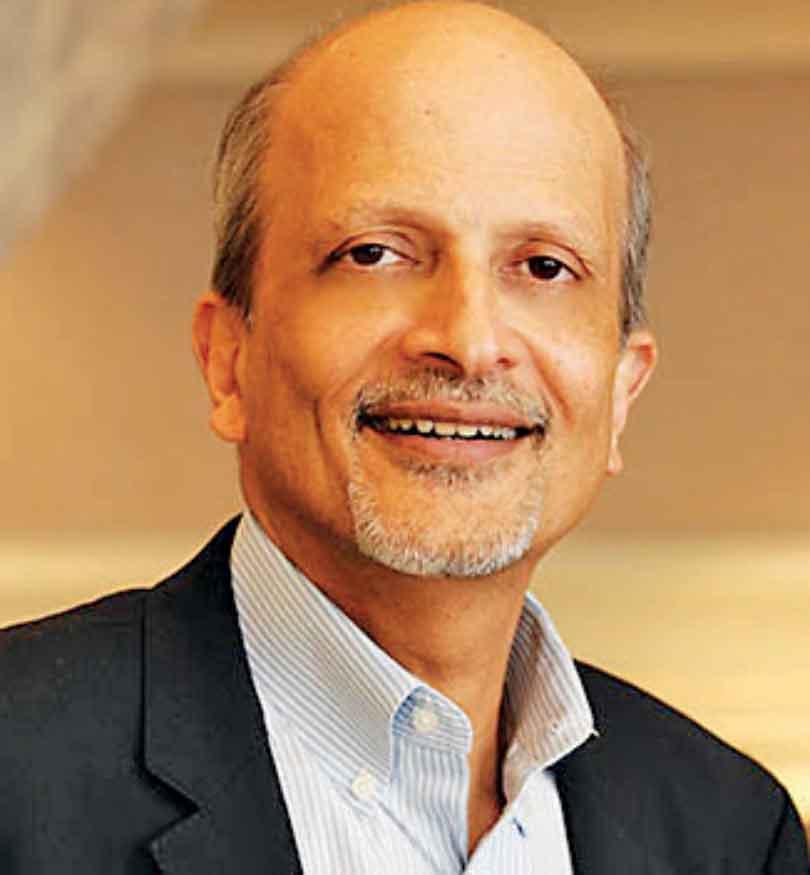
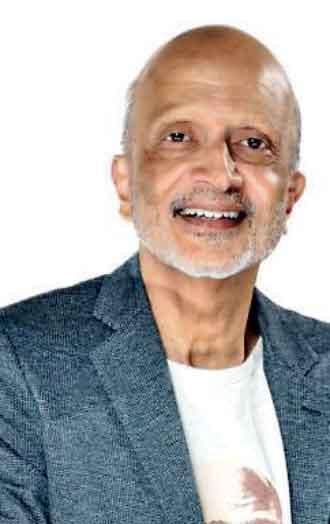 I first met M.R. Rangaswami at a Diwali Dinner hosted by Indiaspora at the House of Commons in London, where leaders from across sectors gathered to celebrate the growing global influence of the Indian diaspora. Warm, articulate, and brimming with quiet conviction, MR spoke passionately about community and connection. A few weeks later, we met again, this time over lunch at Maison Estelle in Mayfair, where our conversation flowed easily from Silicon Valley to social impact. Having arrived in California in 1982, when the Indian community numbered just 10,000, MR has witnessed its transformation into a powerhouse of over 400,000 in the region alone. A tech entrepreneur turned philanthropist, investor, and bridge-builder, he is the visionary behind Indiaspora, a nonprofit uniting 35 million Indians worldwide through leadership, giving, and cultural engagement. Over lunch, he reflected on his immigrant journey, the evolution of Indian identity abroad, and his mission to build a connected, giving global community.
What inspired you to start Indiaspora?
I was inspired to start Indiaspora because, despite the incredible growth of the Indian community in Silicon Valley and across the U.S., we hadn’t yet become politically or socially influential. Professionally, Indians were doing very well, CEOs, doctors, engineers, but there was no collective identity or platform. Before Indiaspora, I’d built a philanthropic community for CEOs, where we pooled resources to support startup nonprofits. Seeing the difference that collaboration made, I wanted to create something bigger and more inclusive, an organization that could connect all Indians in the U.S. and beyond to amplify our collective voice, increase representation, and foster giving back to both our adopted countries and our homeland.
What was the defining moment that turned the idea into a movement?
The defining moment came in 2012, when I convened 100 Indian-origin leaders, CEOs, venture capitalists, doctors, lawyers, academics, from across the United States to ask a single question; Do we need a unifying organization for Indian Americans? The answer was an overwhelming yes. That gathering became the catalyst for Indiaspora. From the outset, our efforts centred on political engagement because we understood that representation was essential; without it, we could not meaningfully influence policy or public perception. We began mobilizing the community, encouraging Indian Americans to participate in civic life, support candidates, and contribute individually to political campaigns. This early backing helped leaders like Ro Khanna, Ami Bera, and Kamala Harris gain traction at crucial stages in their careers. In just six years, these efforts helped Indian Americans achieve proportional representation in U.S. politics, a milestone that once felt out of reach. and positioned the community to play a significant role in national conversations on immigration, education, and innovation.
What are some key achievements of Indiaspora over the years?
Several come to mind. Politically, we helped elevate Indian Americans to positions of real influence, culminating in Kamala Harris becoming the first Indian American Vice President.
Culturally, we played a part in securing the U.S. Postal Service’s Diwali stamp, and we worked to make Diwali an official state holiday in California, a moment of deep pride for our community. During the COVID-19 Delta wave, Indiaspora mobilized the diaspora to raise $15 million for relief efforts in India and $1 million for food banks in the US. And then there’s our annual Global Forum, which brings together leaders from around the world. Our recent “Forum-for-good” event in Abu Dhabi showcased the diaspora’s growing influence across philanthropy, innovation, and policy. We’re planning the next one in Bangalore to deepen collaboration between diaspora leaders and their counterparts in India.
What were some of the biggest challenges faced in the early days of building Indiaspora?
The biggest challenge was overcoming fragmentation. The Indian community abroad had long been divided into regional and linguistic groups, Tamil Sangam, Gujarati Samaj, Telugu Association, and so on. Each was doing meaningful work, but in isolation. Educating people about the power of unity was crucial. We also had to help Americans understand that South Asia isn’t monolithic, that India, Pakistan, Bangladesh, Sri Lanka, and Nepal each have rich, distinct cultures. It took patience, conversation, and a lot of bridge-building to foster a sense of collective identity among people who, historically, hadn’t collaborated at scale.
How has your personal experience as an immigrant shaped your vision for Indiaspora?
When I came to the U.S., Americans were extraordinarily welcoming. I was given opportunities to learn, grow, and contribute. That generosity left a deep impression on me. But today, we’re seeing growing anti-immigrant sentiment in many parts of the world, including here. That’s why part of Indiaspora’s mission is to educate people about the positive contributions immigrants make, to the economy, to innovation, to cultural richness. We want to build bridges, not walls. That’s the essence of Indiaspora: celebrating identity while fostering integration.
How does the organization encourage integration of the Indian community into local society?
We encourage Indians abroad to “Give Where You Live.” It’s easy to focus only on sending money back to India, but true integration happens when you contribute to your local community. We ask members to volunteer at local schools, libraries, and senior homes, to serve on city boards, and to mentor the next generation. When the broader society sees Indians not just as professionals but as community builders, it changes perceptions and deepens belonging.
What is the mission of Indiaspora today?
Our mission is simple yet powerful, to connect 35 million Indians around the world, through leadership, philanthropy, and cultural engagement. We do this through digital content, community programs, and chapters in six key countries; plus, India itself. We aim to amplify our collective impact globally while strengthening the bridge between India and its diaspora.
How is Indiaspora funded and operated?
We’re a member-based nonprofit, supported by a core group of funding members who contribute annually. That allows us to maintain independence and focus on long-term goals. Our 20-person team, mostly women, I should note, manages programs, events, and partnerships. They’re not just employees; they’re mission-driven individuals who go above and beyond because they believe in what we’re building.
How does Indiaspora engage younger generations like Gen Z and millennials?
Engaging the next generation is one of our top priorities. We piloted a program called Heritage India, where high school students spend a month in India immersing themselves in its culture, history, and modern innovation. We’re also launching Indiaspora Next, a community for young professionals aged 22 to 35. It’s a space for networking, mentorship, and service projects that connect their professional ambitions with a sense of purpose.
What challenges exist regarding Indian identity among second and third generation Indians overseas?
Identity is evolving. Many younger Indians abroad are fully assimilated into their birth countries, they might not speak Indian languages or visit India often. As a result, their connection to their heritage can feel diluted. Programs like Heritage India are designed to rebuild that connection, showing them that being Indian is not just about where your parents came from, it’s about a shared set of values: family, education, resilience, and giving back.
What is India Giving Day, and what impact has it had so far?
India Giving Day is a one-day online giving event organized by the India Philanthropy Alliance to support Indian NGOs. In its first year, it raised $1.4 million; the following year, nearly $10 million. Our long-term goal is to reach $100 million annually. It’s about building a culture of structured, transparent giving within the diaspora, where every contribution, big or small, makes a measurable impact.
The diaspora’s economic influence is enormous. What are some key contributions to India’s development?
The diaspora plays a massive role in India’s development. Many global companies have set up innovation and development centres in India, creating hundreds of thousands of jobs. Indian Americans have invested heavily in startups and facilitated the entry of Fortune 500 companies into India. Remittances remain a major factor, last year alone, the Indian diaspora sent $135 billion to India, with around $28 billion coming from the U.S. diaspora. These aren’t just family transfers anymore; they’re also investments, donations, and seed funding for innovation.
How much have Indian Americans contributed to U.S. philanthropy?
Indian Americans have donated over $3 billion to U.S. universities in the past 20 years, and we estimate around $3-4 billion annually goes to nonprofits in the U.S. This shows how deeply integrated our community has become, we’re giving not just to India but to the societies we’re part of.
What advice would you give to the next generation of Indian global leaders?
Start giving early. Don’t wait until you’re wealthy or retired. Give your time, your expertise, your mentorship. Success isn’t measured just by personal achievements but by how many people you help along the way. The earlier you start, the more fulfilling your journey becomes.
How can startups and changemakers connect with Indiaspora?
It’s very easy. Reach out through our social media channels, explore our membership directory, attend our global forums, or simply drop us a message. Our community includes entrepreneurs, investors, and thought leaders who are eager to collaborate. We’ve seen countless partnerships emerge from informal conversations at our events.
What kind of legacy do you hope to leave?
If people remember me as someone who helped others, that’s enough. Titles and accolades fade, but kindness and impact endure. Through Indiaspora, I hope to leave behind a self-sustaining ecosystem of global Indians, people who lift others as they rise.
Finally, what’s next for Indiaspora?
We’re expanding our footprint with new chapters and deepening partnerships with other diasporas, from the Caribbean to Africa. Our next Global Forum in Bangalore will bring together leaders from business, government, and social sectors, creating a dialogue not just between Indians abroad and at home, but across all communities shaping the future of South Asia. At its heart, Indiaspora is about connection. Wherever Indians go, they bring their culture, their work ethic, and their spirit of giving. My hope is that we continue turning that shared heritage into a global force for good.