Sir Nishan Canagarajah: From Jaffna to Knighthood Vice-Chancellor of the University of Leicester, UK
It is not often that one gets the opportunity to sit across from someone who has been knighted, and rarer still when that individual is a proud Sri Lankan whose journey began on our island and rose to global distinction. Professor Sir Nishan Canagarajah is one such figure. From his early years in Jaffna to leading the University of Leicester as Vice Chancellor, his story is one of resilience, intellect and quiet determination. I was introduced to him by former Sri Lankan Ambassador to the United Kingdom, Saroja Sirisena, and from the outset it was evident that beneath the honour and accolades lies a man deeply rooted in his heritage and values.
His knighthood in the 2026 New Year Honours was not just a personal milestone but a moment of immense pride for Sri Lankans around the world. It signalled, once again, that talent nurtured on this island can leave an indelible mark on the global stage. Yet what makes Sir Nishan truly remarkable is not simply the recognition he has received, but the purpose that drives him. He speaks not of status, but of service. Not of titles, but of opportunities created for others.
In an era where success is often measured in quick wins, his journey stands as a powerful reminder that enduring achievement is built on education, perseverance and a willingness to take risks. In this candid and wide-ranging conversation, Sir Nishan reflects on his upbringing, his career, his commitment to Sri Lanka and the values that continue to guide him at the very highest levels of leadership.
You were born in Sri Lanka and now lead the University of Leicester. What formative experiences in your childhood shaped your ambitions?
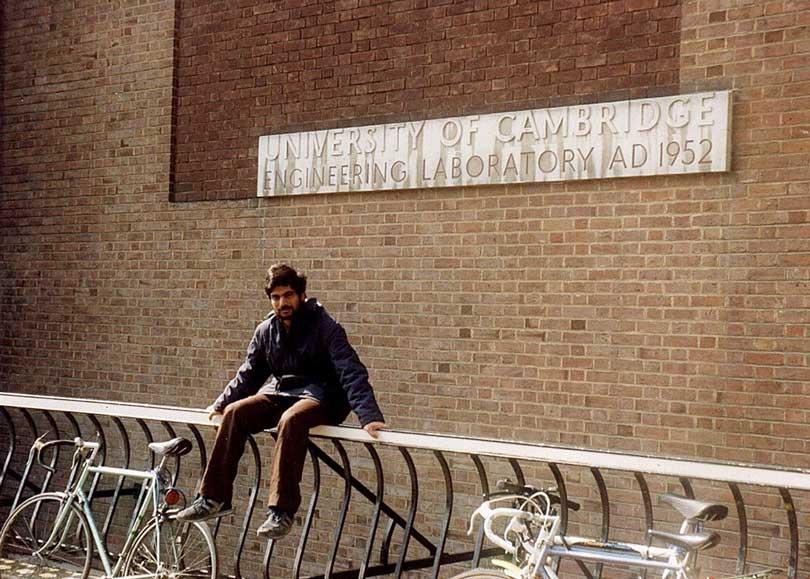
When I was growing up in Sri Lanka, my ambitions were actually quite simple. All I wanted was to go to university and eventually become either a lecturer or an engineer. My parents were schoolteachers, so education was always at the centre of our household. We did not come from wealth. In fact, my parents had limited financial resources, which meant that if I was going to pursue higher education abroad, scholarships would be the only route available to me. I did my Advanced Level studies in Sri Lanka and was initially admitted to the University of Peradeniya to pursue engineering. But at the same time, I received a scholarship to study at Cambridge. That opportunity completely changed the course of my life. Looking back, I realise that my upbringing instilled a deep respect for education, discipline and hard work. My parents believed that knowledge could transform lives. That belief stayed with me and ultimately shaped my career.
When you first left Sri Lanka to pursue higher education abroad, what were the biggest cultural or personal adjustments you had to make?
It was a massive culture shock. Until then I had never lived outside Sri Lanka. I had studied in Jaffna and was used to a very different environment. Arriving in England meant adjusting to a new culture, a new academic system and even a new way of communicating. One of the first challenges was understanding the accent and the idioms. The English spoken in Britain was quite different from what I had learned in school. Academically, there were also differences in teaching methods and assessment styles.
Another adjustment was social behaviour. Sri Lankans tend to be very warm and physically expressive with friends. I remember once putting my arm around an English friend and he told me that was not something people usually did there. There were also little things like social etiquette. In Sri Lanka, you might casually say you will visit someone, but in England people expect an invitation. But these experiences were also very enriching. Over time I made wonderful friends, many of whom remain close to me even today. Those early adjustments helped me understand cultural differences and develop a global perspective.
Was there a defining moment when you realised academia would be your life’s calling?
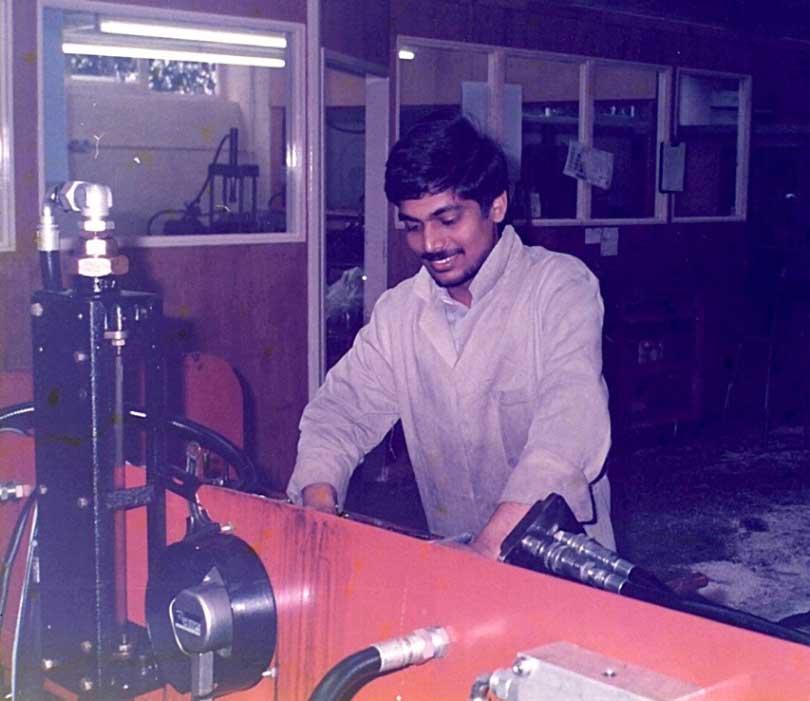
Yes, that moment came during my PhD and my first academic appointment. After completing my doctoral studies at Cambridge, I joined the University of Bristol, where I would eventually spend twenty-five years. When I began working as a lecturer, I realised that academia offered something quite unique. It allowed me to combine research and teaching. I loved explaining complex ideas to students and seeing the moment when they finally understood something. There is something deeply satisfying about that. At the same time, research allowed me to explore new ideas and solve real world problems. I supervised many PhD students and collaborated with industry and government agencies. Every day brought something new. That variety and intellectual stimulation made me realise that academia was where I truly belonged.
Who were the mentors or figures in your early life who most influenced your values and leadership style?
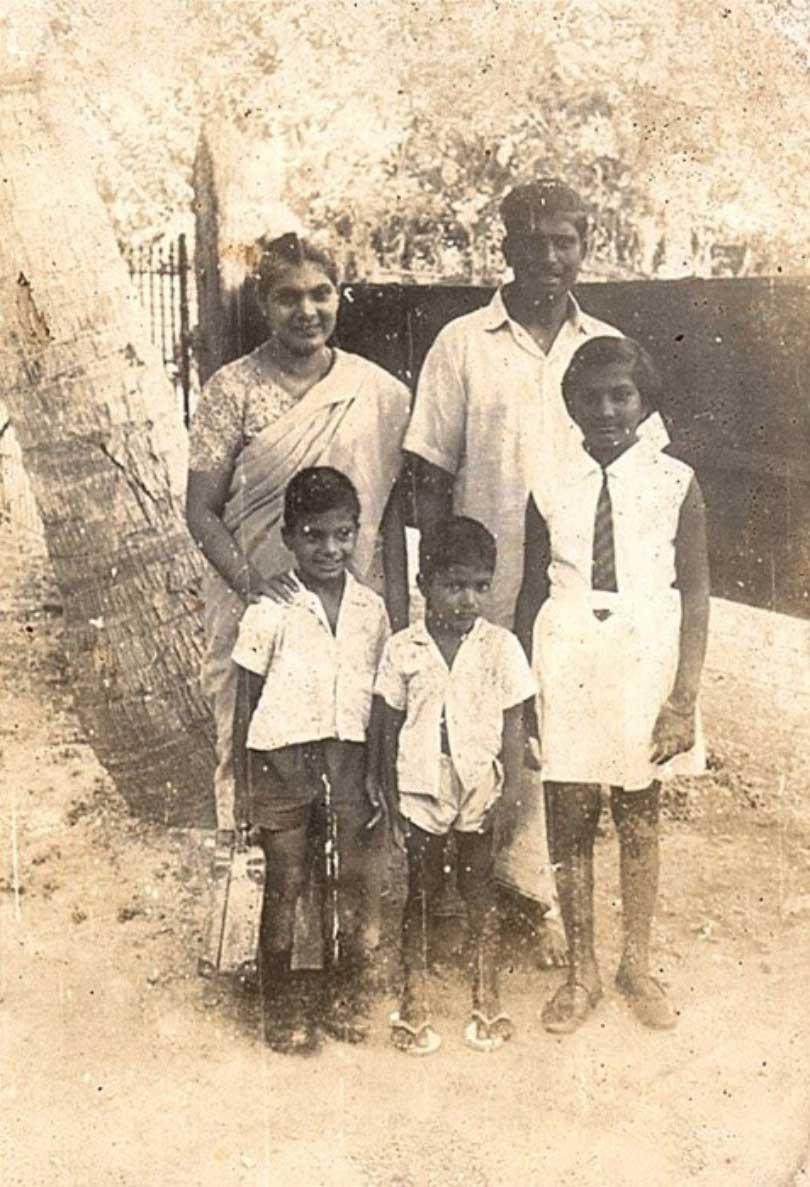
One of the most influential figures in my early life was the principal of my school, St John’s College in Jaffna. He was a charismatic and visionary leader who had a profound impact on the students. Sadly, he was later assassinated during the conflict, but his legacy remains deeply embedded in the values of those who studied under him. Beyond that, I was fortunate to have mentors throughout my academic career. At Bristol, I worked closely with individuals who recognised my potential and encouraged me to take on leadership roles. People like Joe McGeehan and the then Vice Chancellor Sir Eric Thomas played a significant role in shaping my career trajectory. Mentorship is incredibly important. Often, we do not see our own potential until someone else points it out.
You completed your PhD at Cambridge. How did that experience shape your intellectual confidence and global outlook?
Cambridge was transformative. It brought together some of the most talented individuals from across the world. When you find yourself surrounded by people who believe they can achieve anything, it challenges you to think differently about your own possibilities. The environment was intellectually stimulating and constantly pushed you to improve. Meeting brilliant people from different countries opened my mind to new perspectives. It made me realise that the boundaries of what is possible are far wider than we often imagine. But I must also say that my school years in Sri Lanka were equally formative. At St John’s (Jaffna) I was involved in everything from sports to drama and poetry. Those experiences helped build my confidence and curiosity long before I arrived at Cambridge.
Signal processing is a highly specialised field. What drew you to electronic engineering?
When I was growing up, electronic engineering was an emerging and exciting field. In Sri Lanka at the time, students who aspired to engineering often gravitated towards electronics because it was seen as the future. At Cambridge University, I studied electronics and information sciences, which combined electronics with elements of computing. Later, during my PhD, I specialised in signal processing. Signal processing is fascinating because it underpins so many aspects of modern life. The images we see on screens, the sounds we hear, even medical data recorded from the human body are all signals that need to be analysed and interpreted. My doctoral research focused on hearing aid design. My mother wore a hearing aid, and one of the challenges people face is distinguishing speech in noisy environments. I was intrigued by how signal processing could help solve that problem. In a way, my research was both intellectual and personal.
As someone who moved from research into senior leadership, how did you navigate the transition from academic to executive decision making?
It was not a sudden transition. It evolved gradually. Even while I was an academic, I was involved in administrative and leadership roles within the university. Over time, colleagues encouraged me to consider more senior positions. Interestingly, my first leadership opportunity came almost by accident. A colleague mentioned that the dean was considering me for a leadership role. Until that moment I had not seriously thought about it. At Bristol there were very few non white individuals in senior leadership at the time. I knew I had the ability, but it was encouraging to see others recognise it as well. Once I accepted that first role and realised, I could make a positive impact, I became more open to further leadership opportunities. Eventually I served as Dean of Engineering and later as Pro Vice Chancellor for Research and Innovation. Each role built on the previous one and prepared me for the responsibilities of becoming Vice Chancellor.
What has been the most challenging leadership decision you have had to make as Vice Chancellor?
One of the most challenging aspects of leadership is making decisions that affect people’s livelihoods. Universities today operate in an increasingly complex environment, facing financial pressures, changing student expectations and shifting policy landscapes. Ensuring the long-term sustainability of an institution sometimes requires difficult choices, including restructuring programmes or reducing certain activities. Unfortunately, decisions like that can lead to redundancies, and those are never easy moments for any leader. I am very people centred in my approach, so these situations weigh heavily on me. The individuals affected are colleagues who have contributed their time, talent and dedication to the university. Because of that, I make it a priority to engage openly with staff, listen to their concerns and ensure that decisions are made thoughtfully and responsibly. At the same time, leadership requires taking a long-term view. As Vice Chancellor, my responsibility is not only to address the immediate challenges facing the university but also to ensure that the institution remains strong, relevant and sustainable for future generations of students and staff. Balancing compassion for individuals with the responsibility to safeguard the future of the university is one of the most difficult parts of the role.
Universities today face financial pressures, political scrutiny and technological disruption. How do you future proof an institution like Leicester?
The most important investment any university can make is in people. You must recruit talented individuals and create an environment where they can thrive. My role is to provide a clear vision for the future while taking into account political, financial and technological realities. We need to build on our strengths but also identify emerging opportunities. For example, Leicester has an outstanding reputation in medical research, heritage studies and engineering.
But we are also strong in space engineering, which is a rapidly growing field. I believe that investing in areas like space research will be critical for the future. Universities must continuously evolve. The world is changing rapidly, and we must adapt accordingly.

Artificial intelligence is transforming industries. How should universities respond?
AI is already having a major impact on education. At University of Leicester we recognise that students are increasingly using AI tools. Instead of resisting that trend, we encourage them to use AI responsibly and ethically. By the time students graduate, AI will likely be embedded in many professional fields. It is therefore important that they learn how to work alongside these technologies. However, there are aspects of education that AI cannot replace. Critical thinking, empathy, collaboration and ethical judgment remain uniquely human qualities. Universities must ensure that while students embrace new technologies, they also develop these essential human skills.
How has your Sri Lankan heritage influenced your leadership approach?
My Sri Lankan heritage has shaped my values profoundly. Sri Lankans tend to be very people centred and community oriented. We believe in helping others and creating opportunities for those around us. That philosophy guides my leadership. If leadership is not about making things better for other people, then what is the point? Another aspect is our natural warmth and friendliness. People often comment that Sri Lankans are always smiling and welcoming. I think that positivity helps build strong relationships in leadership as well.
Do you maintain strong ties with Sri Lanka?
Yes, very much so. I remain closely connected to my old school, St John’s College in Jaffna. I attended their two hundredth anniversary celebrations and was also invited as chief guest for the annual prize giving ceremony. Beyond that, I have been involved in supporting Sri Lankan students and universities. While I was at Bristol, we offered scholarships for Sri Lankan students to study in the UK. More recently I have been working with the University of Jaffna to help develop research in digital health. We have established partnerships with several UK universities and secured funding to support collaborative research projects. Sri Lanka has tremendous potential, but we need to strengthen our research capacity.
As one of the most prominent Sri Lankan academic leaders in the UK, do you feel a responsibility to serve as a role model?
I would not describe it as a burden, but I do recognise that visibility matters. When people see someone from a similar background achieving something meaningful, it can expand their sense of what is possible for themselves.
Representation plays an important role in shaping ambition. If young Sri Lankans, whether they are studying at home or abroad, see someone who began their journey in circumstances similar to theirs and went on to lead a major university, it may encourage them to believe that such achievements are within reach. In that sense, I do feel a quiet responsibility to set a positive example. My journey was made possible through education, hard work and the support of many people along the way. If sharing that story inspires young people to pursue their own ambitions, to value education and to think globally while staying connected to their roots, then that is something I would be very proud of. Ultimately, success should not only be personal but something that motivates others to aim higher.
Your family must have played an important role in your journey?
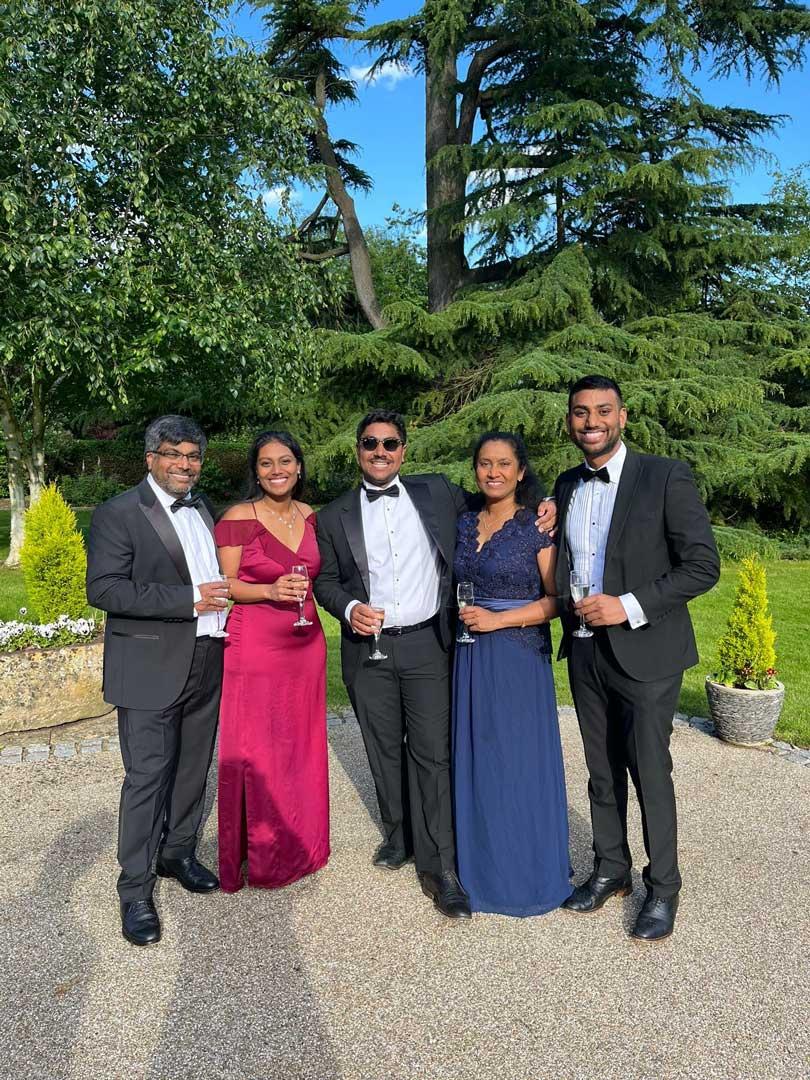
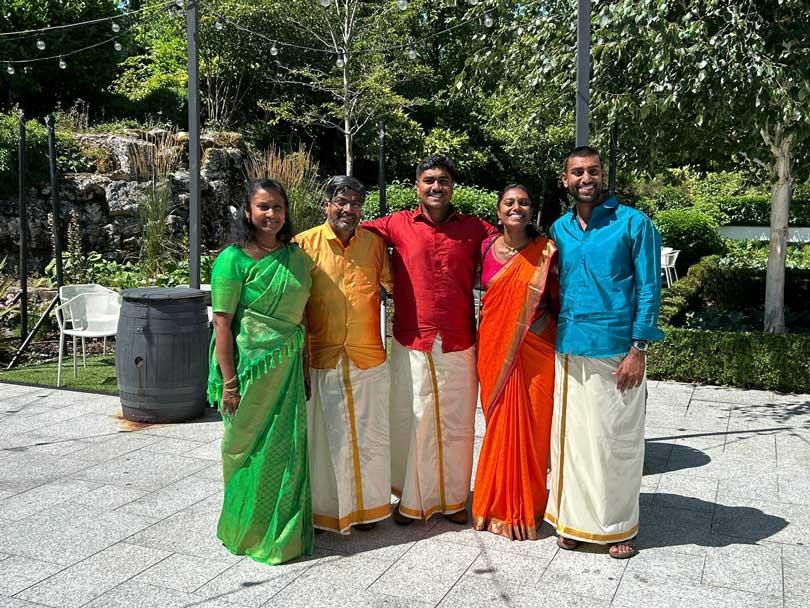
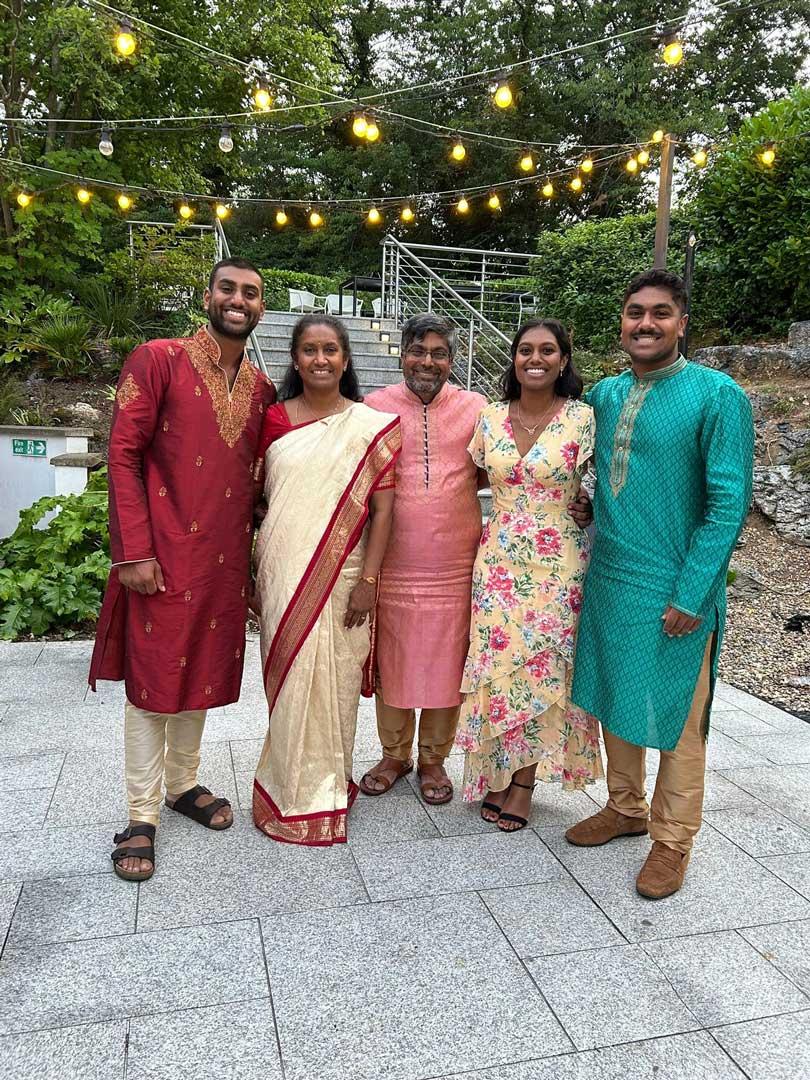
Absolutely. My wife has been incredibly supportive throughout my career. At one stage she even reduced her working hours to help manage our family while I was pursuing demanding academic roles. We have three children. My daughter is a doctor currently working in Australia, my son is a doctor in Birmingham and my youngest is a biology teacher in Brighton. Despite living in the UK, we maintained a strong Sri Lankan cultural environment at home. My children all speak Tamil and remain connected to their heritage.
What personal sacrifices are rarely spoken about in high level academic leadership?
Success requires hard work and resilience. There is no quick route to achieving meaningful goals. Many people today are looking for instant success, but real progress takes time and effort. In my career I have taken several risks. For example, when I first considered moving into leadership roles, some colleagues advised against it. They believed I should remain focused on my research career. But I decided to take the risk and explore new possibilities. Sometimes you have to step outside your comfort zone to discover what you are capable of achieving.
You have been closely involved in initiatives that widen access to education, particularly for disadvantaged communities. Can you tell us about your work with IntoUniversity and why this is such an important cause for you?
I have always been deeply passionate about breaking down barriers and empowering individuals through education. Establishing the first IntoUniversity centre in Leicester is, for me, the realisation of a long-held ambition. There are far too many bright and capable young people who miss out on higher education simply because they lack access to the right opportunities and support. That is something I have always wanted to help change. This centre has the potential to make a meaningful and lasting difference in the lives of young people across the city. It supports school pupils aged seven to eighteen from some of the most disadvantaged communities in Leicester, offering guidance, encouragement and academic support at crucial stages in their development. IntoUniversity has a strong and proven track record of improving both access to and attainment in higher education for students facing disadvantage. I am reminded of a quote by the American basketball player Magic Johnson, who once said that all children need is a little help, a little hope and someone who believes in them. I believe IntoUniversity embodies exactly that spirit, providing young people with the confidence and support they need to realise their full potential.
You have also played a role in strengthening research capacity in Sri Lanka. Could you share more about the Centre for Digital Epidemiology at the University of Jaffna and what it represents for you personally and professionally?
I am immensely proud to have played a role in launching the Centre for Digital Epidemiology at the University of Jaffna. Giving back has always been a guiding principle in my life, and being able to contribute in this way in 2023 was a particularly meaningful moment for me. The centre is designed to strengthen the university’s capacity in research, teaching and community engagement within the field of epidemiology. Its ambitions are both practical and far-reaching. These include securing international research grants, publishing in leading academic journals, supporting and training early career researchers, enrolling PhD students and contributing to the development of effective health strategies in the region. Initiatives like this highlight the vital role universities can play beyond the classroom. They demonstrate how academic institutions can add real value to their communities and the country at large by addressing pressing challenges and improving public health outcomes. Ultimately, centres such as this not only advance knowledge but also help translate that knowledge into tangible benefits for society.
Outside the boardroom and lecture hall, what keeps you grounded?
Sport has always been important to me. When I was younger, I played football, hockey and other team sports. Nowadays I play squash and occasionally badminton. I also enjoy spending time with friends and family. Like many Sri Lankans, I enjoy hosting gatherings and listening to Baila music. Those moments of connection keep life balanced.
Being knighted in the 2026 New Year Honours was a historic moment. What did that recognition mean to you?
Being knighted in the 2026 New Year Honours was a truly humbling experience and, to be completely honest, it came as an enormous surprise. It was never something I had expected or actively worked towards. Throughout my career my focus has always been on doing the best job I can, supporting the institutions I serve and creating opportunities for others. So, when the news came, my immediate reaction was one of disbelief. My first thoughts were not about myself but about all the people and institutions that had supported me along the way. My school in Sri Lanka laid the foundations of my education and values. Cambridge opened the doors to a world of opportunity. My long years at the University of Bristol shaped my academic and leadership journey, and the University of Leicester has given me the privilege of leading an extraordinary institution. The honour therefore belongs not just to me but to all those communities that invested in me and believed in my potential. On a personal level it was also a very proud moment for my family, who have supported me throughout every stage of my career. But beyond the personal significance, I believe the recognition resonated with many Sri Lankans across the world. There are not many Sri Lankans or Tamils who have received such an honour, and I hope it sends a powerful message that people from our small island can achieve extraordinary things on the global stage.
When you look back decades from now, what legacy do you hope Sir Nishan Canagarajah will have left behind?
When I look back decades from now, I hope the legacy I leave behind will be measured not by titles or positions, but by the opportunities I helped create for others. Leadership, to me, has always been about enabling people to succeed and opening doors that might otherwise have remained closed. If I can say that during my time I helped strengthen the University of Leicester, supported its growth and global reputation, and created an environment where students, researchers and staff could flourish, that would already be something I would be deeply proud of. Beyond Leicester, I would also like to feel that I contributed in some meaningful way to the wider higher education sector in the United Kingdom. Universities play an essential role in shaping society, advancing knowledge and preparing future generations for an increasingly complex world. If my work has helped strengthen that ecosystem, encouraged collaboration and supported innovation, then I would consider that a worthwhile contribution.
Equally important to me is Sri Lanka, the country where my journey began. I firmly believe that Sri Lanka’s future prosperity will depend heavily on its ability to invest in research, innovation and entrepreneurship. Universities must go beyond teaching alone. They should be centres where new ideas are created, where solutions to national challenges are developed and where knowledge contributes directly to economic and social progress. If, in some small way, I can help Sri Lanka move further in that direction and inspire young people to believe in the power of education and research, I would consider it a great privilege and a legacy worth leaving behind.