IN CONVERSATION EMB HASHMI From the BBC to the Boardroom How Emb Hashmi Is Teaching CEOs to Lead with Story
In a career spanning two continents and multiple media formats, Emb Hashmi has built a reputation as a consummate storyteller and communications leader. With foundational experience at the BBC, she has reported on global events, anchored flagship programmes, and interviewed high-impact figures across politics, culture, and business. Drawing on this depth of journalistic insight, she now leads Storytelling for CEOs, a pioneering programme designed to equip founders and executives with the narrative tools to lead with clarity and influence. In this dialogue, we explore how Emb has leveraged her broadcast experience into a methodical art of leadership storytelling; and why narrative is the strategic heart of any bold vision.
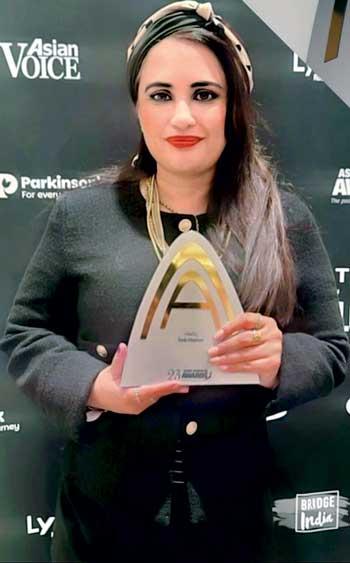 Q:You’ve had a remarkable career as a BBC journalist and presenter. What first drew you to media and storytelling?
I’ve always believed stories are how we make sense of the world. Even as a child, I wanted to connect people through words, emotion, and truth. Journalism was the perfect training ground, if one person walked away better informed, inspired, or empowered, then I knew the story mattered.
Q:Looking back at your years reporting for BBC News 24, Radio 4, and BBC One, which story or moment shaped you the most as a journalist?
It’s hard to pick one. Covering the Taliban takeover of Afghanistan, the Ukraine war, and global elections all shaped me. But one standout was being the first journalist in the world to interview Jemima Khan about her film ‘What’s Love Got to Do with It?’ I even got her to sing in Urdu, which went viral with over 40 million interactions and made breaking news in Pakistan. Another was reporting on the Pakistan floods, the worst climate disaster of recent times. Seeing a third of a country underwater, yet watching people still smiling with resilience, taught me perspective. These are the stories that change you.
Q:What skills from journalism have been the most valuable in your transition to entrepreneurship?
Clarity. The ability to take something complex and make it simple. Also, adaptability, I’ve written for TV, radio, online, social. Every platform has a different audience, and you learn quickly how to shape your message. That’s exactly what I tell CEOs now; make it clear, confident, and jargon-free.
Q:Journalism often requires telling complex stories under immense pressure. How did that prepare you for working with CEOs and entrepreneurs today?
If you can file breaking news under pressure, you can definitely help a CEO cut through the chaos and find calm, clarity, and narrative.
 Q: Who were your biggest influences or mentors during your media career, and how did they impact your style of storytelling?
Nikki Bedi has been a huge influence, she’s rare, one of those women who lifts you even on your worst days. Her belief in me has kept me going. And growing up, I watched people like Christiane Amanpour and Richard Quest. They were global superstars of journalism, holding people to account on the biggest stages. They inspired me to aim high.
Q:What inspired you to create Storytelling for CEOs after years in broadcasting?
I kept meeting brilliant leaders with brilliant ideas, but they couldn’t communicate them. That’s when I realised the gap wasn’t strategy, it was storytelling.
Q:Why do you believe storytelling is such a critical leadership skill for today’s CEOs?
Because the US already gets it; at the UNGA, Clinton Global Initiative, and Concordia Summit, I saw world leaders, entrepreneurs and heads of state all driving their message through narrative. The world follows the US when something works. Storytelling should be a leadership syllabus in schools. Without it, you can’t move to the next stage of your life or career.
Q: Your programme is described as a “storytelling MBA.” What sets it apart from traditional leadership or communications courses?
It’s cinematic, practical, and AI-powered. Think of it as an MBA in storytelling but delivered with the punch of a documentary.
Q:How did you integrate AI into the course, and why was it important for you to make it future-ready?
AI gives leaders prompts, feedback and tools to sharpen their voice. It’s not about replacing humans, it’s about amplifying them.
Q: The course emphasises the F.L.I.P. method. Can you explain what it is and how it transforms facts into persuasive stories?
FLIP is Feelings, Language, Imagery, Pacing. It’s my formula for turning raw facts into stories that connect emotionally and stick in people’s minds.
Q:Storytelling often requires vulnerability. How do you encourage leaders to embrace that while still commanding authority?
I remind them that vulnerability is connection, not weakness. Authority is stronger when it’s human.
 Q:With attention spans shrinking and trust in business declining, how can leaders use storytelling to cut through the noise?
Keep it short, keep it human, keep it clear. A thirty-second story done well will travel further than a thirty-slide deck.
Q:How do you balance the human art of storytelling with the rise of AI-driven communication?
AI can help you draft. Only humans can move hearts. Let AI be the pen but always keep hold of the voice.
Q:Founders often say their venture reflects a personal story. How much of Storytelling for CEOs is a reflection of your own journey?
It’s my journey in a programme. I built what I wish I’d had; a place to learn how to speak with impact, be heard, and lead with story.
Q:Have you ever faced any form of discrimination?
Yes. As a South Asian woman, doors often took longer to open. But those experiences fuel my mission to open doors for others.
Q:Any regrets?
Only that I didn’t start sooner. But timing is everything, every step prepared me for this.
Q:What was the biggest challenge you faced in moving from broadcasting to building your own course?
Running a business. In journalism you tell stories; in entrepreneurship you’re also handling numbers, marketing, sales, finance, everything. But with support from NatWest Bank, accelerators, universities and investors who believe in me, I’m learning every day.
 Q:As a woman in both journalism and entrepreneurship, how have you navigated leadership spaces that are often male dominated?
By showing up with a story, not just a CV. Stories change the power in the room.
Q:What’s the story you most want to be remembered for telling; personally, or professionally?
That women, from any background, can shape global conversations with their voice.
Q:Finally, if you could give one piece of advice to young professionals who want to master storytelling, what would it be?
Start small. Tell one story that matters to you. Then tell it again, better. Storytelling is a muscle, the more you use it, the stronger it gets.
---------------------------------------
What makes Emb Hashmi compelling isn’t just her résumé, it’s her belief that stories build bridges, shape leaders, and spark global change. From her early days in the BBC newsroom to coaching top executives, she’s carried one guiding principle: that clarity and humanity are inseparable in communication. As the world becomes noisier and leadership demands more authenticity, Hashmi’s message feels urgent, that the leaders who will define the next decade are not the loudest, but the clearest storytellers.
For More Details:
https://storytellingforceos.com