CYCLONE DITWAH | KANDY
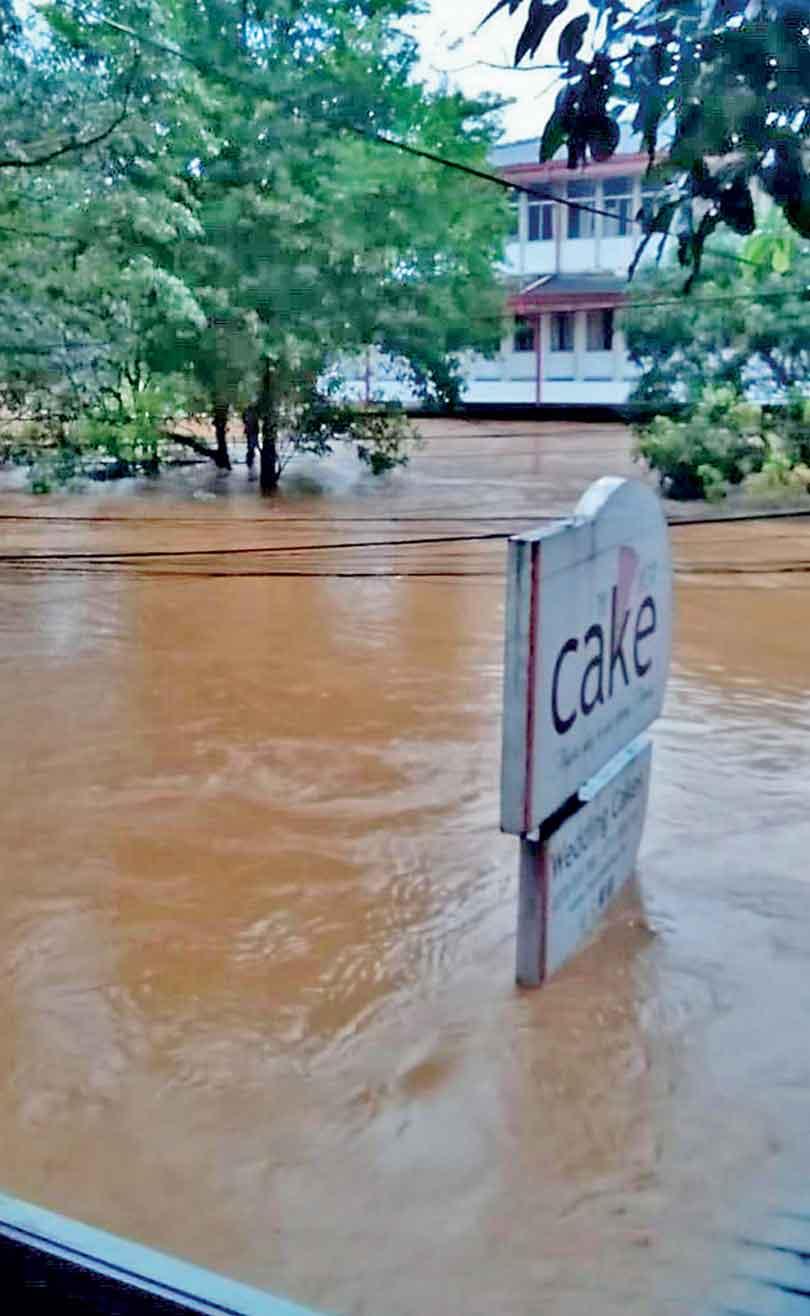
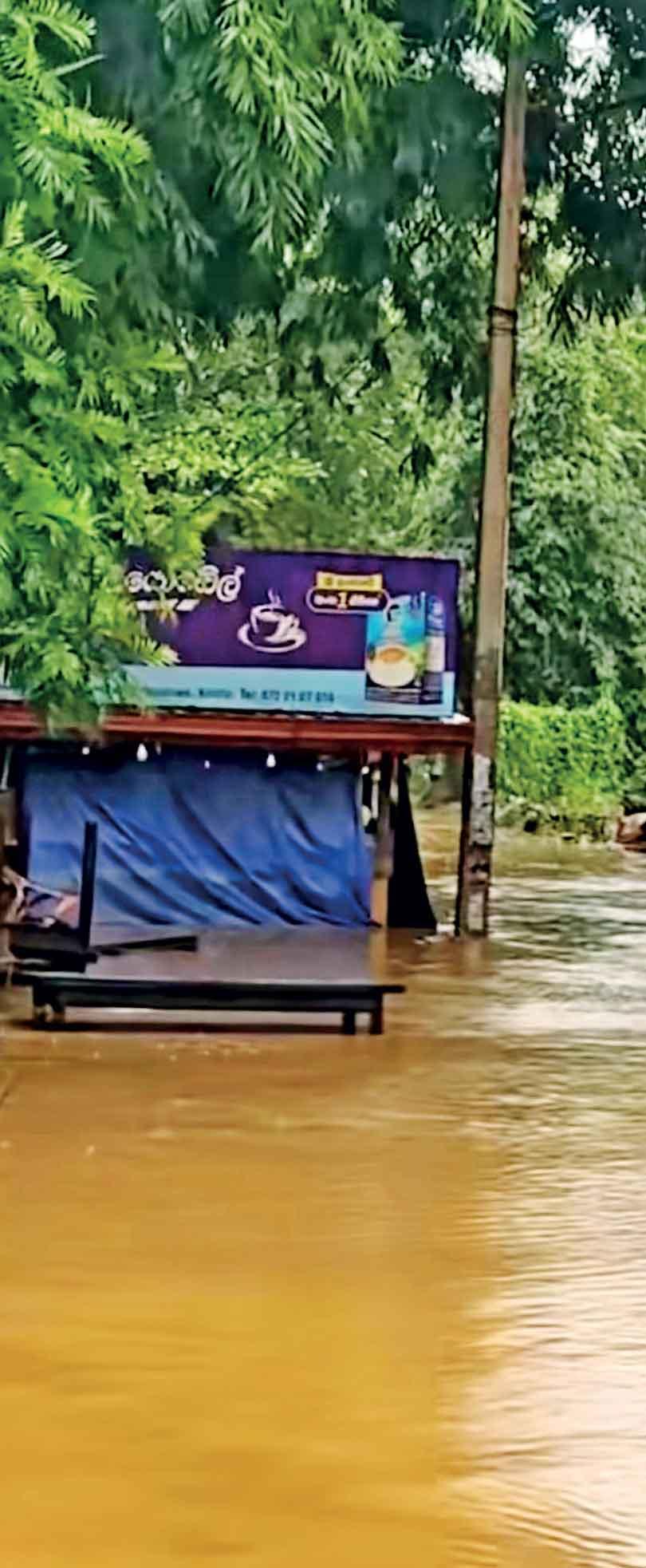

 This week, I thought I’d take a break from the usual flow of my column and focus on something far more pressing. On 28 November, Sri Lanka was hit by a devastating cyclone that caused extensive damage to the area I live in.
I was born and raised in Colombo and moved to Kandy after my marriage ten years ago. Over the years, I’ve had the chance to meet and connect with many Kandyan’s, and I’ve grown very fond of them.
Kandy, being the second largest city in Sri Lanka, is home to some of the purest Sri Lankan souls. I’ve felt a distinct difference in the character of people here compared to Colombo. While Kandy is developing rapidly, its residents remain deeply traditional, kind, warm, laid-back, and genuine. Whenever I visit Colombo, I notice how rushed and impatient people can be, which makes it easy to appreciate the warmth and simplicity of life in Kandy.
I live on the outskirts of Kandy city, just a few minutes walk from the beautiful Mahaweli River. I often took my children for evening walks along the river, where the water level was usually low enough for them to play safely on the rocks. But when the rains began, the water rose to unprecedented levels. Soon, the riverbanks were submerged, and water spilled onto the roads, causing minor flooding.
The villagers were shocked. Many stepped out of their homes in disbelief, having never witnessed the river overflowing before. As the rains continued, roads were completely submerged, and the water reached the surrounding paddy fields. We could hardly believe our eyes as the Mahaweli overflowed, covering roads and paddy fields, making our home situated on slightly elevated ground feel like a small island.
We were fortunate that the water did not reach our home, but several neighbors were affected and sought shelter with us until the rain subsided. That day, our roof sheltered seven people. We had no electricity or water for two days, but thankfully, we had all the essentials we needed.
Once the rains settled, news began to emerge about the severe damage the floods had caused to homes and businesses around Kandy.
Since my column focuses on my food journey, I’d like to highlight some of the food establishments I’ve patronized that were affected by the floods.
Starting with a budget-range eatery, Wawul Kade is a true crowd favorite. Located near the Polgolla Dam, it is famous for its hot roti served with a killer chilli sambol, its savory doughnuts referred to as wade and its signature lime plain tea. People from all socio-economic backgrounds flock to this little roadside kade. My husband and I are regulars, and we’ve taken every visitor we’ve had in Kandy to this spot. Everyone always leaves wanting to return.
Situated right opposite the Mahaweli River, Wawul Kade was badly hit by the floods, suffering significant damage. However, they were back up and running within a week. Damaged areas were repaired, and the kade reopened with a few modest upgrades a true testament to resilience.
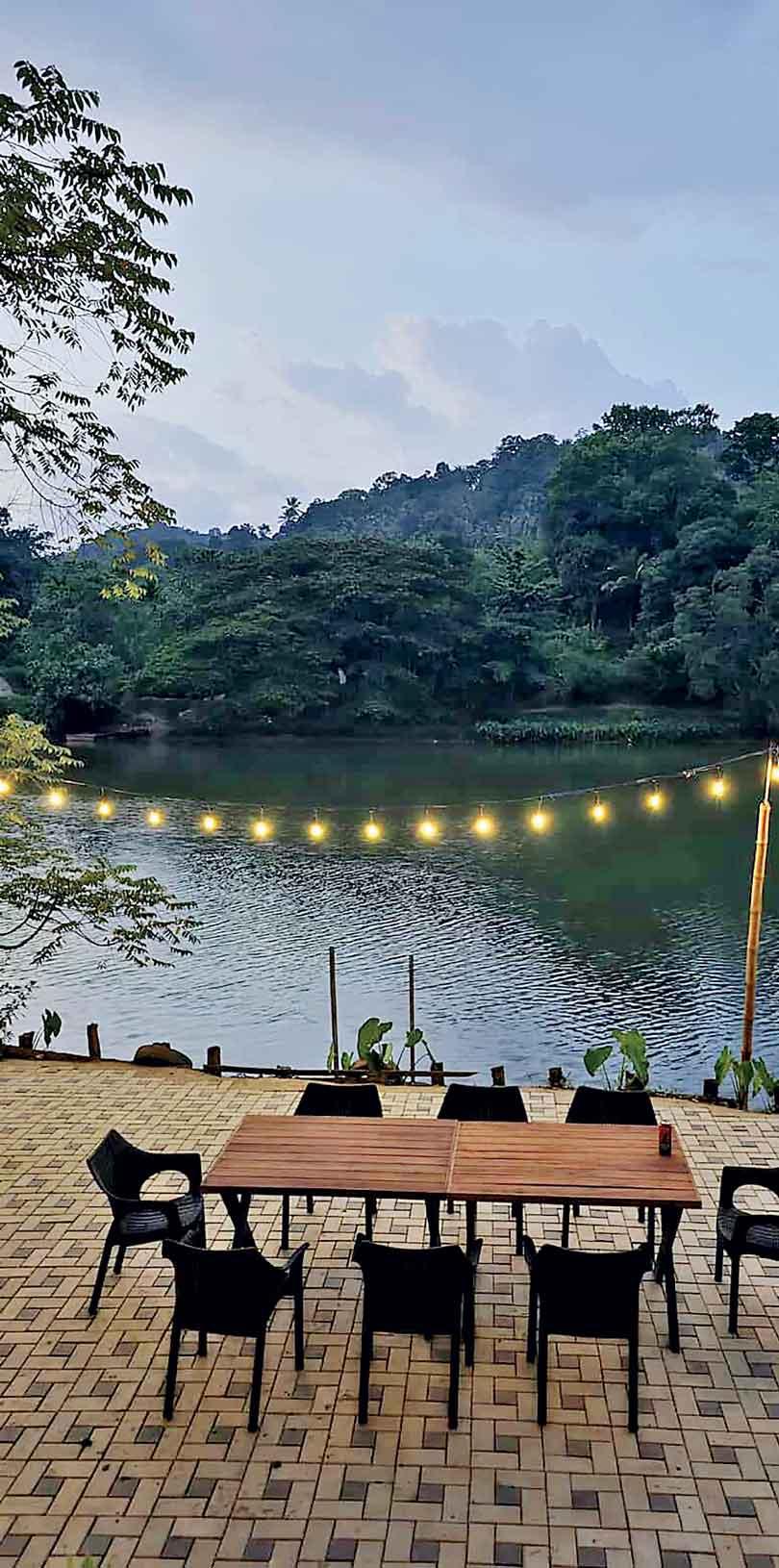
The next establishment, Kamatha Avanhala, is a widely visited restaurant also located by the riverbank. Built with traditional clay huts, Kamatha was a place where people came together to share meals, celebrate special moments, and enjoy the surrounding nature. It was also popular for kayaking, with plenty of space and potential for future additions.
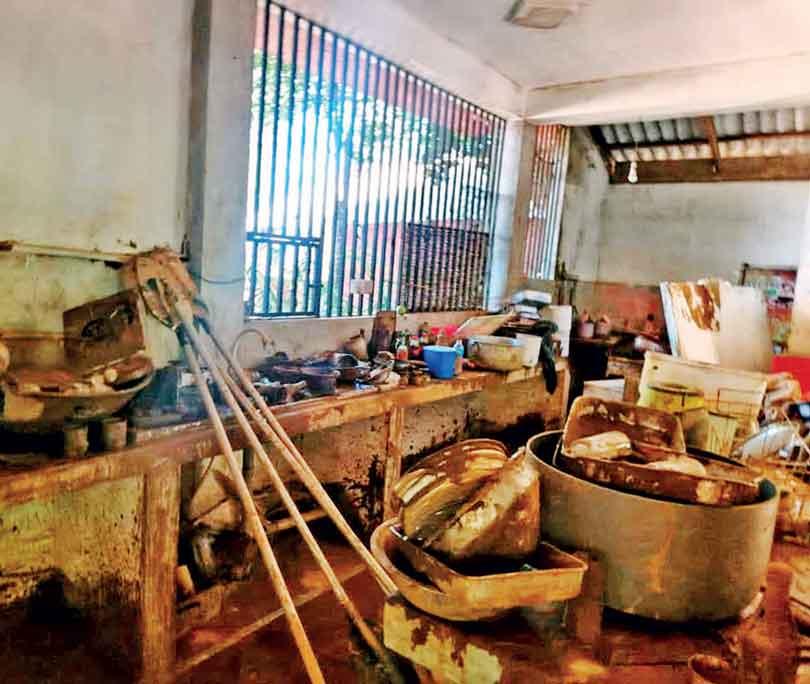
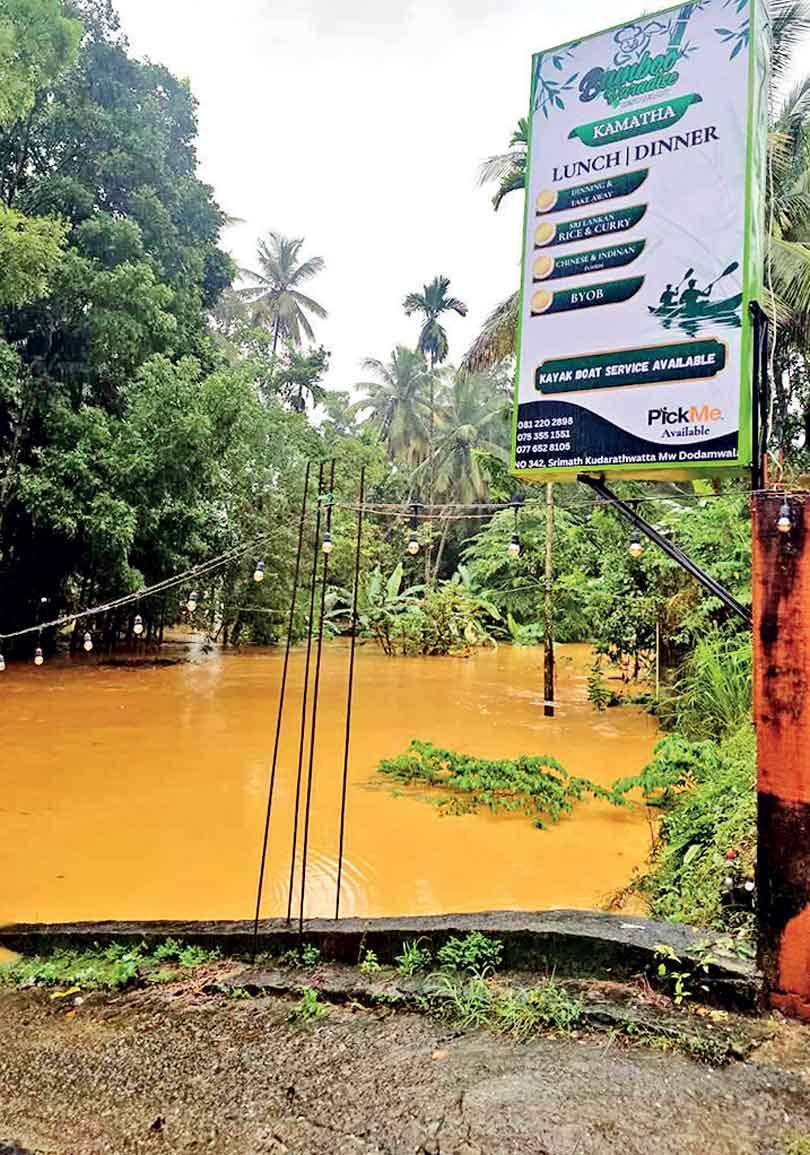
Unfortunately, the recent floods completely washed away Kamatha. The only items salvaged were those locked in the kitchen, but even those were covered in mud. Everything else was destroyed. Rebuilding will take time, but the young and optimistic owner is focused on restoring what the restaurant stands for.
Three weeks after the floods, Kamatha managed a soft reopening, though it may take some time to return to its former glory. Speaking with the owner, they said, “It was never just a restaurant to us. We’re grateful to have had a soft opening and remain hopeful as we continue restoring what Kamatha Avanhala stands for”.
Many other small businesses were also affected, highlighting the resilience and determination of Kandy’s community in the face of this disaster. The owner of The Cake Shop, popular as one of Kandy’s leading wedding cake and event bakers, was also hit by the floods and has been struggling to reopen since.
How will all these businesses clean up layers of mud, repair and purchase equipment, and replace electrical items? Many local businesses, friends, and neighbors stepped up during one of the biggest tragedies to ever hit the central province.
The Hideout Lounge ran collection points and opened their doors for donations, which were personally transported by the owner and staff. Many major hotels in Kandy ran kitchens to cook for the displaced and delivered thousands of food packs. Religious establishments ran kitchens, collected donations, and ensured that those displaced did not suffer more than they already had. I was heartened to see that Kandy did not sit around moping. Once the debris was cleared, the city got back to work. Within a week of the disaster, the city was running again to the point that it was hard to believe a cyclone had occurred.
The biggest damage that will affect Kandy’s economy is to the train lines. Kandy is a tourist hub, a UNESCO World Heritage Site, and part of the Cultural Triangle, and it depends heavily on tourism. The train is the most convenient, quick, and affordable way to travel to Kandy, with the journey taking only 2.5 hours on the intercity train and costing between Rs. 800 and Rs. 1,500. I hope the government is able to repair the tracks soon, though it is a difficult task. Stations such as Balana no longer have earth beneath their tracks, making the railway lines appear as if they are swinging.
Kandy and its resilient people, along with support from across the country, are doing their best to recover. However, the rains have not completely stopped. Even though the cyclone has passed, water levels remain high, and just one day of heavy rain could trigger another flood or landslide. While the government works on rebuilding roads and railway lines, the people are working together to lift each other up so that everyone can rise from the effects of this disaster.