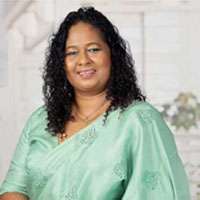
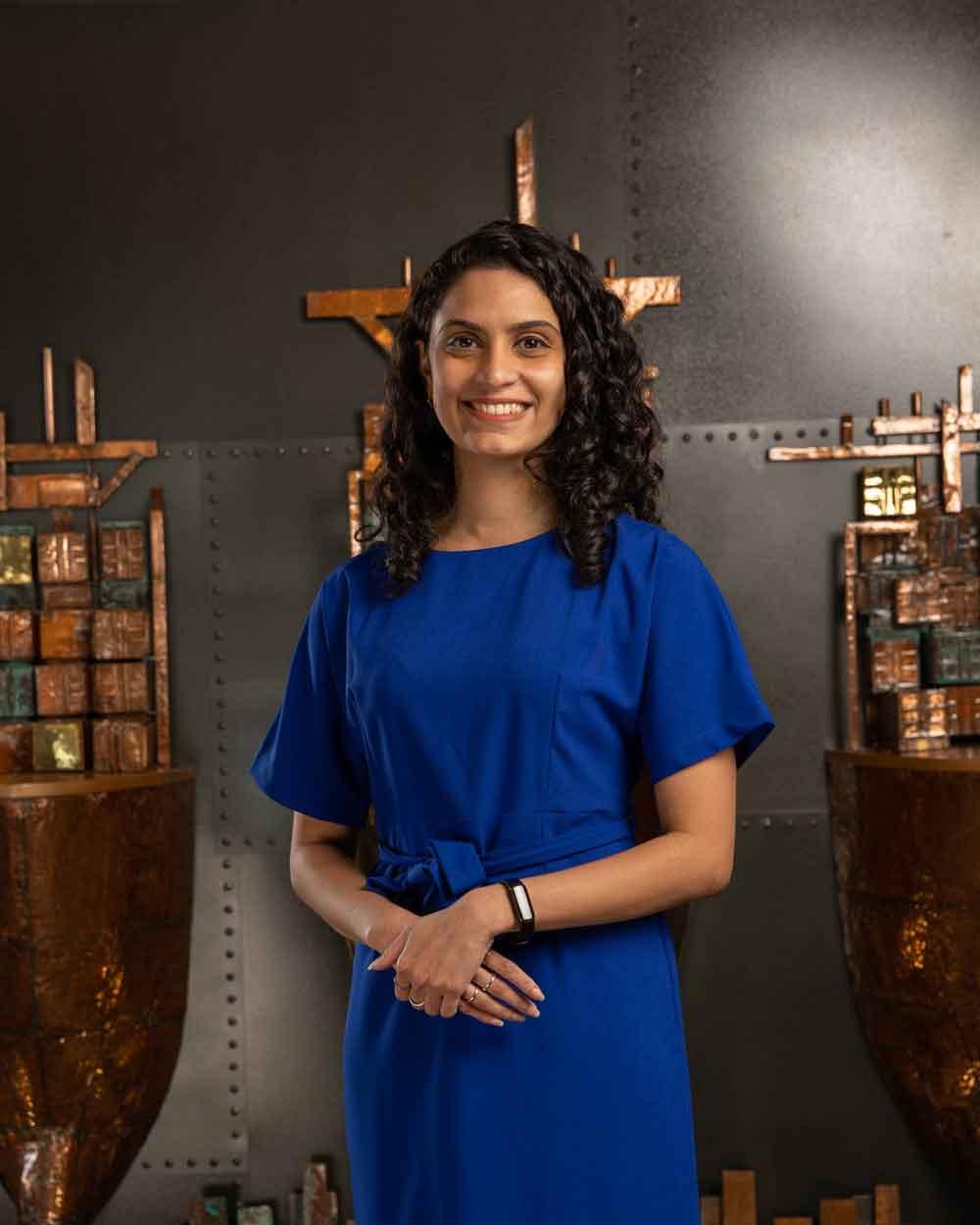
Udara Cumaratunga General Manager Commercial and Marketing, South Asia Gateway Terminals (Pvt) Ltd
BY: DR. SULOCHANA SEGERA
In an industry defined by scale, speed and operational precision, leadership is often measured in volumes moved and efficiencies delivered. For Udara Cumaratunga, General Manager Commercial and Marketing at South Asia Gateway Terminals Pvt Ltd, leadership is also about people, adaptability and perspective. Her career journey across real estate, digital marketing and maritime logistics reflects a willingness to step beyond conventional career paths in pursuit of learning and growth. Joining SAGT at the height of a global crisis, Udara found herself at the center of efforts to digitize import clearance processes almost overnight, helping to ensure the uninterrupted flow of essential goods into Sri Lanka. Today, as the only female member of SAGT’s Senior Management Team in 2024 and the first female President of the Sri Lanka-Australia-New Zealand Business Council under the Ceylon Chamber of Commerce, she represents a new generation of leaders reshaping how commercial strategy and inclusive leadership intersect in traditionally male dominated sectors.
Your career spans real estate, digital marketing and maritime logistics. What motivated you to embrace such diverse industries, and how did each transition shape you as a leader?
When I graduated, I did not have a particular industry or role in mind. Instead, I pursued every opportunity that would give me exposure to different areas, with the hope that I would discover my true passion along the way. As a John Keells Management Trainee, I was given exposure to multiple industries, and I fully immersed myself in every stint, allowing me to build my experiences, skills and professional network. Rather than narrowing my path early on, these experiences broadened my curiosity. Each time there was an opportunity to learn something new, I embraced the challenge, which led me into digital marketing and subsequently into maritime logistics. My journey exposed me to varied scenarios, developed my resilience and opened my eyes to new possibilities. The skills and perspectives I gained were transferable across industries and allowed me to introduce different ways of thinking into each role. Collectively, these experiences have shaped the leader I am today.
You began your journey at John Keells Holdings as a Management Trainee. Looking back, what foundational lessons from your early career still guide your leadership today?
My time as a Management Trainee at John Keells was invaluable and instrumental in shaping both the leader and the career woman I am today. I joined as a fresh graduate, and much of what I knew at the time was theoretical. The programme gave me practical exposure and taught me how to apply theory in real world settings, while also pushing me to recognize my own potential.
It helped me learn how to navigate challenges, work with diverse teams and build a strong professional network. The experiences I gained during that period laid the foundation for my career and continue to guide how I approach leadership today, particularly in how I engage with people and adapt to new situations.
You joined South Asia Gateway Terminals Pvt Ltd during a global crisis and were part of digitizing the import clearance process almost overnight. What was that experience like, and what did it teach you about crisis leadership?
This was an exceptionally exciting and challenging period for me. I had just joined both the company and the industry, with very limited exposure to how the sector operated. I was assigned to a team responsible for transforming import clearance processes in line with social distancing protocols, ensuring the continuous flow of essential goods into the market. There was very little time for structured learning. I had to absorb information quickly and learn on the go. What enabled me to contribute meaningfully was my willingness to take on any role that supported the team. From manning phone lines, to walking down the street introducing the new process, to even helping customers set up email addresses, I did whatever was needed to keep operations moving. This experience taught me that crisis leadership is not about hierarchy. It is about teamwork, recognizing people’s strengths, trusting them and providing support. That support can come in the form of guidance, encouragement or stepping in to fill gaps when needed.
Maritime logistics has historically been male dominated. As the only female member of SAGT’s Senior Management Team in 2024, how do you navigate leadership in such an environment?
SAGT and its leadership have played a significant role in developing and preparing me for this position. Over the years, I have received conscious support and guidance, along with the exposure needed to strengthen my profile within the industry. Importantly, I was not shielded from challenges. I was put forward, trusted with responsibility and supported whenever it was needed. Being a female leader in this industry does come with its challenges, and there are many instances where I am the only woman in the room. However, I have been fortunate to have the support of strong male leaders who value capability and performance over gender. For me, navigating this environment has been about focusing on competence, professionalism and confidence. I lead by delivering results and fostering collaboration, and I hope that my journey helps create a pathway for more women to step into leadership roles across the industry.

As the first female President of the Sri Lanka-Australia-New Zealand Business Council under the Ceylon Chamber of Commerce, what milestones have you achieved in strengthening bilateral trade relations?
Being appointed the first female President of the Council was a great honour for me. It was made possible by the trust and confidence of the member companies, along with the support of SAGT’s management.
My tenure coincided with a period of economic crisis, which significantly impacted the way businesses operated. I focused on strengthening collaboration and forming partnerships with like-minded organizations to ensure we continued to deliver on the Council’s objectives. One of the key milestones was organizing the Council’s first online business to business matching session. While it came with its own challenges, it opened up new avenues for engagement and discussion. We also collaborated on delegation visits, creating meaningful networking opportunities for members in Sri Lanka, and worked closely with the Australian and New Zealand High Commissions on joint initiatives and engagements. Collaboration was central to everything we achieved. By fostering strategic partnerships and maintaining active engagement with stakeholders, we were able to continue driving the Council’s mandate during a challenging period.
Through your roles in WISTA Sri Lanka and the Chartered Institute of Logistics and Transport Sri Lanka, how are you contributing to youth development and gender inclusion in logistics and transport?
My involvement with these associations allows me to contribute to initiatives focused on female and youth empowerment on a much wider scale than I could individually. I support the organizations by helping organize skills development programmes, advocating for more inclusive and diverse work environments and serving as a resource person whenever possible. Through these platforms, I have also been able to provide guidance and mentorship directly to young professionals and aspiring female leaders, helping them navigate their careers in logistics and transport. It is especially rewarding to see how these interactions can translate into real opportunities and increased confidence among young talent.
You hold degrees from the University of Sheffield and the University of West London, with international exposure at Griffith University. How has global education shaped your leadership mindset?
I have always been curious about how different countries trade and how products produced elsewhere make their way onto our shelves. My global education exposed me to diverse cultures and different ways of thinking and problem solving, which helped me develop a greater sense of maturity and perspective. As a leader, these experiences have made me more culturally conscious and adaptable. I draw on what I learned to inspire my team and to foster an inclusive environment where different ideas and viewpoints are valued.
How did the Australia Awards short course in Women in Executive Leadership influence your current leadership approach?
The course connected me with a diverse group of accomplished women, and despite our different backgrounds, we built a strong support system. This network allows us to draw on each other’s experiences and insights as we navigate our respective challenges. The programme emphasized the practical application of leadership, helping me shift from managing to leading. One concept that particularly resonated with me was looking from the balcony, which encourages stepping back to take a broader view of a situation. This helps me better understand the dynamics at play and make more informed decisions. The course was also a valuable opportunity to reflect on my own leadership style and refine the kind of leader I aspire to be. It was an eye-opening experience that continues to influence how I lead today.
You often speak about integrating commercial strategy with inclusive leadership. What does inclusive leadership mean to you in practice?
Inclusive leadership means creating an environment where people are valued for who they are, their strengths are recognized and nurtured, and support is provided in areas where they need to grow. It is about fostering a workplace free from discrimination, whether based on age, gender, race or any other factor, and ensuring that every team member feels heard, respected and empowered to contribute. In practice, I actively seek my team’s perspectives when making decisions, share my own experiences for learning and try to extend support to individuals based on their unique challenges and aspirations.
What advice would you give young women aspiring to enter logistics, maritime or corporate leadership?
The opportunities within the transport and logistics industry are truly endless, even though the path can be challenging. Building resilience is key. Join professional associations and build strong networks so you have a community of support, especially from other women who understand the realities of the journey. Be willing to take on challenges, question the status quo and think innovatively. Your attitude is just as important as your technical skills, because it shapes how you navigate obstacles and opportunities. Focus on developing soft skills such as emotional intelligence, teamwork and leadership, and remain coachable. Being open to learning from others will continue to open doors throughout your career.
RAPID FIRE
- Three words that define your leadership style? Adaptive, inclusive, supportive
- The biggest risk you have taken in your career? Entering an unfamiliar industry
- A decision that changed your professional journey? Embracing every challenge presented
- One leadership quality every young professional must develop? Support others to thrive
- Early morning strategy session or late-night planning? Early morning strategy sessions
- A book or mentor that influenced your thinking the most? Ted Muttiah’s mentorship
- Swimming or boardroom negotiations which demands more mental strength?Both demand mental strength
- One habit that keeps you disciplined and focused? Daily planning and review
- If not in maritime and logistics, what industry would you choose? Hospitality and culinary experiences
- Legacy or success which matters more to you? Legacy over personal success