IN CONVERSATION WITH KASUN SIGERA
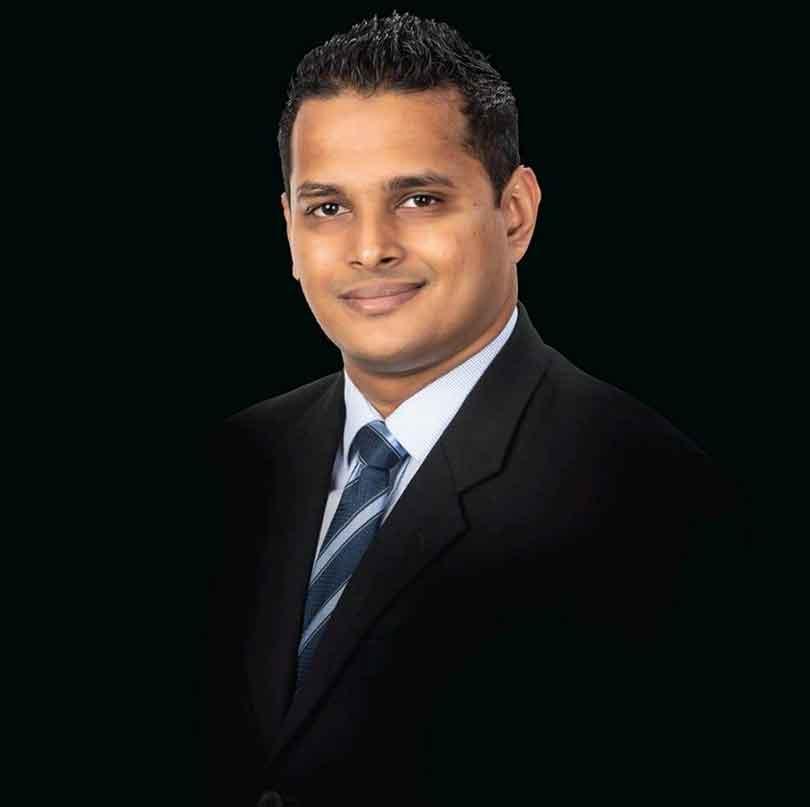
In a world where leadership is often measured by titles, applause, and visibility, Kasun Sigera’s journey offers something deeper and more enduring. From captaining his school hockey team and serving as Senior Prefect to representing Sri Lanka at the Under 18 Asia Cup, his early experiences shaped a philosophy grounded in resilience and responsibility. Over the years, he has worked across more than 30 international markets, risen rapidly in corporate leadership, and stepped into the public eye as a national television presenter. Yet behind the achievements is a story of discipline, service, vulnerability, and growth. In this candid conversation, he reflects on how sport built his character, how global business demands humility, why communication defines influence, and how authenticity remains the foundation of meaningful legacy in a constantly shifting world.
You started your leadership journey quite young as a school sports captain and Senior Prefect. What shaped your mindset toward leadership during those early years?
Leadership for me was never about authority. It was about responsibility. As School Hockey Captain and Senior Prefect, I realised very early that people do not follow titles. They follow relevance and how connected they feel to the overall goal. Representing my school and leading my peers taught me empathy, accountability, and the importance of leading from the front. Winning mattered, but protecting team morale, standing up for what was right, and carrying the school crest with pride mattered more. I have never been afraid to leave places that did not align with my values. Leadership was never about building a blind following. It was about doing what is right, even if that meant being the unpopular person in the room. Those early experiences shaped my belief that leadership is service. It means empowering those around you while staying true to who you really are.
Representing Sri Lanka at the Under 18 Asia Cup must have been a defining moment. What did sports teach you that business school never could?
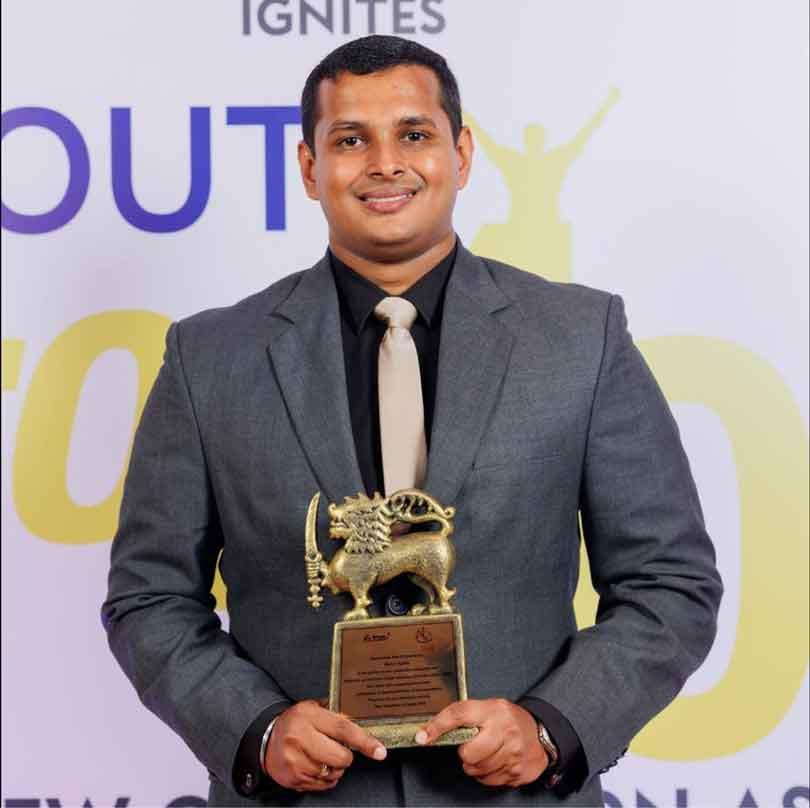
Representing Sri Lanka at the Under 18 Asia Cup in Yangon was one of the proudest moments of my life. Wearing the national jersey changes you. Sports taught me resilience under pressure. No MBA classroom can simulate the intensity of standing on an international turf knowing you represent your country. It taught me discipline, emotional control, teamwork, and how to recover quickly from failure. I was one of the youngest in the team, surrounded by experienced players and leaders. That environment gave me space to learn, grow, perform, and most importantly support the team. In business, just like in sport, you win as a team. Sometimes the scoreboard does not reflect your individual effort, but what truly matters is the final result for the collective.
You have worked across 30 international markets. What is the biggest misconception young people have about working in global business?
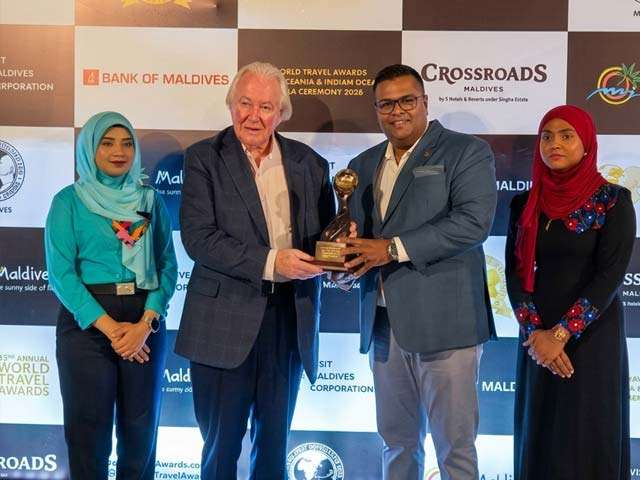
Many young professionals think global business is glamorous, filled with travel, high level meetings, and exposure. What they do not see is the complexity behind it. There are early morning departures and late-night flights. There are presentations delivered despite exhaustion. There is the challenge of staying connected to your home teams while operating across multiple time zones. It is demanding and it is not for everyone. Global business is fundamentally about cultural intelligence. What works in the UAE may not work in Kenya. What resonates in India may fail in Nepal. Strategy is not universal. Adaptability, humility, and deep local understanding matter far more than a fancy title. The biggest misconception is believing that success in one market guarantees success everywhere. It does not.
Many young professionals want rapid career growth. You were promoted to General Manager within a year at Jan and Bros. What mindset or habits helped you accelerate your career?
Two things shaped my growth. Ownership and value creation. I never confined myself to the boundaries of my job description. If something needed fixing, I stepped in. If there was a gap, I filled it. I focused on solving problems rather than simply reporting them. Consistency in performance was critical. So was understanding the numbers deeply, building trust with stakeholders, and treating the company’s resources as if they were my own. Ambition alone does not accelerate growth. Sustained value creation does. Career acceleration is rarely about speed alone. It is about reliability and impact.
You balanced corporate leadership with being a national TV presenter. How important is communication in building influence?
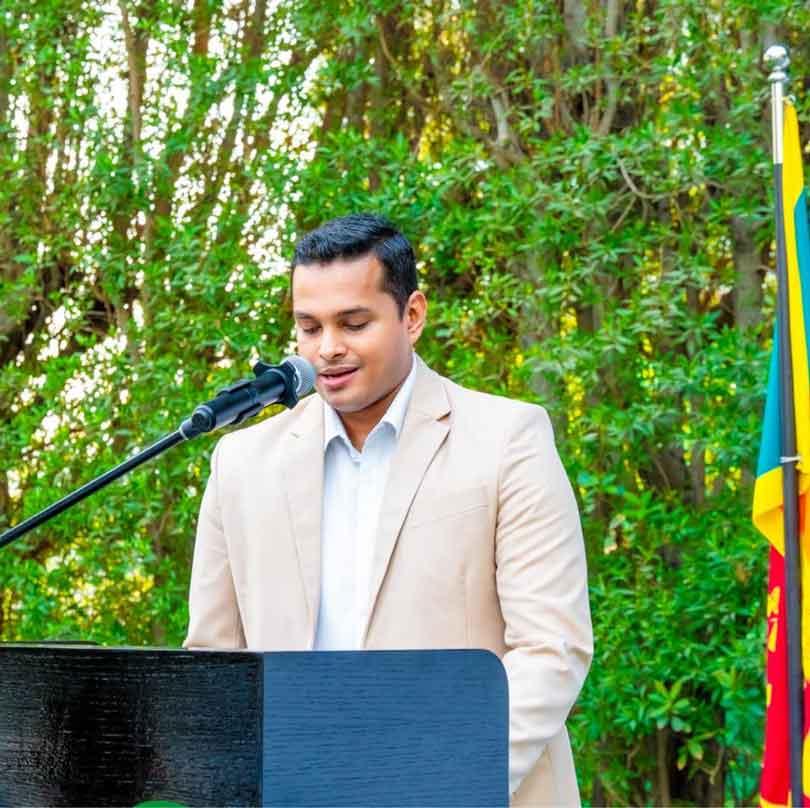
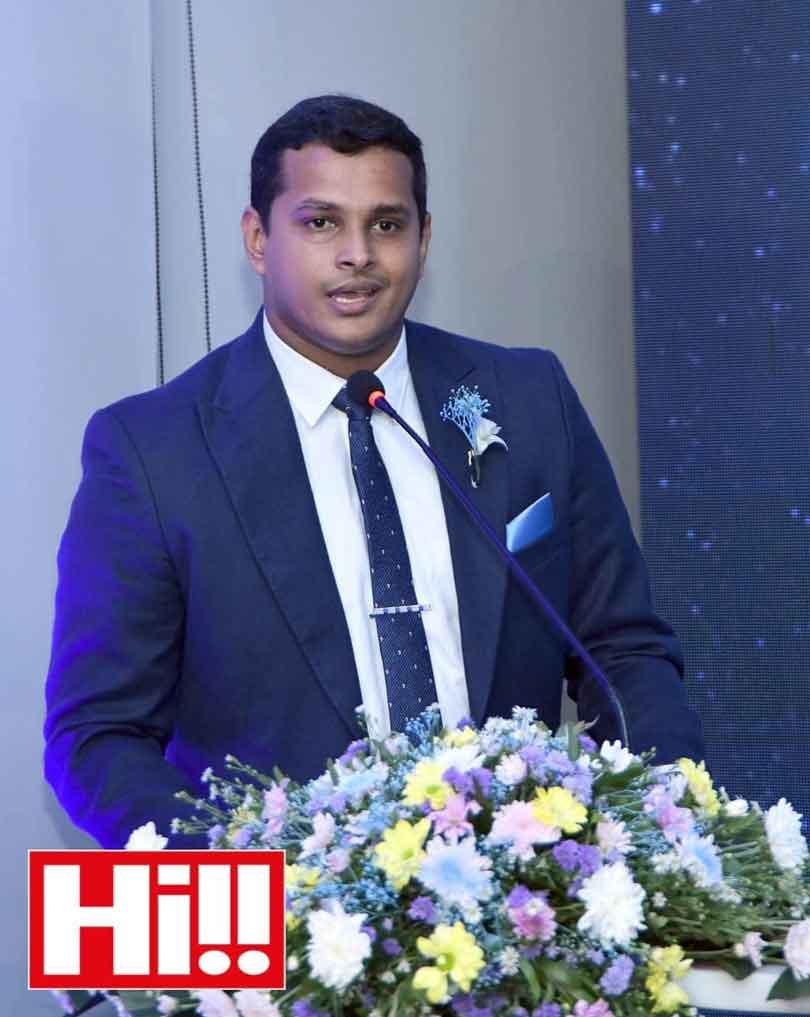
Communication is everything. My journey with Sri Lanka Rupavahini Corporation shaped my confidence and clarity of thought. When you speak to a nation, you understand responsibility in a different way. Every word matters. In corporate leadership, strategy is meaningless if you cannot articulate your vision clearly. Influence is not about power. It is about the ability to connect, inspire, and simplify complexity. Whether in a boardroom or in front of a camera, clarity builds trust. And trust builds influence.
How can youth use media and digital platforms responsibly to build credibility instead of just visibility?
Visibility is temporary. Credibility compounds over time. Young people must ask themselves what value they are adding rather than how many views they are getting. Attention fades quickly. Contribution lasts. Share knowledge. Share lessons. Share failures. Build a digital footprint that reflects depth rather than aesthetics alone. The internet does not forget. Create something today that you will be proud to revisit ten years from now. Influence built on trends disappears with trends. Influence built on substance endures.
What does global competitiveness mean for a young Sri Lankan professional?
Global competitiveness means you can walk into any boardroom in Dubai, Melbourne, Colombo, or Nairobi and add value confidently. It is not about losing your Sri Lankan identity. It is about sharpening your skills, strengthening communication, understanding data, thinking strategically, and delivering results at international standards. Talent is universal.
Preparation is the differentiator. If you can combine strong technical capability with cultural awareness and execution discipline, geography becomes less of a limitation.
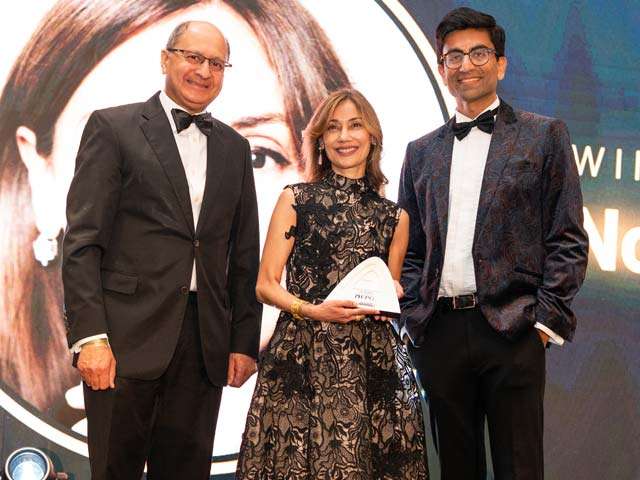
Winning at the Inaugural Youth Top 40 Awards placed you among the country’s most promising young leaders. How did that recognition elevate your professional journey and redefine your sense of responsibility as a role model?
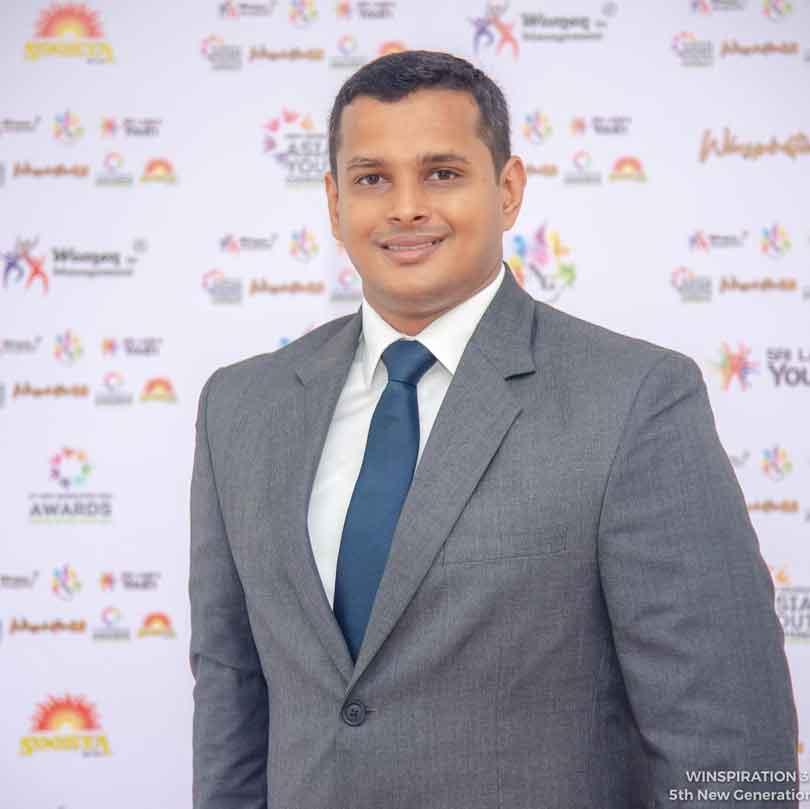
Recognition is humbling, but it also increases responsibility. Being recognised among promising young leaders reminded me that people are watching, especially young individuals trying to navigate their own paths. Awards validate effort, but they also challenge you to remain consistent. For me, it was less about celebration and more about reflection. How do I grow from here? How do I uplift others from here? Recognition should never become a resting point. It should become a responsibility to serve at a higher level.
As the Founding Chair of New Generation Sri Lanka, you stepped into a nation building role. What impact were you determined to create, and what legacy do you believe you are shaping for future leaders?
When we started New Generation Sri Lanka under the guidance of Dr. Sulochana Segera, the goal was simple. Create globally competitive Sri Lankan youth. I wanted to bridge the gap between potential and exposure. There is immense talent in Sri Lanka, but talent without opportunity remains unseen. As someone whose life mission is to take the essence of Sri Lanka to the world, this aligned perfectly with my vision. I firmly believe that you can only build things by acting on them. Without action, dreams remain dreams. The legacy I hope to shape is a generation that thinks beyond limitations. Professionals who can compete globally while contributing meaningfully at home.

How do you stay grounded despite international exposure and public recognition?
It was not success that kept me grounded. It was survival. There was a nineteen-year-old version of me who once wanted to end his life due to depression. I speak about that openly because vulnerability is not weakness. It is awareness. It reminds me that I am human, just like everyone around me. My past, my mistakes, and the silent battles I fought as a teenager remind me where I came from. Every one of us is fighting, or has fought, battles we rarely speak about. That shared fragility connects us. My journey through Rotary and Rotaract, leading and connecting with more than six thousand youth across Sri Lanka and the Maldives, and my work with New Generation Sri Lanka shaped my humility. Service reduces ego and expands perspective. Titles change. Markets shift. Applause fades. Character remains. I constantly remind myself that I am a human being first, and our time here is limited. So, I choose to be real. I choose to be authentic. I choose to be human. Because in the end, legacy is not built on recognition. It is built on impact. And impact always begins with authenticity.
Rapid Fire
1. Morning mantra?
“Veni. Vidi. Vici.” (I came, I saw. I conquered)
2. Fav leadership trait?
Aggressive, yet human.
3. Go-to motivator?
Progress, even 1% daily.
4. Dream project?
Taking untapped Sri Lankan wellness and Sri Lankan talent to the world.
5. Book that changed you?
The Art of War by Sun Tzu.
6. Hidden talent?
Playing my Cajon box, I guess
7. One word to describe your leadership style?
Transformational.
8. Fav way to recharge?
Visiting a mountain top, embracing the silence, absorbing the view, and finding peace in stillness.
9. Most-used phrase?
“You can’t achieve extraordinary results by doing ordinary things.”
10. Advice for young changemakers?
Create your own legacy. Build substance before spotlight. The world rewards depth.