In Conversation with Gimhan Sooriyabandara Founder, Colombo Independent Debaters’ Society.
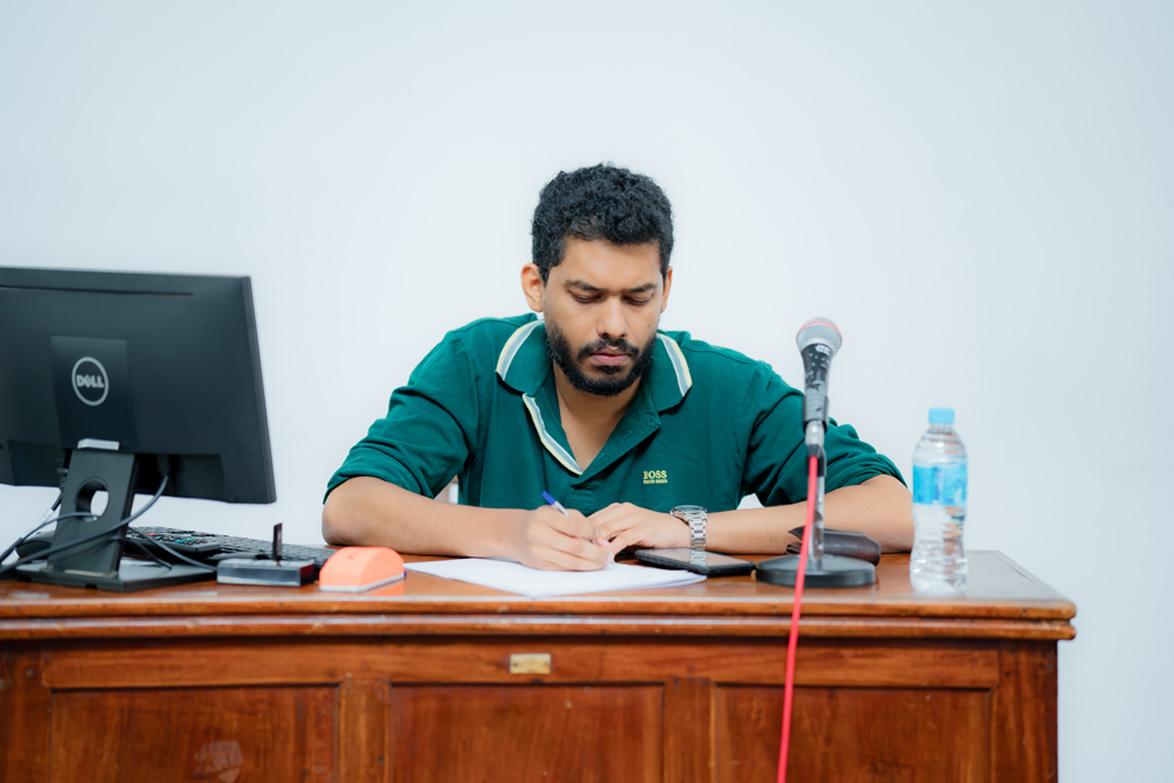
In a country where education, law, and civic consciousness intersect in shaping future leadership, Gimhan Sooriyabandara stands as a compelling example of multidisciplinary influence. An Attorney-at-Law of the Supreme Court of Sri Lanka, political science scholar, lecturer, author, and debate mentor, he has dedicated his career to cultivating analytical thinking and democratic awareness among young Sri Lankans. With academic grounding in law and political science and years of experience teaching and coaching across leading schools and higher-education institutions, he has become a respected educator in English-medium political science and civic discourse. Beyond the courtroom and classroom, he is also the founder of the Colombo Independent Debaters’ Society and an author of multiple books spanning politics and literature, reflecting a deep commitment to public reasoning and intellectual culture. His work sits at the intersection of advocacy, education, and youth empowerment shaping not only students’ academic futures but also their civic identities. In this conversation, we explore the journey, philosophy, and legacy of a professional devoted to building thinking citizens in a complex democracy.
Your career uniquely bridges law, political science, education, and debating. Looking back, what formative experiences first convinced you that shaping young minds, rather than practicing law alone, would become your central life mission?
There was a point in my life when I realized that the courtroom and the classroom were asking very different things of me, but the classroom was asking something more urgent. As a lawyer, I can affect one case and one life at a time, and that is important work. But when I began teaching Political Science to Advanced Level students, I saw something else happening. These were young people engaging with ideas like sovereignty, constitutional rights, and governance for the first time in a structured way, and they were eager to learn. They began asking questions the curriculum never required, deeper questions that connected theory to reality and showed a genuine interest in the world around them. That is when it struck me: if I could influence how young minds think about power, justice, and democracy before they enter the workforce, I was doing something with a much longer reach. One case can change one life, but a classroom, if used properly, can quietly change the course of hundreds. That realization did not make me leave the law; it made me refuse to leave the classroom either.
As both an Attorney-at-Law and political science educator, how do you see the relationship between legal literacy and democratic citizenship in Sri Lanka today? Are we producing legally aware citizens or merely exam-oriented students?
Honestly, we are producing students who are good at knowing but not good enough at understanding. I see it often: they can define separation of powers, cite constitutional provisions, and score well in exams, but struggle to apply those ideas to recent political developments.
That gap matters because democratic citizenship is not an exam it is an ongoing practice of interpretation and informed judgment. Until we treat political awareness as a skill to be practiced, not just memorized, students will know the definitions of democracy without truly living inside it.
You have spent over a decade teaching political science in English medium and mentoring debaters across leading schools. What patterns do you observe in how Sri Lankan youth engage with politics and governance and how has that engagement evolved over the past decade?
The shift has been striking. When I started teaching, students were cautious and hesitant to criticize policies or political figures openly. Political opinion felt private. That has changed completely. Students now come to class with strong, already-formed opinions, and they are not shy about expressing them, social media has played a major role in that. The challenge now is helping them engage with more depth and less noise. Teaching Political Science in English medium at A/L level gives me a unique window into this, because these students are already thinking across a wider register and engaging with ideas linked to global discourse.
Founding the Colombo Independent Debaters’ Society suggests a belief that argumentation is a civic skill, not merely a competition activity. What role does debate play in strengthening democratic culture, especially in societies marked by polarization or misinformation?
I see the classroom and the debating floor as two sides of the same coin. In the classroom, students gain the framework. In debate, they learn to use that framework in real time, under pressure, against disagreement. You need both. Framework without voice creates a thinker who cannot persuade; voice without framework creates an arguer who cannot think. In a society shaped by misinformation, slogans, and tribal loyalties, the ability to build a reasoned argument and truly listen to one, is not just a debating skill. It is a democratic survival skill.
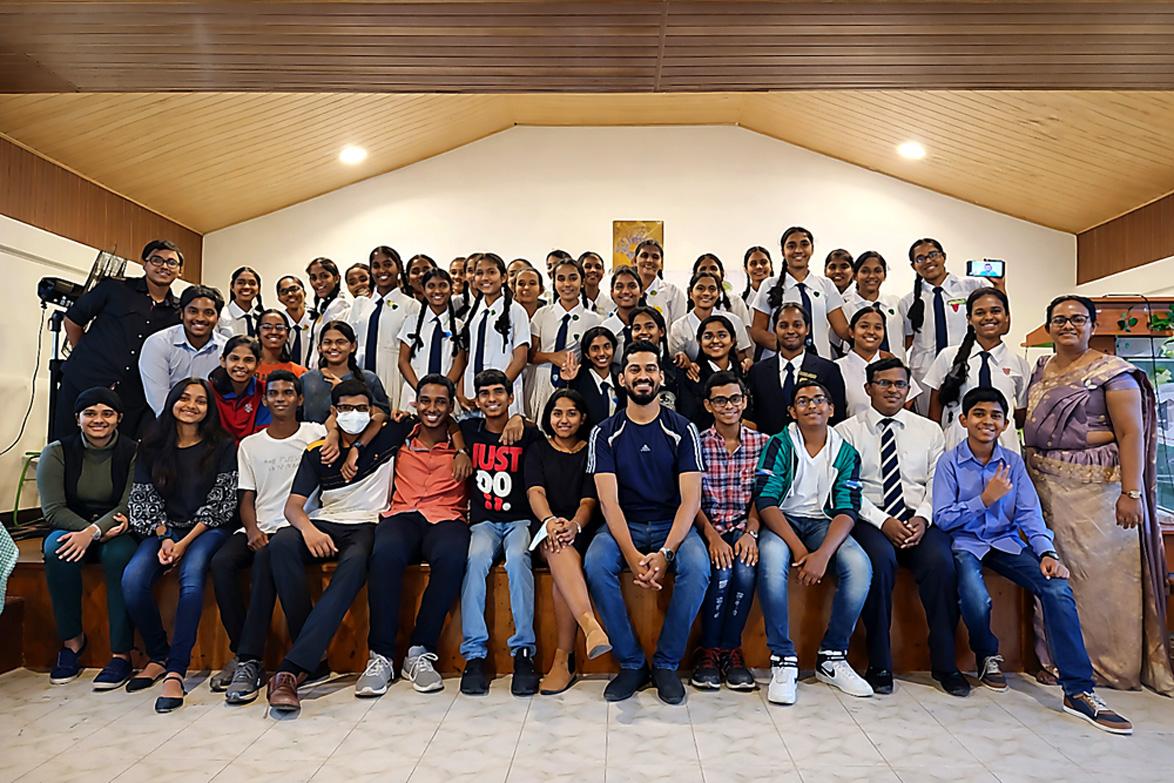
Your work spans both elite urban institutions and diverse student communities. How do educational inequality and language access shape political awareness in Sri Lanka and what structural changes would you advocate to close these gaps?
This is something I feel very directly. When a student wants to pursue law, public policy, or international relations in this country, they will at some point need to engage with political ideas in English in courtrooms, in policy documents, in international forums. That preparation needs to begin at A/L level. But English-medium Political Science teaching at that stage is not widely available. It is not a luxury that is being offered to a few, it is a necessity that is missing for many. What I do is an attempt to fill a structural gap that the system has left open. If we are serious about producing a generation that can engage meaningfully with governance and policy, we need to make rigorous, English-medium political education accessible far beyond the handful of schools that currently offer it. Language should be a bridge into public life, not a barrier standing in front of it.
As an author of both political science texts and literary works, you move between analytical and creative modes of expression. How does storytelling complement scholarship in communicating complex political ideas to younger audiences?
I discovered this almost by accident in the classroom. Concepts like legitimacy, sovereignty, and constitutional morality can be explained accurately but still feel flat. Students may understand the words without feeling the weight of the ideas. But once those concepts are anchored in a historical moment, a real crisis, or a human story, something shifts. The questions get better. Storytelling does not simplify political ideas it shows students that these are real frameworks societies have fought over, lived under, and even died trying to change. That is when they remember why it matters.
You entered the legal profession during a period of significant constitutional and political turbulence in Sri Lanka. How has practicing law in such a context shaped your views on justice, institutional integrity, and the rule of law?
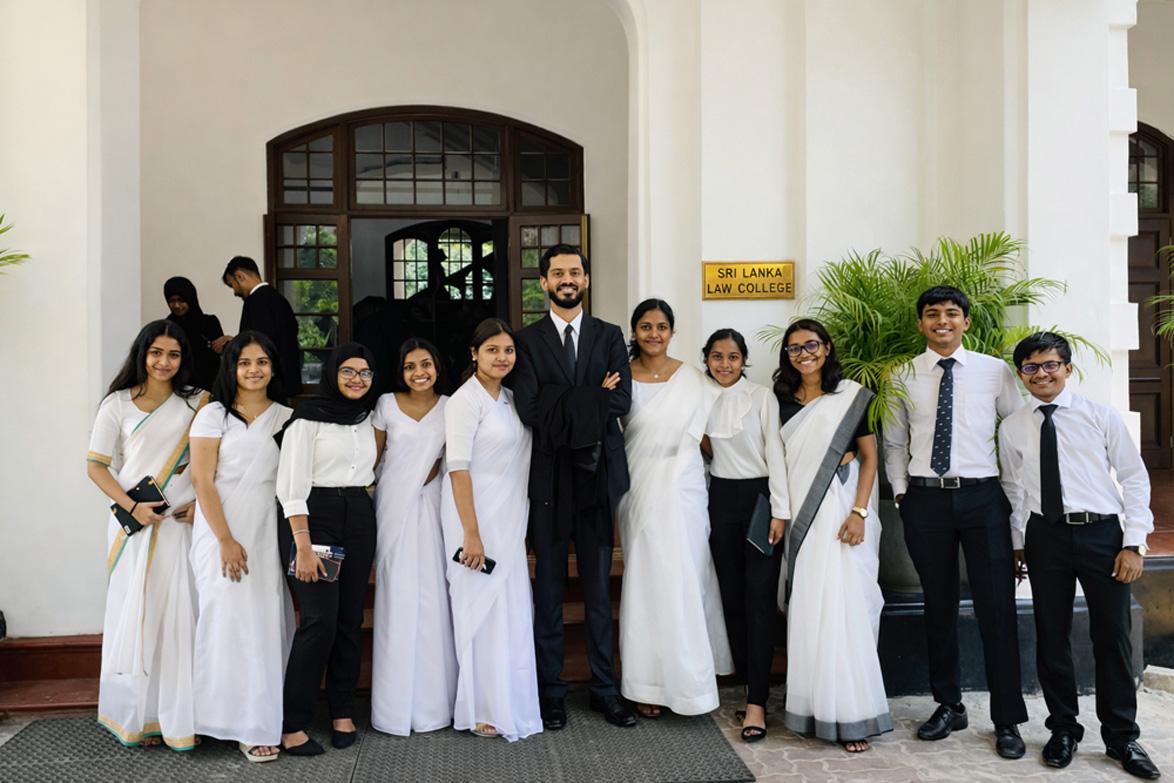
I entered the profession in 2020, in the batch that took our oaths wearing masks during the pandemic, an unusual beginning in itself. Two years later came the economic crisis and the Aragalaya. I worked with juniors from the Faculty of Law, University of Colombo, to organize a legal aid camp at the Galle Face protests. What we did was ground-level constitutional education: explaining fundamental rights, the rule of law, and what sovereignty looks like when people choose to exercise it. I was barely two years into my career, yet already at the intersection of law and lived political reality. That experience shaped me permanently.
Many of your students pursue law as a career after studying under you. What ethical or intellectual qualities do you believe are most essential in the next generation of Sri Lankan lawyers and are current legal education pathways nurturing them adequately?
I’m fortunate to work in two parallel roles: as a practicing lawyer and an A/L English Medium Political Science tutor. Many of my former students are now entering legal education, and I feel a special responsibility toward them because I knew them before the system shaped them. What I try to build in that time is what the formal curriculum often misses: awareness of the world, of current affairs, and of the habit of forming independent, considered opinions instead of absorbing the loudest social media narrative. A lawyer who cannot think independently is a liability to the client, the court, and the profession. Legal education often focuses on substance more than character.
You operate simultaneously as educator, mentor, and public thinker. How do you personally define “legacy”? When you reflect decades from now, what impact on individuals or society would make you feel your work truly mattered?
I’ll be honest, I did not set out to build a legacy. At first, I simply valued spending time with young people and helping them learn how to think and carry themselves as citizens and professionals. I genuinely enjoyed it.
But after years of doing this consistently, and now seeing former students enter their professions, public life, and build their own paths, I realize something has accumulated without me planning it. Legacy, to me, is not something you intentionally construct. With genuine intention, consistency, and responsibility, year after year, student after student, it builds itself.
Finally, Sri Lanka is at a moment of political re-imagination, with young citizens increasingly vocal about governance and accountability. What gives you hope about the country’s intellectual and civic future and what concerns you most?
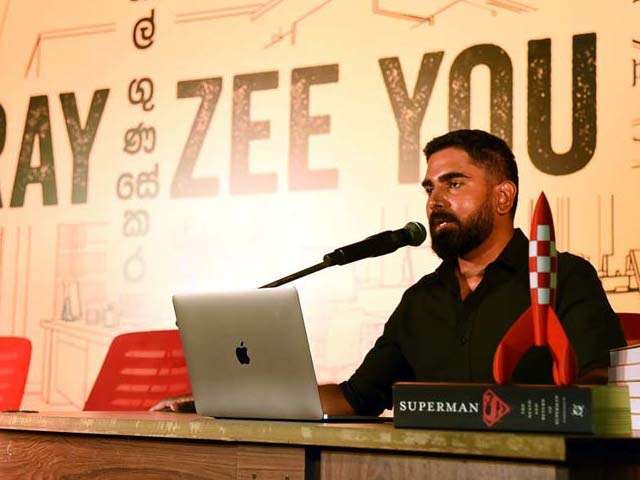
Every time I attend a debating event whether in English, Sinhala, or Tamil, I watch young people argue seriously and passionately about politics, economics, justice, and governance. It reminds me that we are not short of talent, intelligence, or potential. In many cases, this generation understands the country’s problems better than those managing them. That gives me real hope. Sri Lanka’s greatest resource has always been its people, and the young people I meet through debate, classrooms, and mentorship remind me of that constantly. My concern is whether we will give them the right environment to grow. Talent without guidance, access, and institutional support either goes to waste or goes abroad.