Meandering Moods: An Intimate Conversation with Artist Shanthi Shanmuganathan
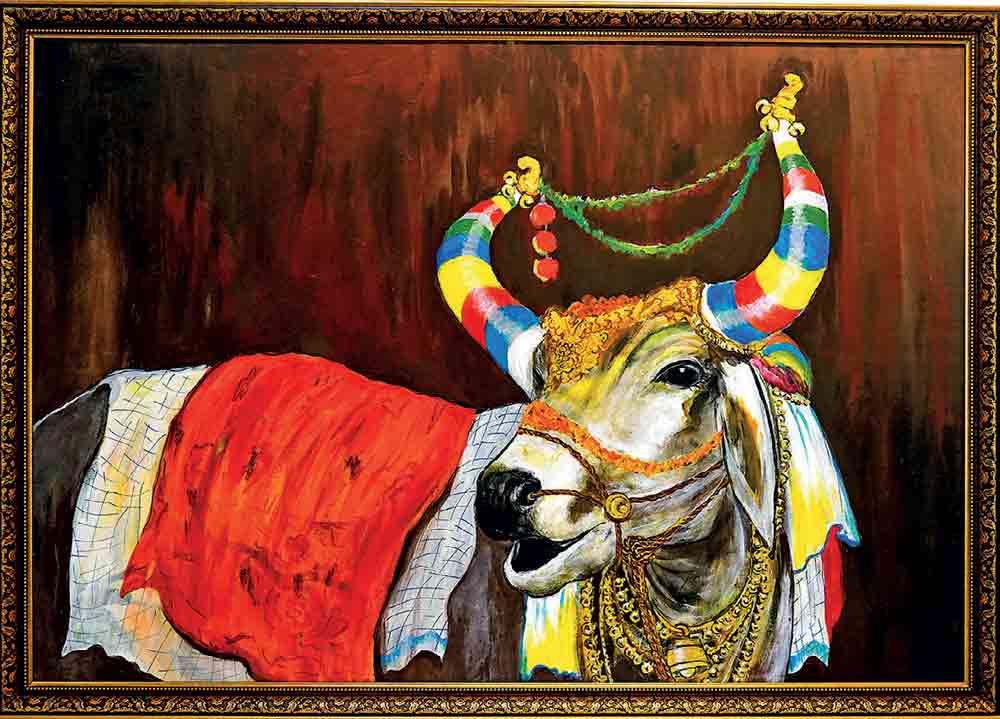
In her latest exhibition, Meandering Moods, artist Shanthi Shanmuganathan invites viewers to journey through a kaleidoscope of emotion, culture, and memory. Drawing on a rich tapestry of personal experience, ancestral heritage, and the landscapes of both Sri Lanka and India, Shanthi’s work embodies the gentle flux of feeling that characterizes human life. Each painting, whether bursting with vibrant colour or rendered in contemplative black and white, carries a narrative that is at once deeply personal and universally resonant. Her work reflects not only an engagement with the traditional arts of the Indian subcontinent, including Madhubani, Kalamkari, and Pattachitra, but also an exploration of Sri Lanka’s history, flora, and fauna, interwoven with a contemporary sensibility. Beyond aesthetic expression, Shanthi’s practice embodies social responsibility, with the proceeds of the exhibition supporting critical charitable initiatives. Meandering Moods is, in essence, an invitation to pause, reflect, and feel.
The term meander signifies a wandering movement, much like the course of a river within its basin, at times gentle and flowing, at times deeply curved, at other moments almost straight. In the same way, my paintings embody a range of emotional states and moods, shifting in form and expression as they evolve. Meandering Moods captures the essence of this fluidity, reflecting both the unpredictability and the gentle rhythm of emotional life. The title emerged naturally as I observed the interconnectedness of the works and realized they shared a common pulse, a journey of moods and moments expressed through colour, form, and narrative.
Q How would you describe the emotional journey you want viewers to experience as they move through the exhibition?
Most of my paintings are guided by the presence of joy, expressed through happy faces, both human and animal alike. Through these expressions, I hope to create a quiet exchange of positivity between the artwork and the viewer, trusting that the warmth I place on the canvas will be felt in return. By working in a thoughtful balance of vibrant colour and timeless black and white, I embrace diversity not only in technique but in emotion. Each piece, whether vivid or restrained, carries its own voice, yet all are united by a shared intention to evoke optimism, harmony, and a gentle sense of delight.
Q Many of the works seem deeply introspective. Are these paintings drawn from personal experiences, observation, or imagination?
My parents are originally from India, and frequent travels to rural villages during my childhood left a lasting impression in my heart and soul. These experiences deeply shaped my visual memory and cultural sensibility. The warmth of the people, the rich textures of village life, the vibrant wall murals, and the traditional drawings and patterns have remained vividly etched in my mind over the years.
My artistic practice is largely inspired by these early memories and observations. I draw from the visual language of rural India, its colours, symbols, and narratives, while interpreting them through my own imagination. Alongside direct inspiration from lived experiences, I explore imaginative compositions that blend memory, emotion, and cultural heritage. Through my work, I seek to preserve the re-envisioning of these enduring impressions, transforming them into contemporary artistic expression that reflects both traditional and personal vision.
Q Can you talk about your choice of colour palette in this exhibition and how colour helps convey mood or memory?
When asked about my favourite colour, I find it impossible to choose just one. I appreciate the entire spectrum, from the quiet earthiness of yellow ochre to the bold intensity of vermillion, red, from the brilliance of radiant white to the profound depth of jet black. Each colour carries its own mood, memory, and meaning. Some whisper, some blaze, some ground us, and others invite us into mystery. Together they form a language richer than any single shade could ever express. Any colour, when thoughtfully combined and applied with artistic sensitivity, can contribute to a visually compelling and aesthetically pleasing composition. As a Hindu, my artistic expression is deeply influenced by cultural and spiritual traditions, which is reflected in the frequent use of vibrant hues across most of my paintings.
Q Your figures appear grounded yet contemplative. How do you approach portraying inner life and stillness on canvas?
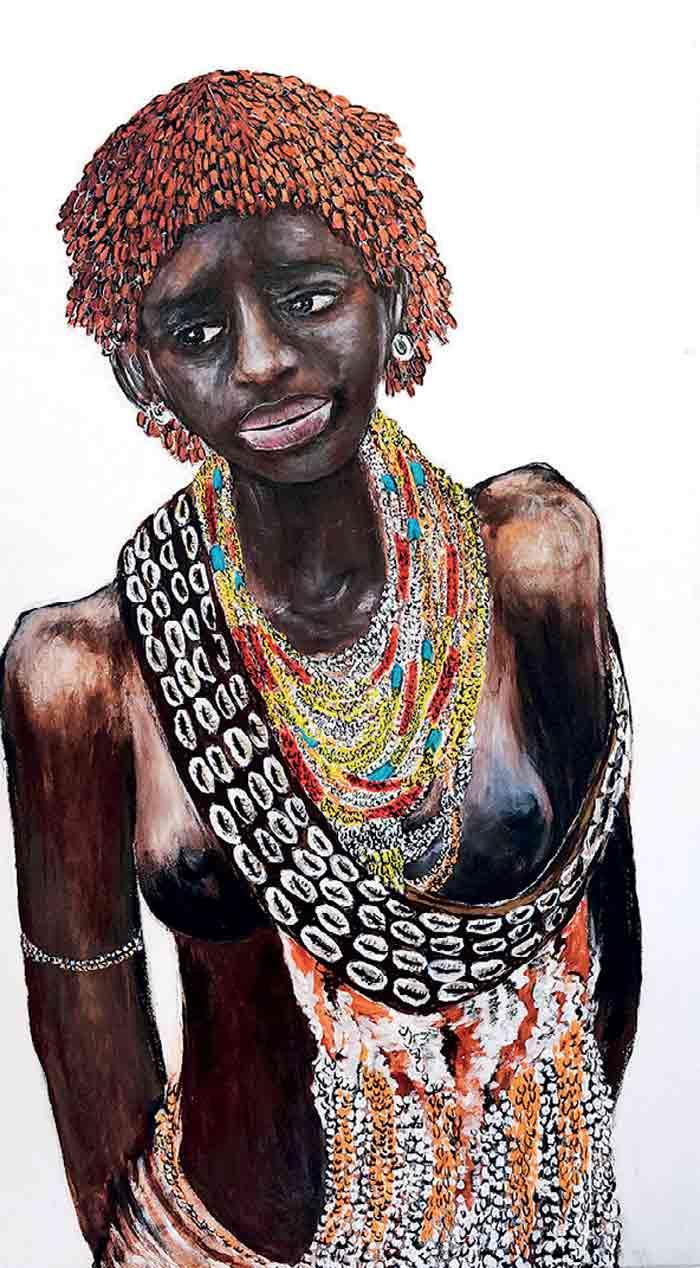
I have always had a strong inclination towards drawing and painting figurative subjects, with particular emphasis on historic, folkloric, and tribal representations. Continuing this artistic pursuit, I have once again selected a range of themes that prominently feature multiple figures, allowing for a deeper exploration of narrative, culture, and human expression. Madhubani painting or Mithila Art is an ancient folk art from the Mithila region of India believed to date back nearly 2,500 years, potentially to the Ramayana era. Centuries ago, women first made Madhubani paintings on freshly plastered walls and mud huts. Plant dye, cow dung, and bamboo sticks were the tools in that era. This art has evolved from being painted on mud huts to being depicted on cloth, paper, and canvas, making it more accessible. Another art form I have worked with is Kalamkari.
My aim as an artist is to engage viewers with the rich history of art and its evolution across centuries, highlighting the diverse forms it has taken over time.
Kalamkari is a 3,000-year-old textile art of Andhra Pradesh known for hand-drawn imagery on cloth using natural dyes. This art flourished during the Vijayanagara Empire and Mughal era. It depicts Hindu mythology, the Ramayana, and religious themes, and is now widely adapted into clothing, jewellery, paper, and canvas. Pattachitra or Bengal folk art is a vibrant and witty style of painting originating from the eastern province of Odisha and West Bengal in the 12th century. It tells the rich mythological and folklore traditions of the region and celebrates human expression through bold figures and intricate narratives.
Q What role does Sri Lankan identity, culture, or landscape play in shaping these works, whether consciously or subconsciously?
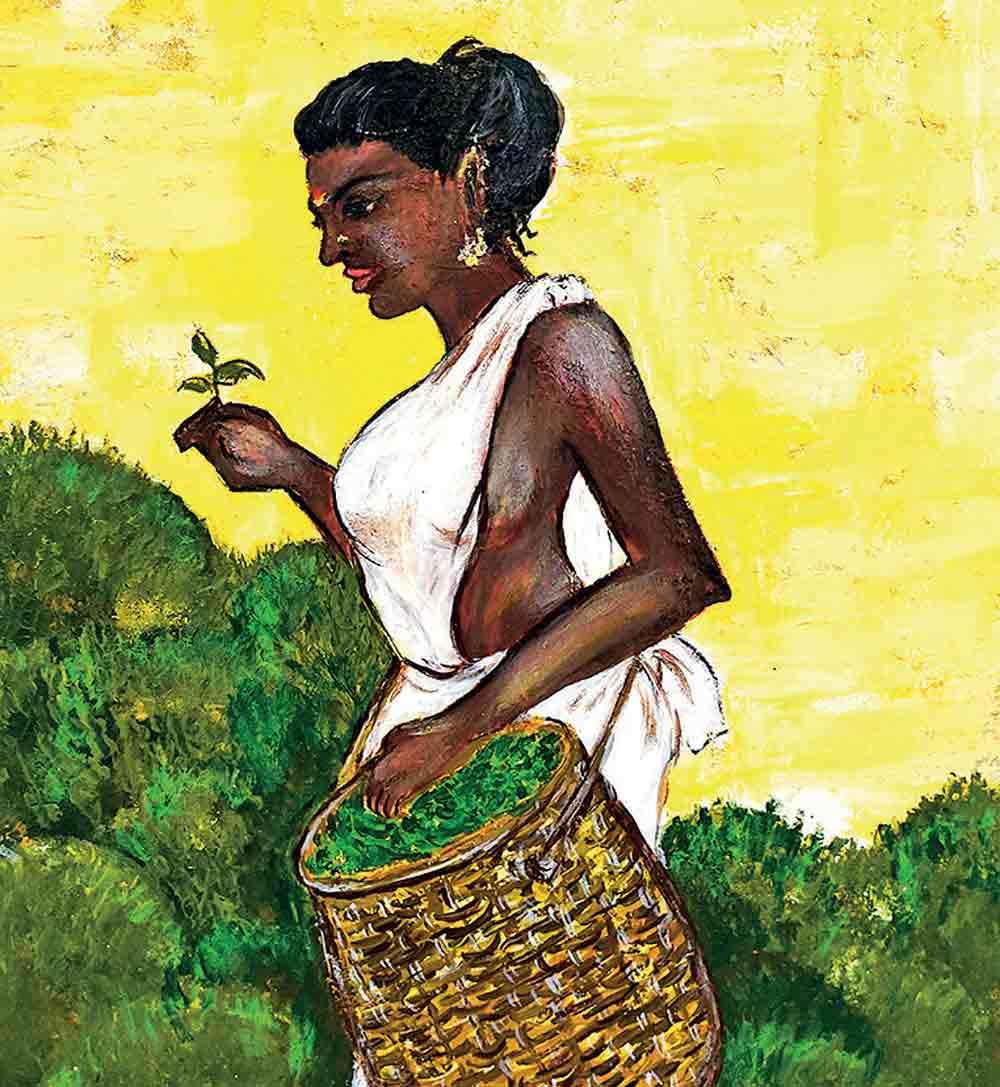
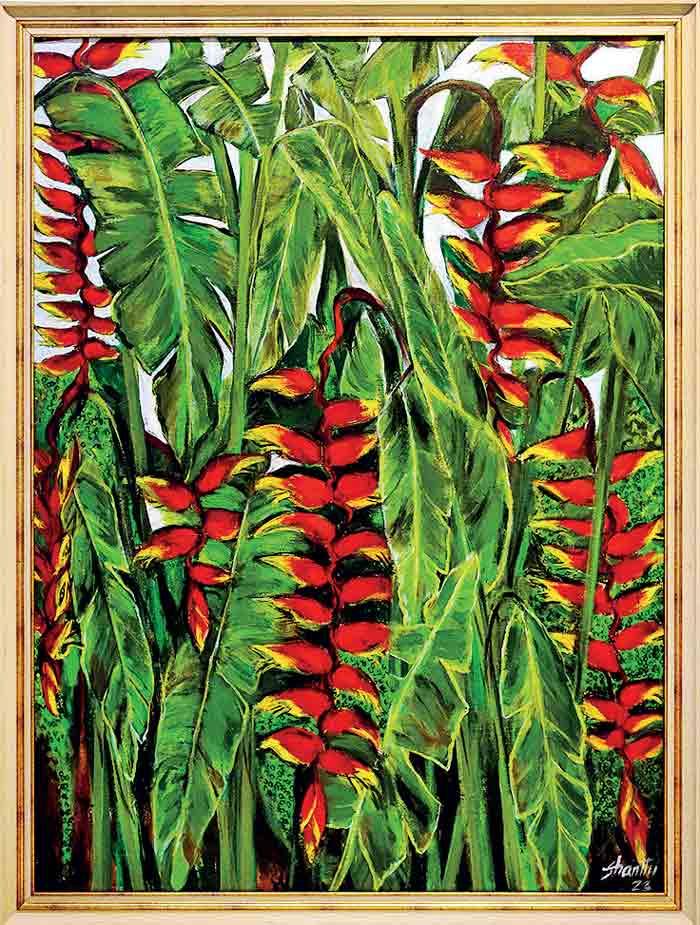
The most important theme I have portrayed here connects to Sri Lanka. Malaiyagam 200 commemorated 200 years since the arrival of the Hill Country Tamils from South India to Sri Lanka in the year 1823 as indentured labourers for the emerging coffee and later tea plantations. The year 2023 marked this historic bicentenary, honouring a journey of sacrifice, endurance, and resilience. Across generations, the Hill Country Tamil community has preserved a distinct and vibrant heritage reflected in festivals such as Thai Pongal, Deepavali, Kaman Koothu, and Karthigai Deepam, in folk music, temple traditions, colourful attire, and communal living. This enduring culture is not merely a memory of the past, but a living legacy of identity and pride. Through art, narrative, and imagery, Malaiyagam 200 captures the soul of the people, the weight of their sacrifices, and the strength of their spirit. It is a story that continues to unfold across the hills of Sri Lanka. I have also created works that celebrate the flora and fauna of our island. Heliconias from Sri Lanka have become very popular globally for Ikebana and floral art, and I have incorporated these iconic forms into my paintings.

Q Was there a particular moment or turning point that inspired you to create this collection now?
My first solo exhibition was held in 2023, marking a significant milestone in a journey shaped by years of dedication to painting on canvas. While I have been creating artworks consistently over the years, the period of the global pandemic proved especially transformative. Spending nearly a year indoors provided an unexpected opportunity to work intensively, resulting in a substantial body of work. The 2023 exhibition met with notable success and was organized in support of two charitable causes, benefiting my alma mater in Kandy and the Rotary Foundation. The encouragement received through this experience has been deeply motivating, fostering a continued enthusiasm for learning and experimenting with new painting techniques. Extensive research, particularly through online resources, has further enhanced my technical skills and creative expression. The current collection features around 40 works, each reflecting an evolving artistic vision and commitment to continuous growth.
Q How does your artistic process usually unfold, from initial idea to finished painting? Is it intuitive or structured?
I draw inspiration from photographs, which often serve as a starting point for my creative process. What interests me most is capturing movement, along with features and expressions that convey emotion and character. While I may begin a painting with a clear idea in mind, the work often evolves organically. Midway through the process, the narrative and even the colour palette may transform entirely. This fluid journey of change is reflected in the title Meandering Moods. I gather ideas from diverse sources and reinterpret them through my own perspective. I believe this approach allows an artist to learn continuously, refine their skills, and develop an authentic artistic voice.
Q Are there recurring symbols or motifs in the exhibition that viewers should look out for?
Malaiyagam 200 captures the breathtaking beauty of the land and the richness of its traditions, reflecting the many cultural and social threads that shape the region. Beneath this visible charm lies a deep and enduring history of suffering experienced by its people over generations. This is an aspect that deserves thoughtful reflection. If this work can evoke even a small measure of awareness within society about these lived realities, it would stand as a meaningful and deeply personal achievement for me.
Q How do you balance technical precision with emotional expression in your work?
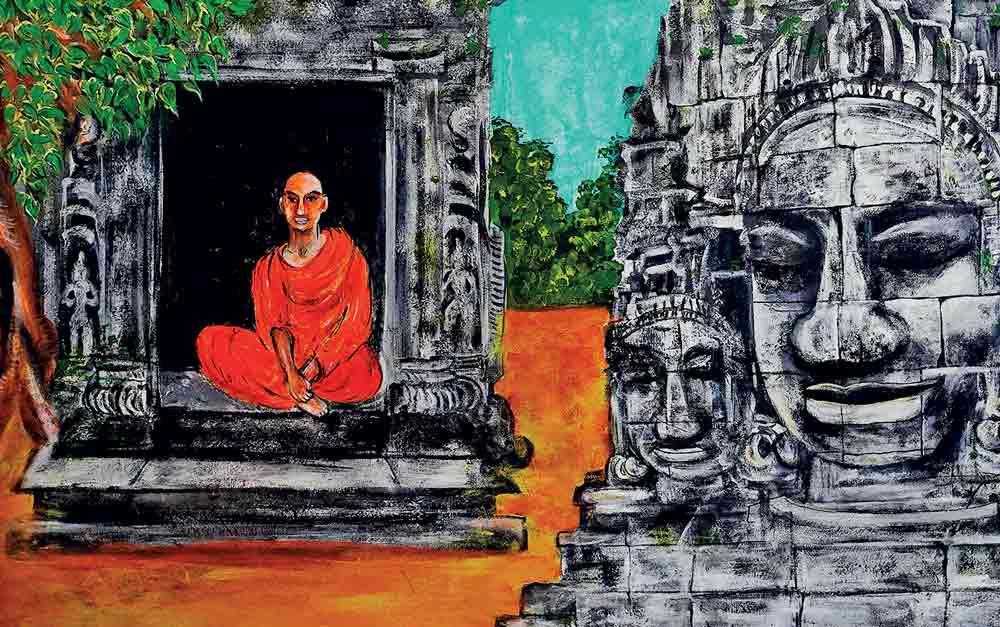
I have done a series of texture paintings that create a distinct three-dimensional effect. This medium is particularly demanding, as the material dries rapidly once applied to the canvas. It requires meticulous planning and great care at every stage of execution. To ensure precision and avoid unnecessary mess, I complete the final sketch separately on paper and then transfer the refined outcome onto the canvas. I am deeply moved by ancient temple pillars crafted centuries ago, which continue to bear testimony to extraordinary artistic skill and devotion. Their intricate details and enduring strength are both humbling and inspiring. Through texture art, I attempt to evoke a resemblance of those timeless surfaces and reliefs, translating their depth and spirit into contemporary artistic expression.
Q Has your style or perspective evolved since your earlier exhibitions, and if so, how is that reflected here?
At times, I reflect on my previous exhibition and question my decision to display certain works, feeling that they still required further refinement. This self-assessment has been an important part of my artistic growth. For the forthcoming exhibition, I have consciously aimed to move a step ahead of my earlier work. Although the number of paintings on display is significantly fewer than last time, I feel a deep sense of contentment with both the quality of the work and its overall presentation. While the style and colour schemes may bear similarities to my earlier creations, this body of work reflects greater maturity, clarity, and confidence in my artistic expression.
Q What do you hope stays with viewers after they leave the gallery? A feeling, a question, or a sense of recognition?
My aim as an artist is to engage viewers with the rich history of art and its evolution across centuries, highlighting the diverse forms it has taken over time. With this approach, I explore innovative techniques on canvas, including controlled paint drips that invite viewers to perceive the work in new and unexpected ways. The paintings are meant to evoke joy and happiness, with vibrant colour themes that encourage reflection and contemplation. I have incorporated sewing techniques into jute-based artworks, adding a distinctive and unconventional texture that gives each piece a unique character. Through this blend of traditional and experimental methods, I hope to offer the audience an immersive and memorable experience of art that bridges history, technique, and emotion.
Q This exhibition supports charitable causes. How important is social responsibility to you as an artist?
Every year, over 3,000 children are born with congenital heart disease in Sri Lanka, and only around 900 children are able to get surgery and lead a normal life. The rest succumb to the disease due to shortages of doctors, operation theatres, trained staff, and high costs. Rotary clubs in Sri Lanka help facilitate surgery in private hospitals in Sri Lanka and at Amrita Hospital in Kochin, India, completely free of charge. They also send nurses and perfusionists for training to assist Sri Lankan doctors. The clubs are equipping the paediatric cardiology unit with state-of-the-art equipment to allow more surgeries to be done locally.
With this in mind, I have proposed to donate the proceeds from the exhibition to fund these projects through Rotary Colombo East, where my husband Shan has been a member for over 30 years.
Q How do you respond when viewers interpret your work in ways you did not originally intend?
The selection of artwork for this exhibition has been influenced largely by viewers’ preferences. During my previous exhibition, several visitors expressed a desire to see more works depicting flora and fauna. Taking this into consideration, I have created a series of floral paintings for the forthcoming exhibition. As an ardent practitioner of Ikebana and a passionate floral artist, I particularly enjoy capturing the beauty of flowers, focusing on the exotic blooms of Sri Lanka, including Heliconias and Niangalas.
Q Looking ahead, where do you see your artistic journey going after Meandering Moods?
After this exhibition, I am already planning to hold another exhibition within the next year or two. A portion of the proceeds from Meandering Moods was pledged for the Little Hearts Foundation. I intend to dedicate the next exhibition to aiding the victims of Cyclone Ditwah, focusing on the second stage of relief and rehabilitation efforts. The impact of Cyclone Ditwah has been long-lasting, and the road to recovery remains challenging for many affected communities. Essential repairs and reconstruction will take several more years, and continued support is vital to restore normalcy. Through this upcoming project, I hope to contribute meaningfully to these efforts, providing assistance and hope to those still grappling with the aftermath of the disaster. I sincerely pray that circumstances allow me to undertake this project successfully, and that through art and compassion, we can make a tangible difference in society.