
India on a Global Stage: Indian Celebrities at the BAFTAs 2026 and Raw Mango at London Fashion Week 2026
By late February 2026, London became the setting for a quietly powerful double moment for India. Over the course of a few days, the city hosted two of the world’s most influential cultural platforms, the BAFTA Film Awards and London Fashion Week. On both stages, Indian talent and aesthetics were not simply present. They were central to the story. From cinema to couture, the message was clear. India’s global presence today is not about fleeting visibility. It is about authorship, confidence and the ability to define modern culture on its own terms.
The BAFTAs have long been a bellwether of international recognition. When Indian celebrities attend, the attention often settles on red carpet glamour and celebrity sightings. In 2026, the narrative moved beyond optics. Indian artists and producers were woven into the ceremony itself, from presenting roles to award wins. The evening reflected a shift in how Indian cinema is positioned within global film culture. It is no longer framed as an outlier or a curiosity. It is being acknowledged as part of the mainstream conversation about storytelling, craft and influence.
One of the most visible moments of the night came with the presence of Alia Bhatt as a presenter. Her role carried symbolic weight. Presenting at the BAFTAs places a star within the core choreography of the ceremony. It signals familiarity and institutional recognition rather than polite inclusion. For Indian audiences watching the ceremony unfold, this moment felt like a recalibration of status. A Bollywood leading lady was not merely attending an international awards night. She was part of how the night was being narrated to the world.

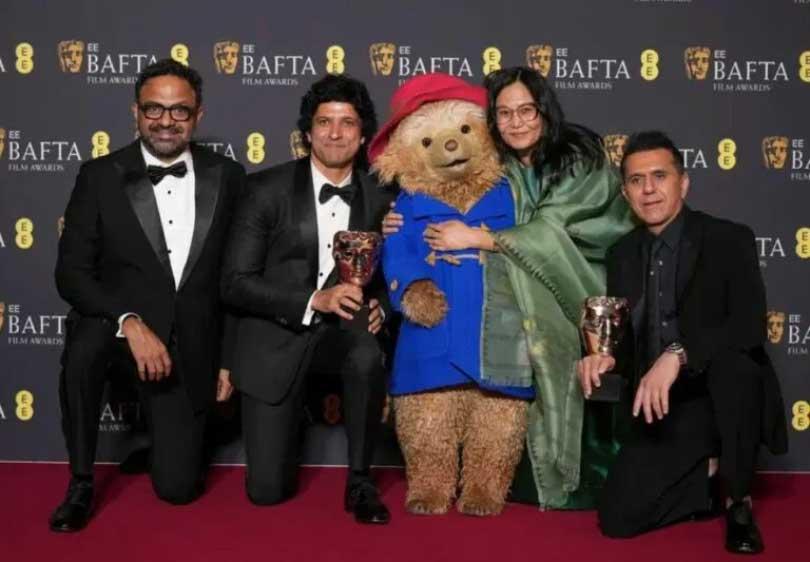
Around her, other Indian film personalities reinforced the sense that this was not a one-off cameo. Farhan Akhtar attended the ceremony with Shibani Dandekar, and their presence felt less like a celebrity appearance and more like a professional milestone. Indian producers and actors have long been building international partnerships and festival credibility. Seeing those relationships reflected on a platform like the BAFTAs suggested that these efforts are bearing fruit in the most visible arenas.
The most consequential moment of the evening, however, arrived not in the form of fashion photography but in an awards announcement. The Manipuri language film Boong won in the Best Children’s and Family Film category. This marked a significant first for Indian cinema in that space and carried implications far beyond a single trophy. The win highlighted how stories rooted in specific regional cultures can resonate on global platforms when supported by thoughtful production and international circulation. Backed by experienced producers, the film demonstrated that India’s cinematic future on the world stage does not belong solely to mainstream Hindi cinema. It also belongs to regional voices that reflect the country’s extraordinary cultural diversity.
The emotional resonance of the win lay in its reorientation of what international juries and audiences are prepared to engage with. A film emerging from Manipur, with its own language, rhythms and realities, stood alongside global contenders and was recognised on merit. This kind of recognition changes what gets funded, what gets subtitled and what gets taken seriously by distributors and festivals. It quietly widens the map of global cinema.
The red-carpet moments at the BAFTAs carried their own cultural subtext. Indian attendees were photographed in looks that balanced international couture with elements of heritage and personal style. In some cases, traditional textiles and silhouettes made their way into one of the most formal global fashion arenas of the film world. These choices were not nostalgic gestures. They were expressions of confidence. They suggested that Indian cultural codes do not need to be diluted to be legible in global spaces. They can exist on their own terms and still command attention.
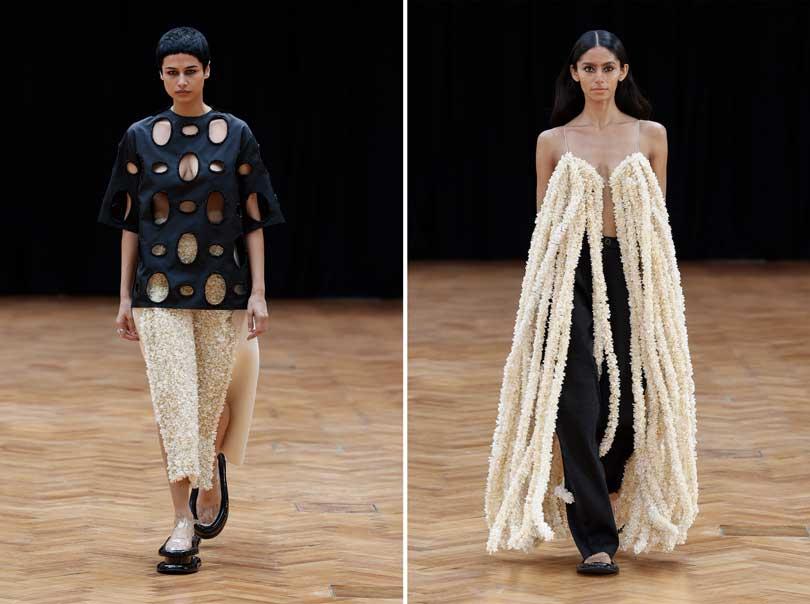
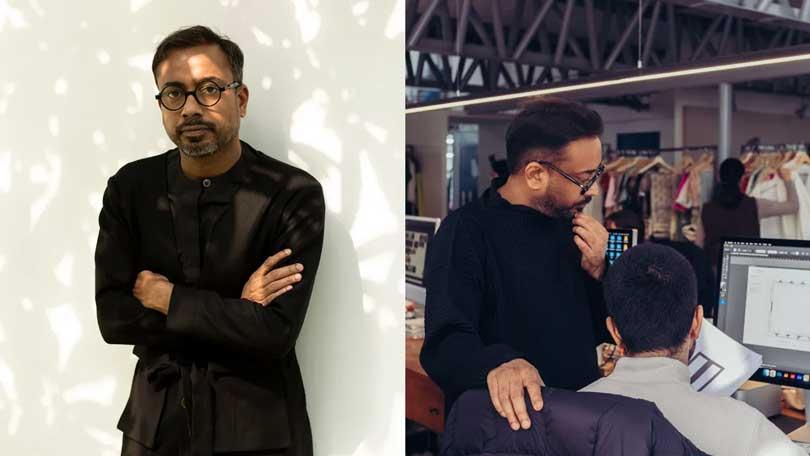
Two days later, London’s cultural focus shifted from cinema to fashion, and once again India found itself in the spotlight. Raw Mango, the Indian label founded by Sanjay Garg, made its official London Fashion Week debut with its Fall Winter 2026 collection. The significance of this moment cannot be overstated. London Fashion Week is not merely a showcase of clothing. It is an ecosystem where design philosophies, cultural narratives and commercial power intersect. For an Indian brand rooted in craft traditions and textile research to enter this arena on its own terms marked a turning point in how Indian fashion is positioned globally.
Raw Mango’s journey to this moment has been slow and deliberate. Founded in 2008, the brand began with a small group of weavers and a tightly curated sari offering. Over the years, it expanded across regions, reviving textile practices and reimagining them for contemporary wardrobes. The London debut did not attempt to repackage Indian craft for Western consumption. Instead, it presented Indian design language as modern luxury, grounded in context and meaning.
The collection, titled It’s Not About The Flower, explored the symbolism of the garland. In South Asia, garlands are everywhere. They are used in religious rituals, celebrations, public ceremonies, markets and moments of mourning. They are intimate and communal at once. By building a collection around this motif, Raw Mango reframed something that global audiences often see as decorative into a cultural signifier with depth and complexity. The clothes drew on colour, texture and form in ways that felt rooted yet unmistakably contemporary.
The presentation itself was thoughtful. Guests received a small photo book documenting garland culture across India. This gesture transformed the fashion show into a cultural exchange. It invited viewers to see beyond the runway and into the everyday lives and rituals that inform the brand’s aesthetic. In doing so, Raw Mango positioned itself not as a label borrowing from culture but as one that exists within it.
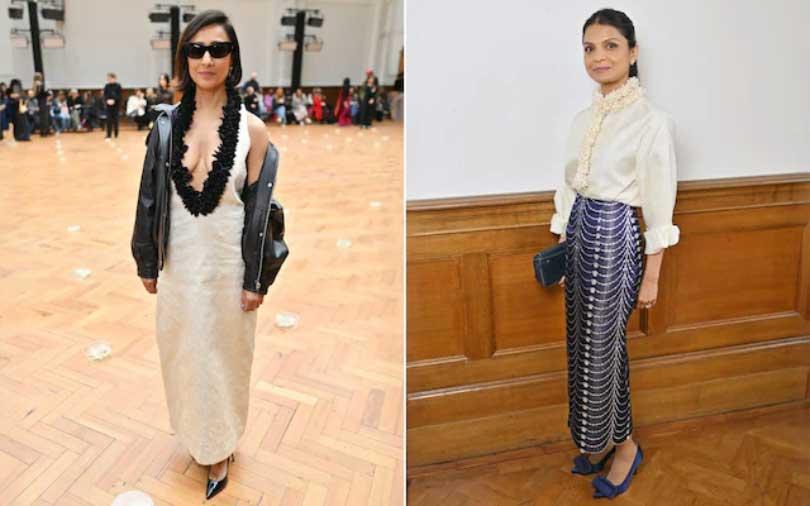
The front row at the show underscored the significance of the moment. Anoushka Shankar, whose career bridges Indian classical music and global contemporary performance, attended in Raw Mango. Her presence felt emblematic of the brand’s ethos. She represents continuity and reinvention, tradition carried forward into new contexts. Akshata Murty was also among those photographed at the show, reflecting how Indian origin figures in Britain occupy multiple cultural spheres, from public life to fashion patronage. The front row became a social map of influence, connecting Indian heritage with London’s cultural elite.
What linked the BAFTAs and Raw Mango’s London Fashion Week debut was not merely timing. It was a shared narrative about India’s evolving relationship with global cultural power. In film, Indian artists are increasingly part of international award circuits not just as attendees but as participants and winners. In fashion, Indian brands are moving beyond being sources of inspiration for Western designers and into positions of authorship within global fashion systems.
This shift is not about India being invited into global culture. India has always been part of it. The change lies in how institutions and industries are recalibrating their understanding of where creative authority resides. Indian cinema is no longer viewed only through the lens of spectacle or scale. It is being recognised for narrative nuance and regional specificity. Indian fashion is no longer framed as ornate or traditional by default. It is being acknowledged as modern design with intellectual depth.
There is also a generational dimension to this moment. Younger Indian artists and designers are navigating global spaces with fluency. They are comfortable moving between contexts without feeling the need to explain or simplify their cultural references. This confidence reshapes how India is perceived. It moves the conversation away from representation toward participation. Indian creatives are not just being seen. They are shaping the rooms they enter.
The economic implications are equally significant. International recognition influences funding, distribution and collaboration. A BAFTA win can change the trajectory of a filmmaker’s career, and the kinds of stories producers are willing to back. A London Fashion Week debut can open doors to global retail partnerships and new markets. These platforms translate cultural capital into tangible opportunities that can reshape industries back home.
Yet the most profound impact may be symbolic. For audiences in India and across the diaspora, seeing Indian stories and aesthetics treated as central rather than peripheral can be affirming. It reinforces the idea that cultural specificity is not a barrier to global relevance. On the contrary, it can be the very source of it. As London hosted these moments in February 2026, the city became a mirror reflecting a broader shift. India’s presence on the global stage is no longer episodic. It is structural. In cinema and fashion alike, Indian creatives are not merely participating in global culture. They are helping to define its present and imagine its future.