IN CONVERSATION ZAHARA ANSARY Country Head Cambridge University Press and Assessments Sri Lanka and The Maldives
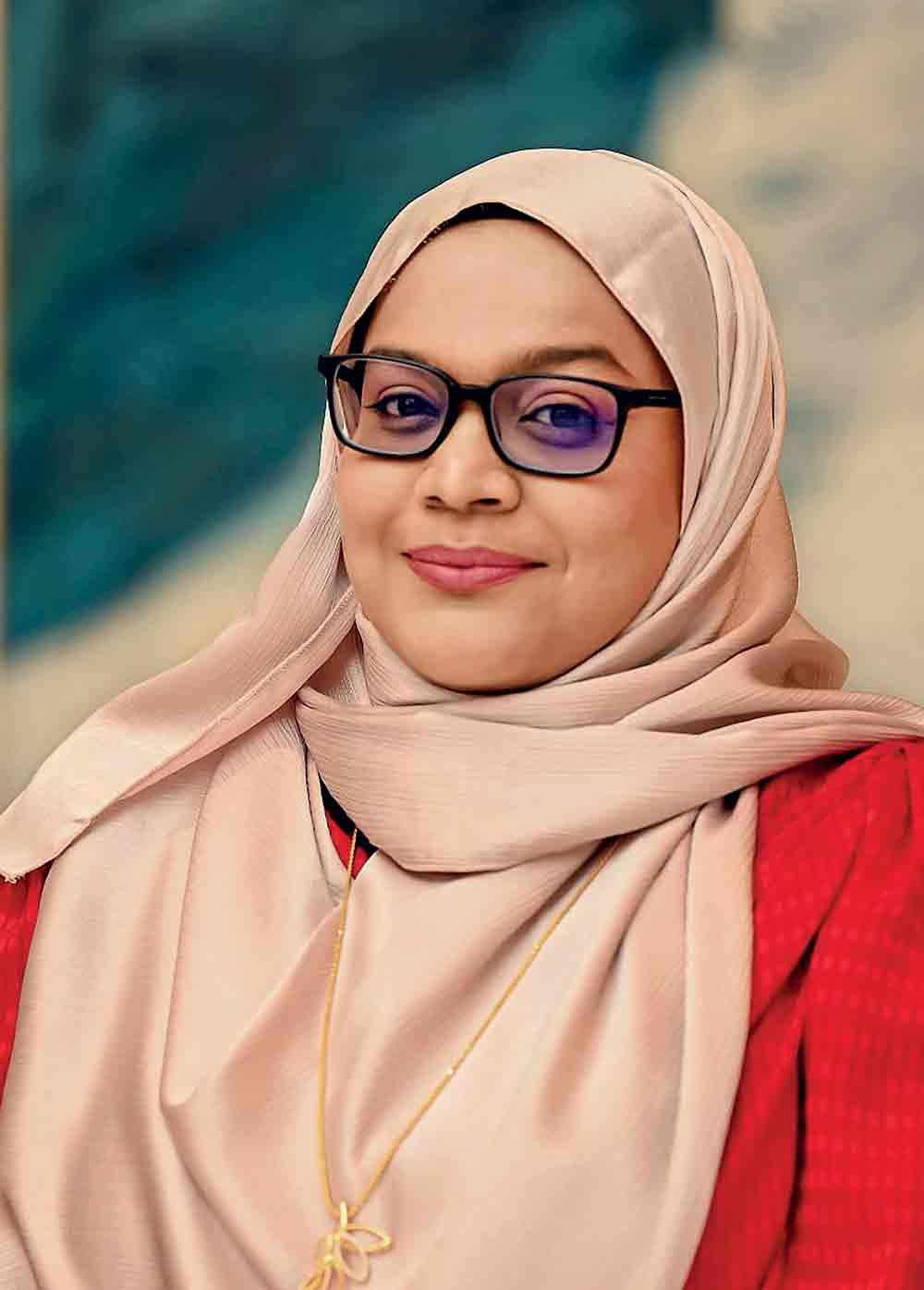
 In an era where leadership demands both agility and authenticity, Zahara Ansary stands out as a rare blend of strategic thinker, purpose driven leader, and passionate advocate for education and equity. Her professional journey spans finance, banking, telecommunications, outsourcing, professional education, and now one of the world’s most respected academic institutions. What makes her story particularly compelling is not just the diversity of sectors she has worked across, but the clarity with which she has continually realigned her career with her purpose.
As Country Head of Cambridge University Press and Assessments in Sri Lanka and the Maldives, Zahara brings together commercial acumen, marketing strategy, and a deep commitment to shaping future ready learners. Balancing senior leadership with motherhood and extensive volunteer work, she represents a modern leadership narrative grounded in values, resilience, and reinvention. In this conversation, she reflects on her career transitions, her vision for education, and the personal foundations that have enabled her to thrive.
Q From management accountant to strategic marketer, your career path is both rare and inspiring. What were the pivotal moments that shaped this transition, and what did you learn about reinvention along the way?
From an early stage, I knew my true interest lay in business and marketing, even as I pursued professional qualifications in management accounting. CIMA provided a strong foundation, equipping me with discipline, analytical thinking, and a deep understanding of how businesses operate. While I enjoy working with numbers, I realized I was not suited to a purely backend role. This became clear during my early experience at Nations Trust Bank, where time spent at cash counters and in finance, though valuable, did not energize me. I wanted to engage with people, understand challenges, and help shape solutions. My role at WNS introduced me to finance transformation and business partnering, showing me a more strategic side of finance, yet I still felt drawn to something more creative. That clarity came at Airtel, where my transition from business analysis to marketing confirmed my direction. My later role at CIMA brought everything together, blending finance with marketing and business development. The key lesson I learned is that while a strong foundation is vital, passion is what truly drives excellence.
Q As Country Head of Cambridge University Press and Assessments in Sri Lanka and the Maldives, how do you see the future of education evolving in our region, and what role should industry leaders play in shaping it?
Education in the region is at a pivotal moment as systems shift toward a learner centred, connected, and skills driven approach. Rapid changes in technology, careers, and societal needs mean traditional education models are no longer sufficient. Learning must move beyond memorization to emphasize deep understanding, creativity, collaboration, critical thinking, and emotional wellbeing. Digital tools have an important role, but only when they genuinely enhance learning, while equity must remain central so that all learners, regardless of background or location, have access to quality education and support. Industry leaders play a crucial role in shaping this future by promoting relevant curricula and assessments that prepare learners for real world challenges rather than examinations alone.
They must also help bridge gaps between policymakers, educators, communities, and the private sector. Greater investment in teacher development is essential, as empowered teachers are the backbone of effective education systems. Purpose driven leadership, inclusion, and ethical decision making must guide educational reform. When industry, institutions, and communities collaborate meaningfully, they can build resilient, equitable, and future ready education systems for Sri Lanka, the Maldives, and beyond.
Q You have worked across banking, BPO, telecom, and professional education. Which leadership lessons have remained consistent across these sectors, and which had to evolve?
Across every sector I have worked in, certain leadership principles have remained constant. Humility, integrity, and credibility are non-negotiable. Standing up for what is right, even when it is difficult, is essential. Above all, people matter the most. Organizations succeed or fail based on how leaders value, support, and empower their teams. The networks you build and the trust you earn stay with you throughout your career. What has evolved is how leadership is practiced. Over the years, and particularly through periods of crisis, I have learned the importance of agility, speed in decision making, and the courage to make tough calls. Empathy and emotional intelligence have become more critical than ever. Leaders today must balance performance with compassion, and certainty with adaptability. I have been fortunate to work with many inspirational leaders who helped me grow, and I have also faced challenging experiences that taught me valuable lessons about what not to do. Both have shaped me into a more grounded and conscious leader, constantly learning and evolving.
Q As a mother of two young daughters and a senior education leader, how do you balance the demands of family life with a highly demanding career?
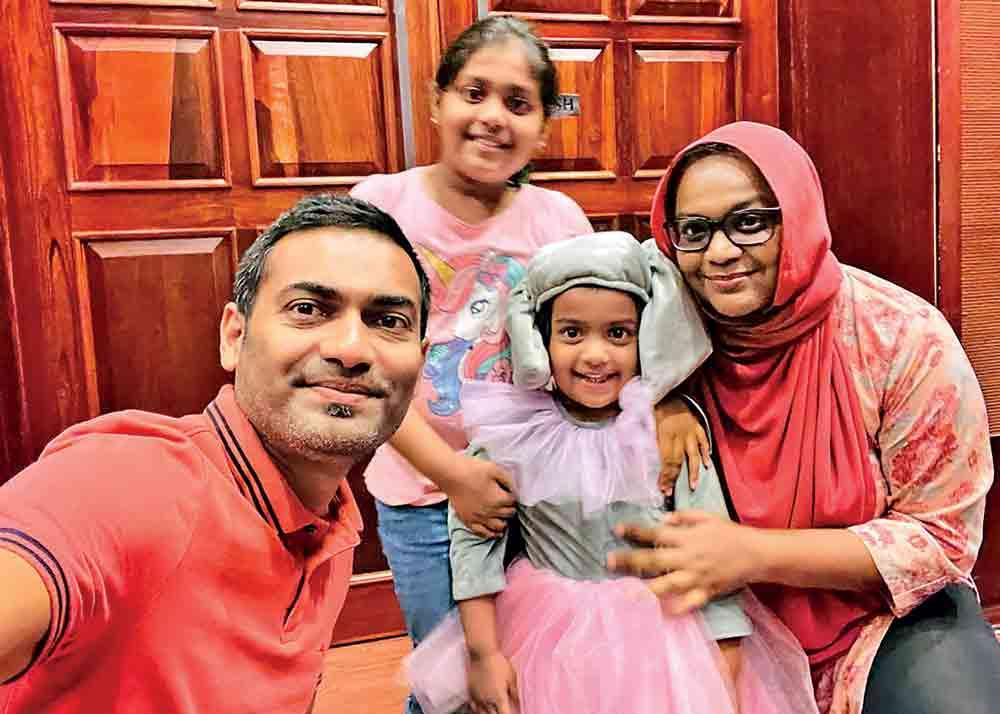
Balance, for me, is made possible entirely by the village around me. I am deeply grateful for my support system. My husband has been unwavering in his encouragement and belief in me. Our house-help Sumathi, and Dayo who steps in when needed, my aunt, and my sisters in law Zuhra and Dilshy all play a role in ensuring our children are cared for, especially when both my husband and I are tied up with work commitments. I travel overseas frequently, and knowing my children are safe and loved gives me peace of mind. We are very intentional about our time. Weekends are largely reserved for the children, their classes, and recreational activities. We share a family calendar where every commitment is recorded, allowing us to stay aligned and organized. I am naturally a workaholic, with early starts and late finishes, but my family’s understanding and patience make it possible. They know that I am passionate not only about my professional role, but also about the volunteer work I do across multiple organizations. That shared understanding makes all the difference.
Q You are a strong advocate for girls’ education. What are the biggest barriers you see today, and how can corporates and communities collaborate to remove them?
Despite notable progress, girls continue to face significant barriers to education in Sri Lanka. Access remains a key challenge, as issues such as safe transportation, limited digital access, and concerns around mental wellbeing often prevent girls from continuing their education even when schools are available. Safety, both physical and psychological, is an ongoing concern, compounded by deeply rooted social norms and gender stereotypes that are frequently discussed but rarely addressed in a sustained manner. In recent years, digital bullying has further undermined girls’ confidence and participation.
Meaningful change requires strong collaboration between corporates and communities. Corporates can contribute by offering scholarships, safe learning spaces, digital resources, mentorship, and visible role models, while also implementing flexible workplace policies that support girls and working mothers, including childcare facilities. Communities play a crucial role in shifting mindsets by engaging parents, educators, and religious leaders. Providing girls with opportunities to break traditional barriers and develop language skills, particularly English, enables them not only to stay in school but to thrive, creating lasting benefits for future generations.
Q You often speak about purpose driven leadership. How do you balance commercial results with social responsibility in high pressure leadership roles?
I firmly believe that commercial success and social responsibility are not mutually exclusive. When decisions are anchored in purpose and values, focusing on the why rather than just the what, outcomes naturally align with long term success. Purpose driven leadership builds trust, inspires teams, and creates organizations that are resilient and sustainable. Financial results follow when people believe in what they are building. For me, the true measure of success is the impact we create through our work, on individuals, communities, and society as a whole.
Q What role has your spouse and family support system played in your leadership journey, and how important is partnership at home for success at work?
My family has truly been the wind beneath my wings. My father gave me immense freedom growing up, allowing me to explore opportunities and experiences beyond traditional boundaries. I was the first in my family to travel overseas at a young age for school and later for work. Watching him contribute his time and energy to community organizations instilled in me a deep sense of service, which continues to guide my volunteer work today. My husband has been pivotal in my career. He encouraged me to apply for the role at CIMA while I was on maternity leave, and since then, he has been a constant partner in every sense. He critiques ideas, offers suggestions, and supports the extensive travel my roles require. Partnership at home is critical for any woman’s success at work. I can lead with confidence because I know I am supported. Behind successful women are partners who allow them to shine and who help hold their crown.
Q From your perspective, how does the Sri Lankan education system compare with international education standards in preparing students for global careers?
Sri Lanka’s education system has strong academic foundations and has produced resilient and capable individuals who perform well globally. However, the gap lies in how students are prepared for modern, global careers. International education places greater emphasis on critical thinking, communication, collaboration, adaptability, and real-world application. There is also a stronger focus on digital fluency, wellbeing, and exposure to diverse perspectives. Sri Lanka has an opportunity to build on its strengths by shifting from content heavy learning to skills rich education. Stronger industry linkages, experiential learning, and global competencies are essential. Reforms have begun, but there is still a long journey ahead. One example from the Cambridge curriculum is Global Perspectives, taught from Grade 1, which develops critical thinking, collaboration, and engagement with real world issues. It teaches students how to think, not what to think.
Q How can Sri Lanka integrate global curricula and digital learning without losing its cultural identity?
Sri Lanka can successfully integrate global curricula and digital learning by building on its rich cultural foundation. International education has long existed in the country, adapted to local contexts. Global perspectives do not have to come at the expense of cultural identity. By blending knowledge, skills, and character development, schools can prepare students for the world while celebrating Sri Lankan heritage, languages, and traditions. Digital tools should enhance learning, not replace the values that give education meaning. I am myself a product of international education, yet I remain deeply rooted in local language and culture. This balance is not only possible, but also essential.
Q Finally, what advice would you give to parents navigating education choices in a rapidly changing global landscape?
Parents must recognize that today’s world is very different from the one they grew up in. Staying informed is crucial. Understanding global trends, such as those highlighted in the World Economic Forum’s reports on future jobs, can provide valuable insight. Parents should look beyond grades and examinations and focus on developing curiosity, resilience, critical thinking, and global awareness. Encourage children to explore their interests and ask questions. Choose education pathways that balance strong academics with creativity, character, and wellbeing. Children today are highly intuitive and technologically adept. Parents must help them navigate information responsibly while staying engaged and supportive. Ultimately, a parent’s guidance, encouragement, and values play a defining role in shaping how children learn and how they engage with the world around them.

Morning person or night owl? Night owl, but I wake up early too
One word for motherhood? Resilience
Work-life balance; myth or achievable? Achievable with support
Sri Lankan education; strength or challenge? Both needs skills and future-ready focus
International education; opportunity or pressure? Opportunity
Book or movie? Movie, but I love Sri Lankan authors too
Woman leader you admire? Gayani De Alwis, Kasturi Chellaraja, Melanie Kanaka, Jacinda Ardern
Biggest career risk that paid off? Moving from CIMA to Cambridge
One word for your daughters to describe you? Strength
Legacy, you want? Passionate, energetic, committed to women’s empowerment and education