Are Muslim Women Traitors for Demanding Justice?
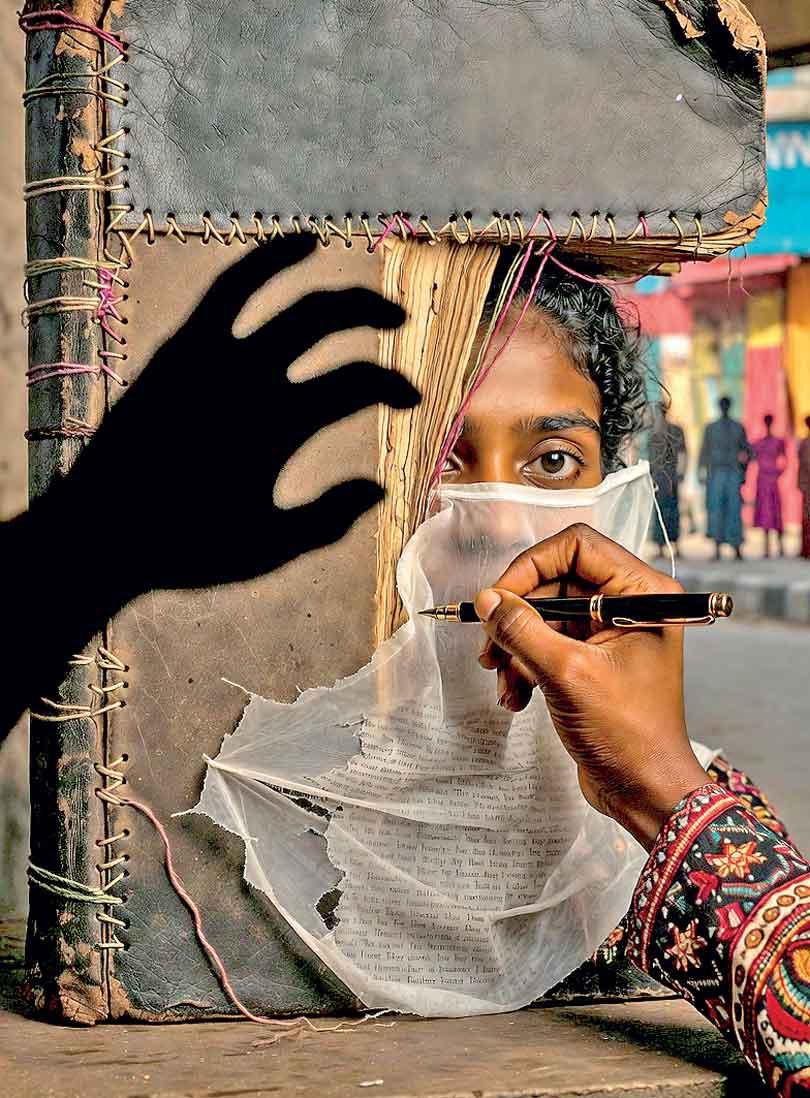
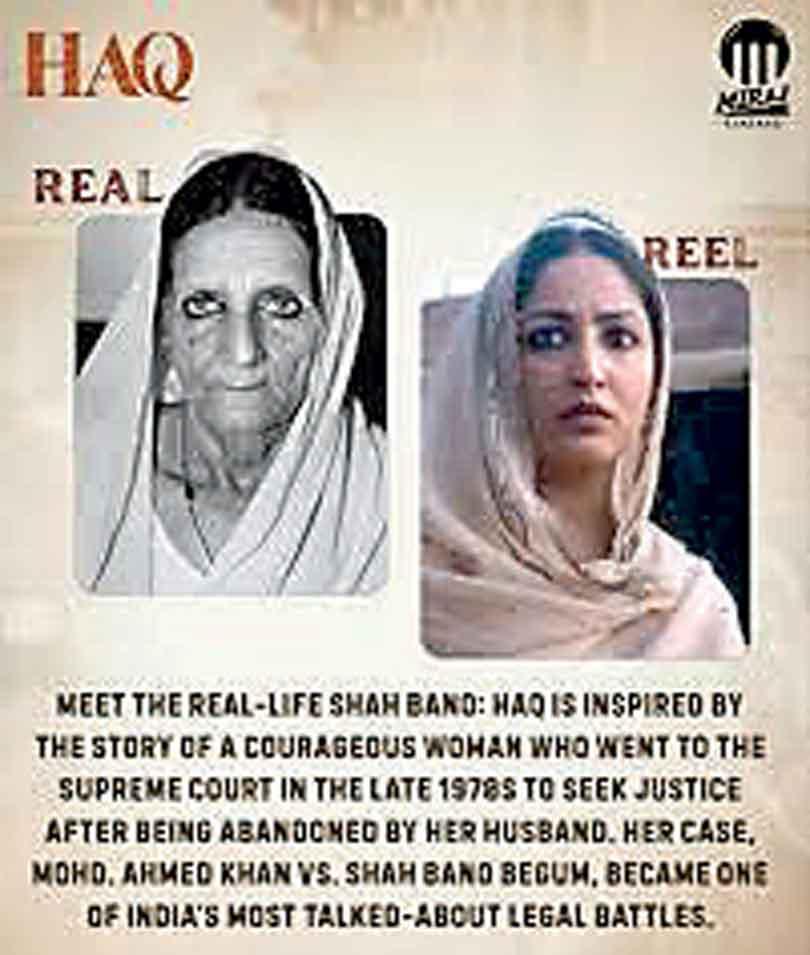
 Watching HAQ this past weekend left me restless. I found myself pausing the film, rewinding scenes, and sitting in silence long after the credits rolled. This movie felt like a mirror held up to our faces here in Sri Lanka, reflecting wounds we've been told to hide, injustices we've been told to accept, and a fight for dignity that we've been told makes us traitors to our faith. I knew I had to pen this down and share it, because silence has protected the wrong people for far too long. The film, which dramatizes the landmark 1985 Shah Bano case from India, tells the story of a woman of deep faith who dares to challenge the practice of instant triple talaq, not because she has abandoned Islam, but precisely because she understands it. Shazia Bano, the protagonist, reads the Quran herself and discovers that the injustice she suffers is not divinely ordained but a patriarchal distortion of scripture. Her husband, like so many men who claim religious authority, has never actually studied the texts he weaponizes against her. Sound familiar? It should. Because this is the exact battle Sri Lankan Muslim women have been waging for decades; a battle where demanding justice makes you a traitor, where quoting the Quran for yourself makes you a Western puppet, where speaking about female genital mutilation or child marriage gets your photo circulated on Facebook with crude emojis questioning your virtue and faith.
The MMDA Masquerading as Divine Law
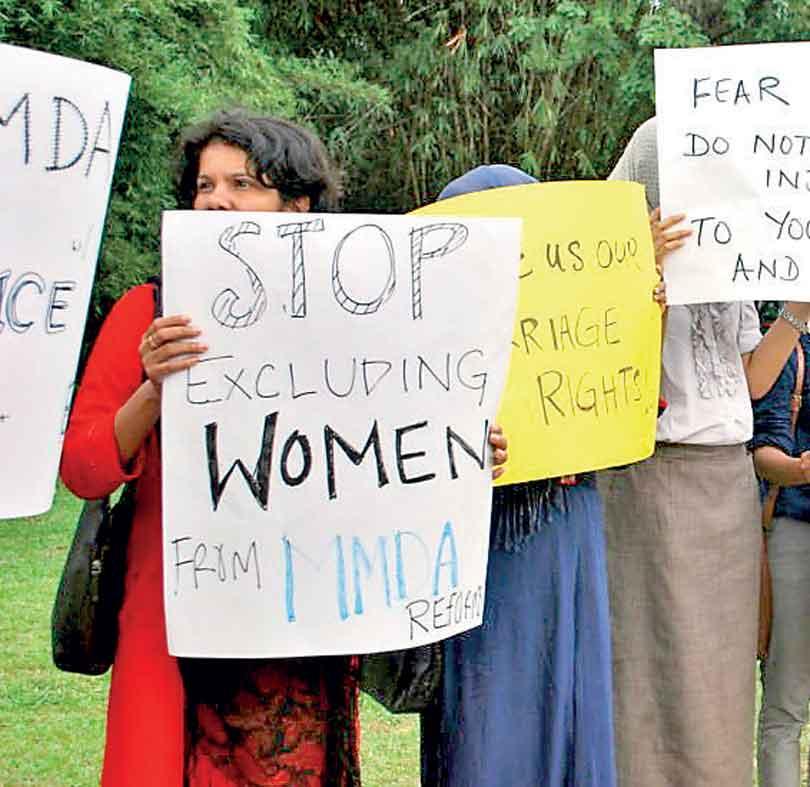
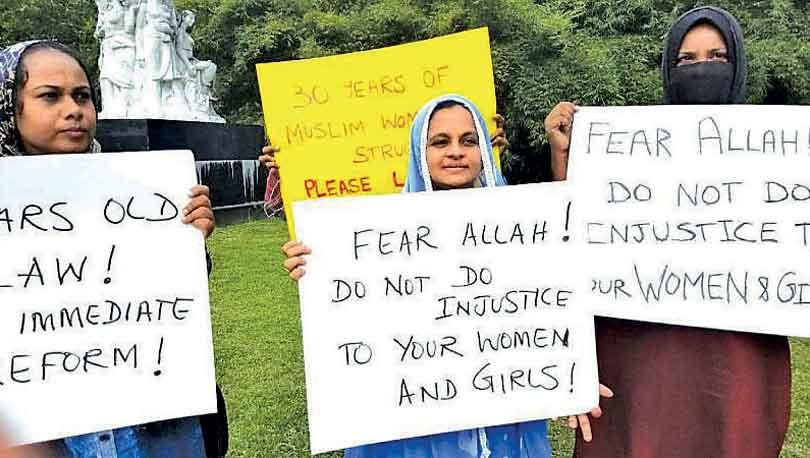
The 1951 Muslim Marriage and Divorce Act is not divine revelation. It is a colonial-era monster stitched together from Batavian Islamic rulings from Dutch colonial rule, Tamil customs, English procedural rules, and selective provisions claimed to be based on shariah. This law allows Quazis to permit the marriage of children under twelve years old. This law prevents women from signing their own marriage documents, denies them the right to become Quazis themselves, permits polygamy without meaningful conditions, and creates profoundly unequal divorce procedures. And when we dare to say this is wrong, we're told we're attacking Islam. The truth they do not want you to know is that the MMDA itself violates shariah. It recognizes kaikuli (dowry), which is explicitly forbidden in Islam. It creates injustices that contradict the Quranic principles of justice, fairness, and human dignity. Countries with Muslim majorities like Malaysia, Indonesia, Morocco, and Tunisia have reformed their Muslim family laws multiple times to address contemporary issues and uphold Islamic principles. Are they all traitors too? Or is it just Sri Lankan Muslim women who must remain silent?
Conservative groups love to claim that "shariah or divine law cannot be touched." They deploy this phrase like a conversation stopper, a weapon to shut down any discussion. But the MMDA is not immutable divine law, it's a piece of 1951 legislation that can and must be reformed. The hypocrisy is staggering that they conflate a colonial-era statute with divine revelation, while simultaneously violating actual Islamic principles.
Men Gatekeeping Women's Rights in the Name of God
The most influential body shaping religious interpretation for Sri Lankan Muslims has, for decades, positioned itself as the gatekeeper of Muslim personal law. From opposing the appointment of women as Quazis to resisting even the mildest reforms, it has consistently framed change as a threat, warning of “external agendas” and “hostile forces” supposedly working against the community. Foreign influence. Hidden enemies. This is the language used to respond to Muslim women asking for fairness, safety, and dignity. I do not raise this to attack an institution, but because its positions have consequences that ripple far beyond statements and press releases. A fourteen-year-old girl in the Eastern Province was married off and forced to abandon her education. When she eventually fled the marriage and sought divorce after enduring repeated sexual abuse, the authority tasked with delivering justice subjected her to hours of questioning, pressing her to recount intimate details of the violence she survived. The psychological harm was so severe that she later attempted to take her own life.
In another case, a fifteen-year-old girl was compelled into marriage following the intervention of a mosque committee, after a man who had been harassing her entered her home and attempted to molest her. Instead of accountability or protection, the response was marriage, offered as a solution to safeguard her “honour.” Then there is the sixteen-year-old bride beaten with a helmet by her husband for refusing to pressure her family into selling their land. These are not unfortunate exceptions. They are the logical outcomes of a system that privileges male authority, suppresses women’s voices, and operates under the claim of religious legitimacy while disregarding the Quran’s clear emphasis on justice, mercy, and human dignity.
The Practice We're Not Supposed to Name
And then there's female genital mutilation. Some claim nearly ninety percent of Sri Lankan Muslims support this practice. In 2008, the Ministry of Health declared it doesn't exist in Sri Lanka. Both statements reveal the depth of our collective denial and the stranglehold of silence. Women who have survived FGM live in fear of speaking out. When fifteen testimonials were finally submitted to authorities in December 2017, the first official submission on FGM in Sri Lanka, it represented extraordinary courage in the face of systematic silencing. These women knew what would happen. They knew they would be attacked, shamed, threatened. They spoke anyway. And they were proven right. Activists who spoke against FGM were viciously targeted. The influential board for Muslims in Sri Lanka, issued a ruling making female circumcision compulsory, and the resistance to criminalization came overwhelmingly from conservative Muslim groups consisting mostly of men. Men making decisions about whether to cut little girls' genitals. Men claiming this is Islamic, despite the fact that FGM predates Islam and is practiced across different religions in certain regions, not because of religious mandate but because of cultural practice.
In May 2018, the Director General of Health Services issued a circular prohibiting medical practitioners from carrying out female circumcision. But a proposal to ban FGM through law, submitted in December 2017, has not progressed. There are still no laws that specifically outlaw FGM in Sri Lanka. We can't even get our government to protect little girls from genital mutilation because the issue is considered "too sensitive."
The Silencing Mechanism
Activists like Bisliya Bhutto have had their personal photos circulated on Facebook with suggestive commentary designed to portray them as promiscuous. Juwairiya Mohideen has faced threats and harassment. These threats question our personal lives, our virtue, our faith. We're categorized as "puppets of the West," as if basic human rights are a Western import rather than Islamic principles. The accusation of betraying the community is particularly insidious because it creates a false choice: you can either be loyal to your community or you can demand justice, but you cannot be both. This is a lie. Demanding that the community uphold Islamic principles of justice and dignity is the ultimate act of loyalty. It's the men who permit child marriage, who enable polygamy without consent, who refuse to criminalize FGM, who interrogate rape survivors for hours, they are the ones betraying the community. They are the ones betraying Islam. Just as Shazia Bano in HAQ argues from her own reading of the Quran that triple talaq is a misinterpretation, Sri Lankan Muslim women are demanding reform precisely because we understand Islamic principles. We're not arguing against Islam; we're arguing against patriarchal distortions of Islam that serve male power at the expense of women's dignity and children's safety.
Article 16(1) and Judicial Cowardice
Article 16(1) of our Constitution states that all laws existing before 1978 remain valid despite any inconsistency with fundamental rights. If the MMDA violates Muslim women's rights, which it demonstrably does, there is no constitutional redress or remedy. The government can ignore and disregard any violations of human rights, gender equality, and fundamental rights under the MMDA, and we have no legal recourse. This provision ensures our subjugation is constitutionally protected.
The courts view these matters as "too sensitive" to touch. Why? Political calculations. Political parties claiming to represent Muslims refuse to push for reform for fear of alienating their vote bank. There's the fear of being labelled anti-Muslim; exemplified when in 2019, a Buddhist monk known for fuelling anti-Muslim violence, Galagoda Aththe Gnanasara, was appointed to head a task force on law reform, showing complete disregard for nearly half a century of work by Muslim women's groups. And there's the fear of community backlash, when MMDA reform was merely mentioned in parliament, all political leadership and advocacy for reform were severely criticized and threatened, with social media videos condemning any "touching" of Muslim law.
So Muslim women are trapped. The MMDA violates our rights, but Article 16(1) prevents constitutional challenge. The courts won't intervene because it's "too sensitive." Conservative religious leaders block reform by claiming divine authority they don't actually possess. Political parties abandon us to protect their vote banks. And we're told to be grateful, to be patient, to be silent. For how long? Muslim women's groups have been advocating for MMDA reforms for over twenty-five years. At least four official committees have been set up since the 1970s with no progress. The Justice Saleem Marsoof Committee was established in 2009 because "certain reforms to Muslim personal law were urgently needed," yet the report took years and reforms have been blocked. The proposal to ban FGM through law has languished since December 2017.
What We Actually Demand And Why
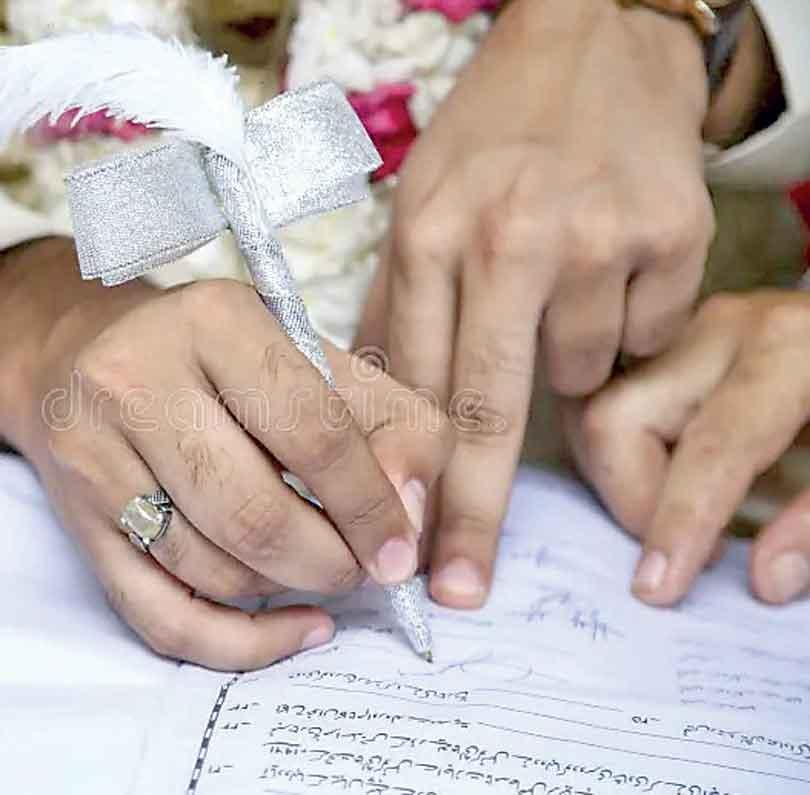
We demand a minimum age of marriage at eighteen without exceptions. Not because we're Western puppets, but because Islam values consent, and children cannot meaningfully consent to marriage. The Prophet Muhammad himself emphasized the importance of a woman's consent in marriage. We demand the right for women to sign their own marriage documents. The "Let Her Sign" campaign in 2021 saw Muslim women across ages, ethnicities, and locations advocate for this basic recognition of agency and consent. We want to enter into marriage with consent, intent, and free will, principles that are deeply Islamic. We demand that women be allowed to become Quazis. There is no Islamic prohibition against women serving as judges. The exclusion is cultural patriarchy, not divine mandate. We demand the abolition of polygamy or, at minimum, meaningful conditions that protect women's rights.
The Quranic verses on polygamy emphasize justice and equal treatment, and explicitly state that if you cannot be just, then marry only one. Yet the MMDA permits polygamy without requiring the consent of the first wife, without ensuring financial capacity, without any meaningful safeguards.
We demand the criminalization of FGM. This practice has no basis in the Quran, causes lifelong harm, and violates children's rights to bodily integrity. We demand the repeal of Article 16(1) to allow constitutional protection. We are citizens of Sri Lanka and deserve the same fundamental rights protections as every other citizen. These demands are not radical. They are not anti-Islamic. They align with Islamic principles of justice, dignity, and equality. They align with reformed Muslim family laws in countries around the world. They align with basic human rights.