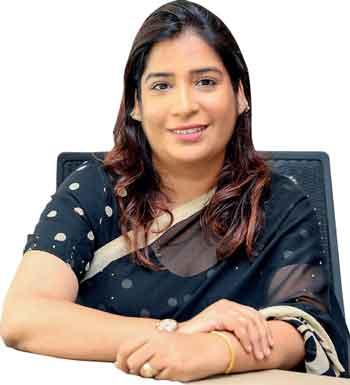
 From stacking blocks to shaping future citizens, early childhood education is far more than what meets the eye. Fazra Irfan, Head of Operations at Footsteps Preschool and Programme Leader for the Cambridge Professional Development Qualification (Early Years) with Cambridge University Press and Assessment, has spent her career working at the very heart of these formative years. Beginning her journey as an assistant teacher and growing into a leader who has helped expand a preschool network from one branch to five, Fazra brings both frontline experience and strategic insight to the conversation. In this interview, she reflects on why the early years are critical to lifelong learning, how play builds resilience and emotional intelligence, and what truly defines a quality preschool environment for children, parents, and educators alike.
QWhat first inspired you to work in early childhood education, and how did your journey in this field begin?
It wasn’t a lightning bolt moment. It was more of a slow, sure realization. I started as an assistant teacher and honestly, I was just in awe. To watch a child figure out how to stack blocks or use a new word to describe a feeling or show kindness to a friend for the very first time… it’s like watching the very foundation of a human being built. That’s powerful. I was hooked on being part of that foundational process. It felt less like a job and more like a privilege.
QMany people still see preschool as childcare. Why do you believe the early years are far more than just babysitting?
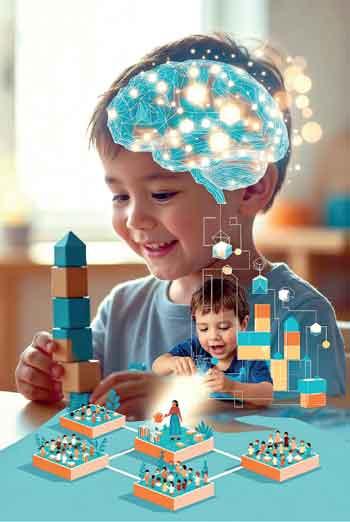
If it were just babysitting, we’d only need to keep them safe and fed. But what we’re really doing is running the most important ‘brain construction site’ in a person’s life. We’re not minding children, we’re moulding future learners, friends, problem-solvers, and citizens. Every game of ‘pretend’ builds language and empathy. Every puzzle tackled builds resilience. We’re wiring their brains for how to approach life, not just fill them with facts.
 QExperts often say the brain develops fastest between ages 0–6. How does what happens during these years shape a child’s future learning and wellbeing?
The neuroscience is clear. This is when the brain’s architecture is being formed. Think of it like building a house. These early years are when we pour the foundation and frame the walls. Everything that comes later - the fancy paint, the furniture (that’s the academics, the skills) rests on this base. A strong, secure, and well-structured foundation means the child can handle anything you build on it later. A shaky foundation makes everything harder. What happens here shapes their confidence, their curiosity, and their capacity to handle stress and learn for a lifetime.
QYou started your career as a teacher. What were some of the early challenges you faced while balancing work, home, and professional growth?
Honestly, it was a beautiful chaos. Juggling the emotional strains of the classroom with demands at home and keeping it up to the expectations, it was tough. But it taught me grit and made my ‘why’ crystal clear. That front-line experience is priceless. It keeps me grounded even now. When I’m making a leadership decision, I always ask: “How will this affect the teacher in the classroom and the child on the floor?” If you lose that lens, you lose the plot.
QHow did your experiences with large education networks like GEMS Education influence your approach to early learning?
Working for GEMS Education was a masterclass in professionalism, growth and systems. I saw the incredible value of structured curriculum frameworks, teacher training pathways, and operational excellence. But I also learned what I didn’t want to lose: the passion. The magic in early childhood isn’t in corporate manuals, it’s in the spontaneous, messy, joyful moments between a teacher and a child. So, I took the best of both: the professionalism and ambition to scale quality, but always wrapped around a core that is deeply personal, child-centric, and warm.
 QGrowing a preschool from one branch to five is no small feat. What were the key lessons you learned along the way?
It wasn't about scaling a business—it was about scaling a mindset. The belief that you, your team, and your model can always learn, adapt, and get better. That drive can’t just live with you; it has to become the culture.
Growth is not an event, it's a constant discipline. We didn't wake up one day and decide to be a five-branch preschool. We obsessed over being a "five-star" preschool first. Quality isn't a checkbox you tick, it’s the daily practice of showing up with intention. We only ever expanded when we had the team who didn't just manage operations but truly embodied our heart and philosophy.
Finally, you have to be ruthlessly open to feedback—from your team, from parents.
That feedback is the most valuable, free consultancy you'll ever get. It keeps us humble, grounded, and forever focused on the real goal: getting better for the children we serve. The moment you think you've perfected it all is the day you start moving backward.
QIn your view, what should parents look for in a quality early childhood education environment?
Look for the substance. Are the children engaged and happy? Listen to the sound: a productive chaos of engagement is golden. But to really see quality, you have to look a little deeper.
First, ask about the curriculum, and see if they 'walk the talk.' Anyone can have a fancy curriculum name. But how is it lived? You want to see a thoughtful balance of child-led play and intentional guided learning. It shouldn't feel like either a free-for-all or a mini lecture hall.
Second, look at the Educators—they are the heart of it all. Are they qualified, empowered and trained? A great school invests relentlessly in its teachers. Are they given opportunities to grow? Happy, supported, and curious teachers create magical classrooms. If the teachers are thriving, the children will too.
Third, look for holistic and intentional diversity. Is it just learning ABCs and 123s, or are social skills, emotional regulation and creativity woven into the day? And look around - do the books, posters, and stories reflect a beautiful, diverse world? A quality preschool consciously builds empathy and global awareness.
Finally, trust your gut on the partnership. You should feel a genuine sense of warmth and collaboration. You're not just dropping off your child, you're entrusting them to an extended family that commits to the wellbeing of your child. That feeling of trust is the ultimate indicator that the philosophy isn't just on the wall -it's in the culture.
QWhat message would you like to share with parents who feel pressured to focus only on academics at a very young age?
Pushing formal academics too early is like trying to build the roof before the walls are up. It might look impressive for a moment, but it’s fragile. The real skills for lifelong success are executive functions. Can your child focus? Can they wait their turn? Can they bounce back from frustration? These are built through play. When a child builds a block tower that falls, and they try again, that’s a lesson in engineering and resilience. That’s the real academic prep.
QYou often speak about children’s “spark moments.” Could you explain what these moments mean to you and why they drive your passion?
Those are my fuel! A ‘spark moment’ is when you see a child’s eyes light up with the “I did it!” or “I get it!” It’s that unmistakable flash of pride, wonder or sudden understanding. It might be when a painfully shy child finally speaks, or when they figure out that they can peddle a bicycle. It’s in those moments you see their unique potential ignite. My entire mission is to create environments where those sparks can catch fire, every single day. That’s what drives me.
QHow important are social and emotional skills during the early years, and how can schools help nurture them effectively?
They are the bedrock. You can have a child who can read at three but can’t make a friend at six. Which skill will serve them better in life? We nurture this intentionally. We name emotions, we teach conflict resolution through role-play, we have collaborative projects where success depends on teamwork. It’s woven into everything, because learning to be a good human is our first and most important curriculum.
QWho have been the key supporters or mentors in your journey, and how have they shaped your vision?
Professionally, one of my head of Section was pivotal. I was a nervous teacher, and she saw something I didn't yet see in myself. She simply said, "I trust you. Take the lead." That single vote of confidence was a tiny spark that lit a much bigger fire. It taught me that leadership is about empowering others. That lesson was echoed by so many leaders after her. I've learned that mentorship comes in different ways. It wasn't just one person; it was a tapestry of leaders. Some gave me tough, aggressive feedback that pushed me to be sharper. Others showed me grace and empathy. Each one left valuable imprints. A balance of both which I now strive to give my own team.
Then, there's my personal village. My husband who took a chance on a young educator with wildly big dreams and has been my rock throughout. Finally, my parents, the unseen heroes who continue to support me every step of the way.
QWhat does your ideal preschool look and feel like, both for children and for parents?
For the child, it feels like a second home. Safe, full of wonder, and a place where they are truly seen. It’s inviting, feels calm yet stimulating. For the parent, it should feel like a trusted partnership. They feel heard, informed, and confident that their child is not just cared for, but cherished and understood. It’s a bridge between home and the wider world, built on warmth and mutual respect.
QLooking ahead, what is your long-term vision for early childhood education, and what change would you most like to see in the way society values the early years?
My vision is a world where early childhood educators are valued like the brain architects they are, with the compensation and respect to match. I’d like to see society shift from asking “How much does preschool cost?” to “How can we invest more in these critical years?” The change I want is for ‘early years’ to be synonymous with ‘essential infrastructure,’ as vital as roads and bridges. Because truly, that’s what we’re building—the infrastructure of our future society.