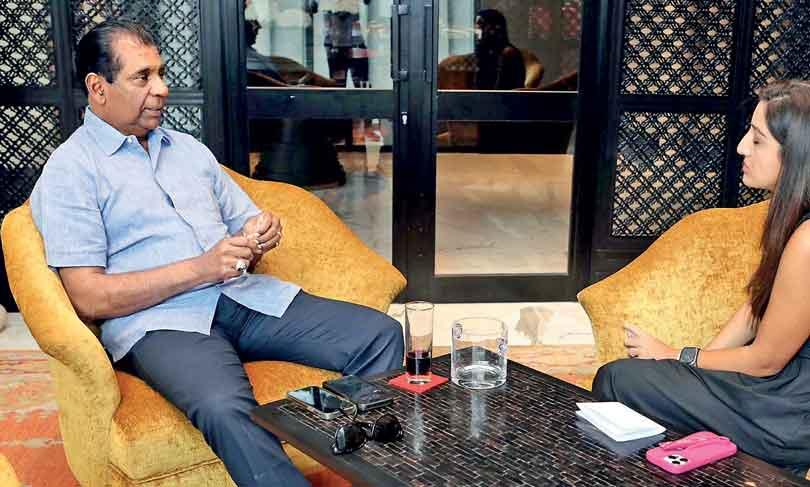
Location Courtesy: ITC, Avartana
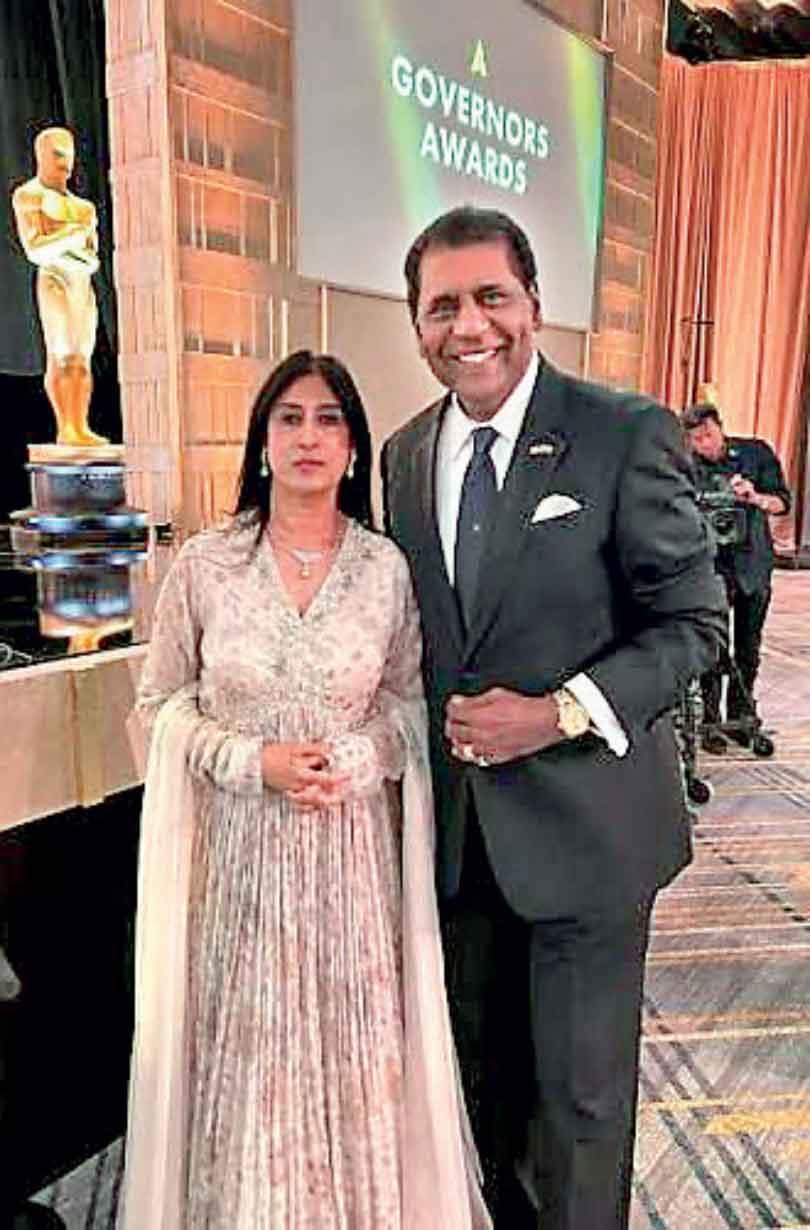
Vijay and his wife, Shyamal
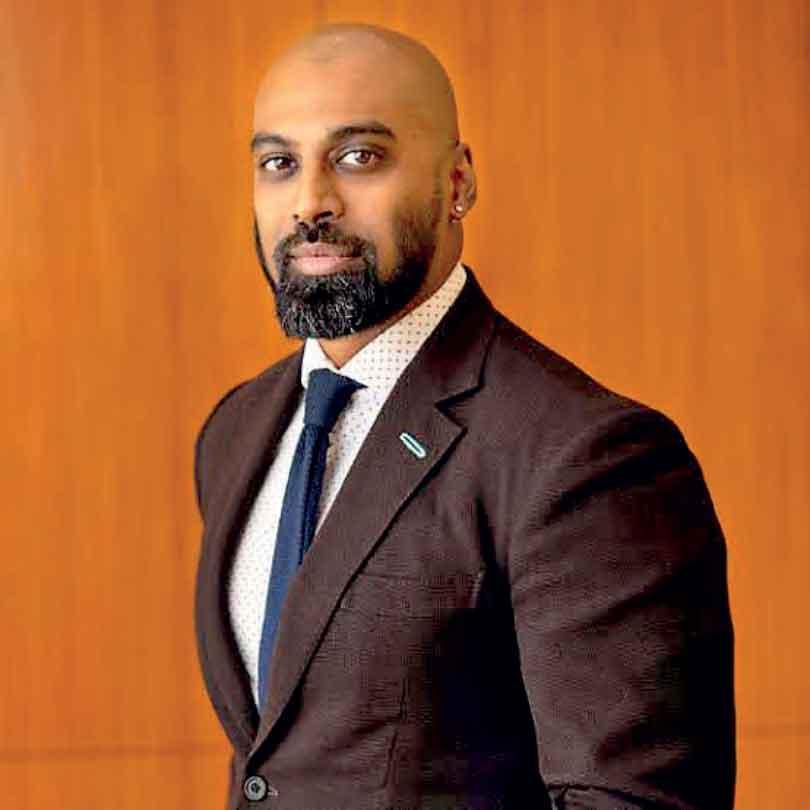
Vijay’s son, Vikram
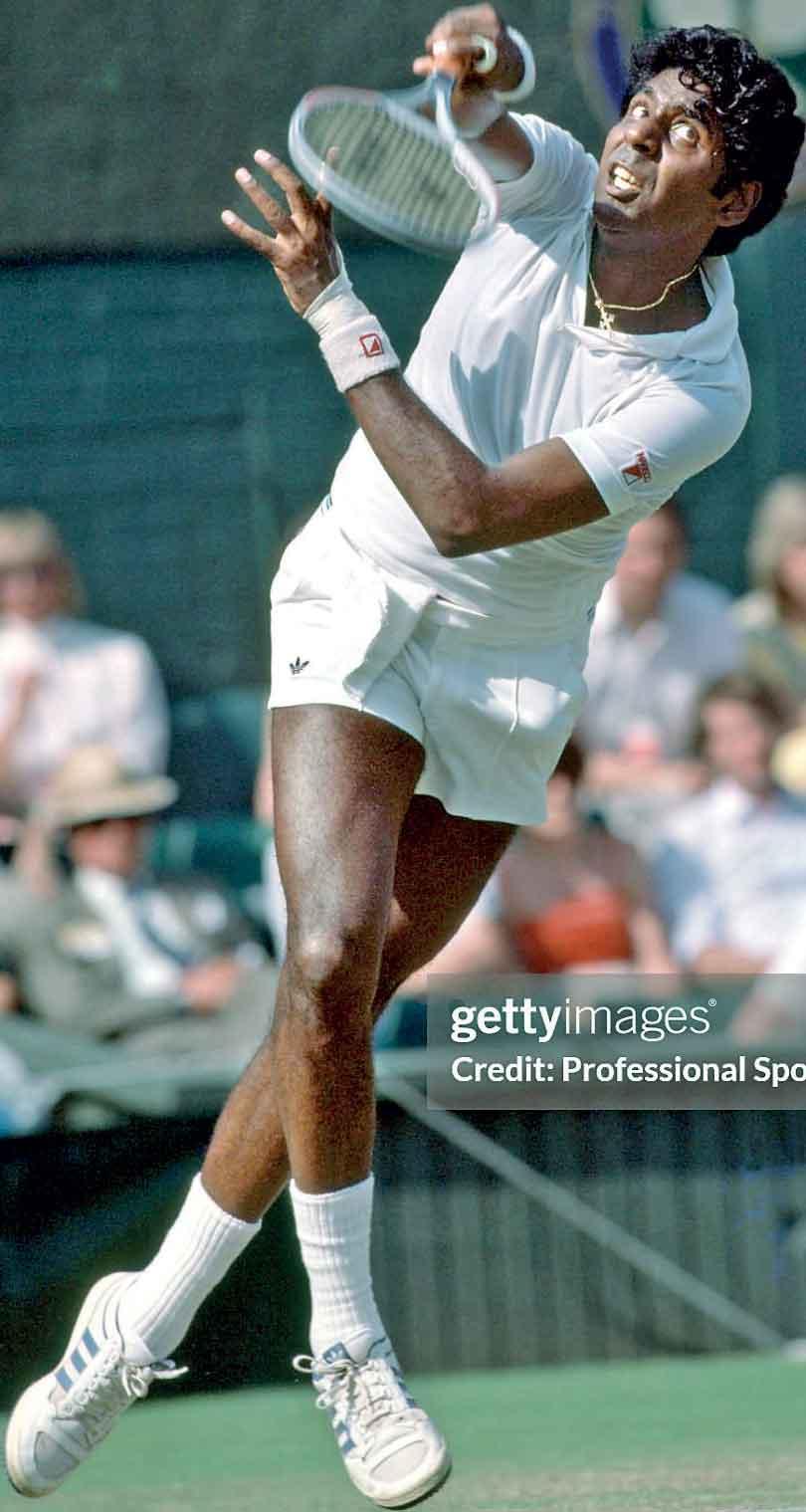
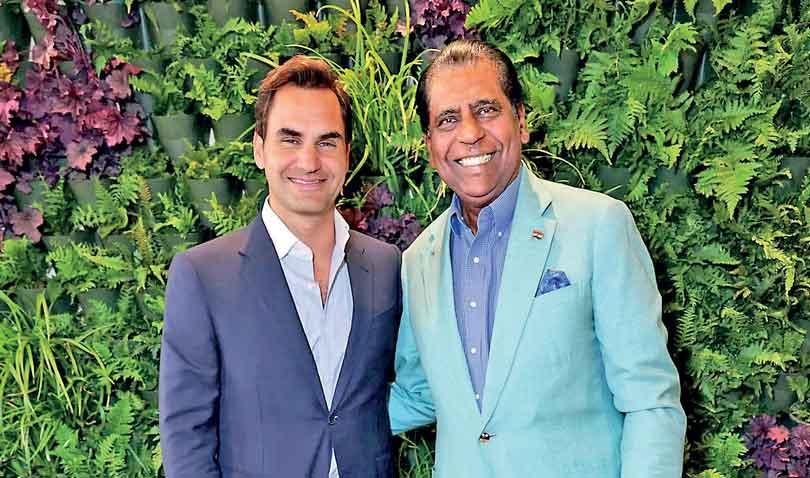
Vijay with Roger Federer, Fellow Rolex Ambassador
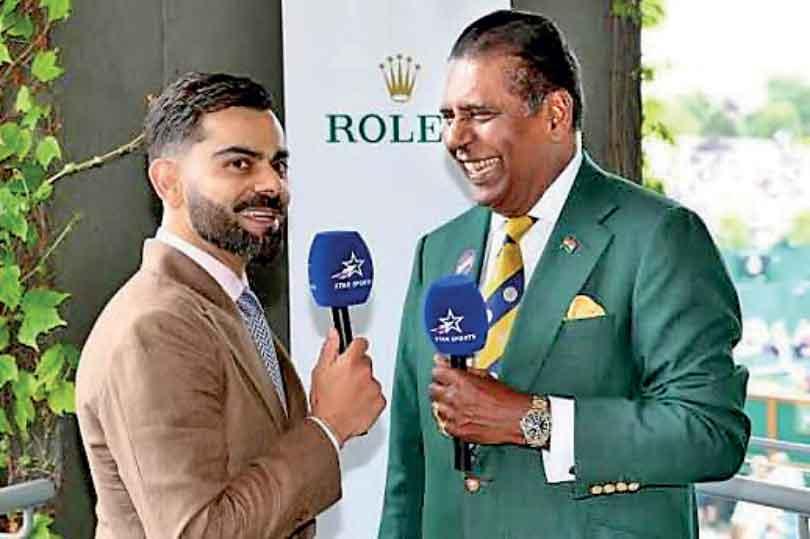
Virat Kohli and Vijay
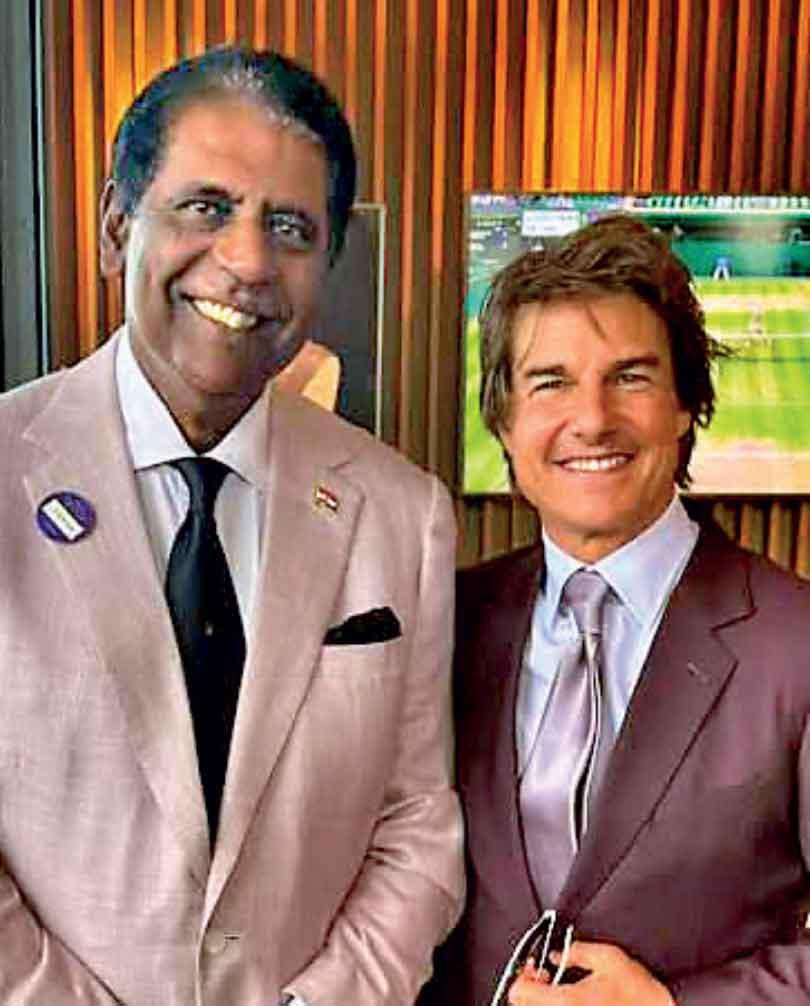
Vijay and Tom Cruise
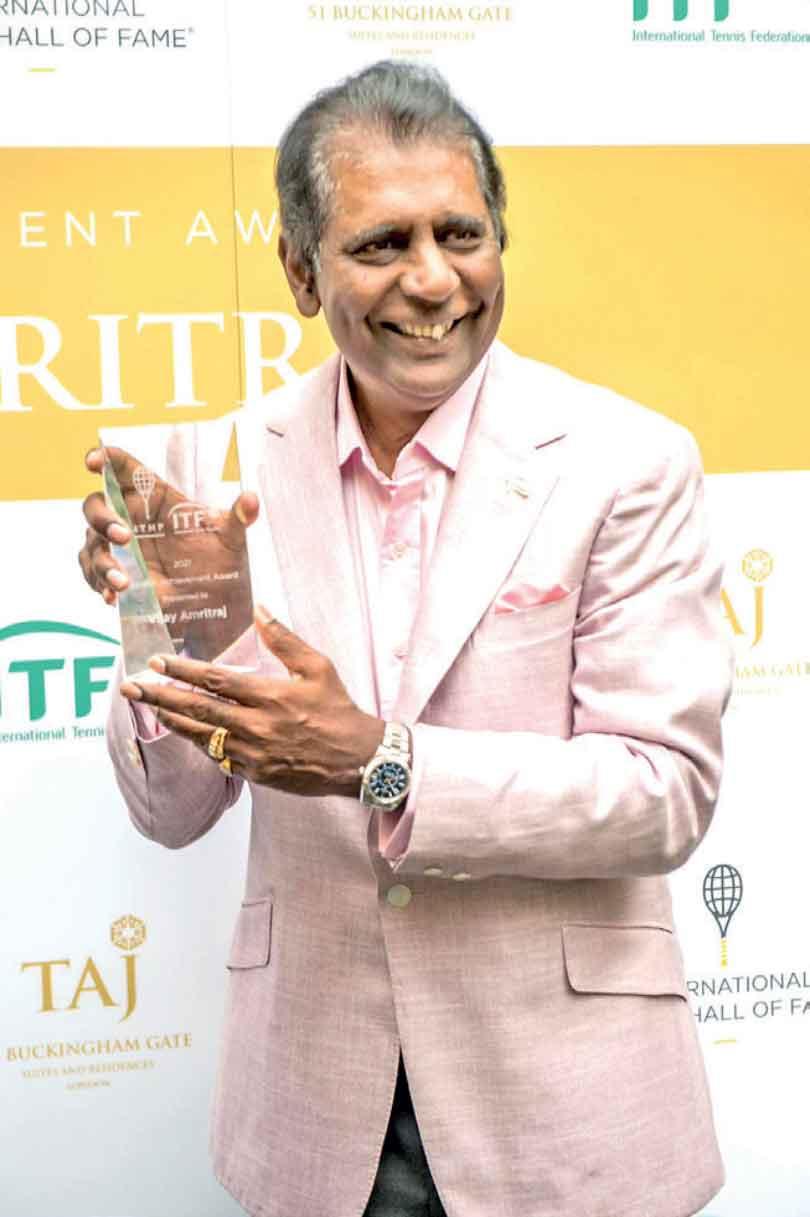
International Tennis Hall of Fame
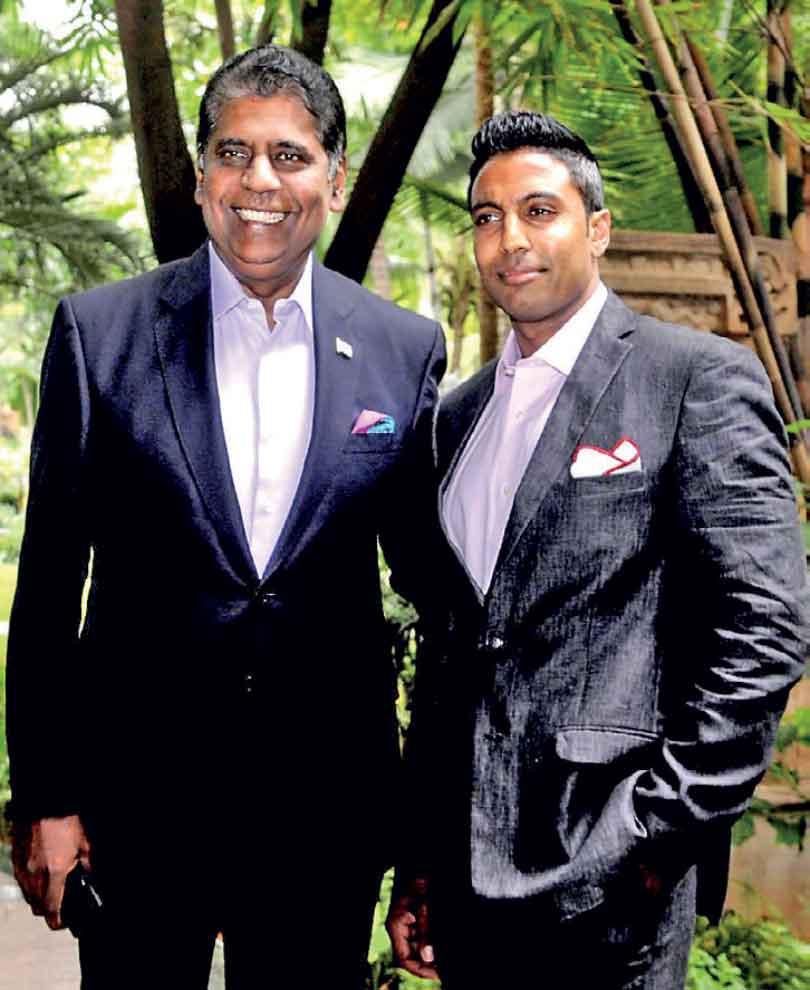
Vijay and his son Prakash
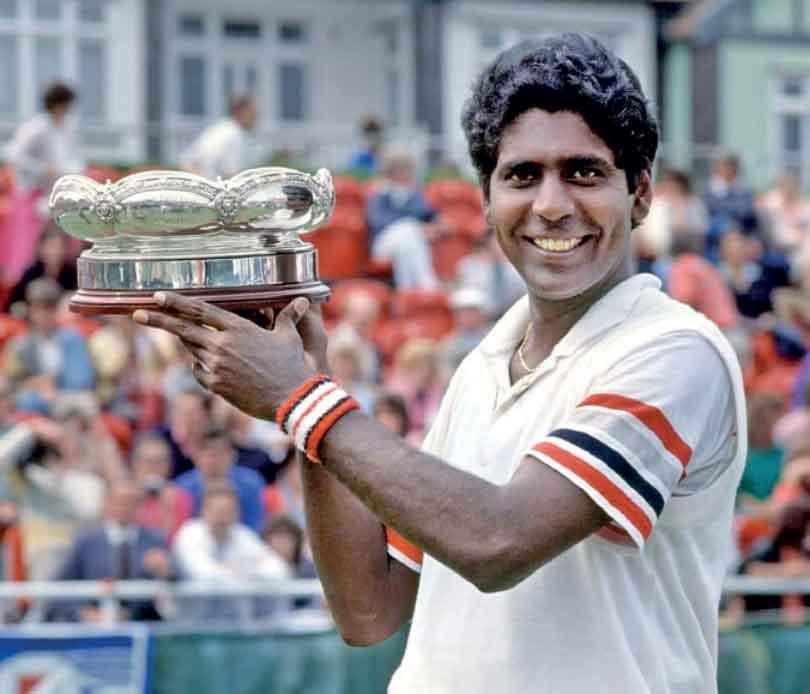
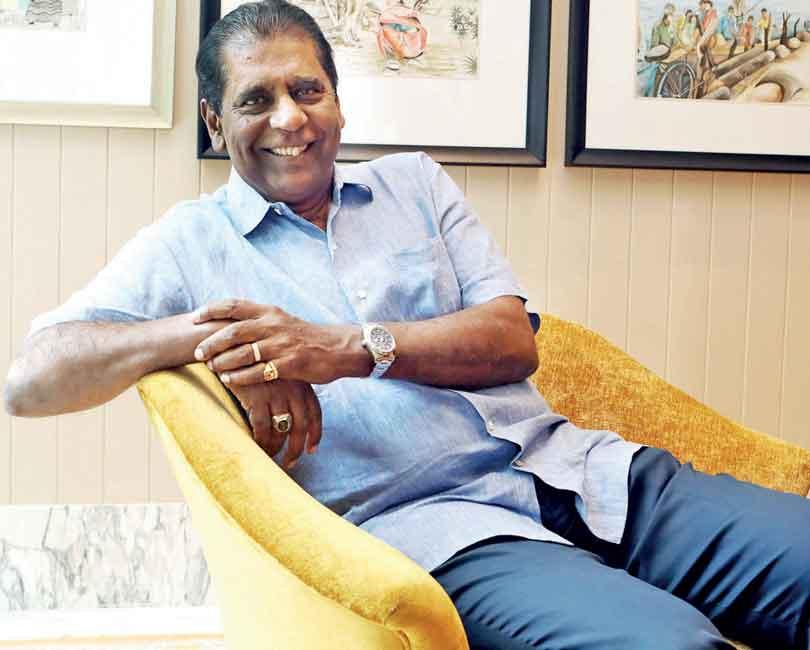
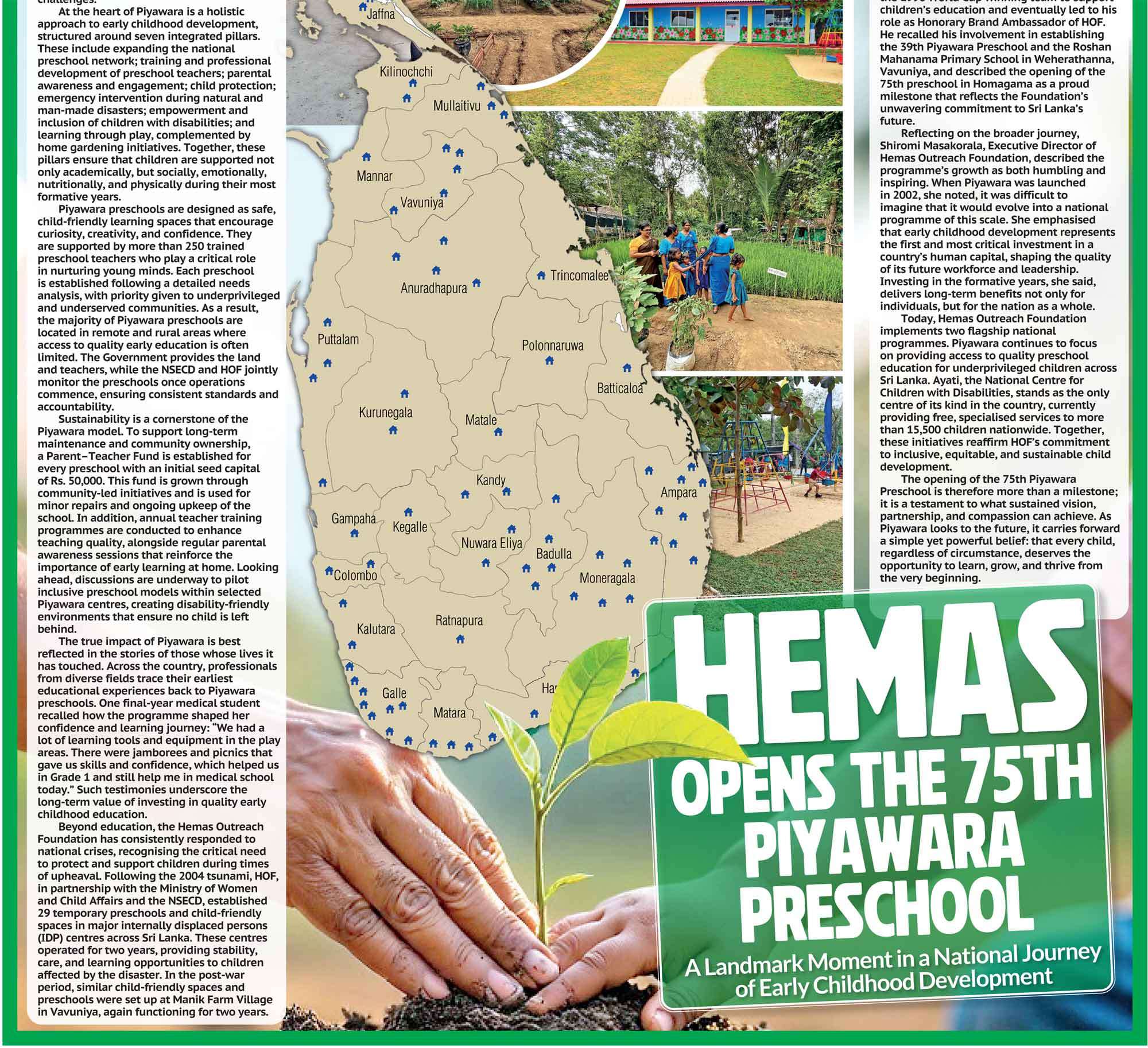
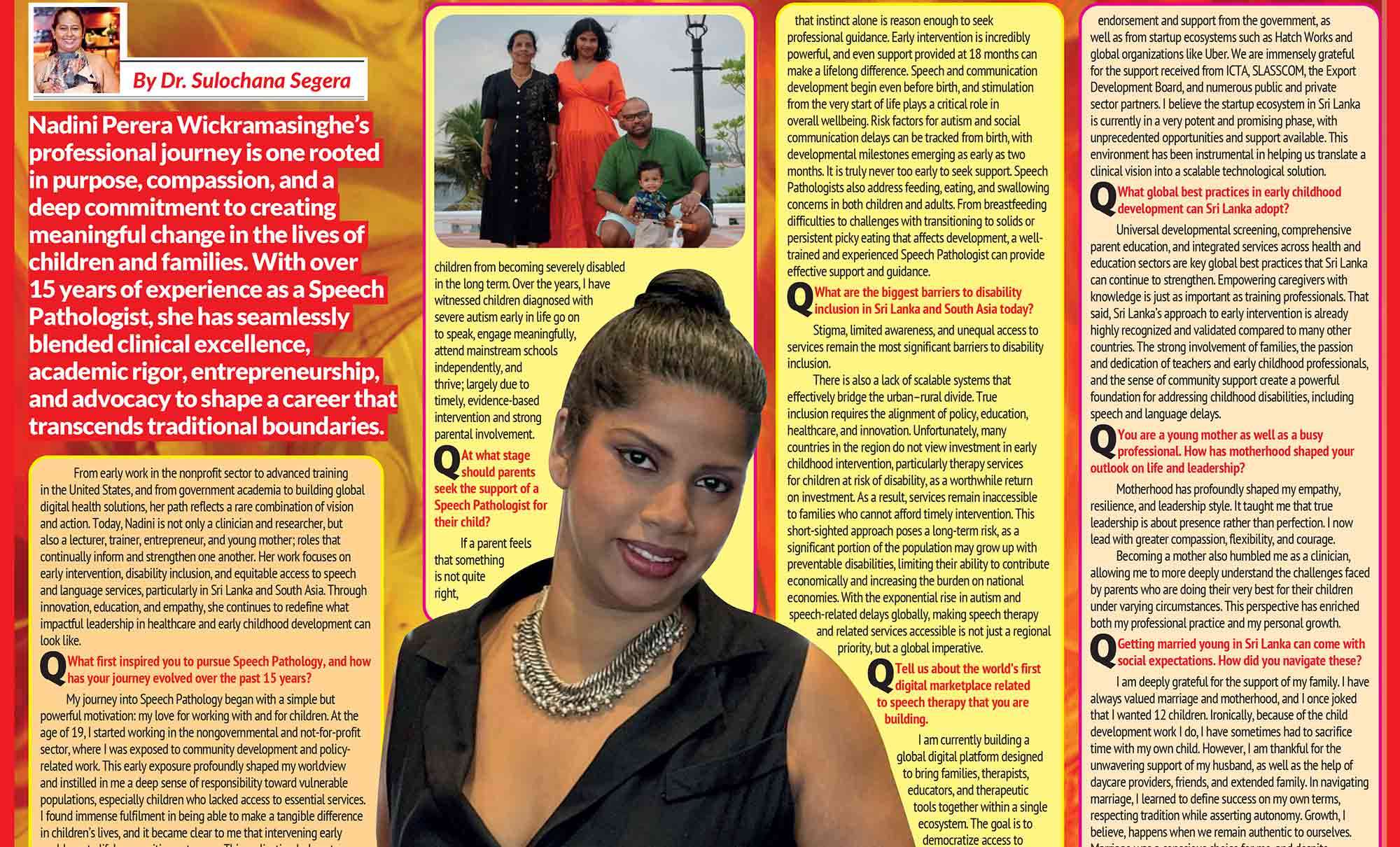
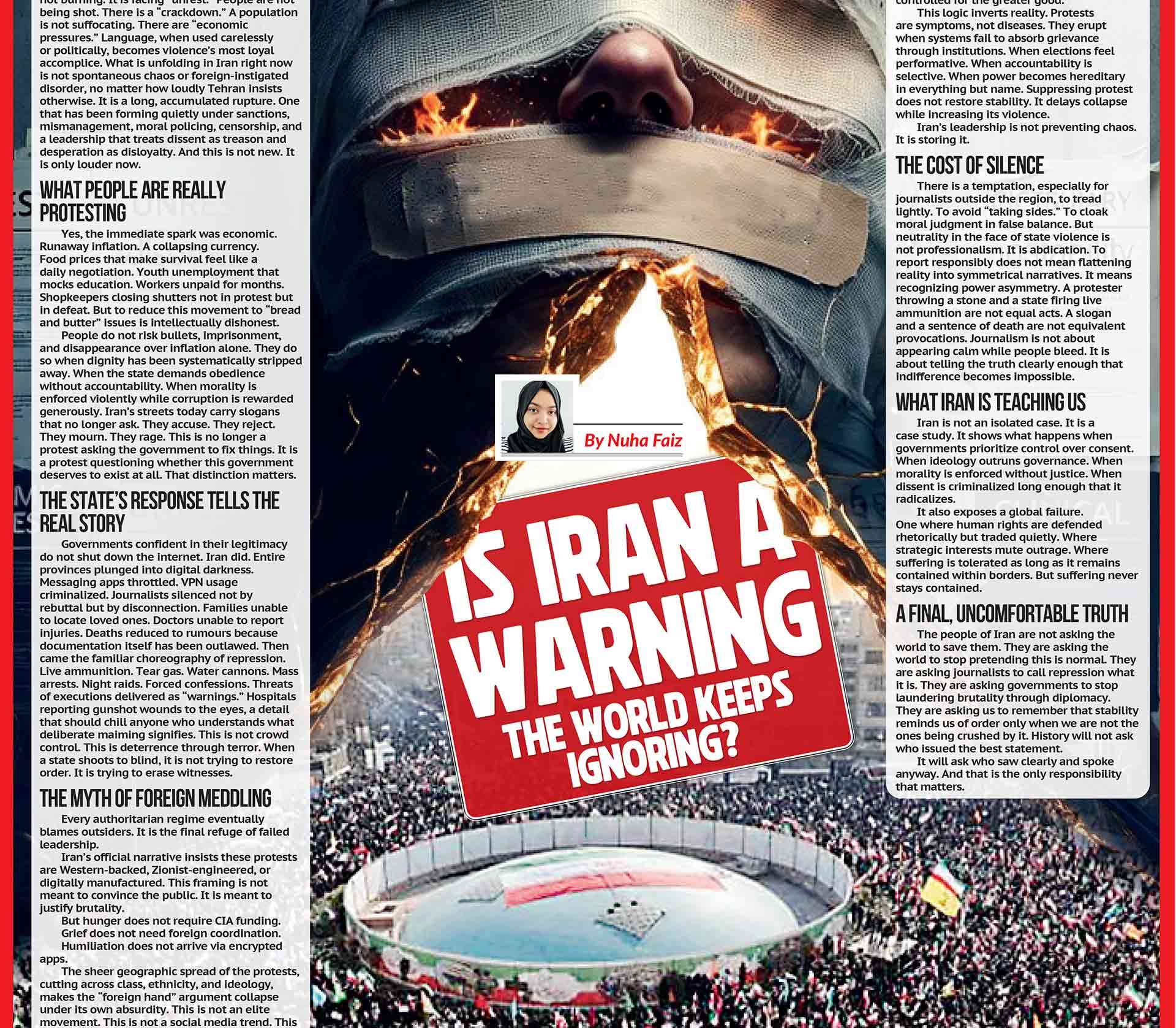
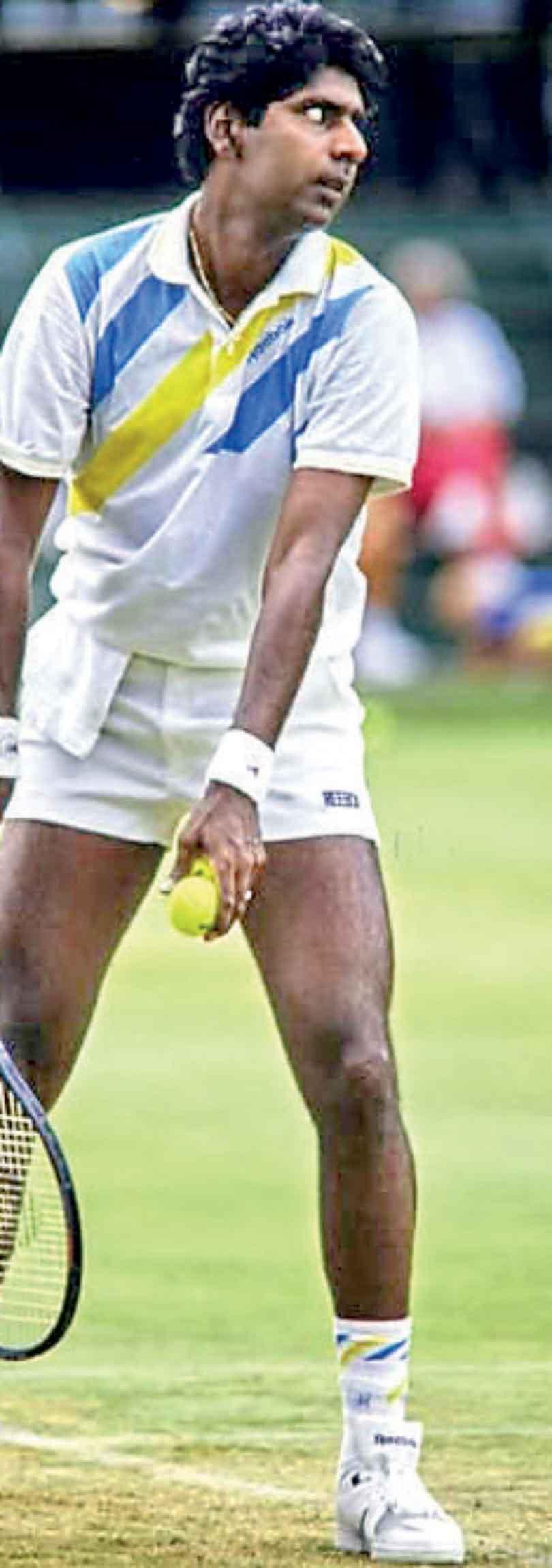
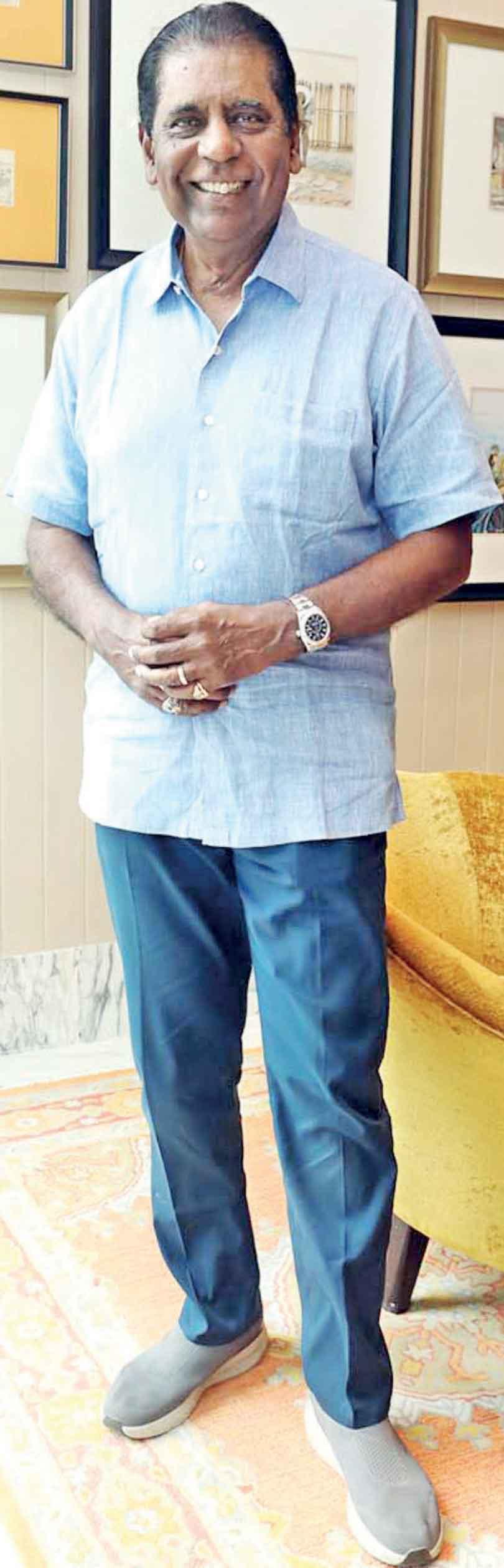
 I sat down with Vijay Amritraj, the charismatic tennis legend, whose work as a commentator continues to shape the narrative of international tennis. A man of many hats, he has appeared in iconic films such as Octopussy and Star Trek, serves as a Rolex Ambassador, and has built a successful career as an entrepreneur, including his own eponymous own fine wine in collaboration with Grover Zampa Vineyards. Beyond sport and business, Vijay founded his eponymous foundation, and in recognition of his humanitarian work, was appointed a United Nations Messenger of Peace, the only tennis player to have received this distinction. A family man of strong faith, he is the proud father of two sons and, most notably, the devoted husband of Shyamala, his wife of 43 years, who hails from Colombo, Sri Lanka. Although vehemently patriotic Indian, his connection to Sri Lanka is both strong and deeply personal.
ON SPORTS AND LIFE...
Q: Growing up as a trailblazer from this region; did you feel you were representing South Asia every time you stepped on court?
A: The most important part of my entire career has been what it meant to come from this part of the world in what was almost entirely a white sport. When I went overseas in my early years, on my first trips to the United States, there was really no one of colour on tour. We didn’t always feel it, but we saw it. The late Arthur Ashe was the only African American on the entire ATP Tour.
Q: You have been an Ambassador for sports in our region for decades. What are you the most optimistic about?
A: There is good news and bad news. The good news is that we have immense talent. We have immense volume. We have a cross-section of ethnicities that can excel in a wide range of sports, not just one. For example, if you go to the northern part of India and look at places like Haryana and Chandigarh, you’ll see that in wrestling they can be fantastic. Mary Kom in boxing; she’s fantastic. Neeraj is fantastic in javelin. Then you come south, and you have Vishy Anand, a world champion in chess. And you have these wonderful girls in Hyderabad, from Sindhu to Saina Nehwal, who are unbelievable in badminton. I’m excluding cricket for the moment because it is a religion on its own. Look at the broad range of these sports, we don’t have to be in a ‘one-size-fits-all’ situation. Similarly, in Sri Lanka, separate from cricket, we’ve had an unbelievable runner who won an Olympic medal, just to name one. I say all this because the bar is still low. We still don’t compare to what we should be achieving, given the size of our population. But if you look at what we’ve done in technology across the region, it’s a completely different story. Why did we succeed to such an extent? Today, 28 of the top 100 CEOs in the world are from India, or Sri Lanka. So, when we look at our part of the world, we have to pay far more attention to sport. That, of course, is the good news.
The bad news is that, socially, the risk factor is extremely high. Investing in a child’s future in sport carries more risk than investing in the worst start-up. If you see a young kid playing a sport and want to invest in him, from an ROI perspective, you’re actually better off putting your money into the worst start-up. In India, and I’m sure Sri Lanka feels the same way, you can’t tell a young couple with two children, aged four and six, ‘Don’t worry about education. Just put the child into sport and go full speed.’ You can’t do that. You have to give the child an education. You have to make sure the child can get a job in the end. So, there is a safety net we build in this part of the world, and socially, it’s very hard to let go of. I was the first professional athlete in the country in any sport. Think about that for a moment. All my cricketing friends who grew up during my time worked for companies, even while playing Test cricket. When I earned my first $50, I became a professional athlete. When I left India for the first time to go to America, I left with just $8. You literally had to win in the afternoon to be able to eat at night.
Q: Are you following the growth of women’s sports South Asia – what do you think about its trajectory?
Well, the women’s cricket team is amazing, but it took a victory as significant as theirs for them to be noticed. That has to change.
Q: Do you have any advice for aspiring athletes here?
A: Well, I think it’s very important to reach a particular standard from where you are. Get to that standard and then push the envelope as much as you can. Once you’re there, whether you’re a top junior or a top 15-year-old, the way people look at you changes. That’s when the possibility of an academy picking you up, or an excellence program taking interest, comes into play. That is what cricket in India has done. They go into rural areas and identify talent. That’s how they found Dhoni, for example.
You have had unimaginable global success - Hall of Fame induction, UN Messenger of Peace, and the Padma Shri, what drives you today?
A: I just feel that every day I must get better and better. You have to be better tomorrow than you were today.
ON SRI LANKA...
Q: We know that your wife, Shyamala is from Sri Lanka. Tell us about your first trip to the country and your first impressions of the place?
A: I always thought, ‘Sri Lanka - I can go there tomorrow morning.’ From Chennai, it was so close by. But I finally made it because of Shyamala. Next week is my 43rd wedding anniversary, touch wood. And I’ve got two lovely boys who are half Sri Lankan, right? There’s a lot in common between southern India and Sri Lanka. I think the most important aspect of both cultures is their attitude towards guests. It’s incredibly welcoming; something you don’t find anywhere else. People do it with such genuine passion. A year or two after we were married, a side anecdote, we played Sri Lanka in the Davis Cup!
Q: You’ve been visiting Sri Lanka for many years. How do you feel Sri Lanka has evolved, and what are your thoughts on its future trajectory?
Well, it’s obvious that Sri Lanka has faced issues of ethnicity and war; thankfully, a closed chapter now, though a tragedy, nonetheless. But when you look at the upward trajectory of where the country is today, I genuinely believe the sky’s the limit. It’s truly a jewel in the ocean. You have the stunning waters of the Indian Ocean. You also have India as a vast neighboring tourism market that can, quite literally, flood the country when needed. Getting 100,000 people to come here tomorrow morning is easy if you have the right offering. I was speaking to friends just last night, and it was clear that the largest number of tourists already comes from India. Sri Lanka has so much to offer; it simply needs to keep building on that. It’s also important to have the right mix of accommodation, not just Air BnB’s, but hotels across the spectrum, whether five-star or three-star, spread across the island. And, of course, the infrastructure to move easily from place to place. With that in place, Sri Lanka has the potential to be even more visitor-friendly than many of the destinations we constantly talk about, whether it’s Bali, Phuket, Chiang Mai, and so on.
Q: What would you highlight about Sri Lanka to your friends abroad?
Whether you’re on the roadside, in a coffee shop, or at a chai place, even if you just ask for a small dosa or a hot cup of coffee, the person serving you is incredibly kind and attentive. The coffee is good, of course, but it’s the warmth and friendliness of the people that really stand out. I think this culture is positive in terms of bringing people together. That said, in this region, we need more of a “winning attitude” in sports. Sometimes people are too quick to back off if someone seems unhappy, thinking, ‘I should kind of step back a little.’ No, in sport, it’s the other way around. The people are the number one attraction. The beauty of the country comes a close second. But if you go to a beautiful place and the attitude, service, and passion of the people aren’t there, you try it once and move on. I’ve seen the mountains, I’ve seen the beaches, I’ve seen all that, and then moved on. But when the people are welcoming, as they are here, it makes a huge difference to tourism and encourages visitors to come back. As I always say, a new restaurant may attract you out of curiosity, but it’s the food, or in this case, the warmth of the people, that will bring you back.
Q: Are there any Sri Lankan traditions or foods that have become part of your life in the United States?
A: You know, I can’t go more than 24 hours without Indian food; it’s just not possible. If someone asks me for my top three choices, it’s Indian food, Indian food, Indian food.
Q: Even when you were playing tennis, you ate South Indian food?
A: Yeah, about 90% of the time. Of course, you don’t eat too much rice before you play, but Indian food has always been my favorite, whether it’s dosas, idlis, chicken chetinaad, or chicken tikka masala stew, or whatever else I might have.
Q: Do you have a favorite Sri Lankan food?
I love Sri Lankan string hoppers and hoppers.
ON PADEL...
Q: Colombo has caught the padel bug, as have I. Have you played, and what do you think of its growing popularity?
A: Padel started in the Middle East, then spread to Europe, where it has mostly stayed. Pickleball, on the other hand, is much bigger in the US; huge, in fact. They have leagues now, and a lot of money is being invested in it. The good news about pickleball is that anyone can pick it up, and in 30 minutes, you could be a world champion! The bad news is… it’s very noisy. Padel, by contrast, requires more skill. I think it’s a bit closer to squash, so it actually gives you something to work towards. Tennis is more complicated in that regard. To become good at tennis, like golf, you really have to work at it.
ON WINE...
Q: What drew you to the world of wine?
A: Although my palate hasn’t changed from Indian food, I did develop a liking for wine. The Grover family of Maharashtra are great friends of mine. Kapil asked, “Why don’t we try doing something with your label on it? We’ve got the vineyard.” I said, Yeah, but you’ve got to make a really top-notch wine. I’m going to compare it to the way I played.’ As it turned out, a French winemaker came on board, and they ended up producing the wine in Bangalore. It has a very good French touch, although they couldn’t get a Chardonnay grape; it’s a Viognier. The white is easily drinkable. I didn’t want the cost to be exorbitant. It has become a popular weekend wine. VA Reserve Collection, both white and red, has won some 47 global awards since we launched in 2014, at the Wimbledon Summer Party at St. James’s Court in London.
Q: You’ve met many remarkable people through your life’s journey. Is there anyone you especially admire?
Over the years, after I finished my tennis career, I did a lot of other things in broadcasting and beyond. It started the year after I played my last Wimbledon, so it naturally followed my tennis journey. I ended up doing commentary for four Grand Slams, the Augusta Golf Masters, the British Open, and I co-hosted the London Olympics; a whole slew of events. I also had my own television show in Southeast Asia on CNN, where I interviewed 30–40 guests from the biggest names in showbiz, food, fashion, and business, one-on-one, almost like a Larry King-style show. I’ve done all of this because I enjoy understanding what makes people tick. Michael Douglas, Pierce Brosnan, Sharon Stone, Cindy Crawford, Wolfgang Puck in food, Oscar De La Hoya, and even Donald Trump before he became president; they were all guests on my show. It gave me a chance to see what drives them and to pick up insights from everyone I met. But in my meetings with Mother Teresa, Pope John Paul II, Nelson Mandela, and Muhammad Ali, I realized there was something truly special; something that made me understand I was in the midst of greatness.
Q: Tell me about the Vijay Amritraj Foundation.
A: After serving the UN for nearly seven years, I started the Vijay Amritraj Foundation in the US to support some of the most needy causes on the ground in India, 95% of them focused on women and children, and 5% on old-age homes and individuals with mental challenges. To support these efforts, we organize events in the US; this year marked our 20th anniversary, which we celebrated with an event at the Bellagio in Las Vegas. We’ve also hosted an India–Sri Lanka golf tournament, and a variety of other fun events. Everyone participates, and all the proceeds go to charity. It’s enjoyable from a sporting perspective, but ultimately, the charity benefits.
-------------------------------------------------
This summer, Vijay will attend his 56th consecutive Wimbledon. At 72, he shows no signs of slowing down, continuing to shape the sport through his commentary and extend his influence through meaningful social impact, always with warmth and laughter.
ON A CHAMPION’S LIFESTYLE...
He is up around 4:30 a.m. every day and in bed by approximately 8:30 p.m. A disciplined life, he works until about 2 p.m. and then makes time for sport and physical activity, golf, tennis, or the gym, to stay fit, which allows him to maintain his hectic schedule, hopping around the world. Of course, he recognizes that there are constraints as one ages but believes that doesn’t mean one shouldn’t push oneself out of their comfort zone, within limits.
ON HARD TIMES...
Competing in an era when mental health was rarely discussed, he managed pressure by reframing it as a privilege. After all, his parents had sacrificed so much for him. Very sickly as a child, his mother was constantly by his side as he went in and out of hospitals. She endured major accidents, including being painfully burned in a fire, and four years later, her hand was caught in a machine while working to support the family, leaving her severely injured. After an arduous surgery, it was successfully reattached. He credits her entirely for his success. When I asked him which of the many chapters of his life, he was most proud of, he replied with gratitude for all of it, realizing that