Q 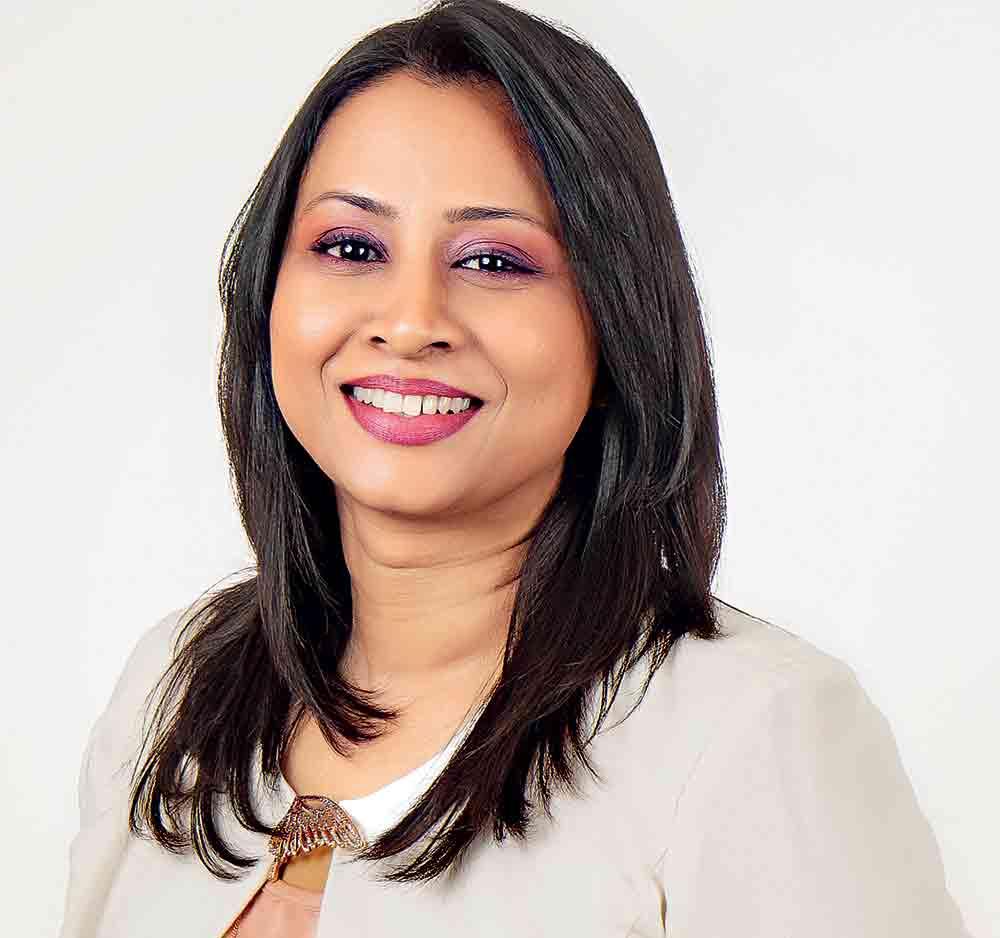
 Rekha Weerasooriya has built her career at the intersection of people, strategy, and transformation. As Group Chief People Officer of Dialog Axiata, she plays a central role in shaping how one of Sri Lanka’s most influential organisations develops leadership, builds culture, and prepares its workforce for a rapidly changing digital future. Her work spans human resources, organisational design, and large-scale transformation, making her a key voice in conversations about leadership, workplace culture, and the future of work in Sri Lanka. With more than 25 years of experience across Sri Lanka and the wider Axiata Group in Malaysia, Rekha has navigated diverse professional environments, economic uncertainty, and complex organisational change.
She has worked her way from grassroots roles into senior executive leadership, gaining deep insight into both operational realities and strategic decision making. Along the way, she has mentored generations of young professionals, advocating for inclusive leadership, continuous learning, and meaningful career development. Beyond her corporate achievements, Rekha is a lifelong learner, coach, and single mother who sees leadership as both a responsibility and an opportunity to shape lives. She measures success not through titles or status, but through peace of mind, purposeful impact, and the growth of others. For her, time is the most valuable currency, and how it is used reflects one’s values, priorities, and sense of purpose.
qHow do you personally define success in life and leadership?
Success has changed meaning for me over the years. In my personal life, it now centres on peace of mind, though what that looks like has evolved at different stages of my journey. Earlier in my career, success felt closely tied to achievement, recognition, and progression. Today, it is more about presence, clarity, and being intentional with my time. Time has become my most precious resource, and I try to use it in ways that align with my values and responsibilities. Professionally, I feel most fulfilled when I am helping to build inclusive, high performing organisations where data, design, and empathy work together. I believe effective people strategies must be grounded in evidence while also recognising human experience. Numbers provide direction, but understanding people’s realities gives meaning to those decisions. At heart, I see myself as a learner, a coach, and a mother. My greatest sense of achievement comes from seeing others grow, whether that is my child, my colleagues, or young professionals I have mentored. If people emerge more confident, capable, and resilient through their interactions with me, then I consider that true success.
Q You have held senior HR and transformation roles across Sri Lanka and the Axiata Group in Malaysia. What key experiences shaped your approach to leadership?
Working across different markets taught me that context truly matters. Even the best global frameworks need to be adapted thoughtfully to local realities. What works seamlessly in one country may not translate in the same way elsewhere. Leading in multicultural, fast-growing environments reinforced the importance of clarity of purpose, simple systems, and genuine collaboration. As my role expanded to include technology, operating models, and cultural transformation, my leadership perspective deepened. I learned that trust and transparency are essential for people to go beyond what is required and give their best willingly.
When leaders are visible, honest, and consistent, teams are more willing to take ownership and contribute meaningfully. Working outside Sri Lanka was also a defining experience. Operating in Malaysia challenged me to step out of my comfort zone, understand new perspectives, and build confidence in unfamiliar settings. It broadened my worldview and strengthened my ability to lead with humility and curiosity.
Q From Vice President of HR Transformation to Group Chief People Officer at Dialog Axiata, what were some pivotal moments in your career?
Over the years, I have worked across seven different portfolios and reported to seven C suite leaders, often in dual reporting roles. My experience spans service operations, business leadership, transformation, and human resources, along with a secondment to Axiata’s corporate centre in Malaysia. Each role added depth to my understanding of how organisations function. One of my most important lessons has been the need to truly understand the business. A people leader cannot be effective without grasping how revenue is generated, how decisions are made, and what pressures leaders face. Aligning people strategy with business outcomes has been central to my approach. Navigating periods of economic instability was another defining challenge. Managing performance driven teams during crises required careful use of data, tough decision making, and the ability to quickly shift organisational priorities. What remains most meaningful to me, however, is developing future leaders. Having risen from grassroots roles to senior leadership, I am committed to creating pathways for others to grow with the same level of investment that organisations make in technology and infrastructure.
Q How do you see the current HR landscape in Sri Lanka compared to global practices?
Sri Lanka has made significant progress in digital HR. Many organisations now use cloud platforms, AI driven tools, and self-service systems that empower employees. However, there is still room for improvement in designing better employee experiences, adopting skills-based talent models, and using analytics to drive real business decisions rather than just tracking metrics. Our greatest strength as a country is adaptability. The challenge now is to scale successful practices consistently, build stronger managerial capability, and link data more clearly to organisational outcomes. This means moving away from outdated processes that may feel familiar but hinder progress. Adoption remains critical. Global trends suggest that many roles will continue to evolve rapidly, and simply introducing new tools is not enough. Organisations must support people through change management so that technology truly enhances rather than disrupts work.
Q What does effective leadership mean in the digital age, especially in large organisations like Dialog Axiata?
Effective leadership today starts with clarity. Leaders must set clear priorities, make difficult choices, and create environments where people feel safe to share ideas, experiment, and learn. In large organisations, empowerment must be supported by strong systems. Clear decision-making structures, aligned goals, and disciplined ways of working ensure accountability is real rather than symbolic. Leaders must also balance data with empathy. Evidence should guide decisions, but understanding lived experience should shape how solutions are implemented. Continuous learning and adaptability are now core leadership qualities.
Technology and AI adoption is not limited to specific departments. It requires collective responsibility across the organisation. Leaders must remove fear, build capability, and help people see digital tools as opportunities for growth rather than threats to their jobs.
Q You have trained young professionals for over 25 years. What advice do you give emerging leaders about resilience and adaptability?
I always encourage young leaders to build strong teams and trust capable people. Leadership is not about controlling everything but about enabling others to succeed. Your own success is closely tied to the strength of those around you. I also believe in taking ownership of personal development. Each year, leaders should commit to a meaningful learning journey, whether through formal education, mentorship, or self-directed study. Staying informed about industry trends builds confidence and adaptability. Exposure to challenging work is equally important. Volunteering for stretch assignments often leads to the greatest learning. Along the way, having mentors who challenge, support, and guide you can make a significant difference. Finally, resilience depends on recovery. Sleep, physical activity, and reflection should not be optional. Caring for your body and mind is essential to sustaining performance over time.
Q With a career spanning over 25 years and multiple high-pressure roles, how do you maintain personal growth and work life balance?
I prefer to think in terms of work life design rather than balance. I structure my week around key priorities such as family time, focused work, and personal renewal, and I protect these deliberately. Reflection and feedback are central to my growth. When I take time to learn and recover, I am better equipped to lead effectively. Priorities shift depending on circumstances, so I use time boxing to create discipline. Family, work, faith, friendships, and fitness all matter, but they require conscious planning. Being intentional with my time allows me to be fully present in each aspect of my life. Some moments are irreplaceable and recognising that shapes my choices.
Q Companies today struggle to retain the new generation of employees. Is this a gap in company practices or a shift in expectations?
It is a combination of both. Younger generations seek meaning, growth, and purpose at work. At the same time, managers continue to play a crucial role in retention. People still tend to leave poor managers rather than organisations. Many companies still focus heavily on tenure and titles, while younger employees value skills, impact, and learning opportunities. Redesigning roles around these priorities can improve engagement. We must also consider broader economic realities. Rising living costs, job uncertainty, and migration pressures affect career decisions in ways organisations cannot fully control. What companies can do is be transparent, provide growth opportunities, and set realistic expectations. This shared understanding helps both sides move forward constructively.
Q What strategies can organisations use to engage Millennials and Gen Z in Sri Lanka?
These generations care deeply about skills, outcomes, and how their time is used. Having a Gen Z son has given me personal insight into their values. They are thoughtful, capable, and focused on building security and momentum.
Organisations should create skills-based career pathways with clear frameworks and frequent opportunities for growth. Recognition should be timely, visible, and linked to real impact. Wellbeing must be embedded into work design rather than treated as an additional benefit. Listening and inclusion are also essential. Giving young employees a voice in shaping organisational direction fosters belonging and commitment. Ultimately, leadership capability matters most. Managers need to understand and support Gen Z in ways that help them thrive in any work environment.
Q Today, many educated Sri Lankan women leave the workforce due to societal and familial responsibilities. How do you view this trend?
This is deeply personal to me. As a single mother for over 20 years, financial independence was crucial. I believe women should have the freedom to pursue careers or entrepreneurship with proper support. Motherhood and professional life can coexist, but it requires collective support from families, organisations, and society. No woman should be expected to shoulder all responsibilities alone. When organisations and policymakers create supportive structures such as flexible work arrangements and childcare support, women’s participation in the workforce can increase while maintaining performance.
Q What role can organisations play in supporting working women, especially in senior leadership?
Companies must move beyond good intentions and take deliberate action. Sponsorship, where senior leaders actively advocate for women, is just as important as mentorship. Flexibility should be outcome based, allowing women to balance responsibilities without compromising performance. Childcare assistance and progressive parental leave policies can also make a meaningful difference. Fair and transparent promotion processes are essential. Performance should be the key measure, supported by consistent evaluation standards. Most importantly, organisations must foster safe, respectful workplaces with zero tolerance for misconduct.

- Leadership style: Purposeful and inclusive.
- Key skill for future leaders: Sensemaking and systems thinking.
- Remote work: Yes, when guided by clear outcomes and strong routines.
- Analytics in HR: Fully necessary.
- Working mother or career first: Whole-person approach that designs for both.
- Best support for women: Active sponsorship backed by structural support.
- Mentorship: Essential, especially when paired with sponsorship.
- Women leaders: Need both empathy and strategy.
- Biggest barrier for women in Sri Lanka: Care responsibilities and bias.
- Surprising hobby: Writing poetry.