 Asia’s culinary landscape is often defined by its heavy hitters. Tokyo impresses with its delicate and deliberate artistry; Singapore delivers a litany of Michelin-recommended hawker halls; Hong Kong captivates with its blend of old-world charm and cosmopolitan flair; while Saigon and Bangkok crackle with heat, spice and riotous street-side theatre. Each city has a distinct energy and offers a plethora of delicious dishes. Yet for all their allure, these culinary capitals can sometimes feel overexposed and commercialised. As though, despite your best efforts and all your research, there is always the risk of landing at a table designed more for tourists than locals, and you end up eating a bland plate that someone insists is “the best in the country.” The real intrigue, I’ve come to learn, lies in smaller cities, where histories and cultures overlap, and cuisines evolve away from the spotlight. This became clear to me on a recent trip to Chiang Mai.
A Quick Look at Chiang Mai
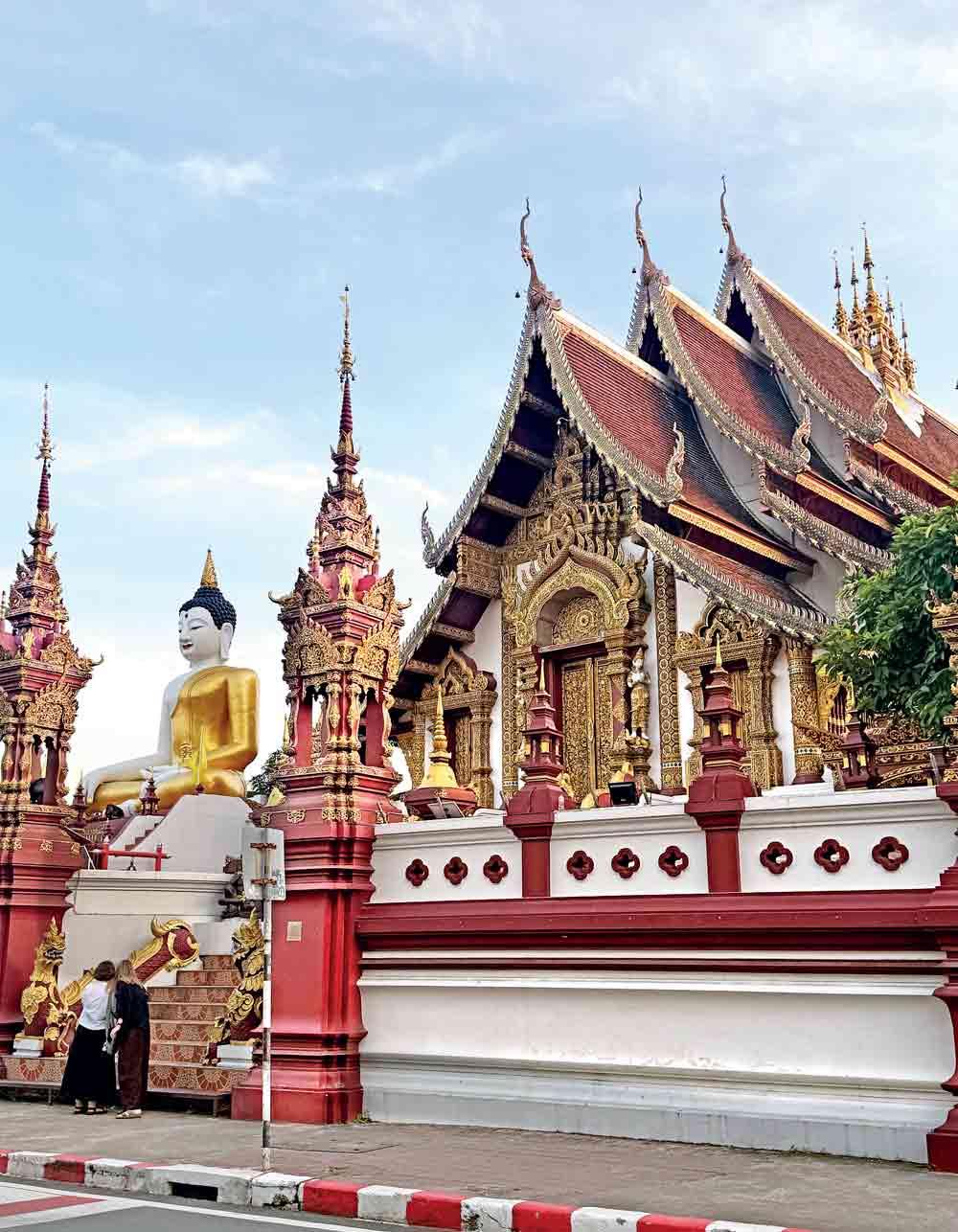
Tucked in the northernmost corner of Thailand, amidst thick jungles and ancient temples, Chiang Mai is a world away from Bangkok. If there were a textbook definition of ‘Sin City,’ it would be Bangkok. The sprawling megapolis is fun, messy, loud, fast (unless you get stuck in a traffic jam), and it’s a place that you can never get bored with or in. Chiang Mai, on the other hand, moves at a gentler pace. The city was once the former capital of the Lanna Kingdom, which ruled the region from the 13th century to the 18th century and retains its traditional roots.
moat and a crumbling defensive wall surround the Old City, making it vaguely reminiscent of the Galle Fort. Inside, life unfolds slowly. Shops, eateries, Muay Thai gyms, spas, and (more recently) weed dispensaries line the tight alleyways, which are perfect for wandering through. Despite all the old quarter’s charms, it’s easy to feel cocooned in a gentrified, tourist bubble. It’s only as you make your way out of the historic centre, towards busier roads and less curated neighbourhoods, that you get a taste of the real Chiang Mai.
In a quiet corner of the Mueang Chiang Mai district, close to the banks of the Ping River, smoke lingers in the air from the charcoal grills that dot the street. Halal restaurants are peppered in this area; satay skewers hiss over open flames, and freshly fried samosas are placed inside plastic coolers (ironically) to stay warm. At first, I was surprised to see so many halal restaurants concentrated in this one area. But, I soon learnt that this neighbourhood is home to descendants of the Chin Haw.
What is Chin Haw Cuisine?
Chin Haw cuisine in Thailand reflects generations of movement, adaptation and exchange. It is a subtle expression of migration and memory, brought south by Yunnanese Muslim traders’ generations ago, who travelled through Myanmar and Laos before finally settling in northern Thailand. Found today in Chiang Mai, Chiang Rai, and Mae Salong, these dishes echo the lives of caravan traders once connected to the Silk Road, carrying spices, stories and techniques across borders.
Compared to mainstream Thai food, Chin Haw cooking is gentler, more restrained, leaning on texture, warmth, and balance rather than heat. Their food is enriched with spices such as star anise, cinnamon, cloves and cardamom, which you may not always find in Thai cooking. It’s a community and a culinary identity that has preserved its roots while absorbing the influences of northern Thai cuisine.
Five Chin Haw Dishes to Try
Khao Soi
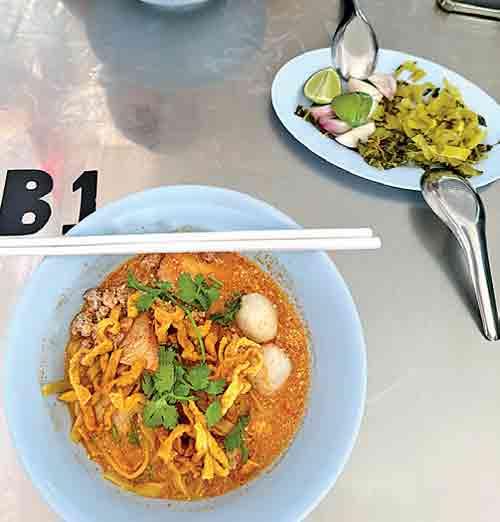
Perhaps the most recognisable Chin Haw legacy. Chiang Mai’s signature dish, khao soi, is a noodle soup that’s somewhat similar to a laksa but includes a few more textural elements. Silky egg noodles sit in a fragrant red curry broth enhanced with coconut milk, warm spices, and topped with a sprinkling of crispy deep-fried noodles. Traditionally halal, this dish is made with chicken or beef, although you can now find versions with pork and seafood. Khao soi is served alongside a few accoutrements: lime, pickled mustard greens, shallots, and chilli oil, allowing each diner to fine-tune the balance of richness and acidity of the brothy noodles.
Xidoufen (Split Pea Porridge)
A humble yet deeply comforting dish, xidoufen is a thick porridge made from split yellow peas, slow-cooked until creamy. The porridge is ladled over a serving of chewy wheat noodles and topped with coriander leaves, fried shallots, toasted sesame seeds and a whole host of sauces that turn this unassuming dish into an umami-packed sensory experience. Often eaten for breakfast, xidoufen is served warm and reflects the Chin Haw food traditions, which were designed to nourish and sustain.
Biriyani
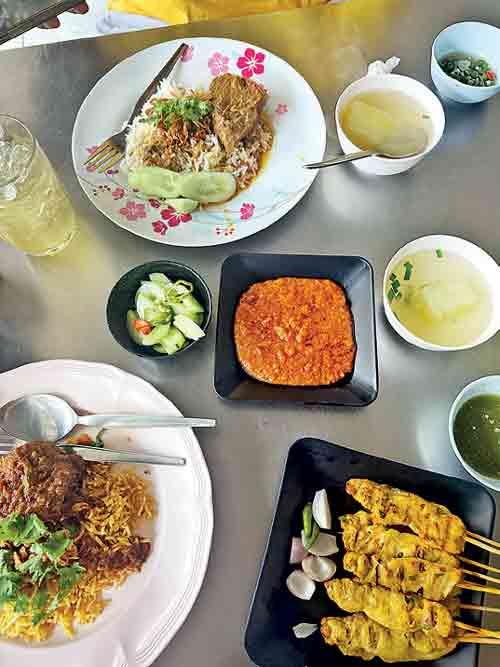
Thailand’s Chin Haw biriyani is an unexpected delight. This biriyani bears the imprint of long-distance trade roads linking Yunnan with the rest of Asia through the Silk Road. Fragrant yellow rice is layered with tender meat that has been slowly braised with spices, aromatics and dried fruits for a touch of sweetness. This fragrant dish is full of flavour and perhaps not as heavy as some of its South Asian renditions. At Khao Soi Islam, a popular local restaurant in Chiang Mai, their beef biryani is served with pickled cucumbers, raw onions, a tangy coriander-chilli sauce and a clear broth. For a more contemporary version, try the duck biriyani at Haawm, a supper club in Bangkok, which is divine.
Satay
It is a truth universally known that ambles around any Southeast Asian city are soundtracked by sizzling woks and the scent of grilled meat—and Chiang Mai is no different. Satay may be ubiquitous across Southeast Asia, but its presence in Thailand is rooted in trade and migration. Skewers of chicken and beef are marinated with coconut milk, turmeric and other spices. They’re then grilled over charcoal until smoky and tender and served with onions, cucumber and sweet, sticky peanut sauce. This simple street food with historical roots is easy to eat and rich in character.
Yellow Pea Tofu Salad
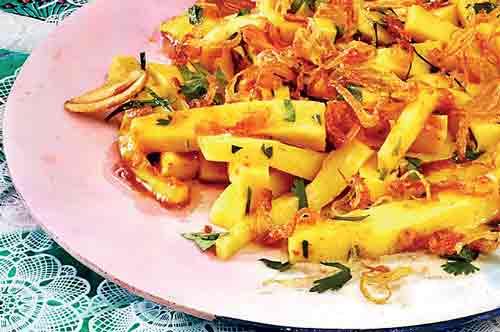
This dish is a wonderful example of how the Yunnanese traders would have had to adapt their ingredients to make traditional recipes. Instead of soy, this ‘tofu’ is made by blending soaked yellow split peas with water, cooking the mixture into a thick paste, and letting it set into a firm, sliceable block. Commonly seen across Myanmar and Yunnan, for this salad, the tofu is sliced into long chunks and dressed with chilli oil, garlic, herbs and a splash of vinegar. It’s light, fresh yet deeply savoury, and offers a nice contrast to the richer dishes.
Savouring a Legacy
Chin Haw cooking may sit quietly alongside Thailand’s better-known cuisines, but it is an essential part of the country’s culinary fabric. It adds depth to northern Thai food culture, reminding us that Thailand’s flavours have long been shaped by movement, trade and cultural exchange. Nowhere is this more evident than in Chiang Mai, where every Friday morning a dedicated Chin Haw market springs to life in this riverside district. Drawing locals who come to eat, shop and reconnect with tradition. It stands as a reminder that a country’s food landscape is not defined by its restaurants alone, but by its communities that continue to cook their histories into everyday meals.