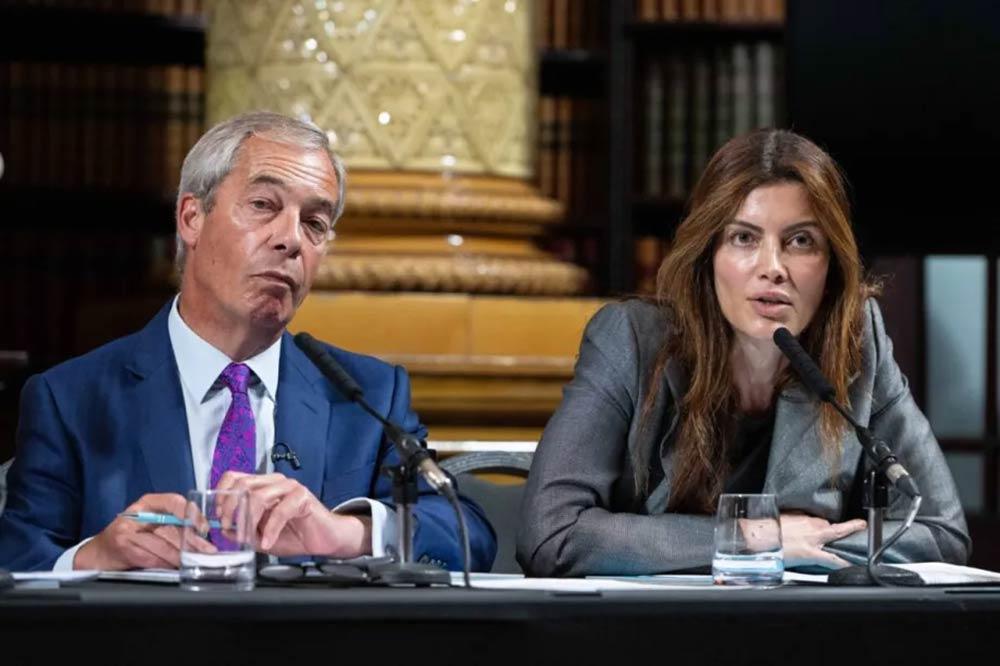
Laila Cunningham is one of Reform UK’s fastest rising and most polarising figures, a politician whose biography and rhetoric collide in ways that have made her a headline magnet in the first weeks of 2026. A former Crown Prosecution Service prosecutor and a Westminster City councillor, Cunningham was unveiled in early January as Reform UK’s pick for the 2028 London mayoral contest, a role that instantly elevated her from local politics into the national conversation.
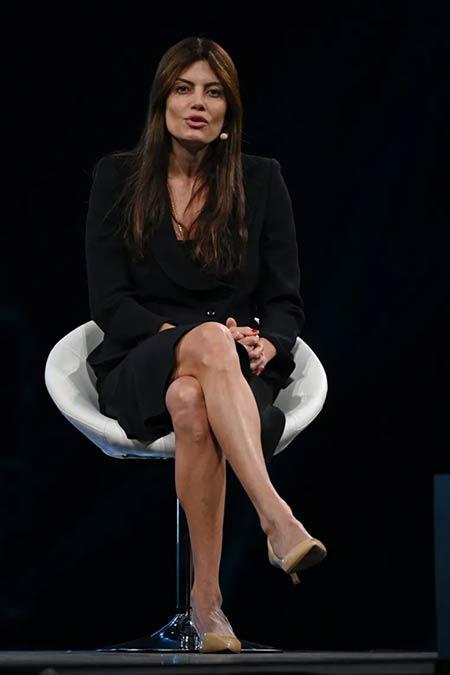 Her supporters describe her as plain spoken, tough on crime and unimpressed by what she calls establishment drift. Her critics hear something else: a candidate who talks down London, courts culture war flashpoints and makes inflammatory claims about Muslim communities and women’s dress. That tension is central to understanding why Cunningham matters, and why her candidacy is being treated as a test of Reform UK’s attempt to expand in the capital while keeping its insurgent edge.
Cunningham was born in Paddington, London, in 1977. She is the daughter of Egyptian parents who moved to the UK in the 1960s, a background that Reform has pointed to as evidence of its claim to be a party of assimilation rather than ethnicity. Cunningham is also a mother of seven, a fact frequently emphasised in profiles and coverage, both as a marker of personal resilience and as a political signifier for a party eager to present a family centred image.
Her professional story is anchored in law and the criminal justice system. She worked as a prosecutor with the Crown Prosecution Service, at points described in reporting as a senior crown prosecutor. The detail matters because her public pitch is built around credibility on crime: she does not speak as a campaigner looking in from the outside, but as someone who has spent years dealing with offenders, victims and the mechanics of prosecution. That background is also why her entry into overt party politics quickly created a clash with the expectations of political impartiality attached to certain public roles.
Cunningham entered elected politics in May 2022, winning a seat on Westminster City Council for Lancaster Gate under the Conservative banner. In a borough where the Conservatives have long treated local government as a training ground for national influence, her election looked at the time, like a conventional route upwards.
The turning point came in June 2025 when she defected from the Conservatives to Reform UK, presenting the move as a judgment that the party she had served had failed on core promises. In coverage of the defection, she framed her decision around issues such as immigration, taxation, and law and order, arguing that the Conservatives had “let the country down”. Reform seized on the switch as proof that its project of hoovering up disillusioned Conservatives could reach into London itself, with Cunningham described as the party’s first London borough councillor.
Her political shift created immediate professional consequences. Within days, reporting described her leaving the Crown Prosecution Service after her political activity became a live issue, with the implication that disciplinary action could have followed had she not resigned. For Cunningham, the exit reinforced the story she now talks about choosing politics over the safety of a career. For opponents, it raised questions about judgment and boundaries. Either way, it made her harder to dismiss as a hobby politician.
Reform UK’s decision to place her at the front of its London push was formalised on 7 January 2026, when Nigel Farage appeared alongside her at a press conference and announced her as the party’s candidate for the 2028 London mayoral election. Even in that unveiling, the campaign’s core themes were laid down in thick marker pen: a claim that London is in the grip of a crime crisis, an insistence that the Metropolitan Police needs a new approach, and a promise to reverse environmental policies that Reform portrays as punitive.
Cunningham’s headline promise is an “all-out war on crime”. She has spoken about tackling knife crime, drugs, robbery, shoplifting, and rape by refocusing the Met’s priorities, presenting herself as the candidate who will restore a sense of order and deterrence. The language is deliberately muscular, a conscious contrast with what Reform argues is the managerial tone of City Hall under Sadiq Khan. In local reporting around her candidacy, she has styled herself as the “new sheriff in town”, a phrase that captures both her political theatre and her attempt to cast London as a place that needs enforcement more than nuance.
Alongside crime, she has made a clear pledge on one of London’s most contentious policies, the Ultra Low Emission Zone. Cunningham has said she would scrap ULEZ if elected mayor, aligning with Reform’s broader attacks on net zero measures and what it describes as green levies on ordinary life. This is more than a transport policy argument; for Reform, ULEZ is a symbol of a governing class that, in its view, prioritises climate signalling over affordability. Cunningham’s commitment to reverse it is designed to speak to outer London motorists and small businesses, even as it risks alienating voters who see air quality policy as non-negotiable.
Her most explosive interventions, however, have not been about emissions but about culture, identity and policing. In mid-January, Cunningham triggered condemnation after suggesting that women wearing burqas should be subject to stop and search, arguing that face coverings can be associated with criminal intent. In the same wave of reporting, she was criticised for describing parts of London as feeling “like a Muslim city”. Advocacy voices warned that her comments were dangerous, arguing they could inflame hostility towards Muslim women, while senior politicians including Sadiq Khan publicly rebuked the rhetoric as divisive.
The controversy widened because the comments sit in a complicated place in her own identity. Cunningham has been described in reporting as British born, Muslim and of Egyptian descent, and she has also spoken about receiving Islamophobic abuse since her candidacy became public. To her defenders inside Reform, that makes criticism of her remarks look selective or politically opportunistic. To her critics, her background does not blunt the impact of what she said and may even intensify fears that she is providing cover for policies that would disproportionately target Muslim women.
Another flashpoint came in her language about London itself. At the launch event, she was reported to have said that people “pity” Londoners because of crime, feeding a narrative that the capital has become unliveable. Opponents accused her of talking down the city, and coverage pointed out that her depiction clashed with official data showing falls in some serious violence measures, even as fear of crime remains politically potent. The dispute illustrates a recurring pattern in her rise: Cunningham makes a stark claim, critics rebut it with statistics, and the argument becomes less about numbers than about trust and lived experience.
Cunningham’s messaging on integration has also drawn attention beyond the UK press. In reporting about her selection, she was quoted arguing that people who come to London must embrace British culture, insisting newcomers should not expect London to change for them. That framing is consistent with Reform’s core pitch on immigration and identity, but it gains extra charge when delivered by a candidate whose own family history is rooted in migration and whose faith is frequently weaponised by supporters and detractors alike.
While her critics focus on rhetoric, other scrutiny has landed on her record outside politics. In January, The Times reported that several of her businesses had been struck off by Companies House for failing to file required documents, an offence under companies law even when it results in no prosecution. Reform’s response, according to the same reporting, was that these were administrative issues common in small or dormant firms and not evidence of intentional wrongdoing. For Labour figures quoted in coverage, the episode was a chance to argue that a politician selling herself as tough on law breaking should be held to the same standard in her own corporate compliance.
There is also a local political record that sheds light on her style. Profiles describe a councillor unafraid to disrupt consensus, someone who relishes confrontation and treats politics as a contact sport. That approach can play well in the age of social media clips, and it fits Reform’s broader preference for insurgent personalities over steady administrators. But it also carries risks for a mayoral run, where the job is as much about budgets, planning and institutional management as it is about rhetoric. Cunningham’s opponents will try to define her as a provocateur; she will try to sell herself as a reforming enforcer.
What makes her candidacy strategically important to Reform UK is the way she embodies both novelty and continuity. She allows the party to argue it is not just a vehicle for familiar faces, because she is a London councillor with a prosecution background and a personal story that complicates easy stereotypes. At the same time, her promises and controversies fit Reform’s playbook: hard lines on crime, hostility to flagship environmental policies, and an emphasis on cultural assimilation that often shades into fights about Islam and visibility in public space.
The road to 2028 is long, and London mayoral politics can change quickly, especially if national conditions shift or if crime and living costs become more salient than identity disputes. For now, Cunningham’s emergence tells you as much about Reform’s strategy as it does about her. Reform wants a candidate who can dominate the agenda, force opponents onto uncomfortable terrain, and make London a theatre for the party’s national story about order, borders and elite failure. Cunningham is offering exactly that, with the added twist that she does so as a British Muslim woman whose own life is used by different sides to argue opposite conclusions about what Britain is and should become.