The Women Who Actually Run Things
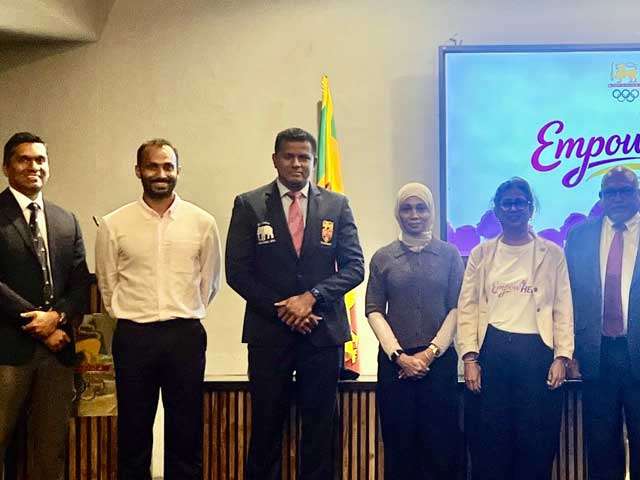
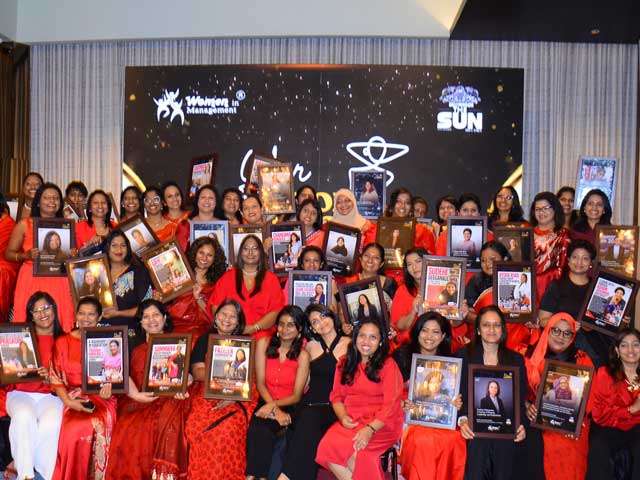
 Something felt different that morning at Port City Colombo. People had come early to the Women in Management event. They stayed late. And when the conversation turned to reframing Sri Lanka's global narrative, nobody reached for easy answers or branding platitudes. Instead, we talked about power. The uncomfortable kind. Who has it. Who keeps it. Who's still waiting outside the room. What caught my attention immediately was the room itself. Yes, many women. But also, many men, not performing allyship or ticking boxes, but genuinely engaged. As if they understood that women's leadership isn't charity work or a nice-to-have. It's how economies grow and governments function properly. That seriousness stayed with me into my next meeting, with Prime Minister Dr Harini Amarasuriya.
The Prime Minister who doesn't need to prove anything
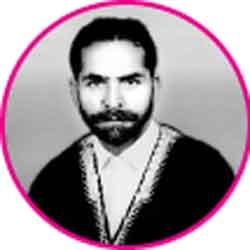 |
| My Grandfather Colonel Tassadaq |
Here's what the meeting wasn't: theatre. No manufactured urgency. No performance of authority for my benefit. Just substance. I've spent decades advising leaders across sectors, and you learn to read rooms quickly. Power reveals itself not in what's said, but in what doesn't need to be said. In who can afford to listen rather than dominate. In who treats ideas as tools rather than decorations. Dr. Amarasuriya moves through the world as an academic first. That's not incidental background information. Her BA in sociology, MA in applied anthropology, PhD in social anthropology, and years as a university lecturer aren't credentials to list on a wall. They're the architecture of how she thinks.
In South Asia, where women's political advancement so often runs through family lineage, her rise matters differently. She's neither wife nor daughter of inherited power. That distinction is important not because family connections invalidate leadership, but because merit-based power changes what people believe is possible. It forces political parties to invest differently. It resets voter expectations. The New York Times earlier in the year noted that women are 56 percent of Sri Lanka's registered voters. Striking number. Yet somehow women remain dramatically underrepresented in Parliament, cabinet, corporate leadership, media decision-making. Numbers don't automatically translate to power. Structures do.
The country of firsts that somehow forgot to follow through
Sri Lanka's relationship with women in leadership is genuinely paradoxical. World's first woman prime minister, 1960. Later, a woman president. High female literacy. Women visible across professions and civil society. On paper, progressive. In international comparisons, impressive.
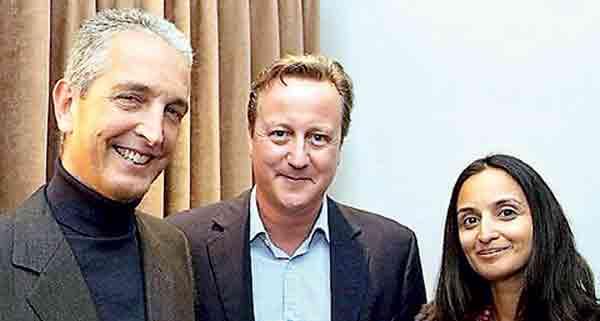
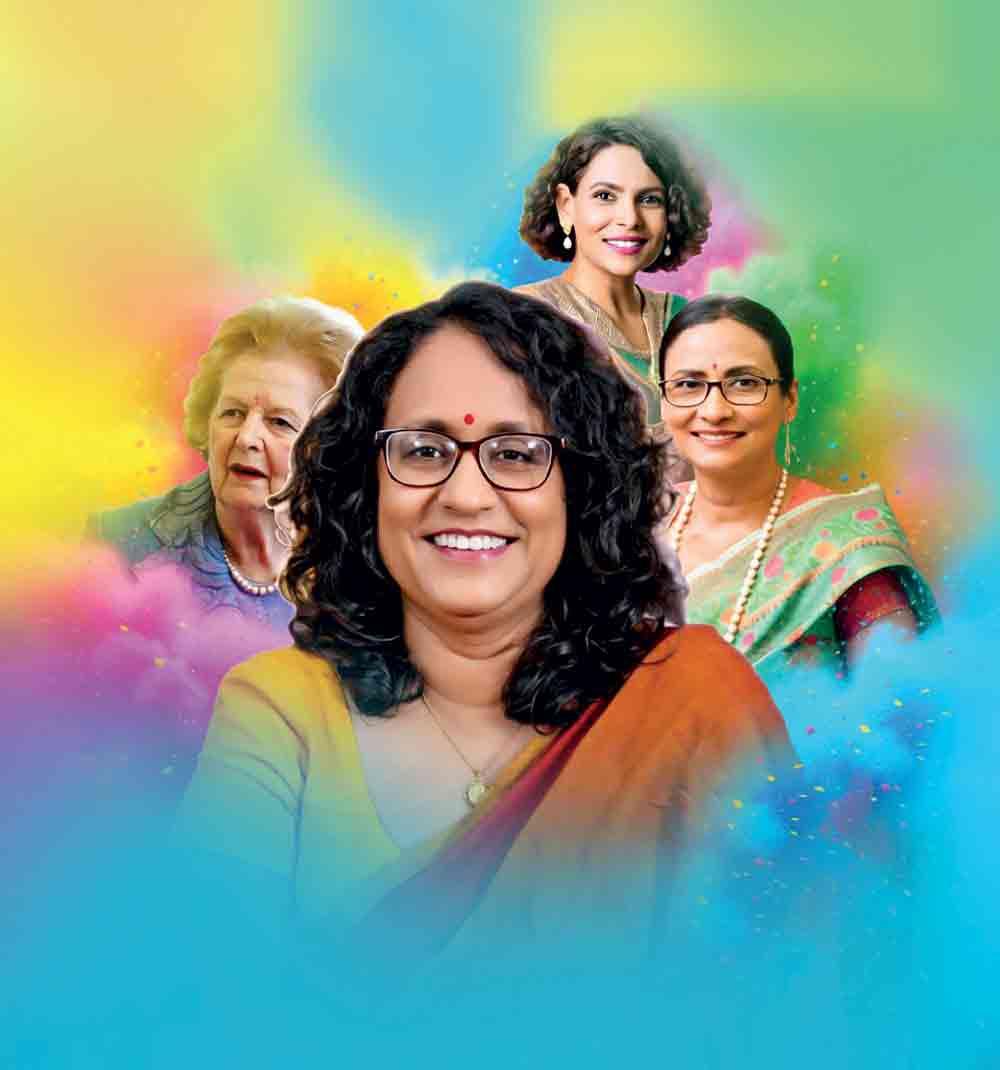
PM David Cameron
But look closer. Women's labour force participation remains stubbornly low despite high education levels. Political representation has barely shifted in decades. Corporate leadership can still treat women at the top as remarkable exceptions rather than normal Tuesday. Media cultures can undermine women leaders through tone and framing rather than substance. This gap between symbolism and reality isn't unique to Sri Lanka. Many countries celebrate a first and assume the work is done. But Sri Lanka's history makes the gap more pronounced. When you've already shown the world what's possible, it becomes harder to justify why that possibility hasn't become normal.
Why dismantling VIP culture actually matters
One of the most interesting signals from the current government: the apparent rejection of VIP political culture. Long motorcades. Excessive security. The rituals that maintain distance between leaders and citizens. Being questioned. Even dismantled. This matters more than it looks like on the surface.
VIP culture isn't neutral. It reinforces hierarchy. It privileges a particular model of masculinity. It makes politics performative and inaccessible. When leadership becomes quieter, more restrained, it opens space for different kinds of authority to be taken seriously.
The transformation of the prime ministerial compound from a bustling operation of over a hundred staff to something far smaller, almost library-like, might seem symbolic. But symbols shape behaviour. They signal priorities. They tell public servants and citizens alike what kind of leadership is being modelled.
Mine clearance and what leadership actually looks like
My conversation with the Prime Minister turned to mine action in the Northern and Eastern provinces. As Prime Minister Harini Amarasuriya told donors in May 2025, clearing landmines in the Northern and Eastern Provinces is ‘a national imperative, not just a humanitarian task’ – a framing that matters for policy and resources.
I serve as a trustee of The HALO Trust, and trusteeship teaches you to think in decades rather than news cycles. Mine clearance isn't about visibility or quick wins. It's about patience, discipline, safety culture, sustained international partnership.
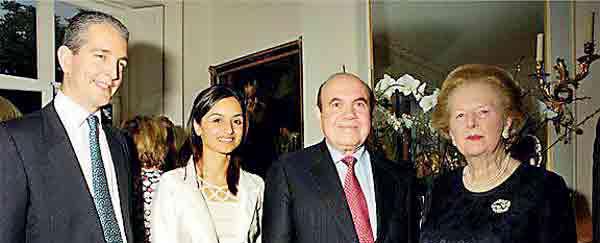
With Former PM Margaret Thatcher
A cleared field restores livelihoods. A cleared road reconnects communities. A cleared schoolyard gives children back something most of us take for granted: freedom to move without fear.
HALO's work in Sri Lanka has reached extraordinary milestones. Over one million explosive items removed, including hundreds of thousands of mines. Yet international aid cuts have reduced capacity, slowing progress exactly when momentum matters most. These aren't abstract budget constraints. They translate directly into delayed returns to land, delayed farming cycles, delayed rebuilding of lives.
Here's what deserves far more attention: who's doing this work.
Around 42 percent of HALO's operational staff in Sri Lanka are women. Some are unit commanders. Many are sole breadwinners. Most lived through a 27-year civil war, through displacement, through uncertainty that most of us cannot imagine. These women aren't performing leadership. They're practising it. Making communities safe. Supporting families. Rebuilding trust in places where trust was systematically destroyed. This is leadership stripped of rhetoric, grounded in responsibility. No speeches. No stages. Just results.
The reformers laying the groundwork for the nation
If Sri Lanka is going to close the gap between symbolism and substance, it won't happen only through elections. It'll happen through people whose work rarely becomes news. Sally Hulugalle was one such figure. Deeply troubled by conditions at Mulleriyawa, where women were arbitrarily incarcerated under the misuse of the Vagrants Ordinance, she co-founded NEST with Kamini de Soysa. They created halfway support for women meant to be released but who had nowhere to go. Through counselling, occupational therapy, practical care, NEST restored dignity to lives emptied by institutional neglect. Later establishing centres in Hendala, Dumbara, Kahatagasdigiliya. Her story reminds us that women's leadership has long existed in Sri Lanka. What's been inconsistent is the translation of that leadership into power, scale, permanence.

With the PM of Sri Lanka, H.E. Dr. Harini Amarasuriya
When exceptional women reveal structural failure
Meeting the inspirational Kasturi Chellaraja Wilson, Group CEO of Hemas Holdings, brought another dimension into focus. She's often cited as evidence of progress. And she is. Her career demonstrates what's possible when talent meets opportunity. But here's the problem: when a woman chief executive becomes a national symbol, it also reveals how exceptional such cases remain. Progress that depends on exceptional individuals is fragile. Structural change is what makes progress durable. The same applies to other leading women entrepreneurs like Tania Polonnowita Wettimuny, whose leadership in logistics demonstrates what women's economic power looks like in practice: jobs, trade, capital, governance.
Building infrastructure, not just inspiration
Women in Management impressed me because it focuses less on inspiration and more on infrastructure. Training. Networks. Access. Livelihoods. The work recognises that empowerment without economic security is just nice words. I was honoured during the visit with an award. But the award should really go to the women of Sri Lanka. Women like Kimarli Fernando, a corporate leader who has served in senior roles across both the public and private sectors, whose intelligence and passion for Sri Lanka was simply astonishing. When I remarked at how smart the Sri Lankan women I was meeting during my stay in the country, I was told about the recent 2025 data from the International IQ Test placing it as the highest IQ in South Asia.
The beliefs that travel through generations
Thinking about all of this, I kept coming back to my own upbringing.
My mother worked in Pakistan as well as the UK when she arrived in the 1960’s. I watched her balance professionalism, resilience, independence as an accountant and entrepreneur. My aunts ran their own businesses in Rawalpindi, Pakistan. That shaped me more than any speech or policy document ever could. My maternal grandfather, Colonel Tassadaq, believed deeply in educating women and insisted his daughters be educated when that wasn't a given. I didn't know him well. He passed when I was young. Yet it's remarkable how much our lives are shaped by the attitudes of those who came before us. Beliefs travel through generations, often silently.

I think about that now as a mother. I hope my daughter Isabella doesn't grow up with limiting beliefs because of her gender. I also hope she develops the astuteness to navigate environments where bias still exists, because pretending it doesn't is not preparation.
A note on politics and power
I'm politically neutral today. Earlier in my career, over twenty years ago, I served as vice chair of a business relations forum within the UK Conservative Party. In that context, I met the late Margaret Thatcher. She was neither the daughter or wife of an important man. She was a shopkeeper’s daughter and in an age of class structures, she had to navigate class as well as gender bias to become the country’s first prime minister. Women who reach positions of power without being defined by lineage or patronage carry particular scrutiny. That's exactly why figures like Dr Amarasuriya matter. They expand the definition of authority itself.
From historic firsts to everyday reality
Female leadership at the top doesn't automatically dismantle structural barriers below. My stay in Sri Lanka was not just about meeting inspiring women, but also, I met the incredibly supportive men, the husbands, fathers, brothers and bosses who want to be part of the solution for gender parity. Sri Lanka's opportunity now isn't about repeating its historic firsts. It's about closing the gap between symbolism and everyday reality. Designing systems that normalise women's authority rather than celebrating it as novelty. Investing in livelihoods as much as optics. Recognising leadership that clears land, rebuilds communities, quietly widens access to power. If it can turn historic firsts into everyday fairness, it'll offer the world something far more valuable than symbolism. It'll offer a model of leadership built patiently, collectively, with dignity at its core. And that's a story worth telling.