
By Mifra Sadikeen and Rajan Thananayagam
 As the momentum for IRONMAN 70.3 Colombo accelerates at an exponential pace, its presence is already being felt across the city. From early morning runs along Colombo’s streets to cyclists logging long kilometres and swimmers grinding through disciplined sessions, the unmistakable trail of IRONMAN preparation is visible in every corner of the capital. Colombo is training, and the countdown has truly begun. As Sri Lanka braces itself for its largest endurance sporting event to date, we are thrilled to place the country firmly on the global sporting map, showcasing Sri Lanka not just as a beautiful destination, but as a serious prospect for hosting world class endurance events. IRONMAN 70.3 Colombo represents a landmark moment, uniting athletes, communities, and the nation around a shared pursuit of resilience, discipline, and ambition.
In this article, we will break down everything you need to know about the IRONMAN 70.3 relay format, including practical training tips, race logistics, health and safety considerations, and essential event day preparation, equipping you with clarity and confidence as race day approaches. While many are eagerly counting down the days to Sri Lanka’s biggest endurance challenge, others are understandably feeling the nerves and uncertainty that come with such an intense event. If you find yourself on the sidelines wondering whether you can sustain the demands of an IRONMAN, you are not alone. The relay format offers a powerful entry point, allowing you to be part of this iconic experience while playing to your strengths as an athlete.
If you are considering taking up the relay challenge, this guide is designed to help you make that decision with confidence. At Raise the Bar, our commitment goes beyond race day. We believe health and wellbeing should be a lifestyle, not a season. Our aim is to build and nurture a strong network of athletes, amateur and professional alike, who support, inspire, and uplift one another, ensuring that the impact of IRONMAN 70.3 Colombo extends far beyond the finish line.
 The Appeal of the IRONMAN 70.3 Relay Experience
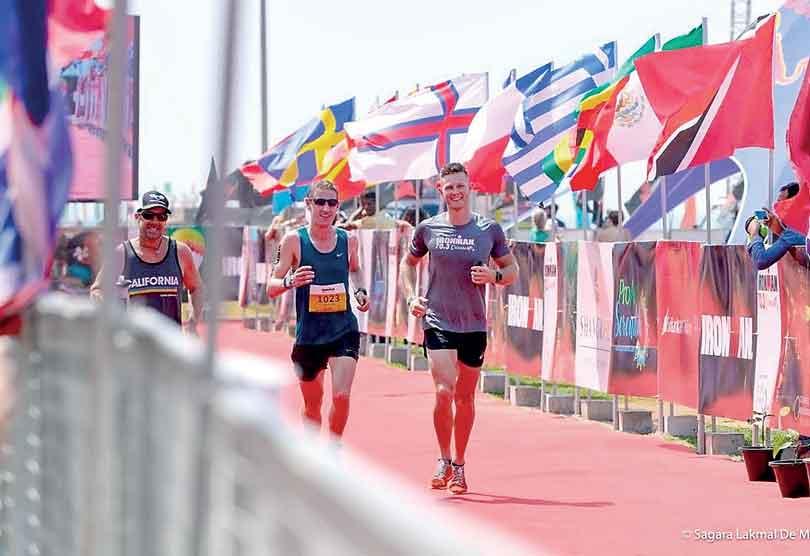
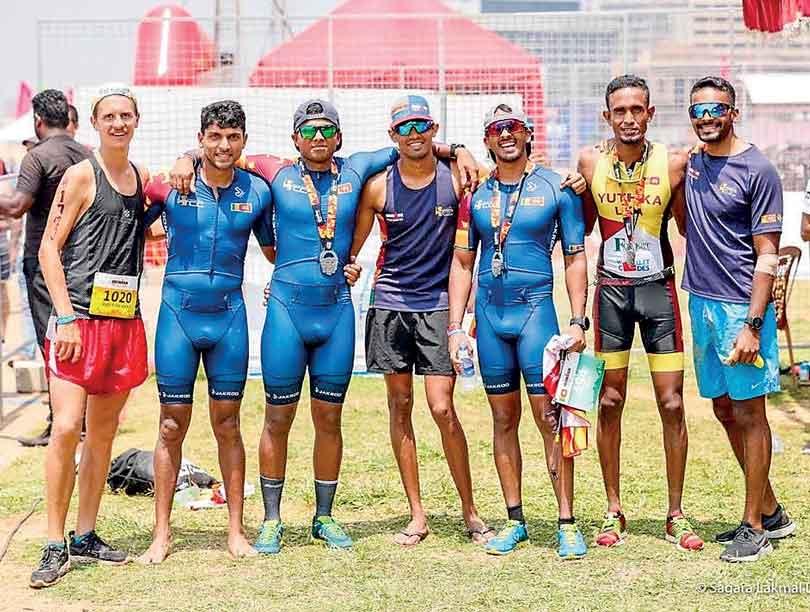
The IRONMAN 70.3 relay offers participants the excitement and atmosphere of a major race day, including the thrill of an ocean swim start, the adrenaline of a fast-paced bike segment, and the unforgettable moment of crossing the finish line. Unlike the individual event, the relay allows each team member to focus on their chosen discipline, making the experience accessible to those who may not be ready to tackle all three sports at once. Taking on the IRONMAN 70.3 Colombo as a team transforms what might seem like an overwhelming challenge into a shared and attainable goal. The relay format encourages camaraderie and collective achievement, making the journey not only possible but also memorable for everyone involved. For many, joining a relay team is an ideal introduction to triathlon, offering a supportive environment to embrace an active lifestyle. The team challenge encourages health and wellness, offering both motivation and enjoyment as participants work together toward a common objective.
Q1. For readers new to triathlon, what exactly is the IRONMAN 70.3 relay format, and how does it differ from the individual IRONMAN 70.3 race?
IRONMAN 70.3 is a half distance triathlon with a 1.9 km swim, 90 km bike, and 21.1 km run. In the individual race, one athlete completes all three disciplines. In the relay, a team shares the same course, with each member completing one or two disciplines, and the team earns a single finish time. The key difference is not the distance. It is the team relay experience that makes the IRONMAN journey accessible, social, and confidence building while preserving the authenticity of the course and the finish line moment. It is a strong stepping stone for someone who wants to take on the full IRONMAN challenge in the future.
Q2. What are the distances for the swim, bike, and run legs in the Colombo relay, and how are they divided among team members?
For IRONMAN 70.3, the course distances are a 1.9 km swim, a 90 km bike, and a 21.1 km run. Relay teams cover the exact same distances. A relay can be divided into three legs, with one discipline per athlete, or into two athletes, with one athlete completing two disciplines and the other completing one. In practical terms, teams should select disciplines based on what each athlete can train for consistently and execute safely, then build the race plan around smooth handovers and calm race day logistics. What makes the 2026 event distinctive is the partnership with Port City Colombo. The sheltered ocean swim along the breakwater provides a safe environment with reduced chop and straightforward sighting. The three lap flat and fast bike course is engaging, energetic, and highly spectator friendly. The final two lap run is designed for atmosphere, with strong crowd support, frequent aid stations, and a finish line experience that delivers the full IRONMAN festival feeling.
Q3. Why was Colombo chosen as the host city, and what makes this course unique compared to other IRONMAN destinations?
IRONMAN’s return places a spotlight on Colombo, highlighting its reputation as a fast, scenic course set in the vibrant heart of the city and complemented by world famous Sri Lankan hospitality. IRONMAN 70.3 Colombo is a truly international event, attracting athletes from more than 60 countries in previous editions. Athlete satisfaction ratings exceeded 91 percent in both 2018 and 2019, making it a favourite among participants. Many athletes extend their stay, enjoying Colombo and travelling the island with family and friends after the event. This combination of a dynamic course, exceptional hospitality, and a welcoming atmosphere makes Colombo a natural choice for hosting a world class endurance event.
Q4. From arrival to finish line, what should participants expect on race day in terms of logistics, transitions, and support?
Participants should expect a professional race week build up and a highly structured race day. Before race day, athletes must attend mandatory check in and briefings from 19 to 21 February and plan travel accordingly. The expo provides access to merchandise, mechanical support, nutrition, and transition familiarisation. The bike athlete must rack their bike overnight at the transition area. On race day, there is a rolling start with self-seeding based on expected swim time. Transitions are disciplined and clearly managed. The swimmer hands over to the cyclist, and the cyclist hands over to the runner. Aid stations are positioned approximately every 15 km on the bike and every 1.5 km on the run. Information points, medical support, and withdrawal procedures are available on site.
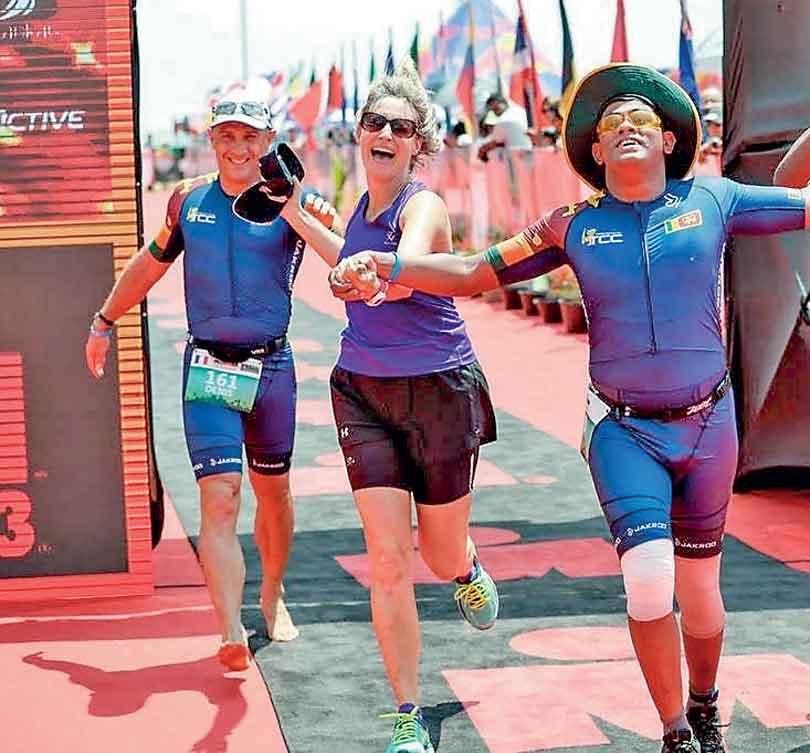
Relay teams may join their runner in the finish chute, meeting at the designated relay meeting point, as outlined in official Colombo FAQs. The best way to reduce stress is to treat race weekend like a well-run project. Arrive early, attend briefings, walk the venue, rehearse handovers, and communicate clearly as a team.
Q5. Are there age limits or eligibility requirements for relay participants, and how inclusive is the event for different fitness levels?
Athletes must be at least 18 years old on race day. Inclusion is where the relay truly shines. Because the distance is shared, participation is possible for a wide range of athletes, including strong swimmers new to cycling, runners returning from injury, or corporate teams where one athlete handles the bike while others contribute the swim and run. Colombo has a strong history of resilience and inclusion, from athletes returning after major health challenges to athletes with disabilities redefining what is possible. Relay teams allow these stories to stand proudly on the same start line.
Q6. Is this race suitable for people attempting their first endurance event, or is prior triathlon experience recommended?
Yes. The relay format is designed for first timers. It allows athletes to focus on one discipline, experience the full race day environment, and reduce complexity around pacing, nutrition, and equipment. Prior triathlon experience is not required. What matters is discipline specific readiness and completing race simulation sessions in training. First timers should aim to finish strong and safe rather than chasing time. Many relay athletes go on to race solo in future editions.
Q7. How far in advance should teams begin preparing for a relay event like IRONMAN 70.3 Colombo?
Preparation depends on current fitness and the discipline selected. Athletes with an existing fitness base may need as little as four to six weeks to prepare for a single relay leg. Those starting from scratch should allow significantly more time. Discipline choice matters. Cyclists can build endurance progressively, while new runners must be cautious with load and injury risk. Teams that prepare early also benefit logistically by coordinating travel, handovers, equipment, and nutrition.
Q8. What does effective training look like for relay participants balancing work, family, or studies?
Training should be enjoyable, sustainable, and integrated into daily life. It should support physical health, mental wellbeing, and community connection rather than becoming a burden. Effective training is built on consistency, progression, and specificity. A realistic weekly structure includes three key discipline sessions, covering endurance, intensity, and skills. Two shorter complementary sessions focus on mobility, strength, or easy aerobic work, with at least one full rest day. Swim athletes should include technique, aerobic endurance, and race pace sessions, with open water practice where possible. Bike athletes benefit from a long ride, a strength or cadence session, and an interval session, with heat adaptation where appropriate. Run athletes should complete a long run, a tempo session, and an easy run with strides, supported by strength work for calves and hips. The goal is not heroic workouts, but repeatable training that fits real life.
Q9. How important is team selection in a relay format, and what should athletes consider when choosing teammates?
Team selection is critical. A relay team functions as one integrated race day system. Trust is essential. Key considerations include reliability, communication, temperament under pressure, shared purpose, and aligned expectations. Relay is a shared commitment, not an individual entry.
Q10. Can relay teams be flexible with roles, or is it best to assign one discipline per athlete?
While flexibility can be planned, clear role assignment is best. Confidence comes from repetition. Knowing your role allows precise training, packing, and execution. Flexibility exists in choosing a two person or three-person structure where permitted. Teams should also understand substitution policies early and avoid assuming last minute changes are possible. Assigning one discipline per athlete is the safest and most effective approach.
Q11. What are the most common challenges first timers face during race week or on race day?
First timers often struggle with three main areas. Environmental conditions require conservative pacing and hydration due to heat and humidity. Logistics can be stressful if check ins or briefings are missed. Fuelling mistakes occur when athletes underestimate hydration or start too hard. These challenges are largely planning issues, not fitness issues, and are entirely solvable with preparation.
Q12. What practical advice would you give first timers to help them feel confident and prepared?
Keep it simple. Rehearse handovers at least twice. Complete one race simulation session for your discipline. Prepare for heat and refine hydration strategies. Use only nutrition you have trained with. Read the athlete information carefully and attend briefings. Adopt the right mindset. First time success is measured by execution, not suffering. Calm and controlled always beats reckless.
Q13. How well prepared is IRONMAN 70.3 Colombo in terms of safety and support?
The event is organised with meticulous attention to safety, medical coverage, hydration, and course management. Detailed schedules, procedures, and medical protocols are provided in the Athlete Information Guide. Swim safety teams are present, restricted areas are managed carefully, and aid stations are positioned frequently on both bike and run courses. Athletes must review all guidance and race conservatively. Nothing on race day should be untested in training.
Sri Lanka has a wide network of running clubs, cycling groups, swim squads, gyms, and workplace communities across the island. Joining a group builds consistency, accountability, and readiness.
Q15. Why should someone consider the relay even if they are not ready to race solo?
Relay is the smartest bridge between inspiration and action. It offers a true IRONMAN experience while reducing injury risk and overwhelm. Team accountability makes training easier and more enjoyable. Local relay stories highlight resilience and unity, including athletes returning from adversity and teams uniting across regions. These moments define the spirit of IRONMAN Colombo.
Q16. At what point in an athlete’s journey would you recommend attempting a relay?
Relay is ideal at three stages. As an entry point for newcomers. As a comeback pathway after injury or life disruption. As a performance test for athletes strong in one discipline. If you can train consistently and meet a realistic benchmark for your leg, you are ready. Consistency matters more than courage.
Q17. Where can participants find official information and register?
All official information and registration are available on the event website. Questions can be directed to organisers via Instagram or email at info@serendibmultisport.com Local gyms and training groups are also valuable information hubs.
Q18. Are there key deadlines or details participants should know before signing up?
Athlete check in is mandatory and must be completed as a team. Race packets include timing chips and relay identifiers. Bike racking is completed by the bike athlete the day before the race. Pre-race briefings are strongly recommended. Race morning follows a strict timeline. Only active leg athletes may access transition zones. Post race procedures include medal collection, photos, equipment retrieval, and awards. Treat race week as a commitment. Plan early, communicate clearly, and review the official event guide to avoid unnecessary stress.
Q19. What message would you share with readers unsure if they are ready?
Courage is not crossing the finish line. Courage is showing up. You do not need perfection to begin. The relay exists for this exact moment when ambition is strong, and confidence is still growing. Choose one discipline, train consistently, surround yourself with a team, and come to Colombo. Readiness follows action.
The relay lowers barriers, invites newcomers, and expands participation. It brings families, colleagues, and communities into the event ecosystem. It strengthens clubs, supports tourism, and normalises endurance sport in Sri Lankan life. The relay is more than a race. It is an invitation to build a healthier, more connected Sri Lanka, one team at a time.