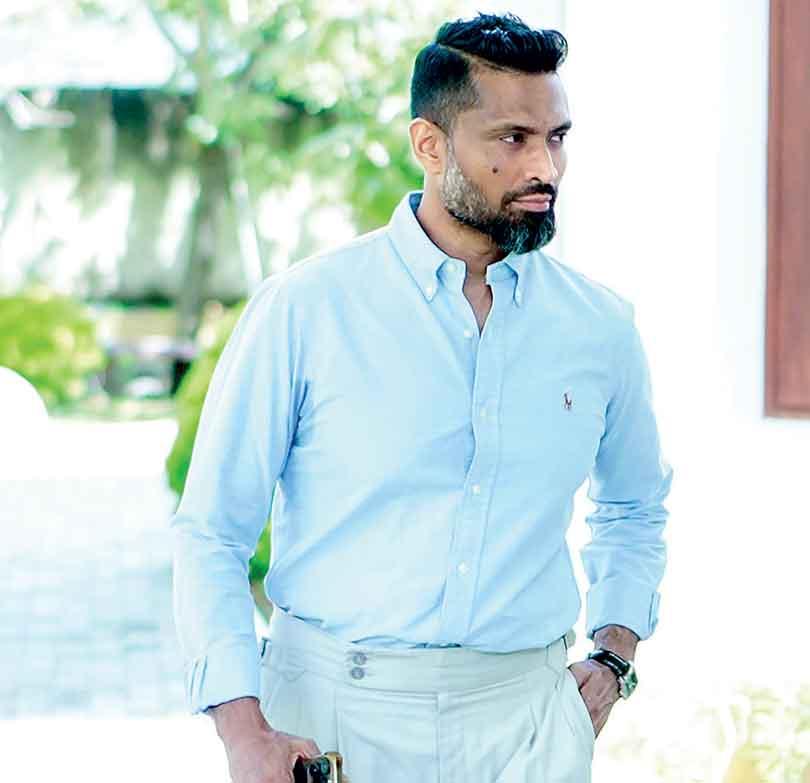
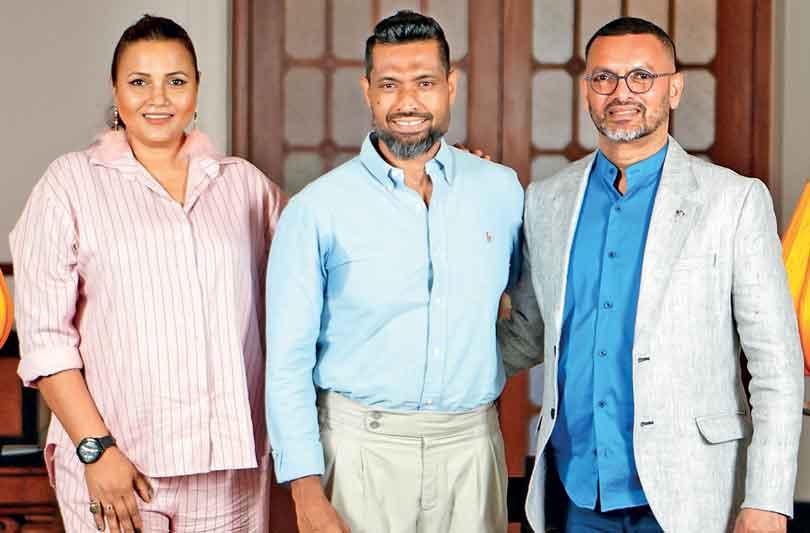
 Arantha Sirimanne, one of Sri Lanka’s leading commercial and fashion photographers, sat down with Kumar de Silva and Rozanne Diasz on this week’s episode of Fame Game to share his journey, insights, and experiences in photography. From his early days balancing IT work and photography to embracing the digital era, Arantha opens up about his creative process, the challenges of working with models, and the philosophy that drives his work. In this candid conversation, he also discusses the evolving photography industry, international experiences, and his vision for the future.
Q: Welcome to the show, Arantha. First of all, why don’t you use WhatsApp?
I have not used WhatsApp for quite some time. Before I moved fully into photography, I worked in the IT industry, and during that time WhatsApp became a pain because of too many groups and distractions. I did use WhatsApp back then, but I stopped. People sometimes tell me I am missing out on work, but I do not feel that way. I have deliberately chosen not to use it. It is a personal choice, and I manage my work without it.
Q: You are not a frequent face at events or networking gatherings. Are you intentionally laid back, or is that the real you?
I am naturally an introvert. Many photographers tend to be introverts. They feel more comfortable behind the camera than in front of it. It is not a tactic. It is simply who I am. I love my work and focus on that. That focus often keeps me out of the social circuit, but it is authentic to me.
Q: You began photography while working in IT. Tell us about that transition and how digital photography was received when you started.
I entered the commercial fashion scene around late 2004 or early 2005, while I was still employed at an IT firm and doing photography part time. In those days, professional photographers were using film, and many looked down on digital photography. Digital was dismissed as a toy. People said anyone could use it and that it would ruin the craft. But a group of us believed in the future of digital photography and persisted. I am not demeaning film. Film is an art. But I believed we needed to look forward. My IT background made me comfortable with technology. I am naturally technical and curious, and that helped me grow within the digital era.
Q: With technological advances, including AI, many worry about manipulation and over reliance on post production. What is your view?
Any new platform needs rules and limitations, but AI is here to stay, just like digital photography was. Some people fear it, but history shows that we adapt. Post production is powerful, but it should be the icing on the cake, not the whole cake.
I aim to get ninety percent of the result in camera and leave about ten percent to post production. That preserves authenticity and the photographer’s craft. Post production can correct and enhance, but the photograph should be fundamentally strong before manipulation.
Q: Practically, how do you achieve ninety percent of the result in camera?
Photography is mainly about lighting. A specialist in people photography must understand how light falls, how skin and fabric absorb light, and how to shape mood and narrative using light and shadow. Lighting sets the vibe. It can make an image feel sad, joyous, dramatic, or soft. I focus on crafting that lighting and extracting as much as possible during the shoot itself, so post production becomes enhancement rather than correction.
Q: Do you prefer outdoor or studio work?
I love outdoor photography. That is where my passion lies because outdoor environments offer fresh challenges and natural variation. However, client demand often brings me into the studio. Much of my commercial work is studio based, but my best personal work tends to be outdoors.
Q: You are primarily a commercial fashion photographer. What about other genres?
Commercial fashion is my bread and butter, but I also do experimental and editorial work as personal projects. Black and white photography has a special resonance. It emphasizes character and mood differently from colour. I often include black and white images in test shoots because they reveal tone and emotion very strongly.
Q: Do you ever get misunderstood because of the kind of work you post on social media, such as swimwear or nude art?
In the past, yes. The industry and audience were more judgmental. Today, attitudes in Sri Lanka are changing. People judge professional work less and understand artistic intent better. That shift has made it easier for photographers and models to be seen as artists rather than being boxed into labels.
Q: You mentor many young photographers and conduct workshops. What do you emphasize about building a career and personal brand?
Sri Lanka lacks formal institutes for some areas of artistic training, so self-education and self-branding are essential. I advise young photographers to learn broadly at first but to specialize eventually. Try different genres such as wedding, wildlife, street, and portrait photography, then identify what you enjoy and where you perform best. Quality and consistency matter. Brand yourself through a carefully curated body of work and keep improving your craft and professionalism.
Q: You mentioned working internationally. Which shoots stand out and why?
I have worked in several countries. Shooting Miss Egypt was a strong experience because models from different cultures approach photography differently. I photographed Miss Finland 2012 in Rovinj in extremely cold conditions, close to minus thirty degrees, which created real challenges in handling equipment. I also do a lot of work in Mumbai and collaborate with agencies there. Working abroad broadens perspective and sharpens both technical and interpersonal skills.
Q: Who are some of the models you have enjoyed working with? Any memorable shots?
I have worked with many talented models. Locally, Nadika Perera stands out, and I consider some of my most iconic work to have come from our sessions together. I also enjoy photographing darker skin tones, which are extremely photogenic and offer unique creative possibilities. Internationally, I have worked with pageant winners and accomplished models, including several Mr India winners. The best shots often come from chemistry in the moment, the model’s movement, and how they inhabit the frame.
Q: When a model is blocked or not performing, how do you handle it?
Preparation is key. I study the person beforehand, their background, interests, and comfort zones, so I can communicate in ways they relate to. Building rapport is important. Some people are naturally camera friendly, while others need time. When someone is blocked, I give them space, engage them in conversation, and suggest small, achievable actions to build confidence. Not everyone can be moulded completely, so you adapt and work with their strengths.
Q: How do you handle responsibility when things go wrong on set?
A fashion photographer must take responsibility. You cannot blame the makeup artist or stylist. You are the director of the shoot. You need a basic understanding of makeup and styling so you can intervene constructively. If something goes wrong, you fix it on set or plan reasonable post production corrections, but the aim is always to make the shoot work in camera.
Q: Have you experienced creative blocks, and how do you overcome them?
Yes, creative blocks happen. They often occur when working with someone new and you do not yet understand their energy. I overcome this by spending time getting to know the person and observing their movement. Sometimes slowing the shoot down helps. Studying art, looking at other photographers’ work, and changing the environment also help refresh ideas.
Q: Why did you choose commercial fashion over wedding photography, which is often more lucrative?
I explored many types of photography, including weddings. Over time, I realised that fashion offered greater creative freedom. Wedding photography is a crowded market. While it can be financially rewarding, my passion lies in fashion and editorial work, where I can collaborate on concepts, styling, and visual storytelling.
Q: When clients approach you, do you lead the concept or adapt to their ideas?
It is a balance. In Sri Lanka, flexibility is important because the market is small and clients often have strong expectations. I usually offer my ideas and professional input, and over time clients have come to trust my direction because they see the results. I remain adaptable while guiding them professionally.
Q: Looking ahead, what are your plans for the next five years?
I plan to do an exhibition. Over the years, I have photographed many characters and portraits, and I want to create a conceptual exhibition that places the subject in dialogue with their photographic image. The idea is to explore identity and mystery by presenting the person alongside their portrait. I am working towards showcasing that body of work publicly.
Q: How do you manage the emotional and logistical responsibilities of a fashion shoot?
You need strong coordination skills, fashion sense, and people skills. I study the strengths of the makeup artists and stylists I work with. Communication is essential. You must take responsibility for the final image and ensure the entire team is aligned with the concept. If something needs correcting, you address it. A photographer must balance artistic direction with practical logistics.
Q: How have you maintained a clean professional image in an industry prone to rumours?
Maintaining a professional reputation requires discipline and consistency. I treat everyone with respect and avoid favouritism. My family life is important, and my wife is very supportive, which helps maintain balance. Being honest, transparent, and responsible on set prevents many issues. Setting personal boundaries and sometimes choosing isolation also helps protect one’s reputation.