
Tom Blyth
 People We Meet on Vacation (2026) is an American romantic comedy-drama directed by Brett Haley, adapted from Emily Henry’s bestselling 2021 novel of the same name. Released globally on Netflix on January 9, 2026, the film offers a restrained, emotionally grounded exploration of love, friendship, and the quiet ache of missed timing. Rather than relying on sweeping romantic gestures or dramatic plot turns, the film unfolds gently, asking its audience to sit with longing, discomfort, and emotional honesty.
At its core, People We Meet on Vacation, is not about falling in love so much as recognising it, often too late, sometimes imperfectly, and always with consequences. The film remains largely faithful to the emotional heart of Henry’s novel, though it makes notable structural and tonal changes that may divide longtime readers. Where the book luxuriates in slow-burn intimacy and interior reflection, the film opts for cinematic restraint, prioritising atmosphere and emotional realism over narrative density.
The story centres on two sharply contrasting characters whose differences both bind and separate them. Poppy is a travel writer whose life is defined by movement. She thrives on new cities, unfamiliar cultures, and the thrill of reinvention. Restless and outwardly confident, she believes happiness lies in motion and possibility. Alex, by contrast, is thoughtful, introverted, and deeply attached to routine. He finds comfort in predictability, structure, and emotional safety, and his worldview is shaped by stability rather than escape.
 The pair meet in college and form an unlikely bond after sharing a long drive back to their hometown in Ohio. What begins as an awkward but sincere friendship slowly evolves into something deeper; though neither is quite brave enough to name it. As adulthood pulls them in different directions, Poppy and Alex commit to an annual tradition: one week together every summer, no matter where life takes them. Over nearly a decade, these trips become emotional touchstones, marking not only the passage of time but the subtle shifts in their relationship.
The film employs a dual timeline structure, moving fluidly between present-day scenes and flashbacks to past vacations. This approach allows the audience to witness the gradual accumulation of shared memories; inside jokes, recurring arguments, moments of intimacy that hover just shy of confession. The use of time feels purposeful rather than gimmicky, reinforcing the idea that relationships are built not on grand declarations but on repetition, familiarity, and emotional consistency.
A pivotal turning point occurs during a trip to Italy, where an unspoken tension finally fractures into silence. The details of this fallout are revealed gradually, allowing emotional weight to build through implication rather than exposition. The present-day narrative begins years later, with an awkward reunion at a wedding in Barcelona. The discomfort between Poppy and Alex is palpable, two people who know each other intimately but have grown emotionally estranged. As old memories resurface and unresolved feelings come to the surface, both characters are forced to confront not only what they feel for each other, but what they want from their own lives.
What distinguishes, People We Meet on Vacation, from more conventional romantic dramas is its refusal to romanticise emotional confusion. The film recognises that love is often complicated by fear, miscommunication, and self-deception. Rather than presenting one decisive moment where everything clicks into place, the story unfolds through quiet reckonings and uncomfortable truths. The eventual resolution is honest and earned, prioritising emotional growth over fantasy.

Emily Bader delivers a compelling performance as Poppy, capturing both her outward charm and her inner vulnerability. Beneath Poppy’s quick wit and adventurous spirit lies a deep uncertainty about what stability might cost her.
Bader allows these contradictions to coexist, resisting the temptation to make Poppy either carefree or tragic. Instead, she portrays a woman grappling with the gap between the life she thought she wanted and the one she may actually need.
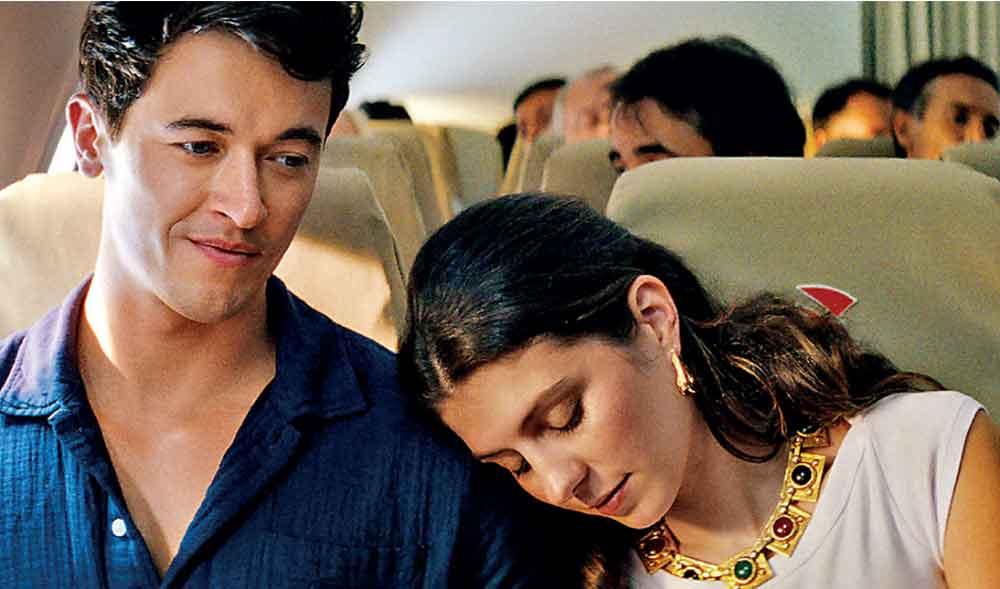
Opposite her, Tom Blyth brings quiet depth to the role of Alex. His performance is defined by restraint, small gestures, measured pauses, and a consistent emotional undercurrent that suggests years of suppressed longing. Blyth excels at conveying what Alex does not say, making his internal conflict feel tangible without overt dramatics. Together, Bader and Blyth share a natural, unforced chemistry that anchors the film. Their connection feels lived-in rather than manufactured, which is crucial for a story that depends so heavily on emotional credibility.
One of the film’s greatest strengths lies in its direction. Brett Haley approaches the material with patience and sensitivity, allowing scenes to breathe. There is a deliberate refusal to rush emotional beats, and the camera often lingers on shared silences, fleeting expressions, and moments of quiet intimacy. These choices reinforce the film’s central theme: that love often reveals itself in what remains unspoken.
Visually, the film adopts a soft, understated aesthetic. The travel sequences, set across Europe and the United States, are presented not as glossy postcards but as lived-in spaces shaped by emotion and memory. Cities are less important than how Poppy and Alex inhabit them together. A hotel room, a train platform, or a late-night street conversation becomes meaningful because of who is present, not where it takes place. The screenplay strikes a careful balance between humour and melancholy. The dialogue feels natural and conversational, avoiding exaggerated romantic clichés. Much of the film’s humour emerges organically from character interaction rather than scripted punchlines.
This tonal restraint ensures that emotional moments land with authenticity rather than sentimentality.
Character development is handled with care, allowing both protagonists to grow independently as well as together. Poppy’s arc is not simply about choosing love over freedom, but about redefining what freedom means. Alex’s journey, meanwhile, involves learning to risk emotional vulnerability rather than hiding behind comfort. Their growth feels mutual rather than one-sided, reinforcing the idea that healthy relationships require both individuals to evolve. That said, fans of Emily Henry’s novel may find the adaptation slightly lacking in depth. The book’s strength lies in its slow-burn intimacy and rich internal monologues, which are difficult to fully translate to screen. Several key moments and secondary character dynamics are either condensed or removed entirely, resulting in a narrative that occasionally feels emotionally compressed. While the film captures the essence of the story, it sacrifices some of the nuance and gradual tension that made the novel so deeply affecting.
In particular, the emotional spark that builds over hundreds of pages in the book sometimes feels muted on screen. Viewers unfamiliar with the source material may not notice this absence, but devoted readers may miss the layered interiority that defined Poppy and Alex’s connection. Still, these omissions do not undermine the film entirely; rather, they highlight the inherent challenge of adapting introspective romance into a visual medium.
Ultimately, People We Meet on Vacation, succeeds as a mature, introspective romantic drama that values emotional truth over spectacle. It is a film about timing, self-awareness, and the courage required to name what we feel. While it may not fully capture the depth of its literary source, it offers a thoughtful and resonant viewing experience; one that lingers quietly rather than demanding attention.
In a genre often dominated by fantasy and idealisation, People We Meet on Vacation stands out for its realism. It understands that love does not always arrive at the right moment, that friendships can blur into something more, and that growth often comes with discomfort. For viewers willing to engage with its subtle rhythms and emotional honesty, the film offers a rewarding meditation on the people who shape us; and the ones we risk losing if we wait too long to speak.