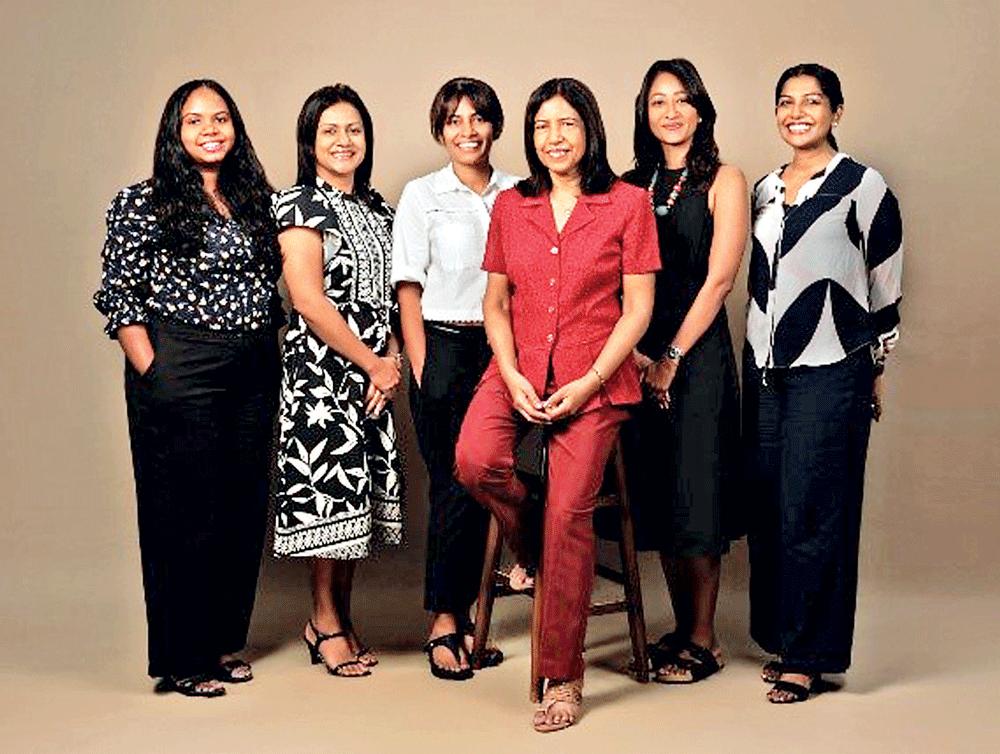
THE COLOMBO TEAM
Over the past twenty years, the conversation around mental health in Sri Lanka has undergone a quiet but significant transformation. Once largely confined to private spaces and burdened by stigma, discussions around psychological wellbeing have gradually entered public, professional, and institutional spheres. This shift has not happened overnight, nor has it been driven by a single moment of change. Rather, it has been shaped by sustained effort, professional commitment, and the steady development of local capacity. At the heart of this journey stands Samutthāna, an organisation that for nearly two decades has played a central role in strengthening mental health care in Sri Lanka while remaining firmly connected to global, evidence-based practice.
Samutthāna was established in 2006, in the shadow of the 2004 Asian Tsunami, one of the most devastating natural disasters in Sri Lanka’s recent history. Beyond the immense physical destruction, the tsunami left deep psychological scars across communities already shaped by years of conflict and displacement. The scale of trauma highlighted a critical gap in the country’s mental health infrastructure: there were too few trained mental health professionals, limited access to structured psychological services, and little integration of evidence-based psychological care into wider health systems.
It was within this context that Samutthāna was set up in Colombo as the King’s College London Resource Centre for Trauma, Displacement, and Mental Health. The initiative emerged through a partnership involving King’s College London, the UK–Sri Lanka Trauma Group (UKSLTG), South London and Maudsley NHS Trust, and local collaborators, with funding support from the Catholic Agency for Overseas Development (CAFOD). From its inception, Samutthāna was shaped by a dual commitment: to respond to urgent mental health needs while also investing in long-term, sustainable solutions that would strengthen Sri Lanka’s psychological care systems from within.
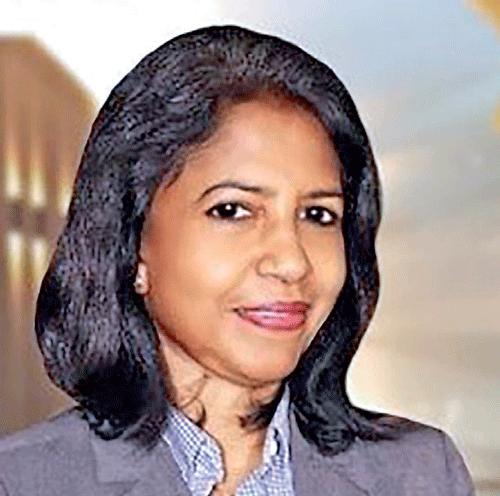
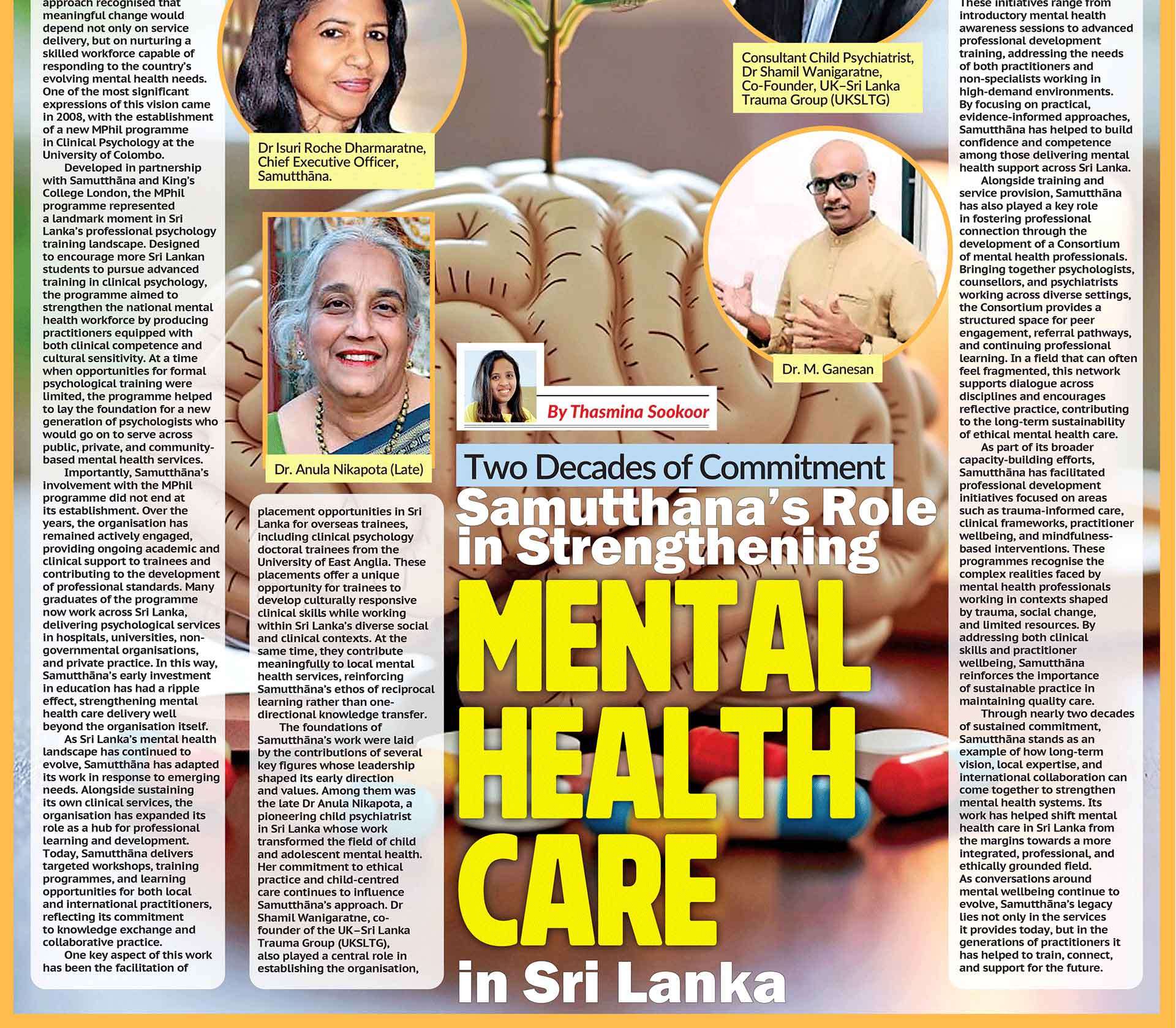
Dr Isuri Roche Dharmaratne, Chief Executive Officer, Samutthāna.
Rather than adopting a short-term, crisis-driven model, Samutthāna articulated a long-term vision centred on capacity building, professional training, and the development of ethical, locally grounded mental health services. This approach recognised that meaningful change would depend not only on service delivery, but on nurturing a skilled workforce capable of responding to the country’s evolving mental health needs. One of the most significant expressions of this vision came in 2008, with the establishment of a new MPhil programme in Clinical Psychology at the University of Colombo.
Developed in partnership with Samutthāna and King’s College London, the MPhil programme represented a landmark moment in Sri Lanka’s professional psychology training landscape. Designed to encourage more Sri Lankan students to pursue advanced training in clinical psychology, the programme aimed to strengthen the national mental health workforce by producing practitioners equipped with both clinical competence and cultural sensitivity. At a time when opportunities for formal psychological training were limited, the programme helped to lay the foundation for a new generation of psychologists who would go on to serve across public, private, and community-based mental health services.
Importantly, Samutthāna’s involvement with the MPhil programme did not end at its establishment. Over the years, the organisation has remained actively engaged, providing ongoing academic and clinical support to trainees and contributing to the development of professional standards. Many graduates of the programme now work across Sri Lanka, delivering psychological services in hospitals, universities, non-governmental organisations, and private practice. In this way, Samutthāna’s early investment in education has had a ripple effect, strengthening mental health care delivery well beyond the organisation itself.

Dr. Anula Nikapota (Late)
As Sri Lanka’s mental health landscape has continued to evolve, Samutthāna has adapted its work in response to emerging needs. Alongside sustaining its own clinical services, the organisation has expanded its role as a hub for professional learning and development. Today, Samutthāna delivers targeted workshops, training programmes, and learning opportunities for both local and international practitioners, reflecting its commitment to knowledge exchange and collaborative practice.
One key aspect of this work has been the facilitation of placement opportunities in Sri Lanka for overseas trainees, including clinical psychology doctoral trainees from the University of East Anglia. These placements offer a unique opportunity for trainees to develop culturally responsive clinical skills while working within Sri Lanka’s diverse social and clinical contexts. At the same time, they contribute meaningfully to local mental health services, reinforcing Samutthāna’s ethos of reciprocal learning rather than one-directional knowledge transfer.
The foundations of Samutthāna’s work were laid by the contributions of several key figures whose leadership shaped its early direction and values. Among them was the late Dr Anula Nikapota, a pioneering child psychiatrist in Sri Lanka whose work transformed the field of child and adolescent mental health. Her commitment to ethical practice and child-centred care continues to influence Samutthāna’s approach. Dr Shamil Wanigaratne, co-founder of the UK–Sri Lanka Trauma Group (UKSLTG), also played a central role in establishing the organisation, helping to bridge international expertise with local needs.

Consultant Child Psychiatrist, Dr Shamil Wanigaratne, Co-Founder, UK–Sri Lanka Trauma Group (UKSLTG)
As Samutthāna evolved, figures such as Dr M. Ganesan and Dr Isuri Roche Dharmaratne became instrumental in strengthening and expanding its initiatives. Their leadership helped to consolidate Samutthāna’s role as a centre for training, service provision, and professional collaboration. Today, Dr Isuri Roche Dharmaratne serves as Chief Executive Officer, guiding the organisation’s strategic direction and ensuring that its work remains grounded in clinical integrity, ethical practice, and community relevance. Under her leadership, Samutthāna has continued to maintain strong links with international centres of excellence while prioritising locally informed responses to mental health challenges.
In recent years, Samutthāna has broadened the scope of its work through collaborations with more than ten partner organisations operating across community, educational, humanitarian, and workplace settings. Through these partnerships, the organisation provides mental health services, training pathways, and placement opportunities via a network of qualified mental health professionals. This collaborative model allows Samutthāna to extend its reach while supporting the development of mental health capacity across multiple sectors.
The scale of this work is reflected in its impact. To date, more than 55,000 participants have engaged with Samutthāna’s workshops and learning programmes. These initiatives range from introductory mental health awareness sessions to advanced professional development training, addressing the needs of both practitioners and non-specialists working in high-demand environments. By focusing on practical, evidence-informed approaches, Samutthāna has helped to build confidence and competence among those delivering mental health support across Sri Lanka.
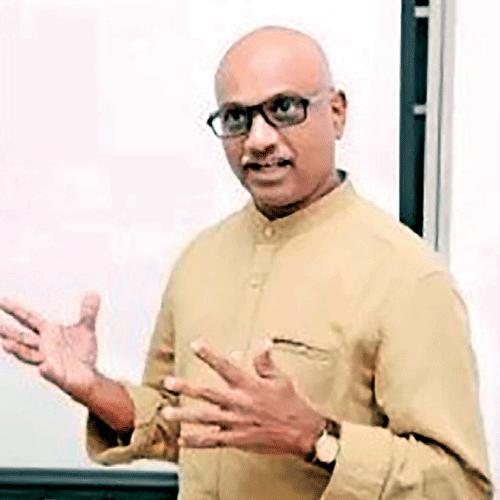
Dr. M. Ganesan
Alongside training and service provision, Samutthāna has also played a key role in fostering professional connection through the development of a Consortium of mental health professionals. Bringing together psychologists, counsellors, and psychiatrists working across diverse settings, the Consortium provides a structured space for peer engagement, referral pathways, and continuing professional learning. In a field that can often feel fragmented, this network supports dialogue across disciplines and encourages reflective practice, contributing to the long-term sustainability of ethical mental health care.
As part of its broader capacity-building efforts, Samutthāna has facilitated professional development initiatives focused on areas such as trauma-informed care, clinical frameworks, practitioner wellbeing, and mindfulness-based interventions. These programmes recognise the complex realities faced by mental health professionals working in contexts shaped by trauma, social change, and limited resources. By addressing both clinical skills and practitioner wellbeing, Samutthāna reinforces the importance of sustainable practice in maintaining quality care.
Through nearly two decades of sustained commitment, Samutthāna stands as an example of how long-term vision, local expertise, and international collaboration can come together to strengthen mental health systems. Its work has helped shift mental health care in Sri Lanka from the margins towards a more integrated, professional, and ethically grounded field. As conversations around mental wellbeing continue to evolve, Samutthāna’s legacy lies not only in the services it provides today, but in the generations of practitioners it has helped to train, connect, and support for the future.