Raising Boys to Respect Women and Ending a Culture That Punishes ‘Her’ Instead of Holding ‘Him’ Accountable

Teaching boys to respect women must begin early because beliefs formed in childhood do not soften with time. They harden. They are normalised. They are defended by culture, tradition, and silence. For generations, society has excused harmful male behaviour with a phrase that conveniently removes responsibility and redirects blame. Boys will be boys has been used to justify everything from playground aggression to sexual misconduct. It tells young boys that their actions are instinctive and uncontrollable, while teaching girls that discomfort is something they must quietly absorb. That phrase has no place in a society confronting digital abuse, leaked sexual material, and the permanent damage caused by betrayal in the online age.
Recent events in Sri Lanka have brought this uncomfortable truth sharply into focus. The ongoing scandal surrounding leaked sexual videos linked to a former head prefect of Nalanda College has ignited public outrage, debate, and an alarming response on social media. It must be stated clearly and without ambiguity that any sexual relationship between teachers and a student is a grave abuse of power and a serious ethical and professional violation. Adults in positions of authority carry an unequivocal responsibility to protect, not exploit. That truth does not require qualification.
What is equally disturbing, however, is the way public discourse has unfolded. While investigations continue, social media platforms have been flooded with commentary hailing the boy involved as a hero, a legend, or a symbol of masculine conquest. Memes, jokes, and praise circulate freely, while the women involved are subjected to intense scrutiny, moral judgement, and public humiliation. This response reveals a deeper and more dangerous problem. Male chauvinism is so deeply embedded that even when wrongdoing is acknowledged on one side, accountability is still selectively applied.
Respect is not innate. It is learned. Children are not born believing they are entitled to another person’s body, privacy, or silence. They learn these ideas from what they observe, from the language adults use, and from what is allowed to pass without consequence. When boys are permitted to mock girls’ emotions, invade personal space, or dismiss discomfort as exaggeration, they internalise a clear message. Women’s boundaries are flexible. Women’s dignity is negotiable. By the time these boys grow into men, such behaviour is no longer dismissed as immaturity. It is defended as normal. And when harm occurs, society rushes to rationalise it rather than confront the culture that produced it.
The phrase boys will be boys performs particularly damaging work because it removes accountability. It reframes harmful behaviour as biology rather than choice. It suggests that boys lack self-control and therefore should not be judged too harshly. This belief does not protect boys. It diminishes them. It teaches that discipline is optional and empathy secondary. At the same time, it conditions girls to believe that managing male behaviour is their responsibility. Adjust your clothing. Be careful with your trust. Do not provoke. Do not complain. The burden is shifted repeatedly onto women, while men are shielded by indulgent narratives.
This imbalance becomes even more pronounced when sexual images are involved. The Nalanda scandal has once again exposed how reluctant society is to hold males accountable for violations that are not physically violent but are profoundly damaging. The unauthorised recording or distribution of intimate material is a violation of privacy and dignity. Yet public reaction so often bypasses that fact. Instead of asking why someone filmed or shared such content, the focus turns to the women involved. Why did they allow it. Why did they behave that way. Why did they trust him. These questions reveal a culture that polices female sexuality while excusing male betrayal.
In this case, the women have become the spectacle. Their personal lives are dissected. Their morality debated. Their silence demanded as a form of penance. Meanwhile, the boy at the centre of the scandal is celebrated by many as clever, powerful, or enviable. His actions are framed as evidence of masculine prowess rather than a serious ethical breach involving consent, privacy, and responsibility. Language matters because it shapes perception. When male behaviour is romanticised and female reputations are destroyed, society signals whose pain matters and whose does not.
These reactions do not emerge in isolation. They are rooted in how boys are taught to perceive girls from an early age. When girls are framed as temptations, prizes, or markers of status, exploitation becomes easier to justify. When masculinity is defined through dominance and sexual conquest, violating boundaries is reframed as achievement. Teaching boys respect requires dismantling these ideas before they calcify. It means teaching that consent is continuous and cannot be overridden by status, desire, or bravado. It means teaching that privacy is not a privilege that can be revoked. It means teaching that vulnerability is never an invitation for abuse.
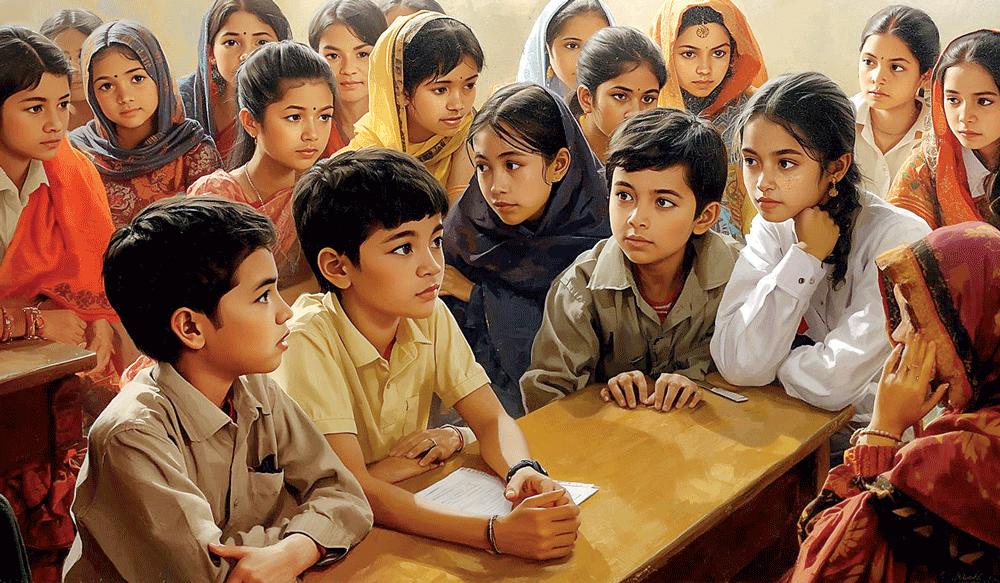
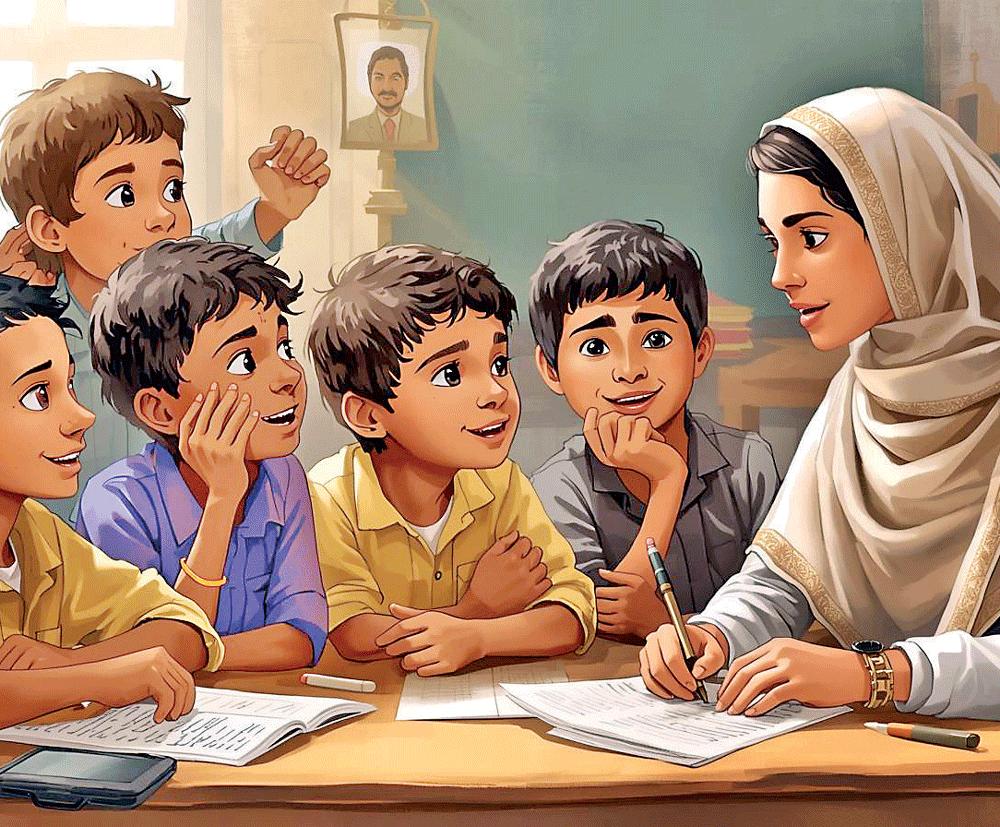
Parents and educators have a crucial role to play. Conversations about respect cannot be postponed until adolescence or limited to warnings about reputation. They must begin with empathy. Boys must be taught to listen when someone says no. To understand that teasing can cause harm. To recognise that emotions are human, not weaknesses. When boys are encouraged to express vulnerability without shame, they are less likely to seek validation through power or humiliation. When respect is framed as strength rather than restriction, it becomes a value they carry into adulthood. Social media and popular culture further reinforce these lessons or undermine them. Boys consume stories that celebrate male entitlement while punishing female autonomy. The man who crosses boundaries is forgiven or rewarded. The woman who exercises agency is shamed. Leaked sexual material is treated as gossip or entertainment rather than abuse. The social media response to the Nalanda scandal fits squarely within this pattern. Challenging these narratives is essential if change is to occur. Boys need to see accountability modelled, not mocked. They need examples of masculinity that centre responsibility, restraint, and integrity.
Legal reform is necessary, but it is not sufficient. Even where laws exist to address sexual exploitation and image-based abuse, social consequences continue to fall disproportionately on women. Careers are destroyed. Safety is compromised. Reputations are irreparably damaged. A legal outcome cannot undo public shaming or erase digital footprints. Cultural change is therefore essential. We must stop interrogating women’s choices and start interrogating male behaviour. Why did you think this was acceptable. Why did you feel entitled. Why did you ignore the power imbalance. These questions should be automatic, not controversial.
A feminist response to these issues is not an attack on men. It is a demand for higher standards. It recognises that boys are capable of empathy, accountability, and moral reasoning when those qualities are expected rather than excused away. Feminism challenges the insultingly low expectations embedded in phrases like boys will be boys. It insists that masculinity need not be defined by conquest or control. It insists that accountability is not humiliation but growth.
When society blames women for scandals involving sexual material, it breeds fear and silence. Women learn that speaking out will only multiply their suffering. That their bodies will be debated in public. That trust will always be framed as naivety. This fear protects perpetrators and normalises abuse. Shifting blame to where it belongs is not only about justice for individuals. It is about preventing future harm.
Teaching boys respect from an early age is a long-term investment in collective safety. It requires consistency and courage. It requires challenging sexist humour even when it is popular. It requires correcting language and modelling accountability. It requires fathers, teachers, coaches, and mentors to demonstrate that authority comes with responsibility. It requires mothers to demand accountability rather than silence. It requires all of us to refuse to celebrate behaviour we would condemn if it were inflicted on someone we love.
The phrase boys will be boys belongs to a past that excused too much damage. Boys can be kind. Boys can be principled. Boys can be held accountable without being destroyed. When they are, everyone benefits. Girls grow up with less fear. Women move through the world with greater freedom. Men build relationships grounded in trust rather than dominance.
The scandals making headlines today are not anomalies. They are symptoms. Revenge porn and the culture that celebrates it are not about desire. They are about power. Dismantling that culture begins with how we raise boys and what we choose to excuse. Respect is not optional. Consent is not conditional. Silence is not neutrality. Teaching boys these truths early is not radical. It is essential.