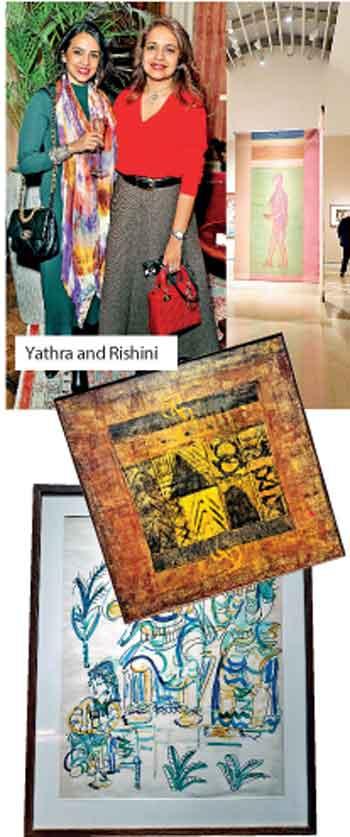
 The Royal Academy of Arts has long served as a bridge between artistic traditions from across the globe, but with The Story of South Asian Art: Mrinalini Mukherjee and Her Circle, the institution directs its focus more intentionally toward South Asian creativity, reframing modernism as a truly global phenomenon. The exhibition explores the roots of the Indian modernist art movement while challenging the dominant Euro-centric narrative that has long shaped Western understandings of modern art.
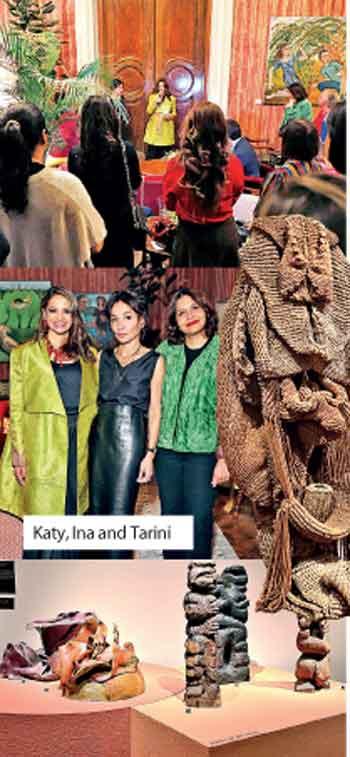
A private view earlier this week, offered guests a chance not only to experience this landmark group exhibition, but to see it through the eyes of its curator, Tarini Malik, whose expansive practice and deep engagement with institutional histories give the show its intellectual clarity. Malik, a London-based curator who studied at the Royal College of Art, has held senior roles at The Hayward Gallery and Whitechapel Gallery, and has contributed to major international projects including the Venice Biennale. Her work brings a nuanced perspective to the Royal Academy galleries, inviting viewers to consider modernism through a broader, more inclusive lens.
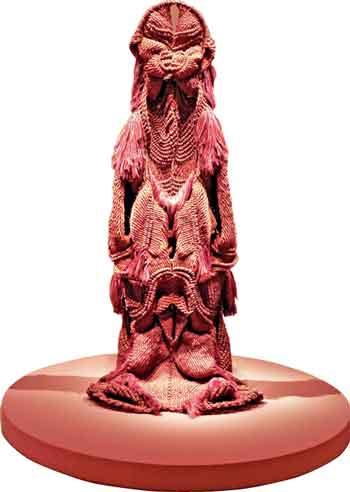
Central to this reframing is Mrinalini Mukherjee, widely regarded as a pioneering figure in Indian contemporary art. The exhibition situates her life and practice within a network of artists, mentors, friends, and family, guiding viewers through key milestones in her artistic journey. Beginning with her formative years at Santiniketan and Baroda,
two of India’s most influential art institutions, the show spans the breadth of her four-decade career, positioning her work within the wider narrative of South Asian art’s emergence on the global stage.
Education and artistic communities are thematic anchors throughout the exhibition, mirroring the Royal Academy’s own historical emphasis on artistic training and dialogue. Featuring around 100 works across mediums including sculpture, ceramics, painting, printmaking, and textiles, The Story of South Asian Art reveals the rich networks of support and creative exchange that shaped modern and contemporary art in South Asia.
The exhibition is also enriched by the involvement of Katy Wickremasinghe, a renowned London-based art patron, cultural advocate, and Trustee of the Royal Academy of Arts. Wickremasinghe is a British-Sri Lankan entrepreneur and the founder of both KTW London, a strategic communications consultancy specialising in the arts, and The Wick, a global content platform and cultural hub dedicated to connecting culturally curious audiences with arts and culture. Her work aims to bridge the worlds of business, creativity, and cultural engagement, making the art world more accessible while championing diverse voices.
Wickremasinghe’s influence extends across the cultural landscape in the UK. She serves as a trustee of the Royal Academy and Dulwich Picture Gallery, and is an advisory board member for The Line, London’s public art walk. In addition to her institutional roles, she mentors emerging talent through organisations like the Association of Women in the Arts and supports cultural programmes that foreground inclusivity and creative exchange. Her leadership foregrounds a commitment to education, collaboration, and the dynamic intersection of Eastern and Western cultural perspectives.
Founded in 1768, the Royal Academy of Arts remains an institution led by artists and for artists. Home to the prestigious RA Schools, a world-famous free art school, the Academy continues to champion artistic excellence and open access, most notably through its annual Summer Exhibition, the largest open-access show in the UK. By hosting The Story of South Asian Art, the Academy reinforces its evolving commitment to global perspectives, expanding the stories it tells about modern and contemporary art.
This exhibition invites audiences to rethink modernism not as a Western export, but as a vibrant, interconnected set of practices shaped by artists across continents. The works on view articulate how artistic communities in South Asia responded to, challenged, and transformed global artistic discourses, repositioning the region as a vital contributor to the history of modern art.
The Story of South Asian Art: Mrinalini Mukherjee and Her Circle is on view at the Royal Academy of Arts in London, until the 24th of February 2026.