The Thread That Connects Mishal Husain Editor-at-Large Bloomberg Weekend
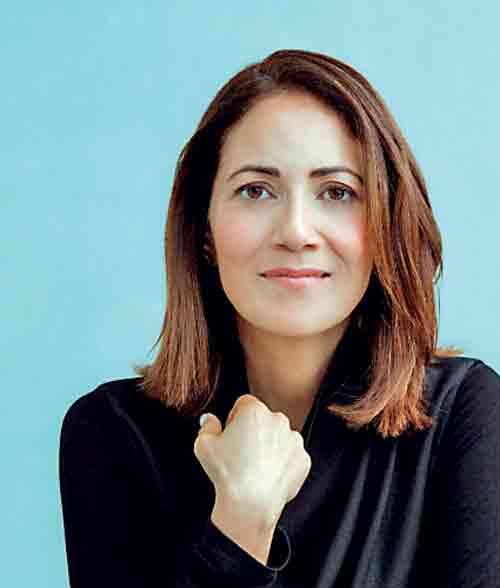
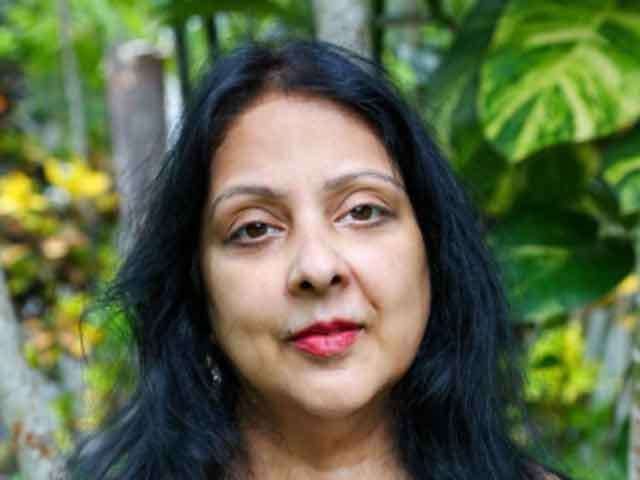
I first met Mishal Husain at a book reading and signing in East London. The event had drawn an eclectic crowd; academics, journalists, and quietly awed young women who had grown up watching her on screen. Mishal’s presence was just as you’d imagine; composed yet warm, her sentences precise, her laughter spontaneous. She spoke of the past with honesty, of the present with clarity, and of the future with optimism. Now, as Editor-at-Large for Bloomberg Weekend and host of The Mishal Husain Show podcast, she continues to push the boundaries of modern journalism, expanding the global conversation while keeping its human core intact. In this conversation, Mishal reflects on her beginnings, her leadership, her book Broken Threads, and the new frontiers of storytelling in a world hungry for truth and connection.
Q You’ve had an extraordinary journey from university lecture halls to leading global newsrooms. When you look back, what were the early influences that shaped your curiosity for journalism?
My parents had gone from Pakistan to the U.K., where I was born, and then to the UAE, which is the scene of my key childhood memories. There, I saw my parents’ thirst to be connected to the places in their life through news, listening to the BBC World Service, primarily. I overheard conversations about events of the 1980s, the assassination of Indira Gandhi for example. I remember the hush that fell over the adults, their faces trying to absorb the implications. From that moment, I’ve known one constant in my life; news and its importance.
Q You began your career with the BBC, and now you’re steering Bloomberg Weekend as Editor-at-Large. How different are those two worlds; public service broadcasting and global business journalism?
At Weekend we have a broader focus than the coverage for which Bloomberg is best known, but culturally the two organisations are different, for sure. Bloomberg has a can-do mentality and a much more collaborative mindset. But I am different too; energised by the opportunity to launch my own show and also feeling the pressure of doing so.
Q What drew you to Bloomberg at this point in your career? Was there a sense of unfinished business, or a desire to redefine weekend journalism for a new generation?
I was up for a fresh challenge and wondering what more I could find within me. What lay within that I did not know was there? Most people in the U.K. might have expected me to stay put at a premier programme, but I wanted to push myself in a new direction.
Q Many see your career as a masterclass in credibility and composure. What guiding principles have carried you through high-pressure moments on air and in leadership?
If you haven’t done your homework and thought through the stories you are covering, the gaps will show. Perhaps not today or tomorrow, but one day, and I never want to be in that position. Preparation, for me, is an act of respect, for the audience, for the people I’m interviewing, and for the truth.
Q You’ve reported on wars, elections, and revolutions. Which story or moment had the most profound personal impact on you, as a journalist, and as a woman?
In 2014, I was the first journalist to enter the school attacked by the Taliban in Peshawar in northern Pakistan. While the bodies had been removed, everything else reflected the devastating reality of what had happened in those rooms. I was almost on autopilot as I walked through with a cameraman, describing what we were seeing in real time, and then did live radio from our satellite connection outside. When people referred to it as a ‘scoop,’ I always felt uncomfortable, it was a scene of too much pain for a word like that.
Q As one of the most recognisable broadcast journalists in Britain, how has your leadership style evolved, especially now that you’re shaping editorial direction at Bloomberg?
There’s a confidence that comes with experience, but I’m always keen to talk through with the team how I see something, my initial thoughts, my instincts. That’s how an editorial approach develops and strengthens: you put your view out there, and then listen to others reflect, refine, and challenge it. Collaboration sharpens clarity.
Q Who have been your mentors or biggest influences along the way, and what’s the best piece of advice you’ve ever received?
The founding presenter of the BBC’s Hardtalk programme, Tim Sebastian, once talked me through his whole approach and showed me his notes, which is rare for a fellow anchor! That openness, that willingness to share one’s craft, stayed with me.
Q You’ve often spoken about the importance of representation in the newsroom. What concrete changes still need to happen for journalism to truly reflect the world it covers?
It’s not only about having people of different backgrounds within teams and newsrooms but also about creating a culture where everyone feels able to contribute without feeling exposed or risking ridicule.
The second part is harder, it requires good editors and team leaders who empower the journalists working under them.
Q In an era of misinformation, what role do trusted journalists and institutions like Bloomberg play in rebuilding public faith?
We live in a world where much of the media serves particular interests. Organisations that strive to be fair to all they cover, to see a story from every possible angle, are precious. They will make mistakes and won’t please everyone all the time, but values and standards matter more than ever.
Q How do you encourage young journalists, especially women, to find their voice without losing their integrity in a noisy, competitive media landscape?
It’s the same for any young person coming in; newsrooms can be daunting. I remember thinking everyone senior to me knew everything, and I wondered how I could ever contribute.
Then I noticed that if I held back in meetings, someone else would make the point I’d thought of, and everyone would applaud them! So, I decided it was imperative to speak up, however intimidating it felt.
Q Your new podcast series has been generating buzz. What inspired it, and what kinds of conversations are you hoping to spark?
I’m so grateful for the opportunity to launch The Mishal Husain Show podcast. It's a single, in-depth conversation, every week, and we cover multiple aspects of human life. It’s also a global guest list, and we go out in three formats; audio, video on YouTube and Bloomberg TV, and text on Bloomberg.com. So far, guests have included Mark Carney, Prime Minister of Canada; ex-U.K. spy chief Richard Moore; and Venezuelan Nobel laureate María Corina Machado. I hope your readers will subscribe, wherever they listen.
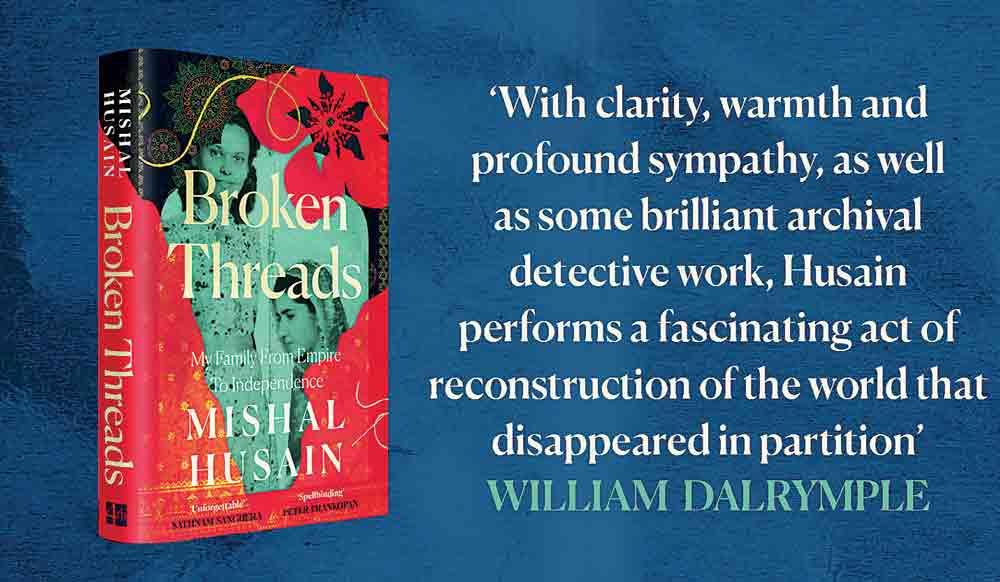
Q Broken Threads, your recent book, offers a nuanced take on identity and belonging. What was the emotional core that drove you to write it?
Like many of us with South Asian heritage, I knew there was a complex story involving faith, migration, and empire. I wanted to unpick a particular generation, that of my grandparents, born in the early 20th century, who lived through seismic change. The British Empire seemed eternal when they were young, and then, suddenly, it was gone.
The consequences were immense, but Britain papered over them at the time. I wanted to understand what that meant for the people who lived through it, and for us, their descendants.
Q Writing a book is deeply personal. Were there moments during Broken Threads where you found yourself confronting your own assumptions or vulnerabilities?
I wanted Broken Threads to have the same credibility as my journalism. But, of course, it was about people and events close to me! I had to fact-check my grandparents, to test their memories, their theories, even the people they admired or resented. Thankfully, much of what they believed stood the test of time. For instance, they had a dim view of Lord Mountbatten, a view that was not palatable in Britain for decades. Only later did more evidence emerge of how rushed the 1947 partition process was, and the aura he cultivated as a royal. I still think we need to pay more attention to former Prime Minister Attlee’s attitude too, and to the tiny circle who made decisions for millions, with little accountability.
Q How has podcasting, intimate, conversational, unfiltered, changed your relationship with storytelling compared to broadcast journalism?
“Intimate” is the right word. You become a companion to people’s routines; they take you with them on walks, commutes, late nights. You have to draw people in more deeply, especially when the guest is not a household name. I’m asking for trust; keep listening, this person is worth your time, even if you don’t yet know who they are.
Q What themes are you most drawn to now, politics, culture, leadership, or the changing idea of “truth” in journalism?
Geopolitics and the connections, the threads, that help us make sense of a complex world. But also, the human stories that bridge divides and build understanding. Those are the stories that stay with me.
Q You’ve often been praised for balancing a demanding career with family life. What does balance really mean to you, and how do you protect your personal time?
My life has gone in waves, depending on what’s happening personally or professionally. Launching The Mishal Husain Show makes this an intense professional period, but that’s to be expected. I owe it to myself and to others to make this a success. Balance, for me, is knowing when to give wholly to something, and when to rest without guilt.
Q Is there a daily ritual, habit, or boundary that helps you stay centred amid the pace of the newsroom?
Counting my blessings. I’m fortunate to have chosen this path, to have seen so much of the world, and to have my horizons constantly expanded. I try to start my weekdays quietly, in my kitchen, with my badly made Turkish coffee, catching up on what I need to know for the day ahead.
Q You’ve been a role model for so many. Who inspires you today?
So hard to answer, there are so many. I admire people who are deeply knowledgeable but wear it lightly. There’s a wonderful oncologist in New York, Azra Raza, who can also be found in Instagram videos sharing her joy in Urdu poetry and explaining it to others. That synthesis of intellect and humanity is inspiring.
Q If you could go back and give one piece of advice to your younger self, perhaps that first day walking into the newsroom, what would it be?
Take your time. It’s overwhelming now, but you’ll find your way and your place. You don’t have to know everything immediately, curiosity is your greatest asset.
Q And finally, looking ten years ahead, what’s the next chapter for Mishal Husain, the journalist, the leader, and the woman?
To make this new show a success, to find the most interesting and relevant people across the world and persuade them to take part. To continue being part of thoughtful journalism in a noisy world. And at home, to nurture relationships and make time for the people who matter most, who have given so wholeheartedly to me.
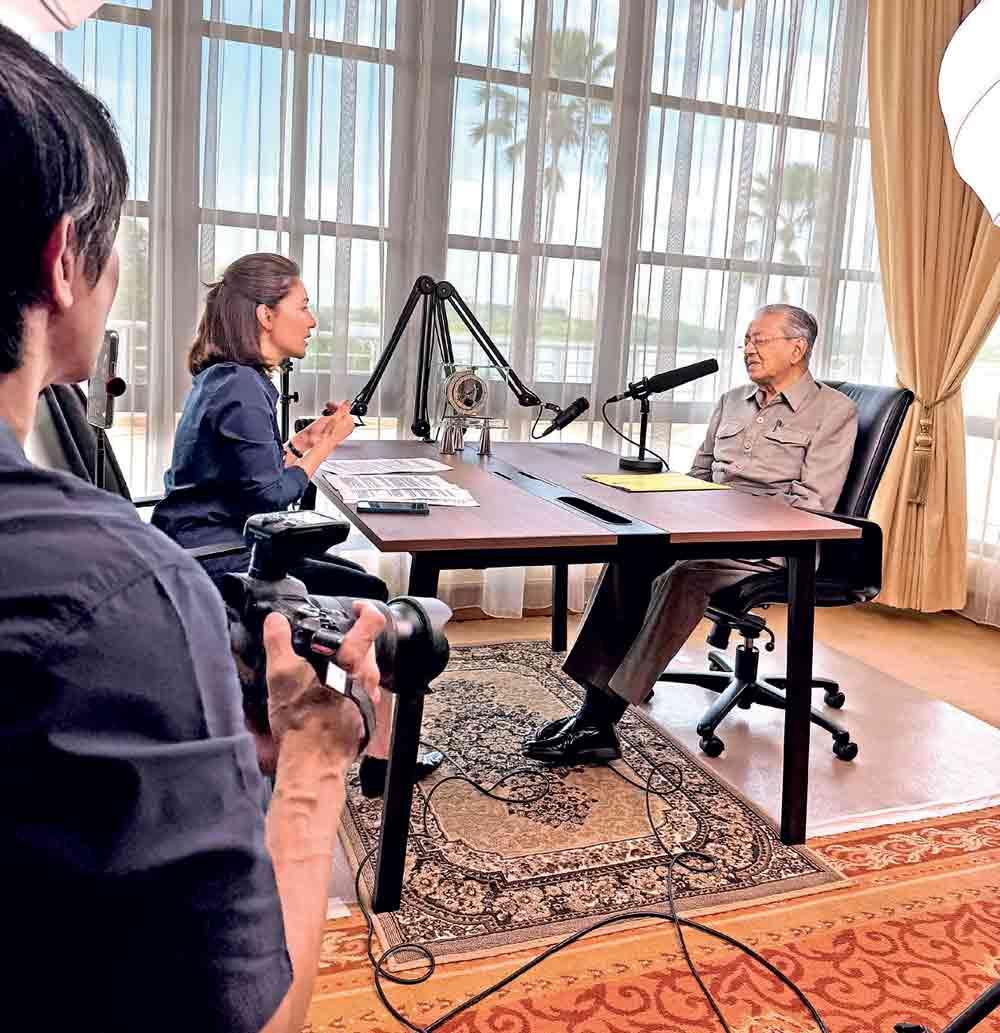
With Mahathir Mohammed on his 100th Birthday
In 2014, I was the first journalist to enter the school attacked by the Taliban in Peshawar in northern Pakistan. While the bodies had been removed, everything else reflected the devastating reality of what had happened in those rooms. I was almost on autopilot as I walked through with a cameraman, describing what we were seeing in real time, and then did live radio from our satellite connection outside.
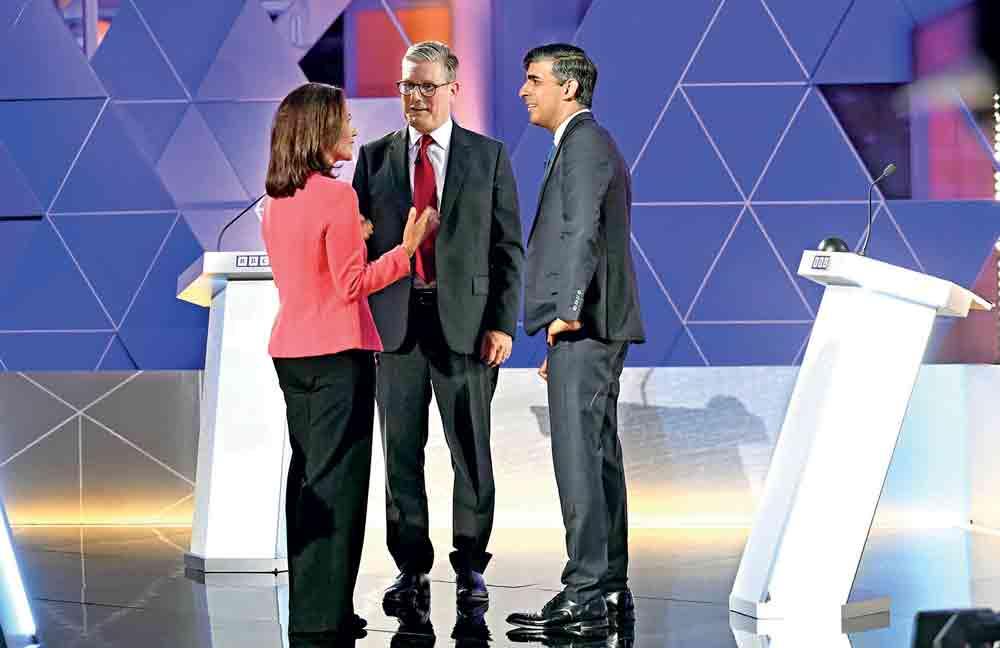
Kier Starmer and Rishi Sunak. Photo by Jeff Overs
I wanted Broken Threads to have the same credibility as my journalism. But, of course, it was about people and events close to me! I had to fact-check my grandparents, to test their memories, their theories, even the people they admired or resented. Thankfully, much of what they believed stood the test of time.
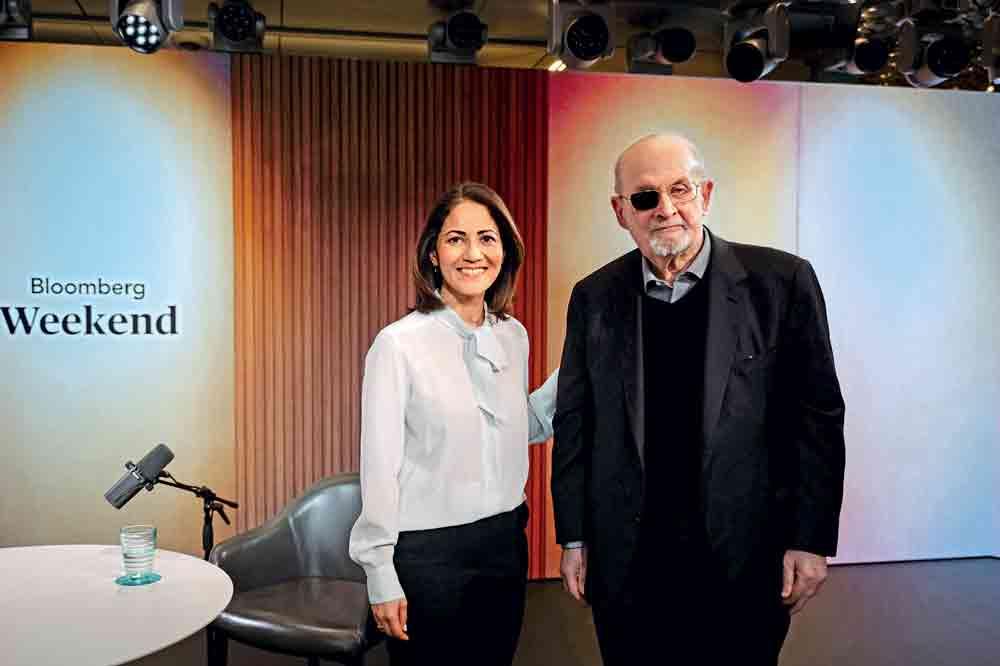
With Salman Rushdie. Photo Credit Jose Sarmento Matos, Bloomberg
The founding presenter of the BBC’s Hardtalk programme, Tim Sebastian, once talked me through his whole approach and showed me his notes, which is rare for a fellow anchor! That openness, that willingness to share one’s craft, stayed with me.
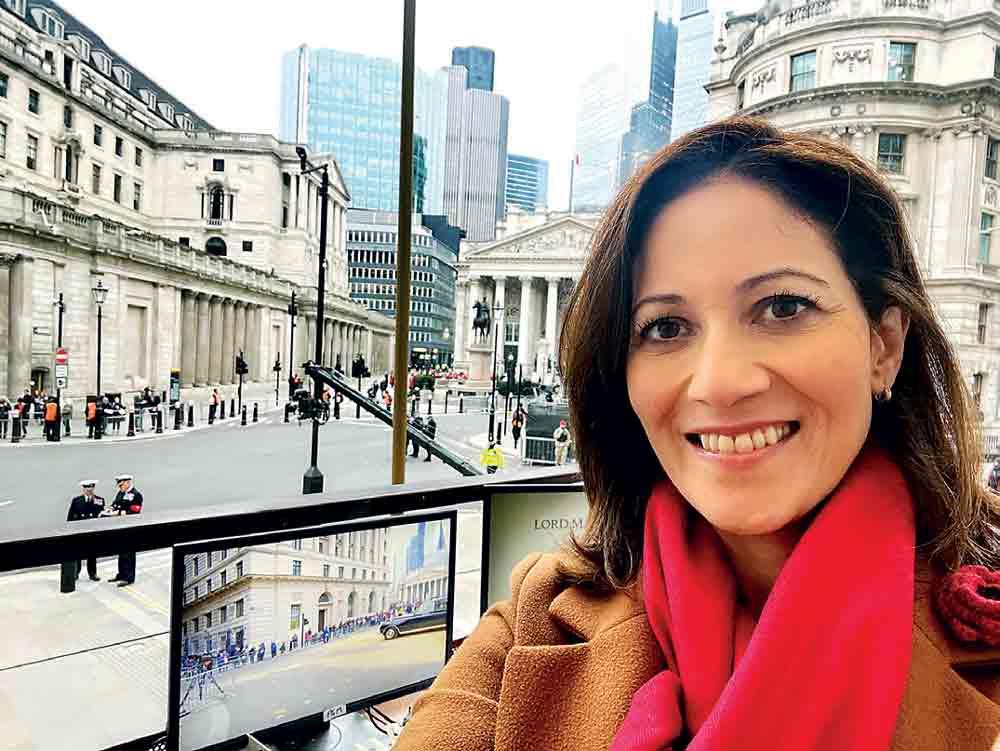
Presenting on Location in the City
Like many of us with South Asian heritage, I knew there was a complex story involving faith, migration, and empire. I wanted to unpick a particular generation, that of my grandparents, born in the early 20th century, who lived through seismic change
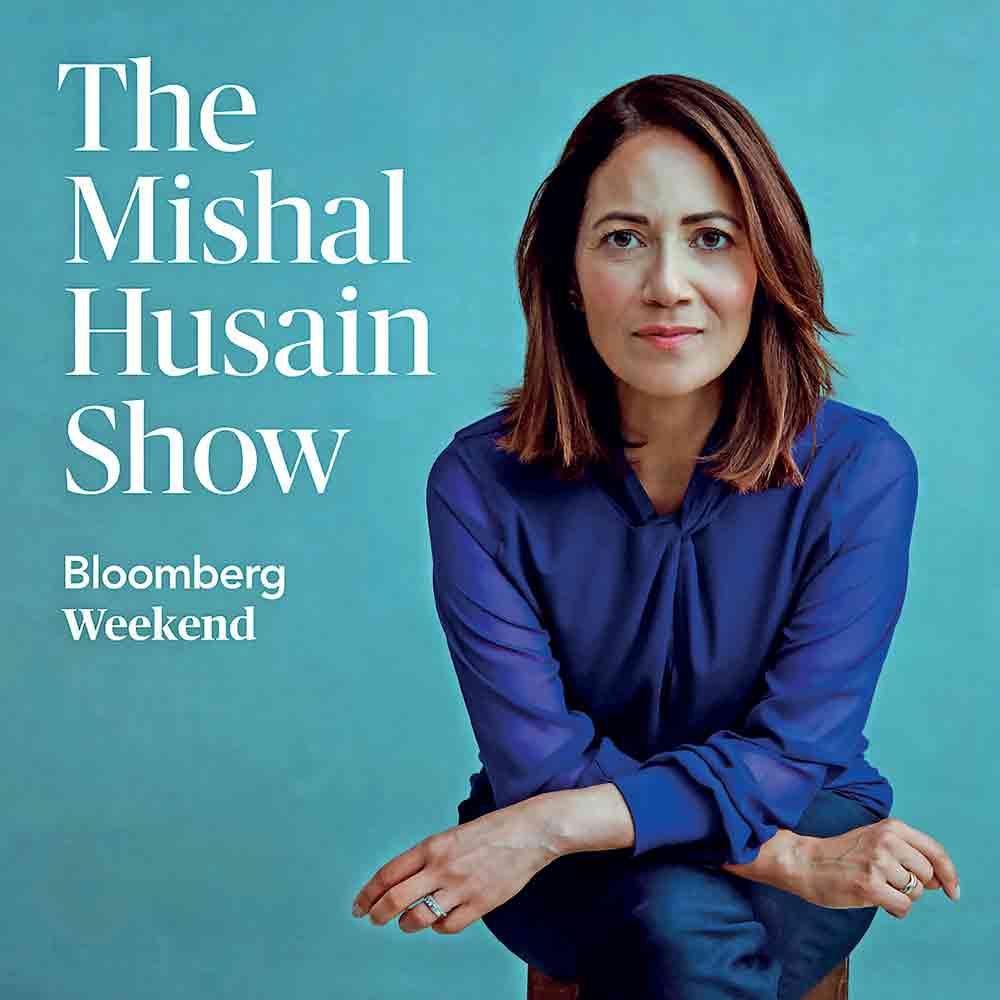
The Mishal Husain Show Podcast
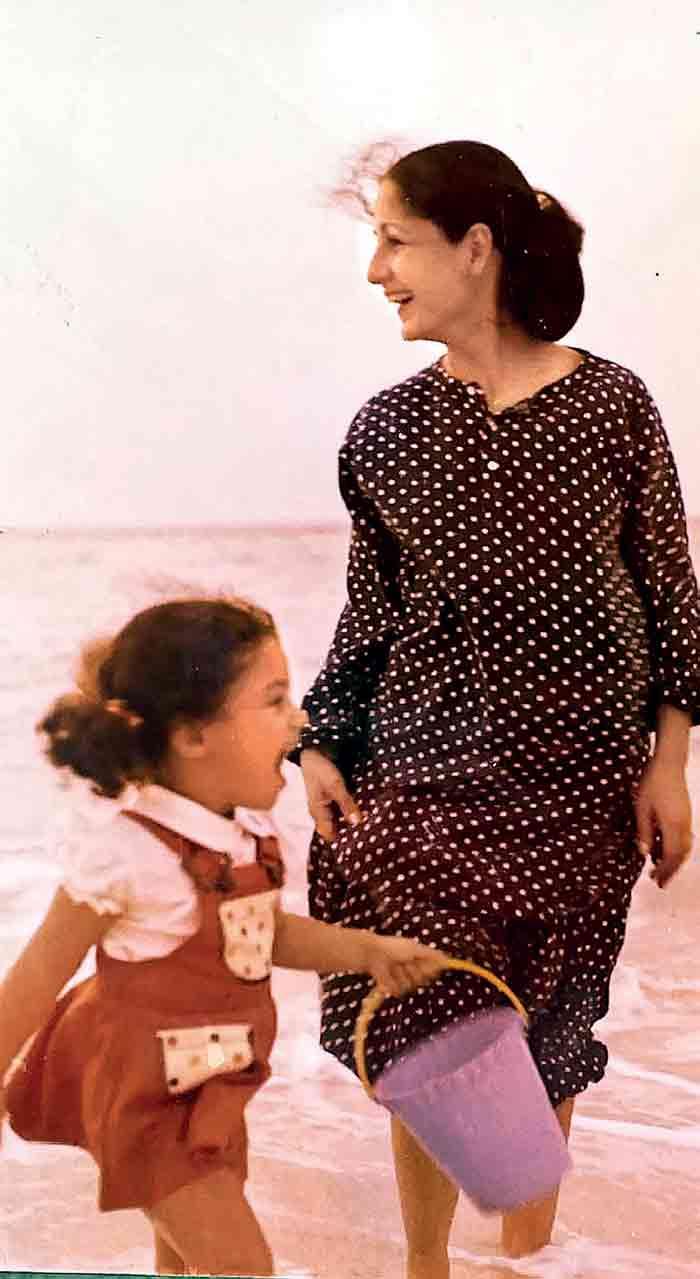
Mishal and her Mother