PART II: EGYPT, ORION, AND THE MEASURED AFTERLIFE

INFORMED MINDS BY SHALEEKA JAYALATH
To understand the ancient Egyptian civilisation is to understand that mathematics, astronomy, religion and kingship were never separate pursuits. They were facets of a single cosmic order, a belief system in which the Pharaoh was not merely ruler of the land, but a living bridge between the heavens and the earth. At death, this bridge did not collapse; it ascended. The dead Pharaoh became Osiris, god of the underworld and resurrection, while his living son assumed the identity of Horus, the sky god. This divine relay was not symbolic poetry. It was architecture, geometry, and star lore made permanent in stone.
The Egyptians believed firmly in the afterlife and in the existence of the ka, a second self that required sustenance and shelter beyond death. The pyramid was not a monument to vanity but an engineered vessel for eternity. Preserving the Pharaoh’s body ensured the survival of his ka, which in turn guaranteed cosmic balance and protection for the people. It is no coincidence that every pyramid was built on the west bank of the Nile, where the sun died each evening. In Egyptian mythology, west was death, transition, and rebirth.
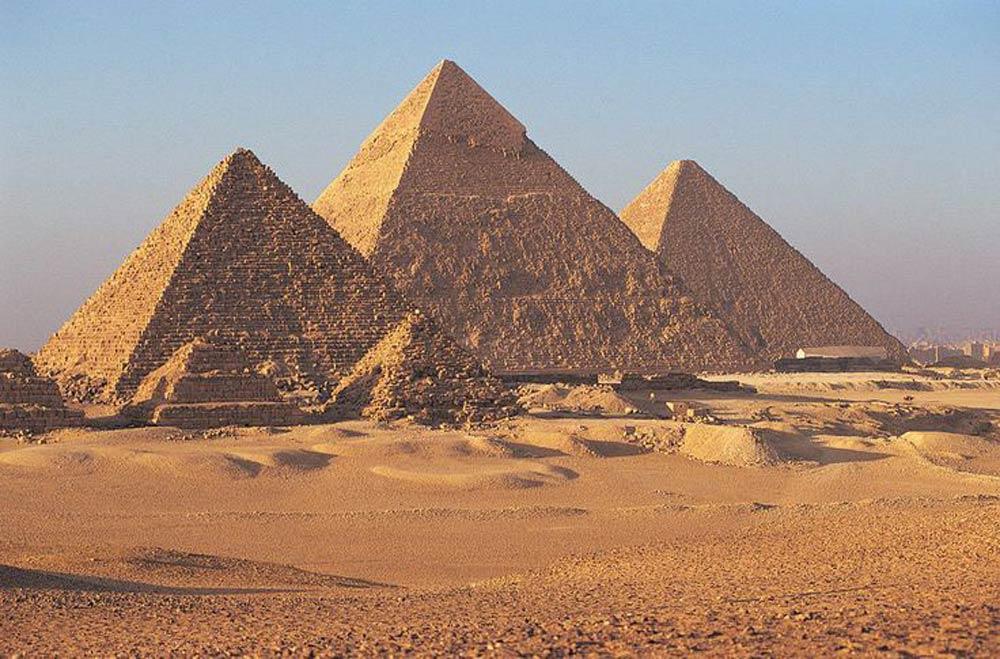
The pyramid’s form itself carried meaning. Its sloping faces echoed the descending rays of the sun god Ra, while its original casing of polished white limestone made it appear almost halolike. Yet symbolism alone does not explain the astonishing precision with which these structures were planned and executed. The Great Pyramid of Giza, built for Pharaoh Khufu around 2550 BC, remains the most compelling example. Each side of its base measures approximately 230 metres, deviating from true north by less than a fraction of a degree. Its original height of about 147 metres encoded proportions that continue to perplex modern engineers. Constructed from roughly 2.3 million stone blocks, weighing a total of nearly 5.75 million tonnes, it stands as one of the most accurate large-scale constructions ever achieved without modern instruments.
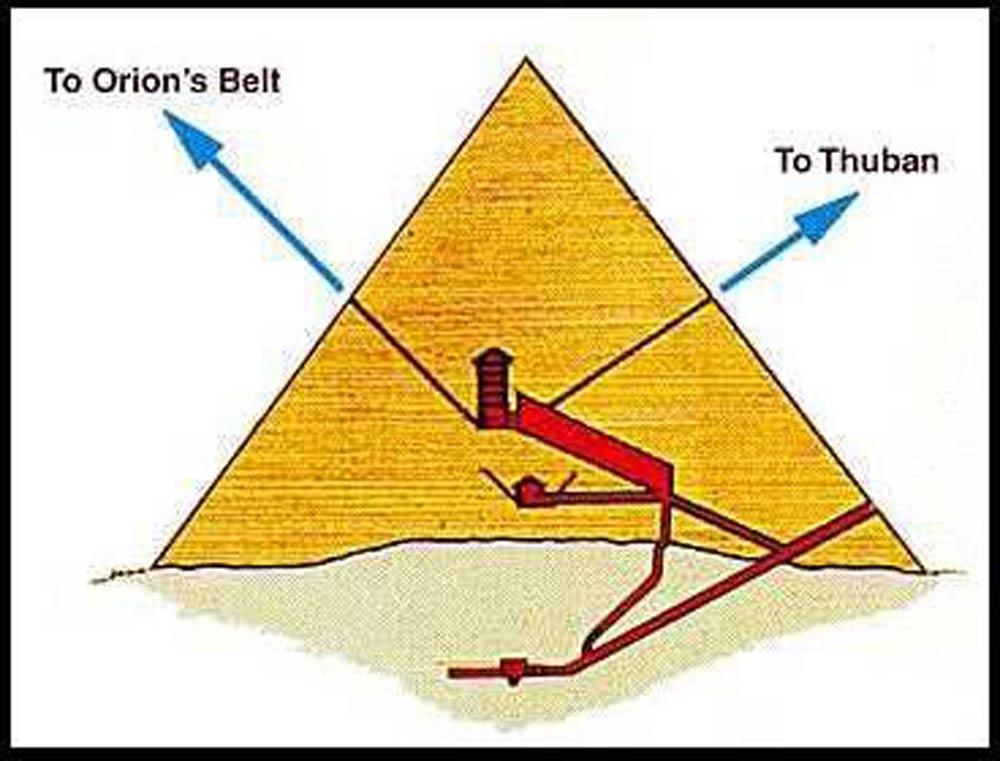
The internal architecture is no less exacting. The entrance lies on the north face, some 18 metres above ground. From it, a descending passage leads deep beneath the pyramid, while an ascending corridor rises to the Queen’s Chamber and the Great Gallery, a 46-metre-long corbelled space of striking mathematical harmony. At its summit lies the King’s Chamber, a granite-lined room from which two narrow shafts extend outward through the body of the pyramid. For decades these shafts were dismissed as ventilation ducts. Their angles, however, tell a very different story.
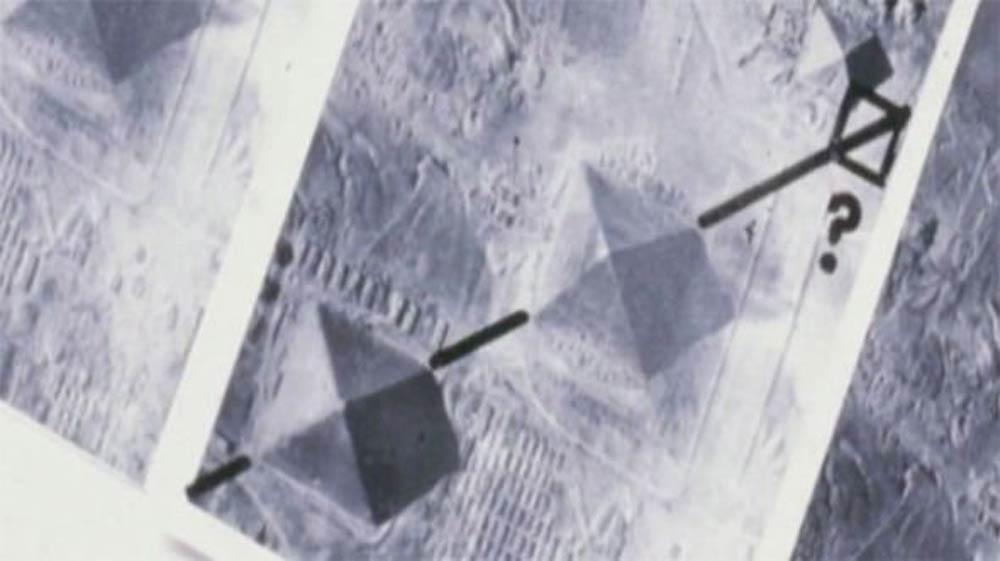
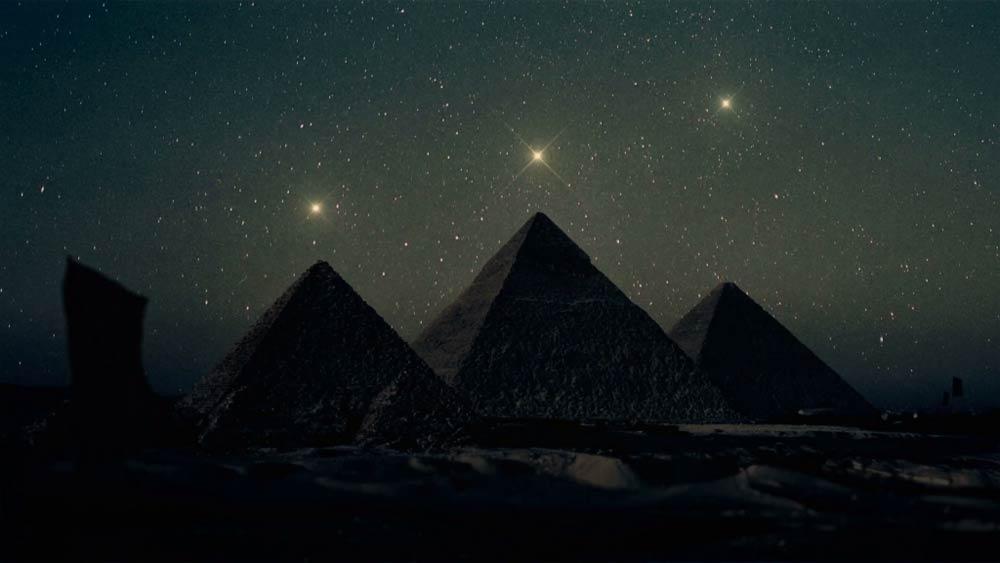
In 1989, Belgian-born engineer Robert Bauval proposed what is now known as the Orion Correlation Theory. His insight began not inside the pyramid but from above, when an aerial photograph revealed that the three main pyramids of Giza were not aligned in a straight line. The smallest pyramid, that of Menkaure, was offset slightly westward. Bauval noticed an uncanny resemblance to the stars of Orion’s Belt, particularly Mintaka, the dimmest and most offset of the three stars.
This was not a vague similarity. When the pyramid layout is overlaid onto a star map of Orion as it appeared around 2450 BC, accounting for the precession of the equinoxes, the correlation becomes mathematically compelling. The relative spacing, orientation, and offset match within remarkable tolerances. Even the apparent brightness of the stars corresponds to the relative size of the pyramids. Three kings, three pyramids, three stars.
Bauval’s research extended beyond Giza. He proposed that the entire necropolis of Memphis formed a terrestrial reflection of the heavens. The pyramid of Nebka at Abu Rawash aligns with the star marking Orion’s left foot, while Zawyat al-Aryan corresponds to Orion’s right shoulder. The pyramids at Dashour align with stars in the Hyades, associated with Seth, Osiris’s brother. Most strikingly, the Nile itself mirrors the Milky Way, the celestial river through which souls were believed to travel.
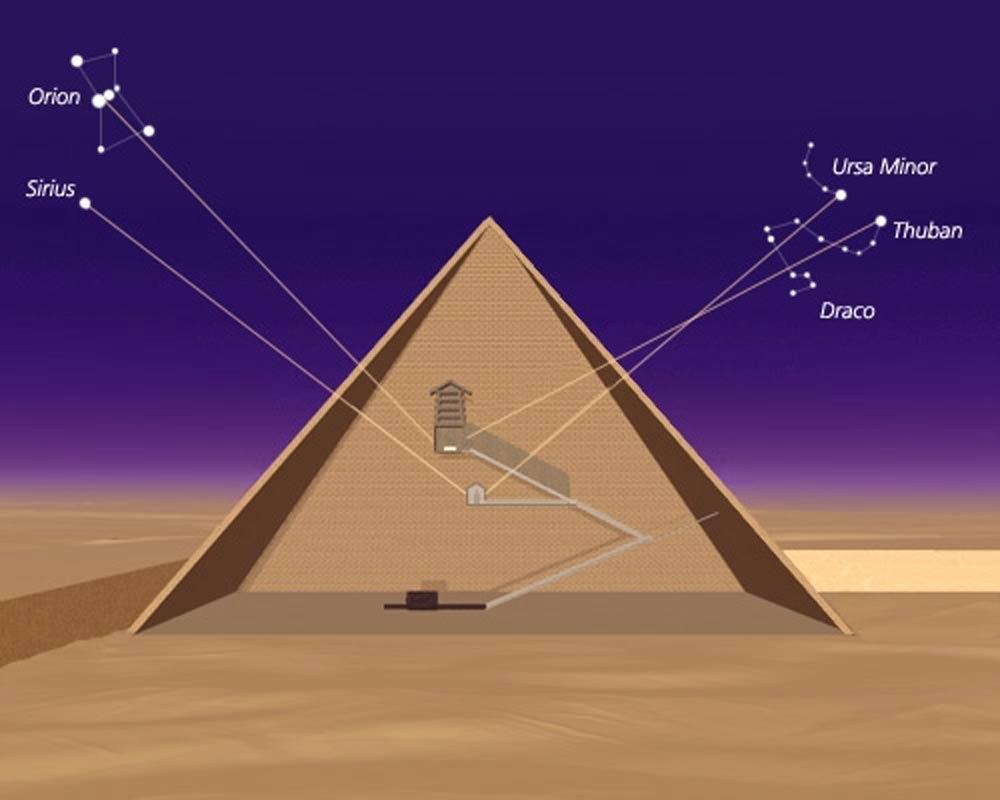
The most precise evidence, however, lies within the Great Pyramid itself. The southern shaft from the King’s Chamber is inclined at approximately 45 degrees. When projected skyward to the epoch of Khufu’s reign, it points directly to Orion, the stellar manifestation of Osiris. The northern shaft, inclined at roughly 32 degrees, aligns with Thuban, or Alpha Draconis, which at that time was the pole star. These were the “Imperishable Stars,” the indestructible lights that never set, symbols of eternal life. Ancient funerary texts echo this belief: “I will cross to that side on which are the Imperishable Stars, that I may be among them.”
These shafts were not conduits for air but for ascension. They were star-paths, meticulously angled to allow the Pharaoh’s spirit to reunite with Osiris in Orion and to take its place among the eternal stars of the north. Such precision implies advanced observational astronomy, long-term sky tracking, and an understanding of angular measurement that challenges any notion of primitive science.
In ancient Egypt, the afterlife was not an abstraction. It was surveyed, measured, aligned, and built. Stone by stone, angle by angle, an entire landscape was transformed into a mirror of the cosmos. The Valley of the Kings, the pyramids, and the Nile itself became a map of the Milky
Way, a declaration that the Pharaoh’s journey did not end at death but began among the stars. Was life, religion, and culture for the ancient Egyptians thus shaped, perhaps even governed, by what they observed in the sky above them?