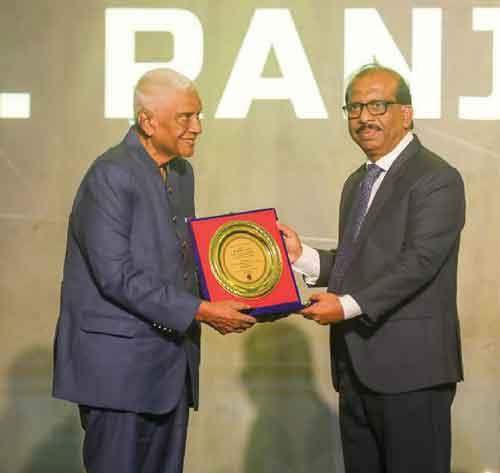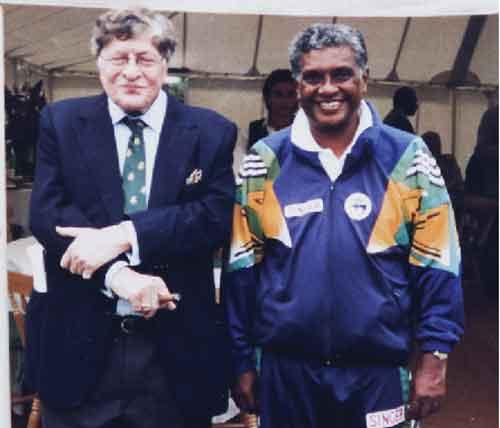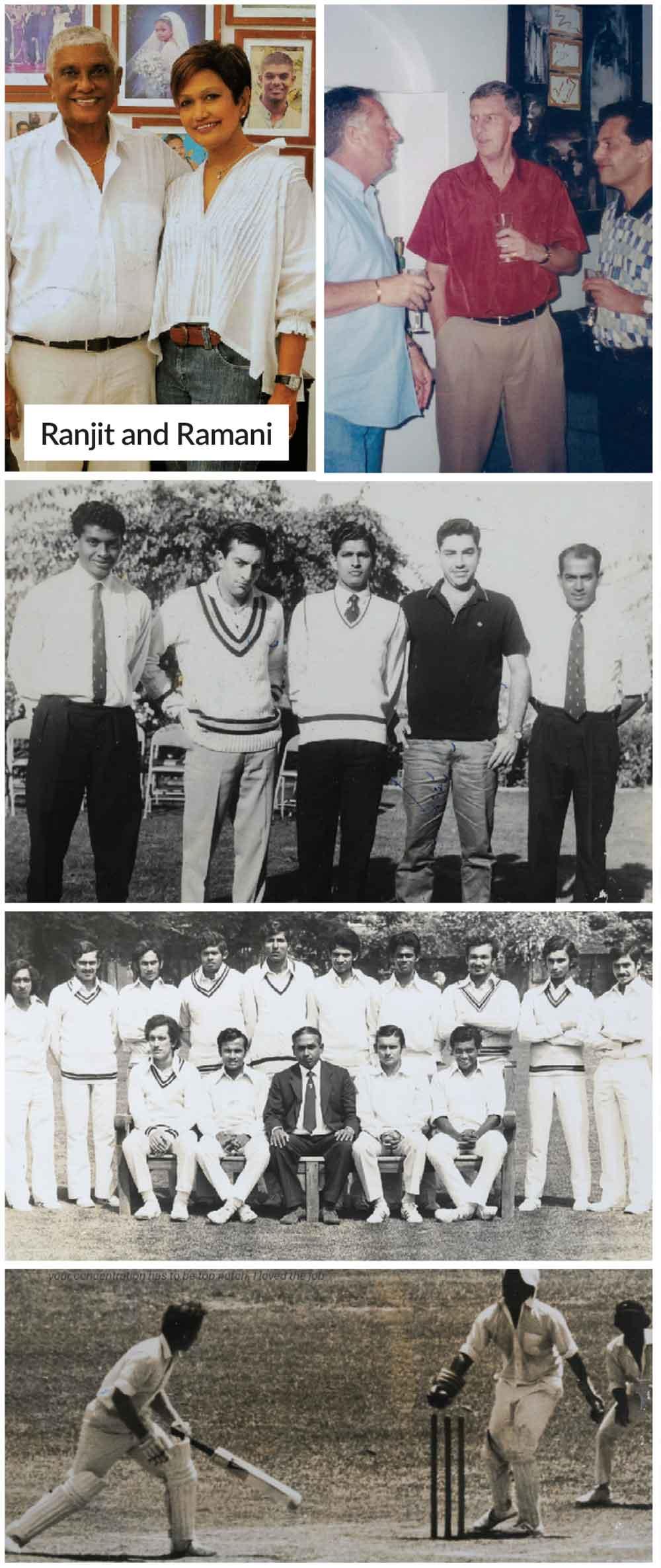

For generations of Sri Lankan cricket fans, the voice of Ranjit Fernando has been inseparable from the rhythm of the game itself. Calm yet deeply evocative, informed yet never overbearing, his commentary has provided the soundtrack to some of the most defining moments in the island’s sporting history. While many recognise him primarily for what they have heard from the commentary box, his life in cricket stretches far beyond the microphone. Long before he became one of the most recognisable voices in Sri Lankan broadcasting, Ranjit had already given decades to the sport as a player, coach, administrator, selector and national team manager. His journey mirrors the evolution of Sri Lankan cricket itself, from its formative years on the international stage to the triumphs, transformations and tensions of the modern professional era. Those who have listened closely over the years will know that his commentary is not simply about describing what unfolds on the field. It is layered with memory, context, discipline and a quiet reverence for the traditions of the game. In this conversation, Ranjit reflects on how commentary became a defining chapter of his life, the responsibility that comes with speaking to millions, the changes he has witnessed in cricket and in audiences, and the personal values that have shaped his voice and his career.
Q You are widely regarded as one of the most recognisable voices in Sri Lankan cricket. Did you ever imagine commentary would become such a defining part of your life?
When I was actively playing the game, I never once imagined that commentary would become such a defining part of my life. At that stage, my world revolved around playing cricket, training, travelling, and doing whatever was necessary to perform at the highest possible level. When my active playing career came to an end, I moved into cricket administration and coaching, becoming a coach, a member of the Cricket Executive Committee, the manager of the national team, and later a selector. Those roles demanded a different kind of responsibility, one that involved shaping teams, supporting players, and contributing to the direction of Sri Lankan cricket behind the scenes. It was during this phase that the opportunity to become an international television commentator came unexpectedly. At first, I saw it as another way of staying connected to the game I loved. I honed my skills on the job and gradually realised that commentary was not merely about talking over cricket. It was about communication, interpretation, and responsibility. Over time, it became a defining part of my identity, not because I sought it out, but because I embraced it fully and tried to serve the viewers honestly and knowledgeably.
Q How did your journey into cricket commentary begin and what were the early challenges you faced breaking into the field?
The journey into commentary began at a time when international matches being televised were drawing the largest and widest viewing public. With television also becoming a major source of revenue for cricket, it became necessary to have commentators from the playing teams in the commentary box. This was done so that viewers could receive insights rooted in lived experience of the teams involved. I was fortunate to be the first Sri Lankan to be given this opportunity, largely because of my continued association with the game in various capacities. However, being first also meant there were challenges.
I was suddenly placed alongside experienced international commentators who had already developed their own styles, rhythms, and professional confidence in front of the microphone. I learnt very quickly that commentary is not something one can master overnight. There is no rehearsal, no script, and no opportunity for editing. You speak live, and your words travel instantly to millions of viewers. I learnt from the more experienced colleagues in the commentary box, observing how they balanced information with storytelling, how they filled silences, and how they recovered from inevitable human errors. The early challenges were about finding my own voice, managing nerves, and understanding that the responsibility extended beyond personal expression to serving a diverse and discerning audience.
Q What qualities do you think separate a good cricket commentator from a truly memorable one?
There are many good commentators, people who are knowledgeable, articulate, and professional. However, to be truly memorable requires something more than competence. A memorable commentator must be gifted with a great turn of phrase, a deep understanding of the game, and an intuitive sense of timing. Knowledge alone is not enough. One must be able to communicate that knowledge in a way that enhances the viewer’s experience without overwhelming it. A thorough understanding of players, conditions, strategies, and the rhythm of the game is essential, but so is the ability to express that understanding with clarity and sensitivity. A memorable commentator also respects the intelligence of the viewing public. They do not speak down to audiences or attempt to impress with unnecessary jargon. Instead, they invite viewers into the game, guiding them through its moments with insight and emotion where appropriate. Ultimately, memorability comes from authenticity and consistency over time. Viewers come to recognise a voice not just by sound, but by the values and sensibilities it carries.
Q Over the years, how has your style of commentary evolved with changes in the game and its audiences?
One has to change with the changes of the game. The audiences have changed too, and it was inevitable that commentary would have to evolve alongside them. In earlier years, there was more time to dwell on historical references, personal anecdotes, and the nuances of technique. The longer formats of the game allowed for reflection, storytelling, and broader contextualisation. With the rise of the abbreviated formats, particularly One Day Internationals and T20 cricket, there is little time to dwell on historical and other aspects of the game. The pace is faster, the attention span of audiences is different, and the demands on commentators are more intense. Commentary today must be sharper, more immediate, and more responsive to rapidly changing situations. While the essence of commentary remains the same, bringing viewers up to speed with what is happening and why it matters, the method of doing so has had to adapt. My own style evolved by becoming more concise where necessary, while still trying to retain a sense of perspective and respect for the traditions of the game.
Q Is there a particular match or moment you have commentated on that still gives you goosebumps when you think about it?
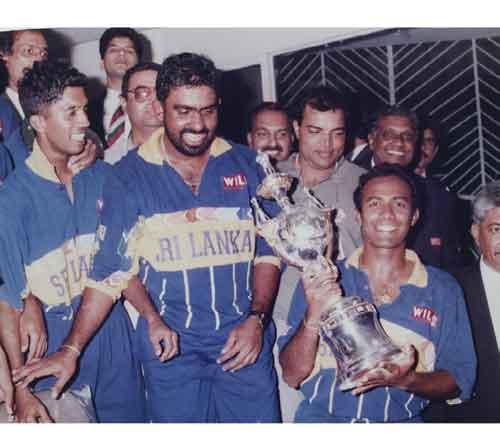
Winning the 1996 World Cup stands out as a moment that still gives me goosebumps. I was in the commentary box when the audience sang our national anthem. It was an extraordinary moment of collective emotion. I had tears in my eyes while standing and joining in singing the anthem. It was not just about winning a cricket match or even a tournament. It was about what that victory represented for Sri Lanka as a nation and for Sri Lankan cricket. To witness that moment from the commentary box, to be both an observer and a participant in the emotion of the occasion, is something that remains deeply etched in my memory. It reminded me that commentary is not detached from feeling. Even as one strives for professionalism and balance, there are moments when the emotional weight of what is unfolding cannot and should not be denied.
Q What kind of preparation goes into a live commentary session that viewers may not realise?
The preparatory stage before a television commentary session is far more exhausting than many viewers might imagine. Every piece of equipment is tested, from microphones to communication systems. Agreements are reached as to the pairing of commentators and time slots, and preparations are made regarding who will do summaries during breaks. There are discussions about coverage plans, transitions between commentators, and logistical details that ensure a smooth broadcast. Beyond the technical and organisational aspects, there is also personal preparation. A commentator must be familiar with team compositions, player backgrounds, recent form, conditions, and any relevant context that might inform what unfolds on the field. All of this happens before the first ball is bowled. Once the broadcast begins, there is no room for pause or revision. The preparation behind the scenes is what allows the commentary to appear effortless to the viewer.
Q Commentary often requires instant analysis. How do you balance accuracy, emotion, and storytelling in real time?
Live commentary leaves no room for editing. Commentators must be experienced and able to respond instantaneously. A thorough knowledge of the game and its rules is absolutely essential. Accuracy is the foundation of credibility. Without it, trust is lost. At the same time, special moments require some emotion in expression to bring viewers up to speed with the significance of what they are witnessing. Storytelling emerges naturally when one understands the context of players and situations. However, each commentator has their own style to which viewers become accustomed. The balance lies in knowing when to be analytical, when to allow emotion to come through, and when to step back and let the moment speak for itself. This balance is not calculated in advance. It develops over time through experience, reflection, and a constant awareness of the responsibility one carries to the audience.
Q Have there been moments on air where you had to quickly recover from an unexpected situation or mistake?
Many a time. Commentators are human and make mistakes. Most often these are minor, and the viewing public accepts them once a correction is made.
However, when an opinion is expressed, one has to be extremely careful not to insult the intelligence of the viewing public. Live broadcasting is unforgiving in that sense. There is no opportunity to edit out a misstatement or rephrase an ill-considered comment. The key is to acknowledge errors honestly and move on without defensiveness. Viewers respect transparency. They understand that commentary is happening in real time and that mistakes are inevitable. What matters is how one handles those moments, with humility and respect for the audience.
Q How do you manage bias and emotion especially when Sri Lanka is playing on the international stage?
A commentator must always be aware of the need to keep personal bias and opinions off air. It is natural to feel partial at times to your own team. That feeling, however, has no space when one is commentating. The viewing public knows my background and understands that my association with Sri Lankan cricket is part of my qualification. However, that does not allow me to impose personal preferences upon them. Light-hearted banter between commentators is often taken with a pinch of salt or as good humour, but genuine bias can undermine credibility. The responsibility of a commentator is to serve the game and the audience, not personal loyalties. Managing emotion means acknowledging the human connection to one’s team while maintaining professional objectivity in what one says on air.
Q Having observed generations of cricketers, how do you think Sri Lankan cricket has changed since you first started?
I can go back to the early sixties and recall the changes that have taken place up until now. The game has evolved in leaps and bounds. A significant turning point came when Kerry Packer showed interest in cricket, which transformed the professional landscape of the sport. Sri Lankan cricket has kept pace with these changes, growing in stature and competitiveness on the international stage. At the same time, I would like to see more Test cricket being played by Sri Lanka. The numbers coming through the gates have grown phenomenally to watch One Day and T20 cricket, which reflects changing audience preferences. While these formats bring excitement and accessibility, Test cricket remains the ultimate examination of skill, temperament, and endurance. The challenge for Sri Lankan cricket, and for cricket globally, is to maintain a balance between commercial realities and the preservation of the game’s longer traditions.
Q Which players past or present have impressed you most not just for talent but for character?
That is a difficult question because there have been so many players who have left their imprint on the game forever. Internationally, figures such as Sir Gary Sobers, Sir Viv Richards, Brian Lara, the Chappell brothers, Richie Benaud, Dennis Lillee, Jeff Thomson, Shane Warne, Barry Richards, Jonty Rhodes, Jacques Kallis, Colin Cowdrey, David Gower, Alan Davidson, Sunil Gavaskar, Sachin Tendulkar, Chandrasekhar, Venkat and Virat Kohli come immediately to mind. From Sri Lanka, players such as Michael Tissera, Stanley Jayasinghe, Daya Sahabandu, Aravinda de Silva, Arjuna Ranatunga, Mahela Jayawardene, Kumar Sangakkara, M Sathasivam and Sidath Wettimuny have all demonstrated not only talent but character. Richard Hadlee and Martin Crowe also deserve mention.
The list is endless, and it would be unfair to single out only a few. Comparing players across eras is always problematic. It is like comparing Sir Donald Bradman with top players in contemporary times. Each era produces its own standards of excellence and character.
Q you believe modern cricket has lost or gained something with the rise of T20s IPLs and other franchise leagues?
The rise of franchise leagues and abbreviated formats was inevitable. Modern cricket is very much a profession, and the returns are comparable to other sports that offer lucrative opportunities to players. This professionalisation has brought greater visibility, financial security for players, and global audiences. At the same time, it has also brought certain negative behaviours from some quarters that make the unpredictability of a final result, predictable. That is regrettable. The commercial pressures and incentives can sometimes distort priorities and undermine the integrity of competition. While there is much to celebrate about the growth of the game, there is also a need for vigilance to ensure that its core values are protected.
Q Away from the commentary box how would you describe Ranjit Fernando the person?
I am basically a family man. I prefer a quiet life away from the hustle and bustle of evening life. Despite being a teetotaller, I do sit with my old schoolfriends and cricketing mates and sip a soft drink quite often. I enjoy the simplicity of familiar company and conversation. The public persona associated with commentary is only one aspect of who I am. Away from the microphone, I value privacy, routine, and the grounding influence of family and long-standing friendships. These provide balance to a life that has often involved travel, public scrutiny, and high-pressure environments.
Q How has your family supported you through the demands of a career that involves travel odd hours and high pressure?
My family has been my anchor. Being away from home for extended periods as a player, administrator, manager, and commentator, the task of bringing up a young family fell largely upon my wife Ramani. She juggled running a very successful business in addition to bringing up four children. In my opinion, she has been the best team player in my life. Without her support and resilience, it would have been impossible for me to commit so fully to the many roles I have played in cricket. The demands of the sport are often invisible to the public, but they are deeply felt within families. The sacrifices made by those at home are as significant as those made on the field or in the commentary box.
Q Is there a particular life lesson cricket or commentary has taught you that you carry beyond the sport?
Cricket in its larger sense has been my life. Whether as a player, administrator, selector, manager or commentator, there runs through the game a thread that shapes one into a better human being. Being a team man, respecting the rules, respecting teammates and opponents are values woven intricately into the sport. These are not lessons confined to the field. They extend into everyday life, shaping how one interacts with others, handles success and failure, and understands responsibility. Commentary, in particular, has reinforced the importance of fairness, humility, and respect for diverse perspectives.
Q When people hear your voice years from now what do you hope they associate it with?
I hope they associate it with honesty, fairness, and a genuine love for the game. Commentary is ultimately about trust. Viewers invite a commentator into their homes and into their experience of the game. To be remembered as someone who respected that trust, who sought to inform rather than manipulate, and who honoured both the game, and its audience would be a source of deep personal satisfaction. I would like my voice to be associated with moments of clarity, context, and calm during both triumphs and disappointments in Sri Lankan cricket.
Q What has been the most personally fulfilling moment of your career so far?
There have been many fulfilling moments across different phases of my career. Being part of Sri Lankan cricket in various capacities has been a privilege. However, moments such as witnessing the 1996 World Cup victory from the commentary box stand out not only for their historical significance but for their personal emotional impact. Fulfilment has also come from knowing that I have been able to contribute to the game in multiple roles, each requiring a different kind of commitment and responsibility. The cumulative effect of these experiences, rather than any single moment, has been the most fulfilling aspect of my career.
Q Are there sacrifices you have had to make along the way that people may not see?
The sacrifices are often quiet and personal. Time away from family, missing milestones in the lives of one’s children, and living with the pressures of public scrutiny are all part of a life in cricket that people may not fully appreciate. There is also the constant demand to remain prepared, informed, and emotionally balanced in public roles such as commentary. These sacrifices are not unique to me, but they are part of the reality of a career that places one in the public eye and demands sustained commitment over decades.
Q What advice would you give young Sri Lankans who dream of working in sports media or commentary?
I would advise young Sri Lankans who aspire to work in sports media or commentary to first ground themselves deeply in the sport they love. Knowledge of the game, its history, its rules, and its evolving dynamics is essential. Beyond knowledge, they must cultivate integrity, humility, and respect for their audience. Commentary and sports media are not about self-promotion but about service to viewers and to the sport itself. Learning from those who have come before, being open to feedback, and understanding that skill in communication develops over time are all crucial. Most importantly, they should remember that the voice they use in public carries responsibility. How they speak about players, teams, and moments shapes how audiences understand and value the game.