If You Can’t See It, You Can’t Be It: Shini Somara on Diversity, STEM, and Curiosity
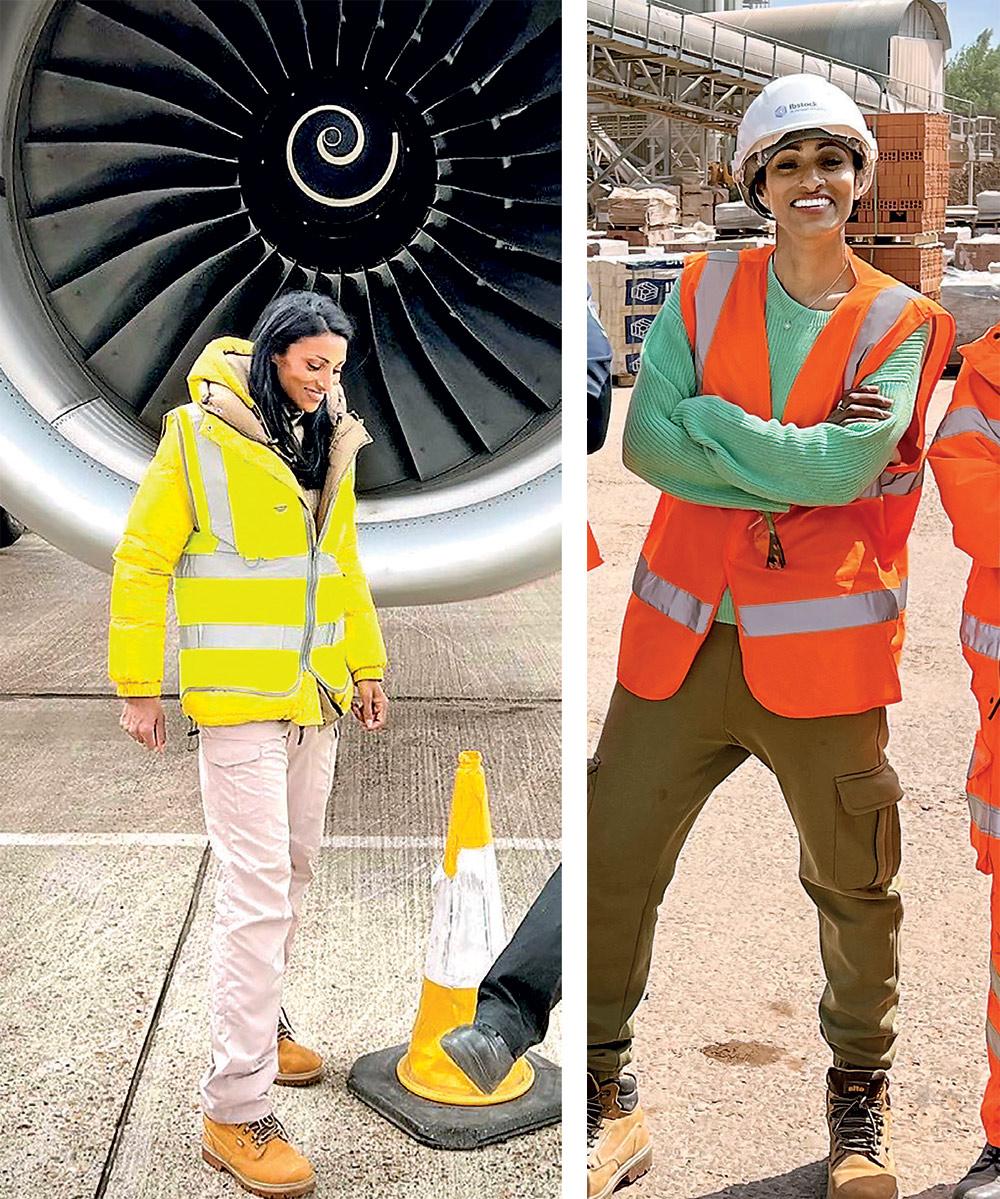
Curiosity has always been Shini Somara’s compass. From a childhood filled with endless questions at the kitchen table to lecture halls and global stages, she has pursued not just knowledge, but the art of making it visible to others. An engineer who sees poetry in equations, a broadcaster who finds rhythm in logic, and a storyteller who unearths humanity in science, Somara inhabits the rare space where intellect and empathy converge. In a world that often hides its complexity behind jargon, she illuminates the unseen, inviting everyone to marvel at the wonder of how things work.
 Starting with your childhood, how did growing up in that environment shape the way you approach learning and problem-solving today?
I have been hugely inspired by my father, who came to the UK from Sri Lanka to do an engineering apprenticeship at Southbank Polytechnic, London. It was there he met my mother, who was studying Business and Economics at university. Dad demonstrated that through hard work and grit, you can achieve anything you set your mind to. Through communicating STEM to the public, I aim to introduce STEM to everyone in the same way my father introduced it to me. I hope to increase awareness and interest in STEM careers so that we can cultivate diversity within the field. From my experience, the more diversity we have in engineering, the stronger the solutions will be. My father’s influence has been pivotal. Growing up, he encouraged me to follow my curiosity. As a child, I constantly asked questions, and our discussions would always lead to more questions. As an engineer, my father leads with logic and reason. Education has been crucial for his success and for mine. I’m grateful for his insistence on prioritizing learning and hard work, because knowledge is a gift that can never be taken away. I love learning and continue to commit to education, even as an adult. My favorite definition of humility is “remaining teachable.” I come from a very humble family where we are all open to learning, growing, and contributing as members of society. In our family of five (including my mother and two sisters), we all chose STEM careers and enjoy solving professional challenges that are smart, economical, and practical. I grew up in a household where the best ideas were simple and ingenious. My curiosity keeps me in awe of the world. I hope STEM equips us with the skills, knowledge, and ability to advance humanity in meaningful ways.
Were there any early moments when you realized you wanted not just to study science, but to communicate it to others?
The importance of communication became clear later in my career. I was always a shy, studious, and introverted child. During my doctorate, I realized that to communicate effectively, I needed to learn how, and I had no training. I taught myself public speaking through short courses and practice. One can become a highly accomplished engineer in the UK without any communication skills, but after my doctorate, I realized that sharing knowledge can be as important as acquiring it. This realization inspired me to research how to communicate STEM to wider audiences through television.
You grew up in London with Sri Lankan and Malaysian roots. How has that layered identity shaped the way you see the world and your place in it?
Having a layered identity was often uncomfortable, but in my thirties, I recognized it as a blessing. It taught me independence, resilience, and adaptability. I have never felt a sense of belonging to a specific place; instead, I find home within myself, often through meditation. I do not speak or read the languages of my parents, but I feel in tune with spiritual aspects of my cultural heritage. This blended upbringing instilled strong values, a fusion of Western and Southeast Asian principles, reminding me daily of the miracle and gift of being alive and encouraging gratitude.
Your work in computational fluid dynamics is focused on visualizing what cannot be seen. Did early training influence your instinct to explain the invisible aspects of science to the public?
Absolutely. Visualizing the invisible through computational fluid dynamics was a technical start to my fascination with communicating the universal laws of nature. Science uncovers truths that cannot be argued with, such as gravity. My studies and presentations at international conferences sparked my passion for explaining complex ideas to audiences, and I have since wanted to reach wider, non-scientific audiences. For me, sharing the wonders of the universe is like a magician revealing a trick, the joy lies in seeing others marvel. I enjoy showing how science and ingenuity can solve global challenges.
Many engineers remain within academia or industry. What gave you the confidence to step into media, especially when women in STEM were rarely visible?
Engineering in the UK offered few women or ethnic minority role models. This underrepresentation motivated me to speak out. I wanted budding engineers to know they were not alone. By stepping into the public eye, I inadvertently inspired underrepresented groups. I have heard from young women engineers who said, “If you can’t see it, you can’t be it.” I believe everyone in STEM has a duty to communicate their work, because this is how future generations are built.
No Kitchen Required placed you in unfamiliar cultures far from labs and studios. What did those experiences teach you about learning, humility, and human ingenuity?
Traveling and witnessing diverse cultures was eye-opening. Indigenous communities displayed ingenious, sustainable ways to hunt, gather, and cook, some techniques more advanced than modern methods. Observing these traditions taught me humility and the importance of staying open-minded. Different cultures have wisdom to offer, and adopting these ideas keeps me curious and grounded.
When presenting Crash Course, you speak to millions, many encountering physics for the first time. What responsibility do you feel in shaping their first relationship with science?
My goal was to make physics fun and unintimidating. A team of physics consultants ensured technical accuracy, but it was my job to convey the content with accuracy and enthusiasm. Many viewers, including fans who struggled with physics in school, found my videos accessible. STEM can feel daunting if presented as a test; it is truly profound when communicated with joy and curiosity.
You have moved fluidly between the BBC, PBS, Al Jazeera, and digital platforms. How do you adapt while staying true to your values as a communicator?
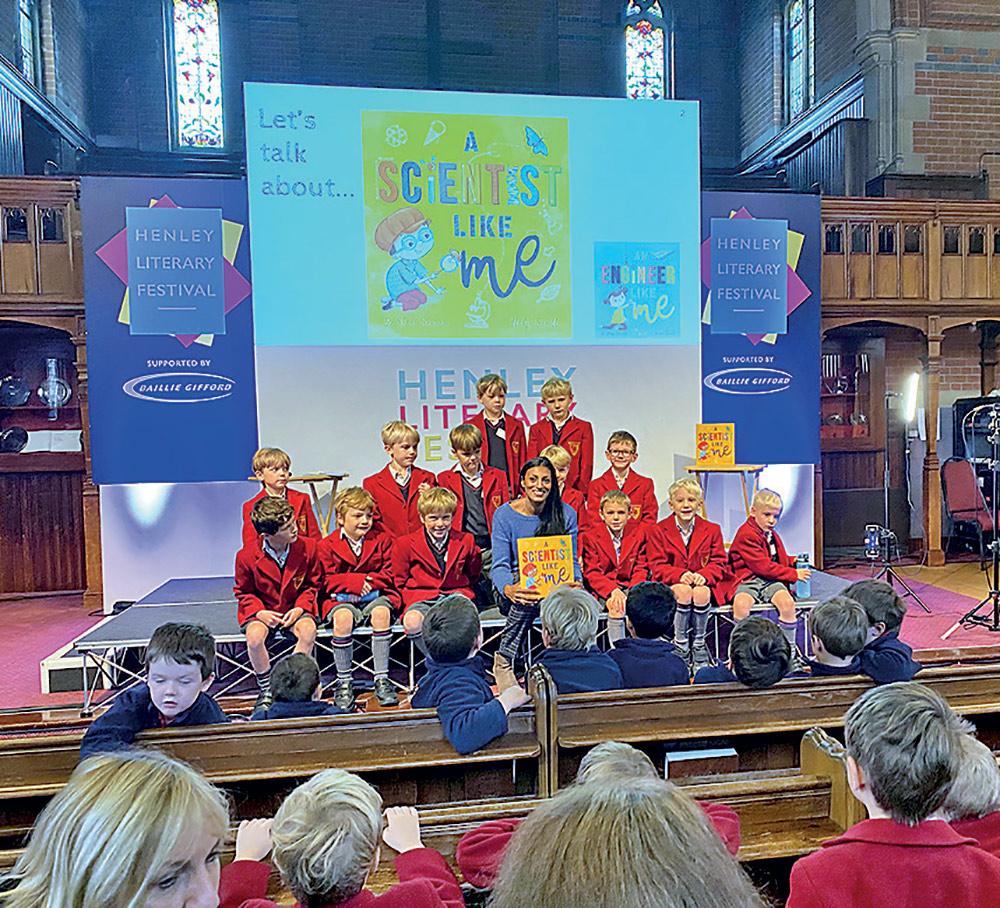
My passion for STEM is consistent; however, it has been essential to understand my audience. Speaking to young children has been the best teacher. If I can hold their attention, I can hold anyone’s. I started my communication career with school talks, which was the hardest self-training I ever received. It taught me everything I needed to know about presenting with authenticity and rigor. Adapting to changes in media technology has also been necessary. Television broadcasting is different from digital platforms in terms of style, tone, and engagement. The common denominator, however, is having a strong sense of what you stand for.
Your speech at the United Nations addressed women and girls in STEM. Years later, what progress gives you hope, and what challenges remain?
Diversity and inclusion remain essential. Achieving this is still a challenge, despite some progress. Society fluctuates regarding unity and representation in science, but the benefits of diversity remain constant. Diversity enhances innovation, and inspiring women and girls in STEM ensures future generations are motivated to pursue education and careers in science. “If you can’t see it, you can’t be it.”
Through podcasts such as Science and Innovators Making a Difference, you have created spaces for honesty and vulnerability. Why do you believe storytelling is so powerful in shifting STEM culture?
STEM is usually communicated through logic and technicality. Science can be overwhelming, but curiosity is its core. Human brilliance is superior to artificial intelligence. STEM is human at its heart, aiming to improve quality of life and help people thrive. Storytelling connects audiences to these human motives, rather than just presenting facts. Communicating the humanity in STEM allows people to relate and understand why we do what we do, which is more compelling than raw data.
You have balanced roles as an engineer, broadcaster, producer, author, and advocate. Was there ever a moment when you questioned whether you were doing too much or not enough?
I have always pushed myself to do more, and there is still more I want to do. I have a strong work ethic and enjoy doing my best, though it can lead to burnout. Finding work-life balance has been important. Even during my last trip to Sri Lanka in February 2025, I gave talks at three schools and at the Institution of Mechanical Engineers. It was exhausting but rewarding. Contributing through education brings me joy and is personally fulfilling. It is also a way to express gratitude for my father’s guidance.
For young people in countries like Sri Lanka, where talent often outpaces opportunity, what matters more in the long run: access, mindset, or mentorship?
Mindset matters most. A healthy and focused mindset opens all opportunities, regardless of access or mentorship. Access and mentorship provide short-term benefits, but without focus and self-belief, they have limited long-term impact. I have experienced this personally. Once I clarified my goals and mapped out a career plan, I achieved far more than I could have without focus and determination.
Science communication today competes with misinformation and shrinking attention spans. How do you keep curiosity alive without oversimplifying the truth?
The rise of AI and social media has changed how we consume content. These tools are both a blessing and a curse, spreading misinformation but also enabling learning. This is why education is vital; teaching young people how to learn allows them to discern accurate information independently. Curiosity and creativity remain human qualities driven by emotion. I aim to reveal the human side of STEM through my work.
If your career were to be remembered for one contribution rather than a title or a show, what would you hope that legacy to be?
I hope to be remembered for helping people help themselves through education. By bravely embracing my own differences and learning to make a positive impact, I hope to inspire others to do the same. Differences need not divide us; they can spark curiosity and growth.
Finally, if today’s Shini could speak to her younger self, what would you reassure her about her curiosity or choices?
I would tell my younger self to follow her heart not just her head and remain true to herself. Staying aligned with oneself is difficult, especially as an underrepresented person. My heritage and upbringing continue to teach me resilience, courage, empathy, and strength. We are all navigating life, and sharing our experiences with others is the greatest gift we can offer.