Fame Game Featuring Sohan Weerasinghe
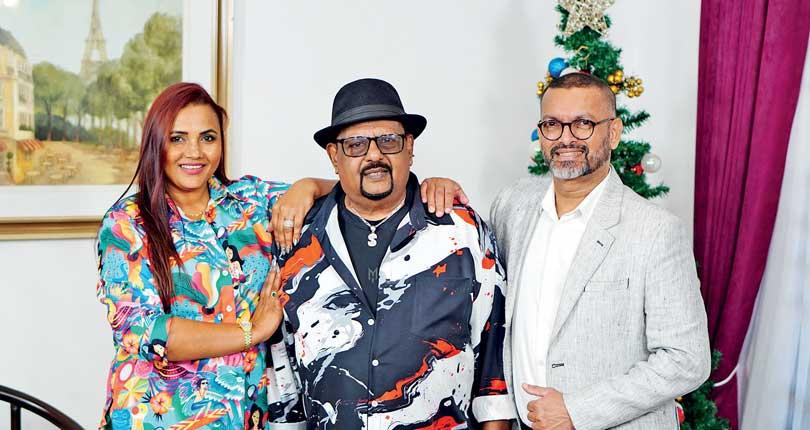
 Fame Game welcomed one of Sri Lanka’s most influential and enduring figures in contemporary music, Sohan Weerasinghe. With a career spanning five decades, Sohan is widely regarded not only as a performer but also as a mentor, bandleader, organizer, and a quiet architect of professionalism in the local music industry. In conversation with hosts Kumar de Silva and Rozanne Diasz, he reflects on the origins of Sohan and the Experiments, the evolution of Sri Lanka’s music scene, the challenges of leadership, personal loss, and the fulfilment he finds in guiding younger musicians.
Q: You were once called the godfather of Sri Lankan music. Do you still identify with that title?
I think that title has changed over time. If anything, I would say I am more of a grandfather now. That is also true in real life because I am a grandfather.
Q: Tell us about that. How is your granddaughter?
She is four years old now. She is full of energy and fun, and she brings a lot of happiness into my life. I see her almost every day, and she really keeps me going.
Q: Let us go back to the beginning. How did The Experiments come into existence?
There was a band called The Experiments. Eventually, most of the musicians migrated to Australia and the band name remained unused. Someone suggested that I take it over. At that time, I was singing with Gabbo and the Breakers. I took over the band and renamed it Sohan and the Experiments.
Q: What year was that?
That was in 1975, which means this year marks 50 years since The Experiments began.
Q: When you look back on those five decades, what comes to mind?
Time has passed incredibly fast. Music keeps you grounded because it connects you to people, memories, and moments. When you look back, you realize how many lives you have crossed paths with through music.

Q: Over the years, many female vocalists have been part of The Experiments. Who was the easiest to work with?
Delreen, without any doubt. She was very accommodating, easygoing, and extremely professional. Working with her was always smooth.
Q: If music had not taken over your life, what career would you have pursued?
I would have been a lawyer. I actually qualified as one, but life took a completely different turn and I changed professions. I have no regrets about that decision.
Q: Looking back over 50 years, what are some of your most unforgettable memories?
There are many, but one that always stands out happened in London. We were on tour and went to Denmark Street, which is famous for music shops. While we were there, we unexpectedly ran into Barry Gibb. He had come to check out a guitar. At first, I could not believe it. We approached him and asked if he was Barry Gibb. He confirmed it and mentioned that he had visited Sri Lanka. We spoke briefly, shared some Sri Lankan tea with him, and shortly afterwards he left. I still have photographs to prove it.
Q: You have met many international artistes over the years. Which encounters stand out?
Meeting the Gipsy Kings, encountering La Toya Jackson in Sri Lanka at the Taj, and many moments while sourcing sound equipment in Singapore. These experiences stay with you and remind you how music connects people across cultures.
Q: Do you miss being part of a permanent band like The Experiments?
Not really, because I am still very much involved in the industry. I perform with many bands now, both in Sri Lanka and overseas. Stepping away from managing a permanent band has given me more freedom. Earlier, I avoided guest performances because of the responsibility. Now I can perform without that burden.
Q: You currently manage a band as well. Tell us about that.
Yes, I jointly manage a band called Aroh with Krishanta de Silva. They rehearse at my studio. They are young, energetic, disciplined, and extremely talented. When they started, their focus was mainly oriental music. We gradually introduced western music, and now they have a strong and versatile repertoire.
Q: How important is discipline in a band environment?
Discipline is everything. Talent alone will not sustain a career. From the very beginning, I have emphasized that there are no shortcuts to success. Professionalism, punctuality, and respect for the job are crucial.
Q: You are known for creating employment opportunities for musicians. Does that bring you fulfilment?
Very much so. At one stage, I was providing work for about 80 musicians across several five star hotels. Seeing them earn a steady income and be treated fairly gives me immense satisfaction. That kind of fulfilment cannot be measured in money.
Q: How has the Sri Lankan music scene evolved over the past 50 years?
The biggest change is versatility. In the past, western bands played only western music and were mostly confined to Colombo. Today, bands need a wide repertoire including Sinhala music, baila, and western classics, especially for weddings and overseas tours. We now have our own musical identity thanks to composers like Bathiya and Santhush and many talented younger musicians.
Q: Which musicians from the younger generation do you admire?
Musicians like Sangeeth from WAYO, Billy from 2forty2, and Bathiya and Santhush. They are trailblazers who have shaped the modern Sri Lankan sound.
Q: What has been one of your most frustrating moments on stage?
When you have given your best performance and someone comes up afterwards and asks, “Can you play something nice?” It happens surprisingly often.
Q: Do you prefer performing in Sri Lanka or overseas?
I enjoy both. Performing in Sri Lanka for an appreciative audience is special. Overseas, particularly in Australia, there is a strong sense of nostalgia. Many people there grew up listening to our music and they make you feel at home.
Q: How do you handle disagreements within a band?
Every musician is different and experience teaches you how to deal with people. I never reprimand someone in front of others. I speak to them privately because respect is essential. Fair payment is also very important. If musicians are treated properly, they have no reason to leave.
Q: You are known to be a teetotaler. Has that helped your career?
Yes, very much. I have never consumed alcohol. It helps me maintain a clear head, especially when handling issues late at night. Discipline on and off stage is essential.
Q: How do you read an audience during a performance?
That comes with experience. You observe body language and energy levels. I never follow a fixed playlist because timing is everything. Even a good song played at the wrong moment can lose the audience.
Q: Have you ever forgotten lyrics on stage?
Many times. Once, in front of a crowd of over 50,000 people, I forgot the opening lyrics of The Final Countdown. I asked the audience to clap while I quietly checked with the band. Eventually someone reminded me and we continued. The key is not to let the audience see your panic.
Q: Looking back, is there anything you would change musically?
I wish I had learned music formally. I have never had formal training. Everything I do is instinctive. Formal training would have helped me technically, especially with vocal control.
Q: What advice would you give young musicians today?
Respect the craft. Be disciplined. Treat people fairly. Learn to read your audience. Remember that success comes not only from talent but also from character, consistency, and hard work.
-----------------
Five decades into his musical journey, Sohan Weerasinghe continues to perform, mentor, and guide. He remains a respected and steady presence in Sri Lanka’s music industry, shaped by experience, humility, and an enduring love for music.