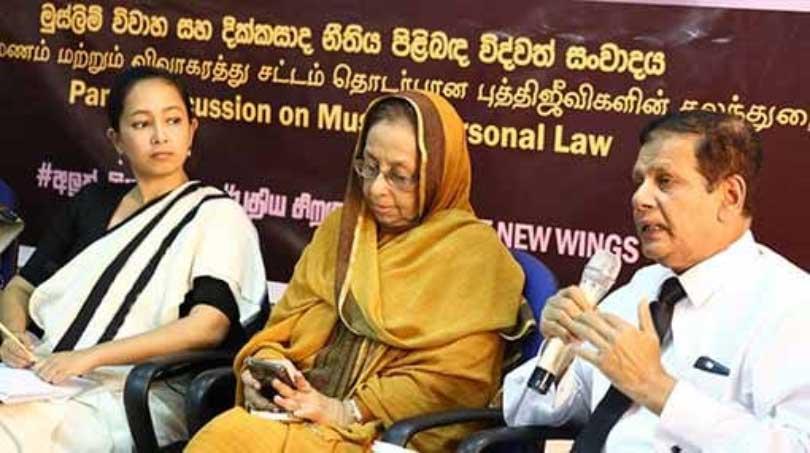
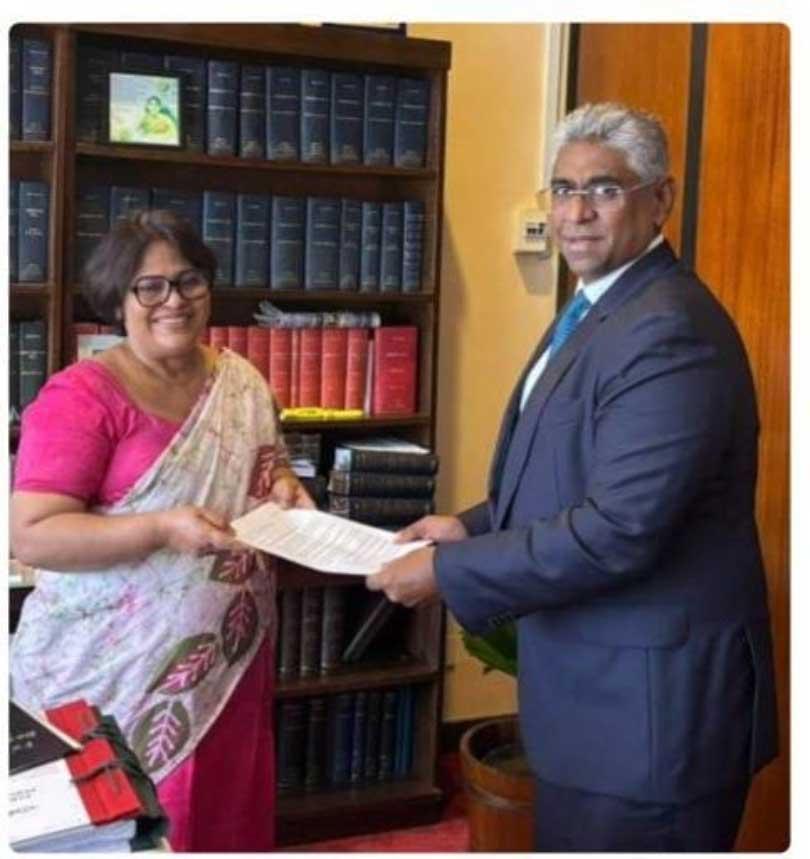
 I have watched this fight for most of my adult life. I have watched Muslim women beg for dignity and be told to wait. I have watched men invoke God to justify cruelty. And I am done pretending this is a "complex debate." In February 2026, Opposition MP and President's Counsel Faiszer Musthapha submitted two Private Member Bills to Parliament. One introduces no-fault divorce for all Sri Lankans. The other proposes long-overdue reforms to the Muslim Marriage and Divorce Act (MMDA). And predictably, the backlash came fast. Suddenly, self-appointed guardians of faith emerged to declare that Allah condemns female leadership, that Shariah cannot be altered, that reform is betrayal. None of this is new. What is new is that people are no longer interested in cushioning the truth to protect fragile egos or political alliances.
The MMDA Is Not Sacred
The MMDA is not divine law. It is a 1951 colonial-era statute stitched together from Dutch Batavian rulings, local customs, English procedural law, and selective interpretations of Islamic jurisprudence. It was drafted by men. Passed by men. Enforced by men. And it has failed Muslim women spectacularly. Under this law, Muslim girls can be married off below 18. Below 12, even, with Quazi approval. Section 23 explicitly permits this. And even without approval, those marriages remain legally valid. While every other child in Sri Lanka is protected by a minimum marriage age of 18 under the General Marriage Registration Ordinance, Muslim girls are left exposed.
Approximately 12% of girls in Sri Lanka are married before age 18. Among Muslim communities, that figure climbs higher in certain districts. In 2019, activists documented cases of girls as young as 13 being married off in the Eastern Province. In 2021, the #LetHerSign campaign went viral when a woman from Puttalam shared that she was married at 16 to a 38-year-old man without her consent. In 2024, a 14-year-old girl in Mannar was pulled out of school, married to her cousin, and pregnant within months. Her education ended. Her childhood ended. It was all legal under the MMDA. Muslim women are not required to sign their own marriage contracts. Consent is assumed. Permission is outsourced to male guardians or Quazis. In 2025, a woman in Colombo discovered she had been married for six months before anyone told her the registration was complete.
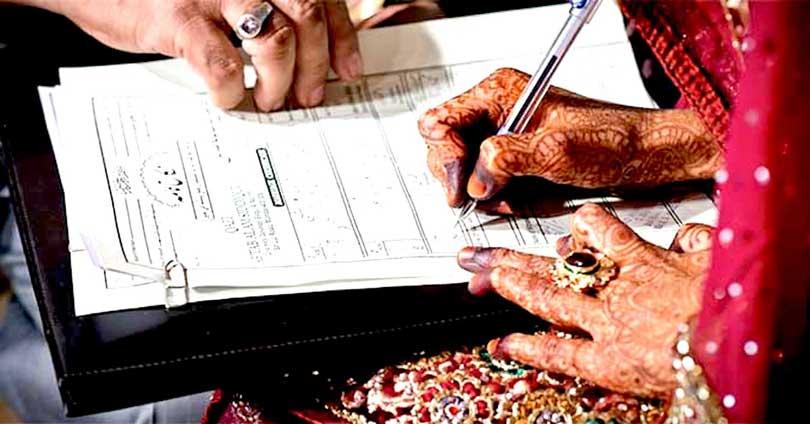
Divorce rights are grotesquely unequal. Men pronounce talaq, sometimes over the phone, sometimes via WhatsApp, and walk away. Women must prove fault while Quazis question their character, their modesty, their worth. In 2023, a woman from Akurana testified that her husband divorced her while she was in the hospital after childbirth. She learned about it three weeks later by letter. She had no legal recourse.
Polygamy is unrestricted. Financial capacity is irrelevant. In 2022, legal aid organizations documented 47 cases of women who discovered their husbands had taken second or third wives only when financial support stopped or when another woman showed up claiming marital rights to the family home. And then there is the Quazi court system. Sixty-five courts, publicly funded, operating outside the formal judicial structure. No women Quazis. No lawyers allowed. Many Quazis without legal training. The Muslim Women's Research and Action Forum (MWRAF) interviewed 120 women who had been through Quazi courts between 2019 and 2024. The testimonies are clear: women told to "be patient" with abusive husbands, asked what they did to "provoke" violence, denied divorce even after producing medical evidence of battery, called "immodest" for seeking education or employment. One woman described being told by a Quazi in 2021: "A good Muslim wife doesn't question her husband's decisions." When she insisted on divorce after years of physical abuse, the Quazi asked her male relatives if they agreed with her petition. As if her bodily autonomy required committee approval. If this were happening to any other community, we would call it what it is. A human rights crisis.
Thirty Years of Asking Nicely Has Achieved Nothing
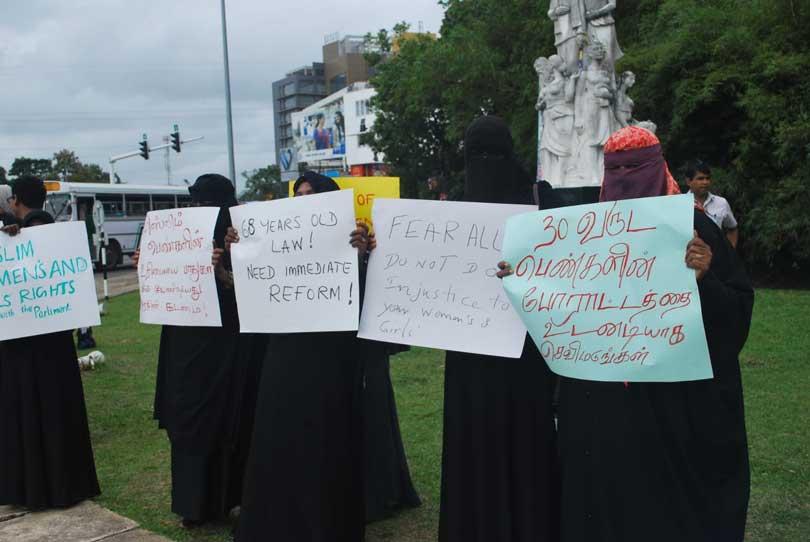
This fight did not begin in 2026. It began decades ago. In 1972, early calls for reform emerged. Ignored. In 2009, a Committee of Experts led by Justice Saleem Marsoof was appointed. Women had to fight just to be included. When the report was finally submitted in February 2018 after nine years, half the committee including the All Ceylon Jamiyyathul Ulema (ACJU) issued a dissent. Reform froze. After the April 2019 Easter attacks, consensus miraculously emerged around 14 basic amendments. By July 2019, Muslim MPs agreed on these reforms. They stood before cameras and promised action. And then, once again, the moment passed. The ACJU pushed back on July 22, 2019. Parliament retreated. Women paid the price. Between 2019 and 2021, the #LetHerSign campaign exploded. Thousands of Muslim women shared their stories. In 2021, activists delivered a petition with over 15,000 signatures demanding MMDA reform. It was received politely. Nothing changed. This was cowardice. Political expediency trumped human rights every single time.
Why Musthapha's 2026 Submission Actually Matters
This time is different. Musthapha's bills are comprehensive. They confront the core injustices head-on. No child marriage, 18 as an absolute minimum with no exceptions. Explicit consent and signature from the bride as mandatory. Gender parity in the Quazi system allowing women judges. Structural reform of divorce procedures with equal access and due process protections. They build on Sri Lanka's own law reform efforts, including the 2006 Matrimonial Causes Act proposals. They align with our obligations under the Convention on the Elimination of All Forms of Discrimination Against Women (CEDAW), which Sri Lanka ratified in 1981 but has consistently violated through the MMDA. And no, this is not a Colombo elite project. Muslim women from Sainthamaruthu, Kandy, Mannar, Puttalam, Kurunegala, Jaffna and beyond have been carrying this struggle for decades. So have men who understand that faith and justice are not opposites.
Stop Lying About Islam
I am tired of watching religion weaponised against women. There is no Quranic prohibition against women being judges. None. The claim that "Allah condemns female leadership" or that women cannot be Quazis is not just wrong. It is a deliberate misrepresentation of Islamic scholarship.
Historical precedent: Thumal al-Qahraman served as head of the Mazalim court system during the height of the Abbasid Caliphate, effectively chief Qazi of the Islamic empire. Caliph Umar ibn al-Khattab appointed al-Shifa' bint Abd Allah as market inspector of Medina with law enforcement authority. She had the power to investigate, prosecute, and punish violations.
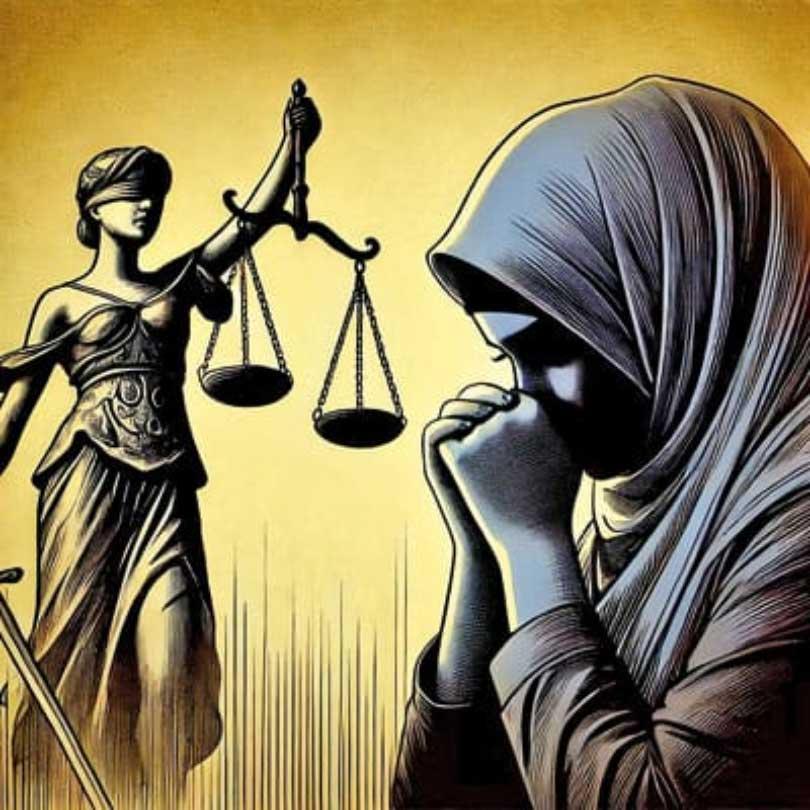
Major Islamic scholars support this: Imam Abu Hanifa (699-767 CE), founder of the Hanafi school followed by over 30% of Muslims worldwide, explicitly permitted women to serve as judges. Imam Malik (711-795 CE) held that women could become qazis. Ibn Hazm (994-1064 CE) argued there is no theoretical prohibition in Islamic law against women even being prophets, let alone judges. Al-Tabari (838-923 CE) supported women as judges.
Yes, some scholars from the Shafi'i and Hanbali schools took more restrictive positions. But scholarly disagreement is not the same as divine prohibition. You cannot cherry-pick one restrictive opinion and claim it represents "true Islam" while dismissing centuries of permissive scholarship.
Muslim-majority countries have already done this: Indonesia has had women serving as Sharia court judges since 1964. Pakistan appointed its first female Sharia court judge in 2013. Malaysia has had women Sharia judges since 2003. Palestine appointed its first female Sharia judge in 2009. Sudan has had women judges in Sharia courts since the 1970s. India has multiple female Qazis currently serving. Morocco reformed its family code in 2004 with women heavily involved in Islamic legal scholarship. Tunisia has women judges throughout its judicial system including family law. Jordan has had women serving as Sharia judges since 2008.
Are all these countries committing mass heresy? Or is it possible that the restrictive interpretation you are defending is not as universal or divinely mandated as you claim?
The "Never Prosper" hadith: The hadith stating "a people ruled by a woman will never prosper" was narrated by Abu Bakra regarding the Persian empire appointing Chosroe's daughter as ruler. Many scholars argue this was a specific historical prediction about Persia's political instability, not a universal theological prohibition.
The Quran itself praises the Queen of Sheba in Surah An-Naml. She is described as wise, just, and consultative. She prevents war through diplomacy. The Quran does not condemn her rule. It praises her judgment. If female leadership were inherently condemned by Allah, the Quran would not present a woman ruler as an example of good governance.
The hadith is being used as a weapon against women when its original context and scholarly interpretation suggest something far more nuanced.
This Is About Power, Not Piety
At this point, the argument is no longer theological. It is ethical and legal. And it is unmistakably political. When people insist that MMDA reform is an attack on Islam, what they are really saying is that women's suffering is an acceptable cost of preserving male authority. They dress that power play in religious language because it sounds noble. It is not. It is cowardly. No one is asking to erase faith. What we are demanding is that faith stop being used as a shield for abuse.
The Muslim Marriage and Divorce Act, as it exists today, does not reflect divine will. It reflects human choices. Choices made in 1951 by men who could not imagine women as legal subjects in their own right. Choices that Parliament has repeatedly had the opportunity to correct and chose not to. That is why the February 2026 submission by Faiszer Musthapha matters. Not because he is perfect or beyond criticism, but because the bills force the country to confront a truth it has spent decades avoiding personal law cannot be a constitutional blind spot where women are left unprotected.
Sri Lanka cannot continue to claim commitment to equality while allowing one group of women to be married as children, divorced without notice, denied legal representation, and humiliated in state-funded courts. That contradiction is not sustainable. It is not defensible. And it is certainly not Islamic. We also need to stop pretending that delay is neutral. Every year Parliament hesitates, another girl is pulled out of school. Another woman is divorced in absentia. Another survivor is told to be patient with violence. Delay is not diplomacy. It is damage. I am no longer interested in politeness that protects power. I am interested in justice that protects people.