Olympics Opening Ceremony The Milano Cortina 2026 Winter and the Online “Satanic” Backlash A Deep Dive
When the 2026 Winter Olympics opened in Milan and Cortina d’Ampezzo, the expectation was a globally televised celebration of sport, culture, and unity. Instead, within hours of the ceremony airing, parts of the internet erupted with claims that the spectacle contained satanic or demonic symbolism. Short clips circulated rapidly across social platforms, accompanied by ominous captions and dramatic music, reframing moments from the ceremony as evidence of hidden occult intent.
The controversy did not emerge from official criticism or expert review. It was born online, amplified by algorithms, and sustained by interpretation rather than proof. This episode is not just about one ceremony. It is a case study in how modern spectacles are consumed, re-edited, and reinterpreted in real time. Viral fragments now shape narratives faster than context can catch up. What follows is a clear look at what the ceremony aimed to convey, what specifically triggered the backlash, why the claims spread so quickly, and why most observers and organisers reject the idea of occult messaging.
A Ceremony Framed Around Harmony and Italian Design
The Opening Ceremony was conceived as a celebration of harmony between people, places, nature, and engineering. The official creative theme focused on unity and continuity, drawing on Italy’s long tradition of art, music, fashion, and design. The ceremony combined orchestral and choral performance, contemporary dance, and visual storytelling intended to bridge the urban energy of Milan with the alpine heritage of Cortina and the surrounding regions.
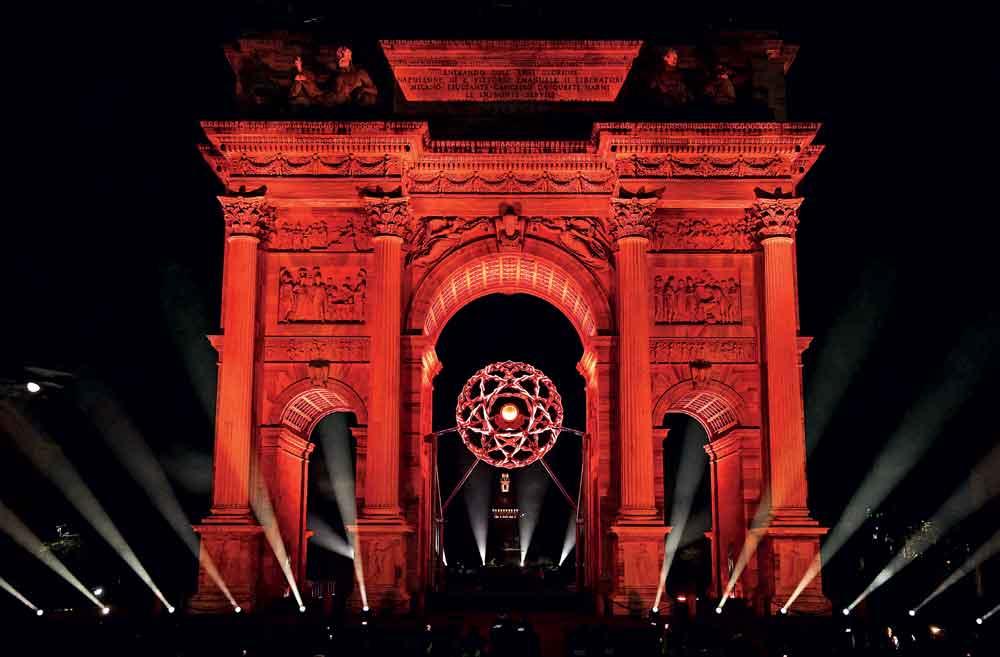
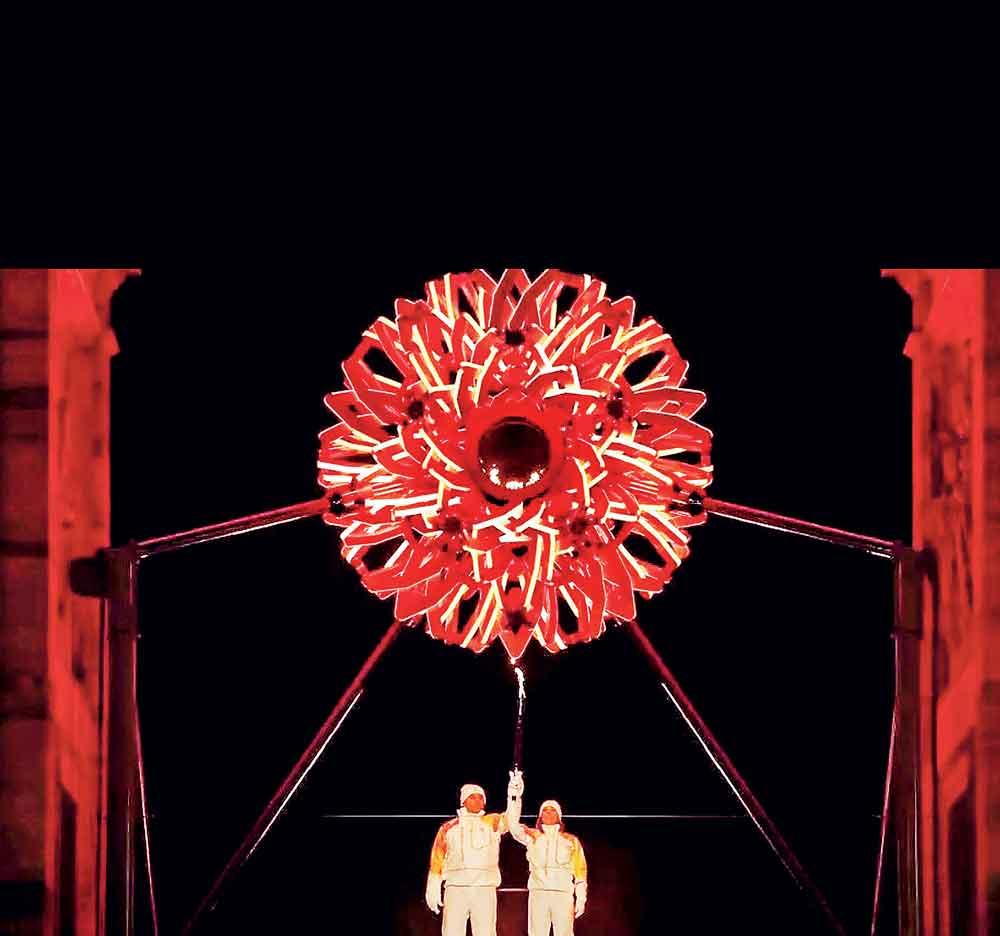
One of the most discussed design elements was the dual Olympic cauldrons, lit simultaneously to reflect the shared hosting of the Games. The cauldrons were kinetic structures that opened and unfolded around the flame, forming a geometric bloom before settling back into place. The designers described their inspiration in terms of Renaissance geometry and interlaced forms associated with Italian artistic heritage, particularly studies of proportion and knot-like structures that appear in historical sketches and architectural motifs. The intent was to symbolize connection and balance through motion and form, pairing modern engineering with classical visual language. In the days leading up to the ceremony, coverage focused on the logistical complexity of a dual host opening and the ambition of staging a cohesive narrative across locations. There was no pre ceremony controversy about symbolism. The backlash began only after edited clips appeared online.
What Sparked the Viral Backlash
The flashpoint came from short videos of the cauldron reveal. In isolation, the expanding geometry around the flame appeared to form star like lines when viewed from certain angles. Some viewers claimed this resembled an inverted pentagram, a shape often associated in popular culture with satanic imagery. The clips were zoomed, slowed, and looped. Captions framed the moment as deliberate occult signalling. In comment threads, users interpreted the choral music and lighting as ritualistic, despite these being common features of large-scale ceremonies. Once the idea took hold, other elements were pulled into the same narrative. Red lighting during a performance segment was framed as infernal. Costumes were described as cult like. Ordinary stagecraft was reframed as ritual. The ceremony became a canvas onto which fears and suspicions were projected.
This pattern is familiar in the age of short form video. When a claim is emotionally charged and easy to repeat, it spreads faster than careful explanation. The framing did not require proof. It required only a suggestive visual and a caption that primed viewers to see something sinister.
Fact Versus Viral Interpretation
No official body involved with the Games has supported claims of occult intent. Organisers and designers have described the cauldrons and stage visuals in terms of geometry, heritage, and engineering. There is no documented evidence that any symbol was chosen for religious or occult reasons. The claims remain interpretations made by viewers. The pentagram reading itself is subjective. Geometric patterns can be perceived in multiple ways depending on angle and framing. The same structure can appear as overlapping triangles, a star like bloom, or a mechanical flower. When a still frame is isolated from motion and context, the brain looks for familiar shapes. If a viewer is primed to expect sinister meaning, that expectation guides perception. Viral clips also strip away narrative context. The cauldron reveal was part of a longer sequence about connection between host cities and continuity of the Olympic flame. In isolation, the moment can be reimagined as something else entirely. This is not deception by organisers. It is a side effect of how content travels online.
Why the Narrative Resonated
The speed and intensity of the backlash are not accidental. They reflect broader dynamics in online culture. First, controversy is rewarded by algorithms. Content that provokes fear, outrage, or shock is more likely to be shared and recommended. Words like satanic and demonic are powerful emotional triggers. They invite reaction rather than reflection. Second, distrust of global institutions fuels interpretive suspicion. For people who already believe that international organisations operate with hidden agendas, ambiguous visuals can be read as confirmation of those beliefs. The Olympics, as a highly visible global event, becomes an easy target for projection. Third, symbolic interpretation varies widely by cultural and religious background. Symbols do not carry one fixed meaning. The five-pointed star has appeared across cultures for centuries with meanings ranging from protection to harmony. Popular culture has narrowed its association in some circles to satanism, but that association is neither universal nor historically consistent. When symbols are ambiguous, people bring their own frameworks to interpret them.
Mainstream Coverage and Expert Reaction
Most established coverage of the Opening Ceremony has focused on the creative ambition, the technical challenge of staging a dual host event, and the cultural references embedded in the performances. Where the backlash has been mentioned, it is generally framed as an online phenomenon rather than a substantiated critique of the ceremony’s intent. Arts commentators and designers note that geometric forms and dramatic lighting are staples of large-scale ceremonies precisely because they read clearly to distant audiences and cameras. There is also a practical dimension that undermines the conspiracy framing. Opening Ceremonies involve hundreds of designers, engineers, performers, and coordinators, often under public and sponsor scrutiny. The idea that a hidden occult message could be deliberately embedded and pass unnoticed by so many stakeholders strains credibility. Large productions are messy, collaborative, and constrained by safety, branding, and broadcast requirements. They are not fertile ground for secret messaging.
Why This Matters Beyond One Night
The controversy illustrates how easily meaning can be detached from intent in the digital age. Visual misinformation does not require falsified footage. It can arise from selective framing and narrative overlay. Once a story takes hold, corrections struggle to travel as far or as fast as the original claim. It also highlights the power of interpretation. People do not encounter spectacles as blank slates. They bring beliefs, anxieties, and media habits with them. When those beliefs align with viral framing, the interpretation hardens into certainty. Finally, it underscores the need for cautious engagement with viral claims. Extraordinary interpretations demand proportionate evidence. Pausing to ask what the creators said, how the design process worked, and whether alternative explanations exist is not naïve. It is essential media literacy.
The 2026 Winter Olympics Opening Ceremony was designed as a celebration of unity, heritage, and modern engineering. The claims of satanic symbolism arose from isolated visuals interpreted through a lens of suspicion and amplified by the mechanics of social media. There is no credible evidence from organisers, designers, or independent observers that occult imagery was intended. What this episode reveals is less about the ceremony and more about how global spectacles are now consumed. In a landscape shaped by clips, captions, and algorithms, meaning can be reassigned in minutes. The challenge for audiences is not to accept official narratives uncritically, but to resist the pull of sensational interpretations when simpler explanations suffice.