YAGA
Sri Lanka’s Gradual Entry into the Global Rave Circuit
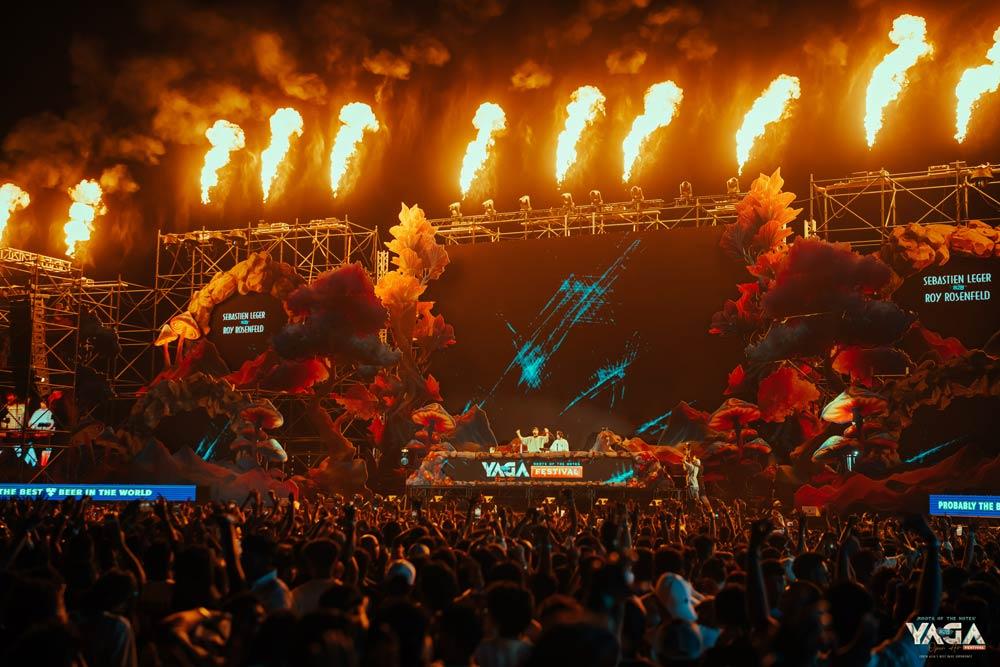
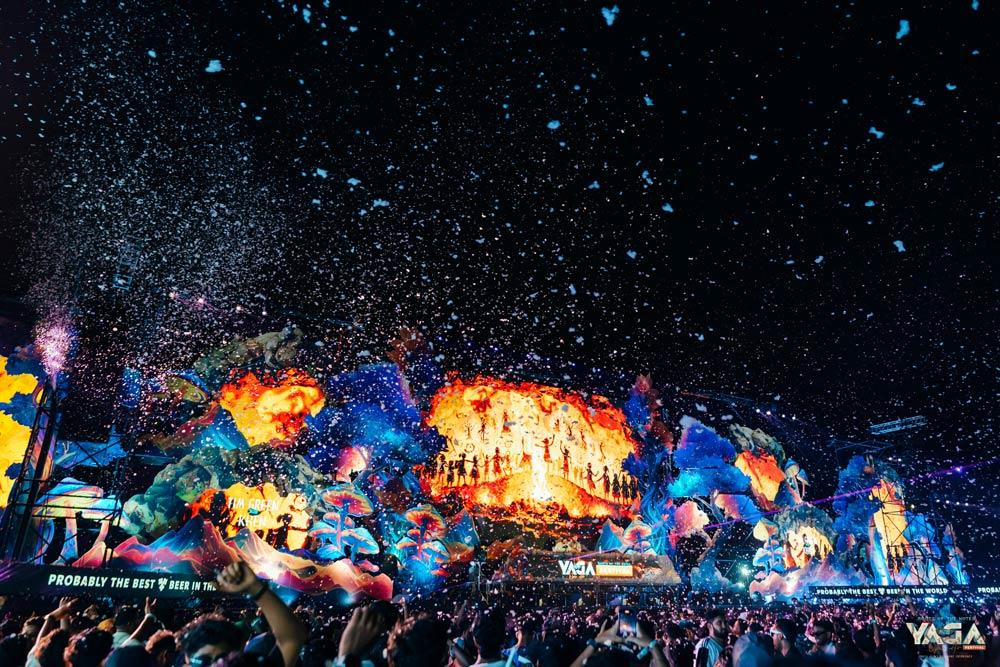
Sri Lanka’s relationship with electronic music has been uneven. For years, it appeared in pockets rather than structures. One-off parties, short-lived collectives, borrowed aesthetics, and improvised venues formed a scene that was energetic but fragile. What existed was interest. What did not exist was continuity. YAGA Festival arrived quietly into that landscape.
It did not present itself as a cultural turning point. It functioned instead as something more modest and, ultimately, more durable. A recurring event with clear systems, consistent execution, and an understanding that credibility in rave culture is built slowly.
The festival’s early editions were careful rather than ambitious. Scale was secondary to control. Programming avoided excess. Production favored reliability over spectacle. These decisions did not generate immediate hype, but they established trust. Over time, that trust became the festival’s defining asset.
The idea for YAGA was developed by its founder and producer, Janith Perera, known as Janiya. His approach differed from many event-led ventures in the region. Rather than treating the festival as a brand to be expanded quickly, he viewed it as a platform that needed time to mature. The objective was not to replicate established rave destinations, but to build a version that made sense within Sri Lanka’s social and logistical realities.
From the beginning, YAGA was planned with longevity in mind. That meant accepting limits. Lineups were curated conservatively. Infrastructure was built incrementally. Each edition was treated as a test rather than a declaration. This restraint allowed the festival to avoid the volatility that often defines emerging music scenes. As the festival grew, operational leadership became central to its survival. Project Director Gayashan De Silva oversaw the development of production systems that could support scale without sacrificing consistency. Planning, coordination, and risk management were treated as essential rather than secondary concerns. The result was a framework that allowed the festival to expand without destabilizing itself.
YAGA’s structure relies heavily on teams rather than individuals. Creative direction, production management, technical operations, logistics, safety, and ground coordination function within a shared chain of responsibility. This professionalization distinguishes the festival from many others in the region, where informal decision-making often undermines execution. The emphasis on systems has tangible effects. Sound delivery is reliable. Crowd movement is considered. Safety protocols are visible without being intrusive. These details rarely attract attention when they work, but they determine whether an audience feels secure enough to engage fully with the experience.
YAGA’s programming philosophy also reflects this measured approach. The festival does not rely on headline-driven curation. Artists are selected based on coherence rather than prominence. Sets are sequenced to maintain continuity rather than competition. The result is a sonic environment that unfolds gradually, encouraging immersion rather than interruption.
This approach aligns with established principles of rave culture, where the collective experience often matters more than individual performance. YAGA does not attempt to dramatize this idea. It simply accommodates it. The space is designed to allow the audience to remain present rather than constantly redirected. Over time, this consistency began to attract attention beyond Sri Lanka. International artists returned after initial appearances. Regional audiences traveled specifically for the festival. The conversations surrounding YAGA shifted from novelty to reliability. It became known less for its ambition than for its delivery.
Sri Lanka’s presence within the global electronic music circuit has historically been limited. While destinations such as Goa and Bali developed reputations over decades, Sri Lanka remained peripheral, despite proximity and cultural overlap. YAGA has contributed to changing that position, not through branding campaigns, but through repeated execution. Global rave destinations tend to emerge through ecosystems rather than events. They depend on local capacity, audience literacy, and institutional memory. YAGA operates with this understanding. It does not position itself as a standalone spectacle. It functions as part of a developing infrastructure for electronic music on the island.
One of the festival’s most significant contributions has been its emphasis on safety and accountability. In a culture that values freedom and release, these considerations are often undervalued. YAGA treats them as prerequisites. This approach has helped broaden the festival’s audience and attract international participation. As perceptions shifted, Sri Lanka began to appear differently within regional music conversations. It was no longer framed solely as a scenic backdrop, but as a place capable of hosting contemporary music culture at a professional level. This change did not arrive suddenly. It accumulated through repetition.
YAGA’s growing reputation as one of South Asia’s strongest rave experiences reflects this gradual process. The recognition is not attached to a single edition or moment. It emerges from consistency across years, teams, and decisions.
The festival’s influence extends beyond music. It signals a broader confidence within Sri Lanka’s creative industries. A willingness to invest in systems. A recognition that global standards are attainable locally. A shift away from improvisation toward intention.
YAGA does not present itself as a cultural movement, though it has begun to function as one. It does not claim to represent a generation, but it reflects one. A generation comfortable operating within global frameworks while remaining attentive to local conditions.
The festival’s leadership has avoided framing YAGA as a statement. It is positioned instead as a practice. Something done repeatedly, carefully, and with attention to consequence. This orientation has allowed the festival to evolve without losing coherence. As YAGA continues, its significance lies less in scale than in precedent. It demonstrates that electronic music culture in Sri Lanka can be sustained rather than episodic. That festivals can grow without abandoning discipline. That credibility can be built quietly.
YAGA is not reshaping Sri Lanka overnight. It is contributing, incrementally, to how the island is understood within contemporary youth culture. That contribution is grounded not in ambition, but in consistency.
In the long view, that may be its most durable achievement.