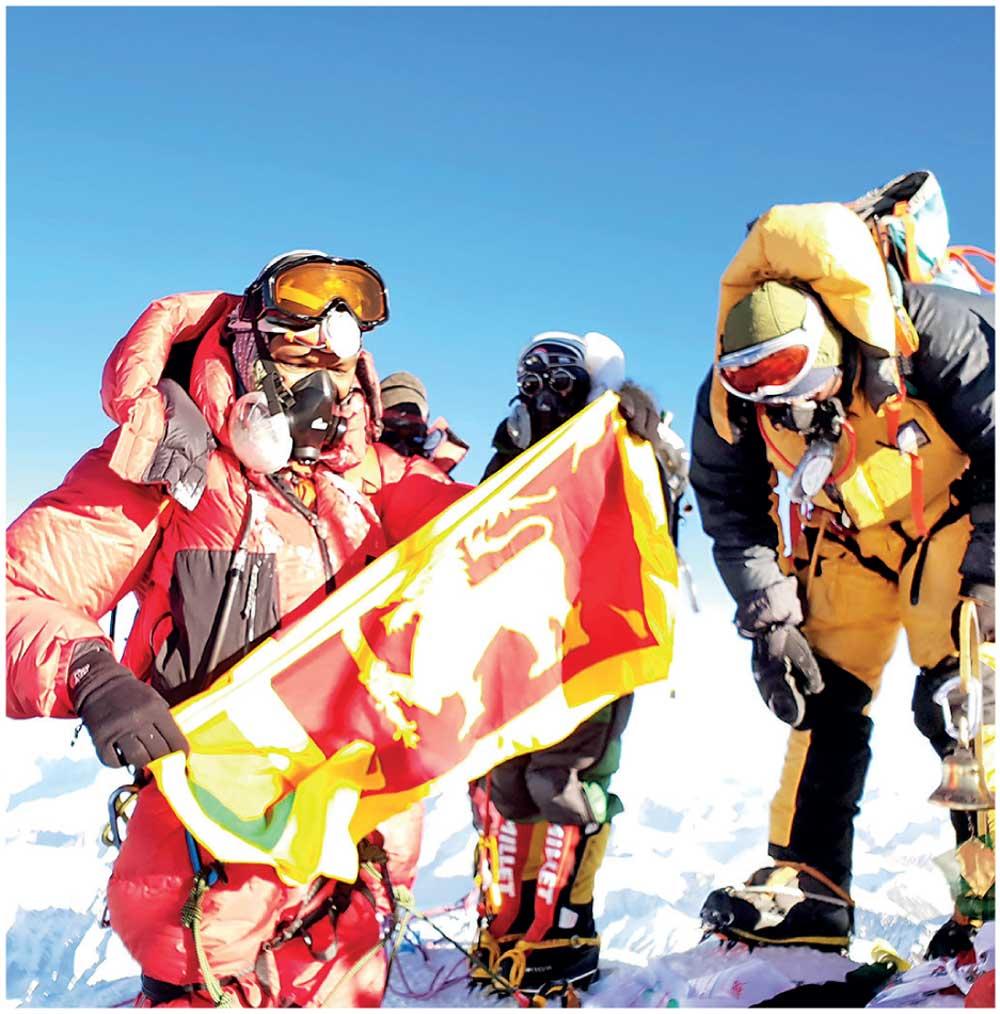
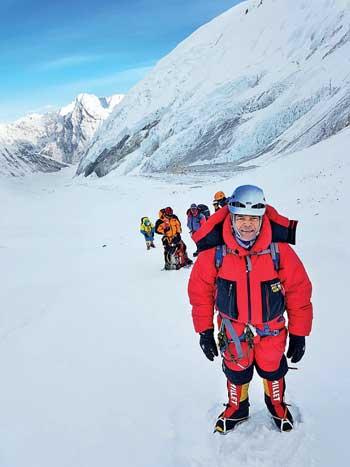
 When it comes to Sri Lankan mountaineering, Johann Peries stands in a league of his own. He is the first Sri Lankan male to climb Mount Everest and the only Sri Lankan to complete the Seven Summits, conquering the highest peak on every continent.
Sitting down with him made one thing clear: true strength in mountaineering goes far beyond the physical. His journey is built on mental resilience, discipline and a deep sense of purpose. This feature takes readers behind the scenes, from the essentials in his backpack, climbing gear, packets of Samahan and wet wipes to the years of training and mental conditioning behind each ascent. These seemingly small items and habits carry him through the harshest moments, keeping him focused and steady. Through Johann’s story, we see how discipline, belief and consistency shape a climber as much as skill does. His journey shows that conquering mountains tests every part of you and requires courage that extends far beyond the body.
QYou’ve faced both triumph and heartbreak on the mountains, from turning back near the Everest summit in 2016 to finally conquering it and later taking on climbs like Denali and Vinson. When you look at these journeys together, which climb tested you the most, and why did that moment leave the deepest mark?
Every mountain has its own personality, but Everest was the toughest for me. At 8,848 meters, it is the highest point on Earth. In 2016 I had to turn back just 400 meters from the summit, one of the hardest decisions of my life. Being so close yet choosing safety taught me humility and deep respect for the mountain. Denali in Alaska, at 6,190 meters, is challenging in a different way. It is lower than Everest, but its brutal cold can drop to minus 40 degrees Celsius or below. You carry your own gear, your food and your tent, pulling your sled with no support team, which pushes your physical strength to its limits. Mount Vinson in Antarctica, at 4,892 meters, feels like another planet. Its remoteness, endless daylight and constant wind make the environment the real challenge. Everest tests your mind, Denali your endurance and independence, and Vinson your ability to survive extreme cold. Each mountain leaves a lasting mark.
QHigh-altitude climbing isn’t a season of training, it’s years of preparation. How long do you train leading up to a major climb, and what does a full training cycle for Johann Peries actually look like?
For me the key is consistency. You cannot prepare for a mountain in just a few months. You have to stay active all year. I train at the gym five days a week to maintain strength and combine that with local hikes. Whenever possible, I travel outside Sri Lanka to climb smaller mountains and build real endurance. Before a major climb, I intensify everything, sometimes training twice a day. My lifestyle shifts too. I skip parties, dinners and most invitations, not out of reluctance but out of focus. High altitude climbing demands years of discipline, and when the time comes, you must give it your full attention.
QPhysically, what does a body need to survive extreme altitudes, the cold, the altitude, the weight loss, the oxygen deprivation? What kind of strength is truly required to stand on the summit of a continent?
Your body goes through all of it: the cold, the altitude, the weight loss and the lack of oxygen. Physical strength and endurance matter, but the real power is mental. You need determination when your body is exhausted and resilience when the cold cuts through your layers or the thin air makes every step heavier. Your muscles and lungs can only take you so far; after that, your mind drives you forward. For me, faith is also part of that strength. Believing in a higher purpose keeps me grounded and courageous. That blend of preparation, mental toughness and belief has carried me through the hardest moments.
QEvery climber has their own nutritional discipline. What does your diet look like in the months before a climb, and what changes in the final weeks leading up to summit day?
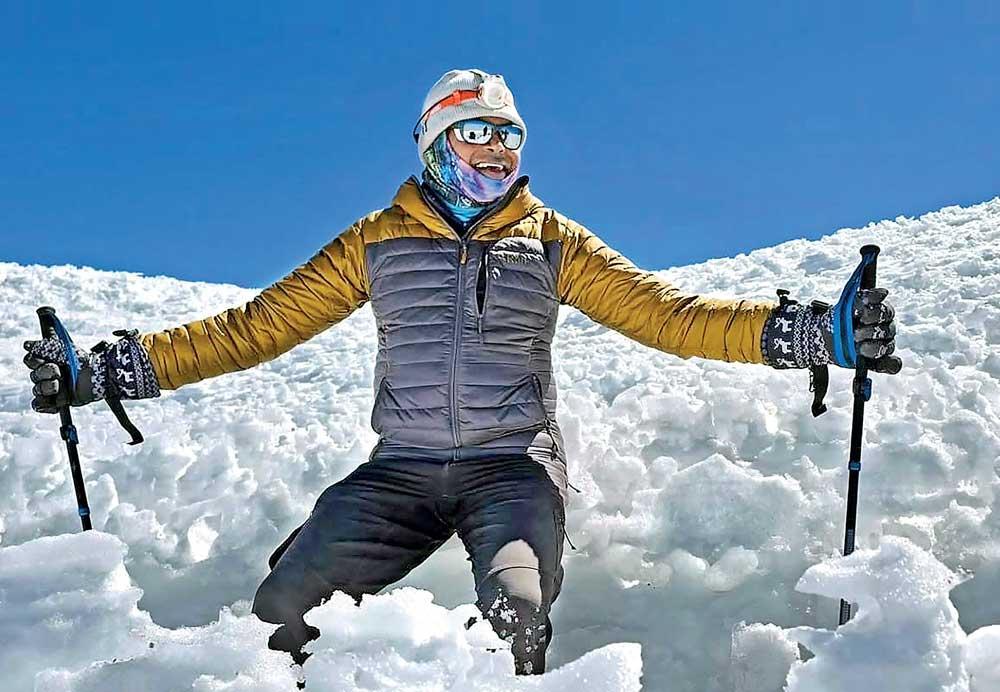
Nutrition is a crucial part of preparing for a climb. I eat clean year-round, but before a major expedition I focus on gaining a few extra kilos, because high altitude, cold and intense effort can make you lose up to fifteen. I prioritise balanced, high-calorie, nutrient-dense meals to sustain long days of climbing. Some expeditions last weeks or even months, and the physical toll is immense. You burn so much energy at altitude that being underfed is not an option. I also work on strengthening my immune system, since harsh conditions constantly stress the body. Eating well keeps you fuelled, strong and healthy enough to reach the summit.
QThere are many aspiring climbers who wonder: is there an age limit for chasing the Seven Summits, or is the real limit something else entirely?
You know, I don’t think there is a real age limit for chasing something like the Seven Summits. There are climbers in their 70s who do it, so it is very possible. And in some ways being middle aged helps. You have more life experience, more patience, and often more wisdom when things go wrong. To give you some perspective, the oldest person to climb Mount Everest was Yuichiro Miura who reached the summit at 80 years old. On the other hand, the youngest was Makalu Gau, just 13 years old when he summited. As you can see, the spectrum is very wide. It is not really about age. It is about motivation, mental strength, and making smart decisions under pressure. For me, being a bit more mature means, I can weigh risks better and stay calm when a situation becomes difficult.
The world celebrates the success stories, but the odds of never making it, due to weather, oxygen failure, injuries, or simply luck, are real. How do you personally confront the
Qpossibility that a climb may end without a summit?
That is always a real possibility. We do everything we can to manage the risks that are within our control. Beyond that, I believe it is left to a higher power up there, as I mentioned before. You have to prepare your body, your mind, and your decisions, but at the end of the day some things are beyond us, and you have to accept that.
QInside every climber’s bag is a story. What are the absolute non-negotiables you must carry on every expedition, no matter the mountain or the continent?
I think it really varies from person to person. For me, of course, my climbing equipment is essential. But besides that, I always carry my packets of Samahan and wet wipes. I remember one time I forgot to pack my Samahan at base camp, and it really affected me mentally. Luckily someone who was leaving the base camp checked on me and was able to bring it for me. Things like that might seem small, but they are really important. They help keep you mentally strong, because when you are up there you are constantly worried about catching a cold or getting sick and not being able to finish the climb. Sometimes items are about survival, and some are about keeping your mind steady and confident throughout the journey.
QYou’ve trained in some of the harshest environments on earth. Who trained you, or what training philosophy shaped you into the climber who could take on the Seven Summits?
There have been many who have helped me on this journey. I have had many trainers in different disciplines, and then a team of friends who are always there to support me.
QBefore you climb, what precautions, physical, safety, and medical, do you take to protect your body and mind when entering such unpredictable terrain?
I keep my physical fitness at the highest level, as I mentioned before. That is the foundation for everything. On top of that, as part of the expedition requirements, I go through all the necessary medical tests to make sure my body is ready. It is about being prepared physically, medically, and mentally, because you never know what the mountain will throw at you. Preparation gives you confidence and safety, but you also have to accept that some things are beyond your control.
Mentally, high-altitude climbing is entering a space where fear, exhaustion, and solitude all magnify. What mental preparation do you do before a climb, and in your experience, what matters more at 8,000 meters: mental strength or physical strength?
At 8,000 meters, mental strength matters even more than physical ability, though the climb still drains every ounce of energy you have. Your body works harder than ever, but it is your mind that keeps you moving when everything tells you to stop. For mental preparation, information is essential. The more you know about the route, weather and mountain, the more confident you feel. A little fear is healthy, keeping you alert and focused. Mental resilience carries you through, while physical training helps you endure.