
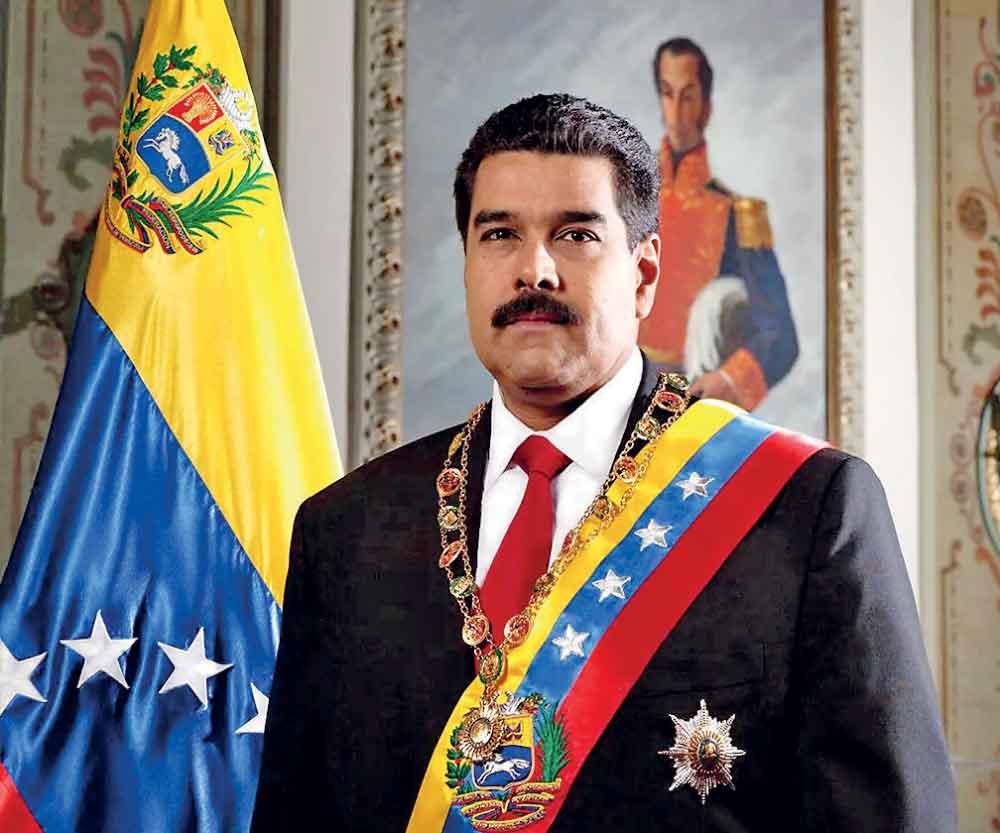
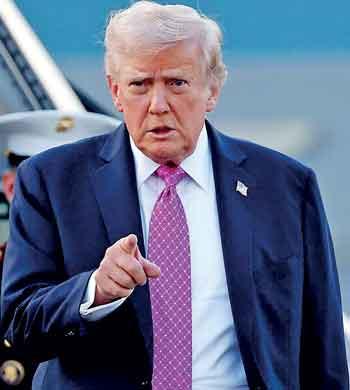
 The arrest of Venezuelan president Nicolás Maduro by United States authorities has sent shockwaves across Latin America and far beyond it, reopening uncomfortable questions about sovereignty, democracy, and the true motivations that drive global power.
While Maduro has long been accused of authoritarianism, electoral manipulation, and human rights abuses, the manner of his removal from power has alarmed even those who oppose him. At the centre of this controversy lies not only the legality of the arrest itself but also the rhetoric that followed, particularly statements by former US President Donald Trump linking the arrest directly to Venezuela’s oil wealth.
Maduro’s capture did not come through a Venezuelan election, a parliamentary impeachment, or a negotiated political settlement. It came through foreign intervention. Critics argue that regardless of how unpopular or repressive a leader may be, the removal of a sitting president by another country without international mandate represents a deeply undemocratic act. International law is built on the principle that sovereign states cannot simply remove one another’s leaders by force. Once that principle is weakened, the consequences extend far beyond Venezuela.
President Trump’s public remarks in the days following the arrest intensified these concerns. He spoke openly about Venezuelan oil being handed over to the United States and framed the arrest as a strategic victory that would benefit American energy security. For many observers, this rhetoric stripped away any remaining illusion that the operation was solely about justice or democracy. Instead, it appeared to confirm long held fears that Venezuela’s vast natural resources were central to Washington’s interest all along.
Venezuela is not just another oil producing country. It possesses the largest proven oil reserves in the world, estimated at over three hundred billion barrels. This figure exceeds the reserves of Saudi Arabia and Iran, placing Venezuela at the top of the global oil hierarchy on paper. These reserves, concentrated largely in the Orinoco Belt, are predominantly heavy crude, which is more expensive and technically demanding to extract and refine. Yet despite these challenges, the sheer scale of Venezuela’s oil endowment gives it enormous long term strategic value.
For decades, oil was the backbone of the Venezuelan state. It funded social programmes, subsidised food and fuel, and shaped the country’s foreign policy. Under Hugo Chávez and later Maduro, oil revenues were also used to project influence across the region. However, years of mismanagement, corruption, sanctions, and declining infrastructure caused production to collapse. From producing more than three million barrels per day at its peak, Venezuela’s output fell to a fraction of that figure, turning an oil superpower into a nation struggling to keep the lights on.
This decline is precisely what makes Venezuela’s oil so tempting to external actors. The reserves remain underground, largely untouched, waiting for capital, technology, and political stability. President Trump’s comments about transferring Venezuelan oil to the United States were therefore interpreted not as a one-off shipment but as a signal of longer-term ambitions. Control over future production, contracts, and revenues could reshape energy markets and geopolitical alignments for decades.
In purely economic terms, an influx of Venezuelan oil would have mixed effects on the US economy. The United States is already one of the world’s largest oil producers, yet it still imports significant quantities of heavy crude because many American refineries are designed to process it. Venezuelan oil fits that profile. Increased supply could lower fuel prices for consumers, ease inflationary pressures, and benefit industries dependent on transport and logistics. Cheaper energy has historically functioned as a stimulus, putting more disposable income into consumers’ pockets.
At the same time, lower oil prices can harm domestic producers, particularly shale operators whose profitability depends on higher price thresholds. A sustained flood of additional oil onto the market could discourage investment in US drilling, reduce employment in energy producing regions, and introduce volatility into an already fragile global market. The benefits, therefore, would not be evenly distributed, and the political consequences inside the United States could be significant.
Beyond economics lies a more troubling issue. If the arrest of a foreign president is followed by claims over that country’s natural resources, it establishes a precedent that many nations find alarming. It suggests that control of strategic commodities can be pursued not only through diplomacy or trade but through direct intervention. For countries across Latin America, Africa, and the Middle East, this revives memories of an era when powerful states openly shaped the leadership and economies of weaker ones.
The controversy becomes even sharper when contrasted with President Trump’s decision to pardon the former president of Honduras, Juan Orlando Hernández. Hernández had been convicted in the United States on serious drug trafficking related charges and sentenced to decades in prison. Yet President Trump exercised his presidential power to pardon him, securing his release. The message this sends is deeply contradictory. One Latin American leader is seized and imprisoned in the name of justice and democracy, while another, already convicted, is freed.
For critics, this contrast exposes a selective application of justice driven by political convenience rather than principle. Honduras, unlike Venezuela, does not possess vast oil reserves or strategic energy leverage. The pardon has therefore been interpreted by some analysts as evidence that accountability is flexible when it suits US interests. This perception, whether fair or not, undermines claims that the arrest of Maduro was motivated purely by law and moral responsibility.
The impact on democratic norms in the region could be severe. Latin America has spent decades attempting to move beyond coups, foreign interference, and strongman politics. The arrest of Maduro risks normalising the idea that unpopular leaders can be removed externally rather than through domestic democratic processes. Even governments that despised Maduro may now worry that the same logic could one day be applied to them.
Supporters of the arrest argue that Maduro forfeited his legitimacy long ago. They point to contested elections, the sidelining of opposition parties, and the humanitarian crisis that drove millions of Venezuelans to flee the country. From this perspective, his arrest represents overdue accountability. Yet accountability achieved through force rather than institutions carries its own dangers. Justice imposed from outside rarely produces stable or democratic outcomes.
The future of Venezuela now hangs in uncertainty. Without a clear, inclusive political transition led by Venezuelans themselves, the country risks descending further into chaos or becoming effectively governed from abroad. If oil revenues are controlled externally, even temporarily, the perception of economic occupation could fuel nationalist backlash and prolong instability.
Ultimately, the arrest of Nicolás Maduro is not just about one man. It is about the rules that govern international behaviour. It is about whether democracy can truly be promoted through coercion and whether justice can be separated from resource interests. Trump’s statements about Venezuelan oil have ensured that these questions cannot be ignored. By linking military action, legal proceedings, and economic gain so openly, the episode has laid bare the uncomfortable intersection of power, profit, and principle.
If this moment marks a return to a world where might determines legitimacy and resources justify intervention, the consequences will be felt far beyond Caracas. They will echo across the Americas and into a global order already struggling to hold itself together.