
For more than a century, golf in Sri Lanka has always been synonymous with heritage, quiet greens, timeless etiquette, and a tight-knit circle of those who mastered the sport with patience and finesse. A sport rooted in calm fairways, whispered applause, and a quietly devoted community. But in 2025, the landscape shifted, and it did so with style, flair, and a burst of energy that no one expected. The Ceylon Golf League (CGL), the country’s first-ever franchise golf competition, arrived as a sporting revelation. It elevated golf from a gentleman’s pastime into a high-voltage cultural event with glamorous weekend match days, brand-driven team identities, roaring crowds, and a festival-like atmosphere.
The moment CGL was announced, the atmosphere surrounding Sri Lankan sport felt different. Where cricket crowds usually dominate the national enthusiasm, golf now found a fresh stage with roaring fans, dazzling team colors, and a new competitive identity, especially one that made space for families, youth, and anyone seeking a weekend of excitement. Suddenly, the fairway wasn’t just a playing field. It was the heart of a festival. At its heart were three individuals who believed strongly in golf’s potential to expand beyond exclusivity: cricket legend Mahela Jayawardena, and passionate entrepreneurs Shamal Perera and Suhayb Sangani. Together, they envisioned a reawakening where sport meets social experience, where young talent finds pathways once out of reach, and where Sri Lanka embraces a global shift already taking place across fairways from Europe to the Middle East.
Globally, golf has been undergoing a transformation from television-friendly formats to franchise-driven competitions like LIV Golf. Sri Lanka has now confidently stepped into that evolution. The CGL reimagines the sport as entertainment: energetic walkouts instead of silent tee-offs, live commentary, music, hospitality lounges, brand-powered experiences, and a spectator culture that celebrates every winning putt with style. This dramatic shift has made golf feel less distant and far more relatable. Young audiences who once saw the greens as “an adults-only arena” are suddenly interested in club selection, leaderboard drama, and team pride. Parents are bringing children. Friends are showing up in coordinated jerseys. Social media is buzzing with behind-the-scenes excitement. Golf, for the first time in Sri Lanka, feels cool.
Eight Cities, One National Playing Field
The introduction of eight franchise-based teams infused a powerful sense of representation. 8 teams include Colombo Aces, Sigiriya Hornets, Nuwara Eliya Panthers, Kandy Kings, Anuradhapura Gladiators, Galle Ballers, Hambantota Tuskers and Trinco Sharks. These are not just teams; they are brands designed to spark loyalty, local pride, and sporting rivalry. City-based franchise culture has long been a proven formula in global sport and this emotional connection is what transforms casual viewers into passionate fans, and that passion is what transforms a league into a legacy.
Where Heritage Meets Modernity
Despite the glitz, CGL never abandons tradition. The Royal Colombo Golf Club is one of Asia’s oldest golf clubs hosted the Inaugural league. The sport’s etiquette and technique still form the foundation of competition. Yet what the league has done so beautifully is bridge the heritage of golf with the pace of contemporary entertainment. It celebrates the history but refuses to be trapped in the past. The concept of teamwork, rarely seen in golf, adds relatability and fresh intensity. Strategies form. Chemistry matters. Every stroke counts not just for individual glory but for collective victory. This shift from isolation to unity has reshaped how players perform and how fans connect.
A Pathway for Future Champions
Beyond the glamour, the CGL carries a deeper mission: to build Sri Lanka’s next generation of golfers. With only a handful of golf courses in the country and limited access for beginners, the sport has long been available to a privileged few. The league aims to change that narrative turning golf into a dream that any child could chase. By expanding youth participation, introducing school-level development, and investing in skill progression, the league becomes more than a seasonal event, it becomes a catalyst. When young athletes see professionals walking fairways with crowds cheering around them, the dream feels achievable. These greens are now a gateway and for a country rich with untapped talent, the impact could be transformational.
Inclusivity, Visibility, and Community
Perhaps the most powerful aspect of the CGL is its cultural ripple effect. Golf clubs are no longer intimidating spaces guarded by silence. They’re inclusive terrains where people gather in order to compete, to celebrate, to socialize. A new lifestyle moment has emerged: brunch by the fairway, chic spectator outfits, curated lounges, and shared experiences crafted around sport. The CGL brings together young professionals, seasoned golfers, local entrepreneurs, media personalities, and curious newcomers under one experience. It builds networks. It builds belonging. It builds a community around the joy of participation.
A Launch That Sparked Excitement and A Future That Feels Bigger
- Season One was a proof of concept.
- Season Two will be a statement.
The inaugural run showed Sri Lanka was ready to embrace innovation in sport. Full tee sheets, packed viewing areas, powerful brand response, and players who thrived under the lights all demonstrated that this experiment was not a gamble. It was the start of something very big. As the league scales, improvements in scheduling, youth involvement, and expanded regional presence will make CGL a nationwide sporting calendar staple. Tourism and lifestyle sectors are already recognizing the appeal. Partnerships are strengthening. And the entertainment value only continues to grow.
The greens are now louder. The crowd is now larger. The spotlight is now brighter. What began as a bold idea has already become a movement.
A Sport Reimagined
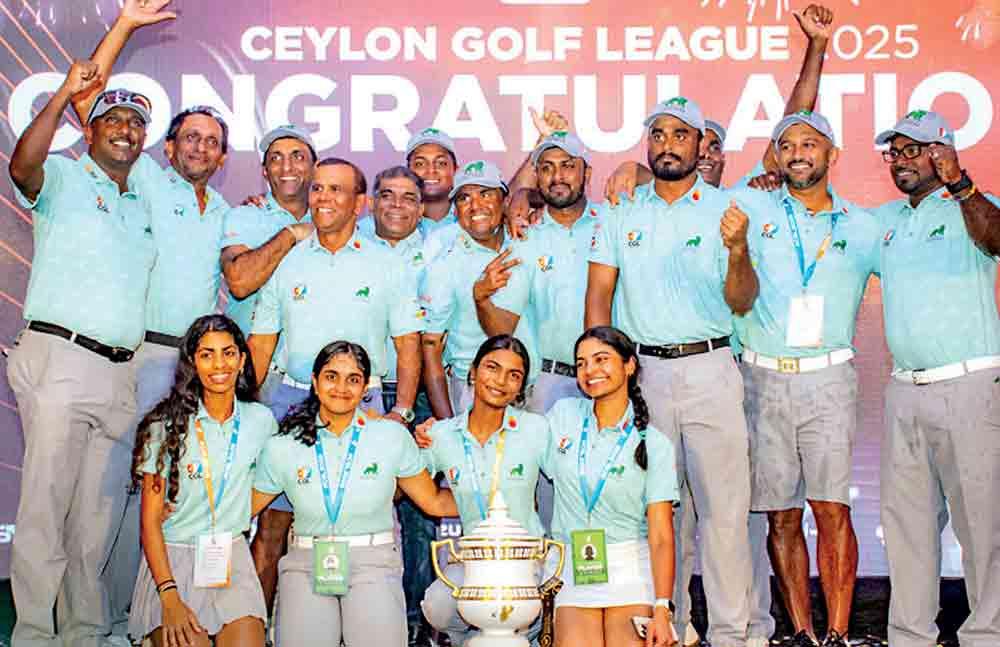
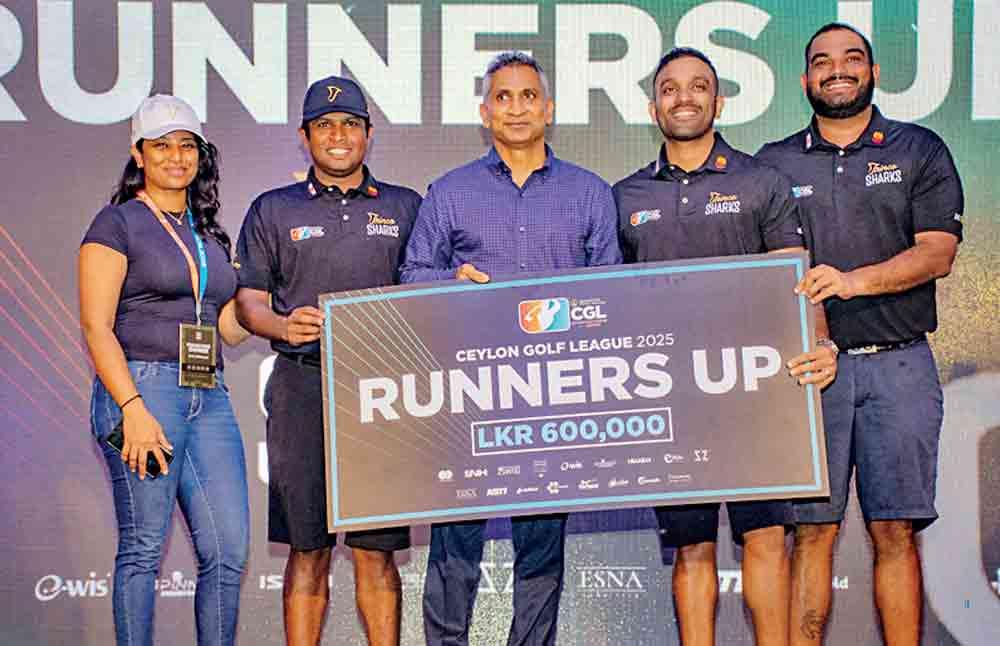
After three electrifying days of play filled with roaring crowds, dramatic putts, and bold team strategies, the Nuwara Eliya Panthers claimed the very first CGL title, with the Trinco Sharks chasing closely behind in a thrilling final showdown. The victory wasn’t just a trophy win, it marked the beginning of a powerful sporting tradition that is now firmly rooted in Sri Lankan soil.

IN CONVERSATIONS FOUNDERS, CGL
Shamal Perera
Co-Founder, CGL
Q You’ve backed this league from day one. What convinced you that Sri Lanka was ready for a commercially driven golf ecosystem?
Golf has been a large part of both my life and Shuaib’s. We participated in a league in India back in 2024, and that experience made us realize how the global sporting world was shifting into the franchise model, even golf, with the launch of the LIV Golf League. We also saw that Sri Lanka has enough talented players and a vibrant social culture that would embrace both excitement and entertainment. So, we asked ourselves, why not elevate a sport we love and make it part of Colombo’s energetic lifestyle scene?
Q From ownership structures to brand partnerships, how do you plan to ensure the league grows sustainably beyond the first season?
We are very focused on fair financial structures. Player budgets are transparent and equal ensuring teams have competitive balance and a level playing field. All owners who purchased the first eight franchises are individuals and companies who believe in building a brand, not just their own team. Our contracts ensure shared responsibility in growing the league together. For us, CGL began as a passion project, and now we see its potential to reshape the future of golf in Sri Lanka opening doors for people who may not have otherwise gained access to the sport. That purpose will keep us moving forward.
Q Describe CGL in three words.
Fun. Competitive. Transformational.

Mahela Jayawardena
Co-Founder, CGL
Q You’ve been central to elevating Sri Lankan sport on global stages. What inspired you to take that passion into golf and pioneer a franchise format in this country?
After retiring from cricket, golf became my primary sport. It’s been more than a decade now. With my ongoing involvement in franchise cricket through Mumbai Indians, I truly understood the power of the model to transform sport, fan engagement, and talent development. As a member of the general committee of Royal Colombo Golf Club, everything aligned perfectly. We saw an opportunity to take a sport rooted in heritage and give it new energy and purpose in Sri Lanka.
Q The CGL blends golfing tradition with high-energy entertainment, a big shift from the sport’s usual quiet culture. What does success look like to you?
Long-term, success would be seeing players who start at the CGL go on to represent Sri Lanka internationally making golf a pathway, not just a pastime. In the short to medium term, we want to grow the sport from the grassroots: into schools, into regional golfing towns, and create more opportunities for young players. Bringing investment into the sport from coaching to equipment and development programs will drive that future. That’s the vision.

SUHAYB SANGANI CO-FOUNDER,CGL
Q CGL has created a festival-like, spectator-focused golf experience. What inspired this shift from quiet greens to a high-energy environment?
Globally, golf has already been evolving toward a more inclusive and dynamic experience welcoming more women, more social engagement, more entertainment. Golf is traditionally seen as an individual sport. We wanted to flip that perception and spark team-based passion. People rally behind teams in a different way and that excitement brings new fans into the game. It just made sense for Sri Lanka.
Q What were the biggest challenges in transforming an elite sport into a nationwide franchise platform?
The biggest early challenge was getting people to believe in the idea, because franchise-based sport in Sri Lanka is still very new aside from the LPL. We also have only one major course within Colombo city limits, and the others are over 100 km away. Scheduling a major event around member play, other tournaments, and sponsor calendars was tough. We moved fast in Year 1, thanks to everyone buying into the vision. But in the coming seasons, we plan to structure timelines better especially around weather and school breaks to make CGL even stronger and more accessible.