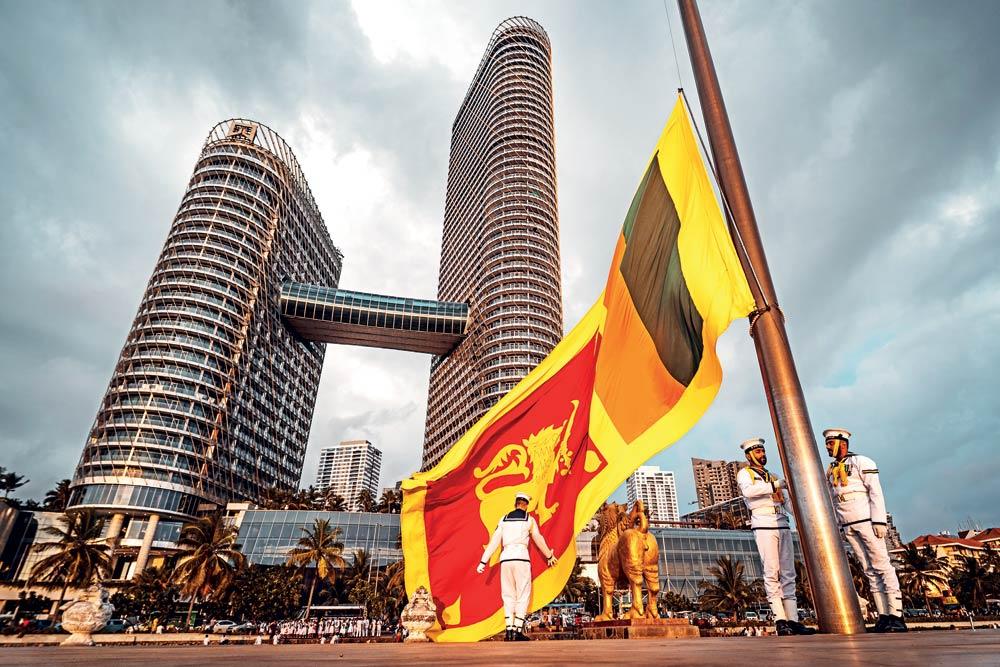
Sri Lanka turns seventy-eight this February as an independent nation. The anniversary returns each year with flags, parades, and ceremony, yet it now arrives with an unease that is difficult to ignore. Independence Day is marked, but increasingly it is also questioned, joked about, and sometimes dismissed. For a country that once fought hard to escape colonial rule, that shift in tone should trouble us.
 In 1948, independence was not a hollow gesture. It was not symbolic theatre. It was a decisive break from a political order that had governed the island for centuries without consent. For generations, Sri Lankans lived under systems designed elsewhere, ruled by authorities who answered to a distant empire rather than the people who inhabited this land. Independence meant reclaiming the right to decide our own future.
British colonial rule reshaped Sri Lanka in lasting ways. It reorganized agriculture around export crops, altered land ownership, introduced new systems of education and administration, and restructured society along lines that privileged some while marginalizing others. Wealth flowed outward. Decisions flowed inward. The population adjusted, endured, and adapted, but rarely governed. Independence interrupted that arrangement. It ended formal colonial control and transferred authority to local hands. For those alive at the time, this was an extraordinary moment. It meant that laws would be written here. Taxes would be decided here. Power, at least in theory, would be accountable to the people it governed. That shift carried enormous emotional and political weight.
Sri Lanka’s independence was achieved through negotiation rather than violent uprising, but this has sometimes led to the mistaken belief that it lacked resistance or sacrifice. That view ignores decades of political struggle, labor movements, constitutional agitation, journalism, and intellectual resistance. Independence was not gifted. It was pressed for, argued for, and insisted upon by people who believed this country deserved self-rule. The absence of a dramatic rupture did not make independence any less real. It made it fragile. The new state inherited colonial institutions that were never designed to be inclusive or equitable. Ethnic divisions, economic inequality, and centralized power structures were carried forward rather than dismantled.
In the years following independence, the promise of unity began to fray. Policies introduced in the name of national identity often excluded large sections of the population. Language reforms, land settlement schemes, and political patronage deepened mistrust. Rather than confronting the plural nature of the country, successive governments often pursued majoritarian solutions to complex problems.
By the late twentieth century, these failures had erupted into violence. The southern insurrections of the nineteen seventies and eighties exposed economic frustration and political alienation. The civil war in the north and east revealed the cost of ignoring minority grievances for too long. Independence had delivered sovereignty, but not cohesion. The civil war consumed nearly three decades of Sri Lanka’s post-independence life. It altered institutions, normalized emergency rule, and reshaped the relationship between the state and its citizens. Tens of thousands were killed. Many more were displaced, traumatized, or disappeared. Entire regions were devastated. The human cost was staggering.
When the war ended in 2009, it was celebrated by many as a restoration of territorial sovereignty. For others, it marked unresolved loss and unanswered questions. Both responses were legitimate. A military victory does not automatically resolve political wounds. Nor does it complete the project of nationhood. The post war years were framed as a period of rebuilding and renewal. Infrastructure development accelerated. Roads, ports, and cities expanded rapidly. Growth figures improved. Poverty indicators shifted. For a time, optimism returned. Yet beneath the surface, deeper problems remained unaddressed. Power became increasingly concentrated. Dissent was narrowed. Decision making moved further from public scrutiny. Development was pursued without sufficient regard for sustainability or accountability. The economy grew, but so did debt. Independence began to take on a new ambiguity, one defined less by colonial memory and more by financial dependence.
Sri Lanka’s growing reliance on foreign loans raised difficult questions about sovereignty in the modern world. When economic survival depends on external creditors, independence becomes conditional. When national assets are leased to manage debt, autonomy feels compromised. This is not a uniquely Sri Lankan dilemma. It is the reality faced by many post-colonial states navigating global financial systems that offer limited room for error. The tsunami of 2004, which devastated large parts of the island, further exposed the fragility of state capacity. Recovery was uneven. Conflict zones lagged behind. Aid distribution was politicized. Once again, national crisis revealed structural weakness.
These pressures accumulated over time. Fiscal mismanagement, short term political decisions, and the erosion of institutions eventually led to collapse. By 2022, Sri Lanka faced its worst economic crisis since independence. Fuel shortages, power cuts, inflation, and shortages of essential goods pushed daily life to the brink. The protests that followed were unprecedented. Citizens from across social, ethnic, and generational lines occupied public spaces and demanded change. They questioned authority openly. They rejected inherited political loyalties. They refused to accept collapse as inevitable.
Those protests were often described as a moment of awakening. In truth, they were an assertion of independence in its most basic form. They reflected a refusal to be governed without accountability. They expressed a belief that sovereignty must extend beyond flags and speeches to include dignity, transparency, and competence.
This raises an uncomfortable question. Are we truly independent? If independence is defined as economic self-sufficiency, the answer is uncertain. If it is defined as political integrity, the answer remains contested. If it is defined as social justice, it remains unfinished. But independence was never a guarantee of success. It was a transfer of responsibility. It gave Sri Lankans the right to make choices, including wrong ones. It made failure our own burden, not an external imposition.
To mock independence today is to confuse disappointment with meaning. It is to forget that the freedom to criticize, protest, and demand better exists because colonial rule ended. It is to overlook the courage required to imagine self-governance at a time when it seemed improbable. The men and women who worked toward independence did not promise prosperity or unity. They secured the space in which those goals could be pursued. They handed over an unfinished project, not a completed nation.
Independence Day should not be a performance of blind pride. Nor should it be dismissed as empty ritual. It should be a moment of reckoning. A reminder that sovereignty carries obligation. That freedom demands responsibility. That self-rule is not static but constantly tested. At seventy-eight, Sri Lanka remains a country in negotiation with itself. Its independence is neither complete nor meaningless. It exists in tension, shaped by history, challenged by present realities, and dependent on future choices. Independence was powerful when it was won. It remains powerful because it is still being contested. That contest, however uncomfortable, is its truest expression.
Pics By Nazly Ahmed