
The documentary film Melania released worldwide in January 2026 arrived with extraordinary anticipation and unprecedented financial backing. Centred on the current First Lady of the United States, Melania Trump, the film promised rare access, personal insight, and an intimate portrayal of one of the most enigmatic figures in modern American political life. Instead, its global debut has ignited fierce debate, not only about its subject but about the nature of documentary filmmaking itself, the role of political image making, and the limits of access when the subject controls the narrative.
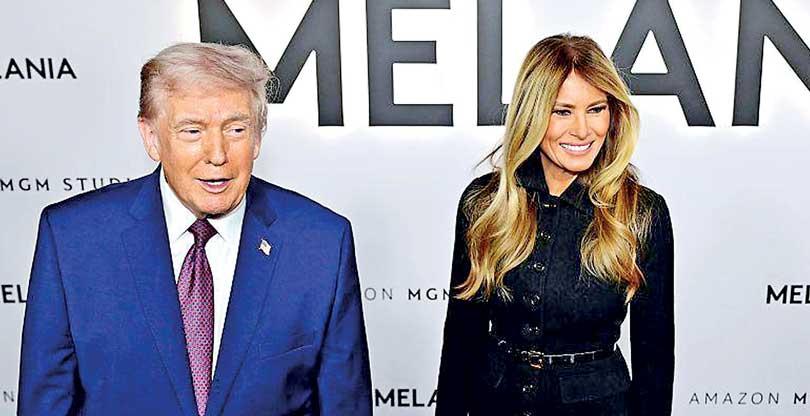
Directed by Brett Ratner and distributed by Amazon MGM Studios, Melania is among the most expensive documentaries ever produced. Reports confirm that Amazon paid approximately forty million dollars for distribution rights, followed by a marketing campaign estimated at over thirty million dollars. Such figures are virtually unheard of in nonfiction cinema and immediately positioned the film as a major cultural event rather than a niche political portrait.
The documentary follows Melania Trump during the twenty days leading up to the January 2025 inauguration of her husband, President Donald Trump. Structured as a chronological account, the film places the viewer inside preparations for her return to the White House, capturing moments of wardrobe selection, event planning, private travel, and rehearsed public appearances. It is visually polished and deliberately restrained, with muted colour palettes, slow pacing, and a score that favours elegance over urgency.
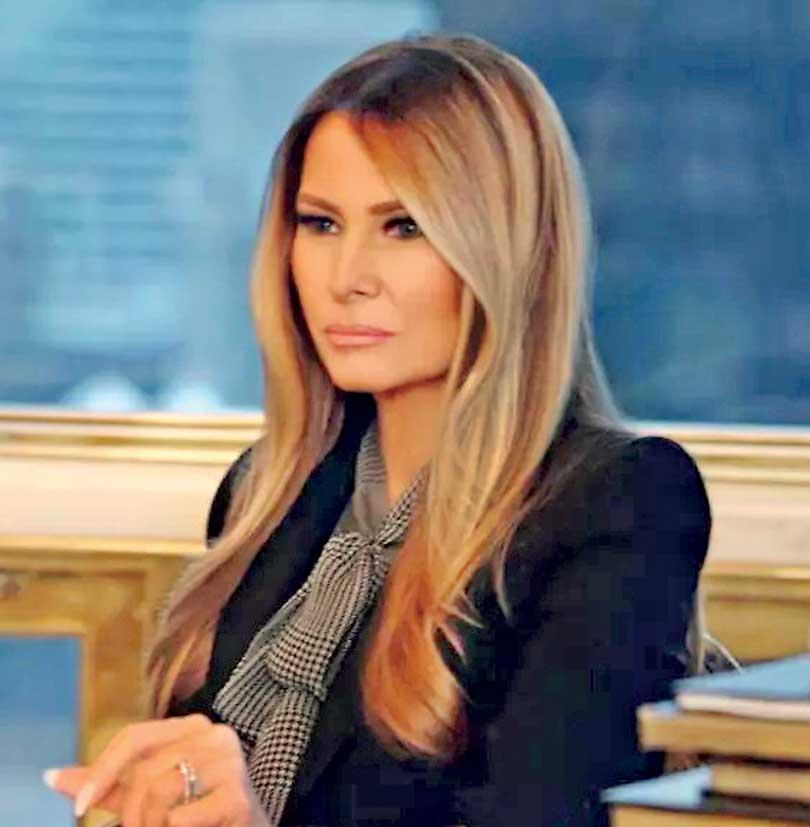
From its opening moments, Melania establishes its core intention. This is not an investigative documentary nor an examination of policy or controversy. It is a portrait of image, control, and presentation. Melania Trump appears composed, largely unemotional, and intensely private. The camera lingers on surfaces rather than conflict, silk dresses rather than political consequences, carefully arranged spaces rather than unscripted exchanges. When she speaks, it is measured and sparse, offering reflections on duty, privacy, and resilience without addressing the broader political storms that have defined the Trump era.
This approach has proven divisive. Supporters argue that the film succeeds precisely because it refuses spectacle. They view it as a corrective to years of tabloid caricature, offering a dignified and human portrayal of a woman who has long been scrutinized and rarely heard on her own terms. For this audience, Melania is an exercise in restraint and self-possession, an assertion of control in an environment that thrives on chaos.
Critics, however, have been far less forgiving. Reviews across major publications describe the documentary as hollow, evasive, and fundamentally incurious. Many note that despite unprecedented access, the film reveals very little. It avoids any discussion of political ideology, public criticism, legal controversies, or the personal toll of occupying the most visible ceremonial role in American life. Moments that might have offered genuine insight are either glossed over or aestheticized to the point of abstraction.
The question of authorship has been central to this criticism. Melania Trump served as an executive producer and reportedly retained significant editorial control.
This has led many reviewers to question whether the film qualifies as a documentary in the traditional sense, or whether it functions instead as a form of political image management. Unlike observational documentaries that embrace unpredictability, Melania feels tightly controlled at every level, from framing to dialogue to pacing.
Brett Ratner’s direction reflects this control. Known primarily for glossy commercial cinema, Ratner brings a sleek visual language to the project, but one that often prioritizes polish over intimacy. The camera rarely intrudes. It does not challenge its subject. Instead, it maintains a respectful distance, reinforcing the sense that the film is less about revelation and more about preservation of a carefully maintained persona.
Public reception has mirrored this divide. While critical scores have been overwhelmingly negative, audience ratings tell a more complex story. Among conservative viewers and Trump supporters, the film has been embraced as a vindication of Melania Trump’s dignity and composure. In these circles, the absence of controversy is seen not as a failure but as a statement. Silence, in this reading, becomes a form of resistance.
Box office performance, however, suggests that enthusiasm has been limited. Despite a wide theatrical rollout across the United States, the United Kingdom, Europe, and parts of Asia, reports from multiple markets indicate weak attendance. Numerous cinemas reported sparsely populated screenings, and in some cases, near empty theatres. The film was pulled from release in South Africa following local controversy, while in Mexico and parts of Europe, it was met with public indifference and occasional protest.
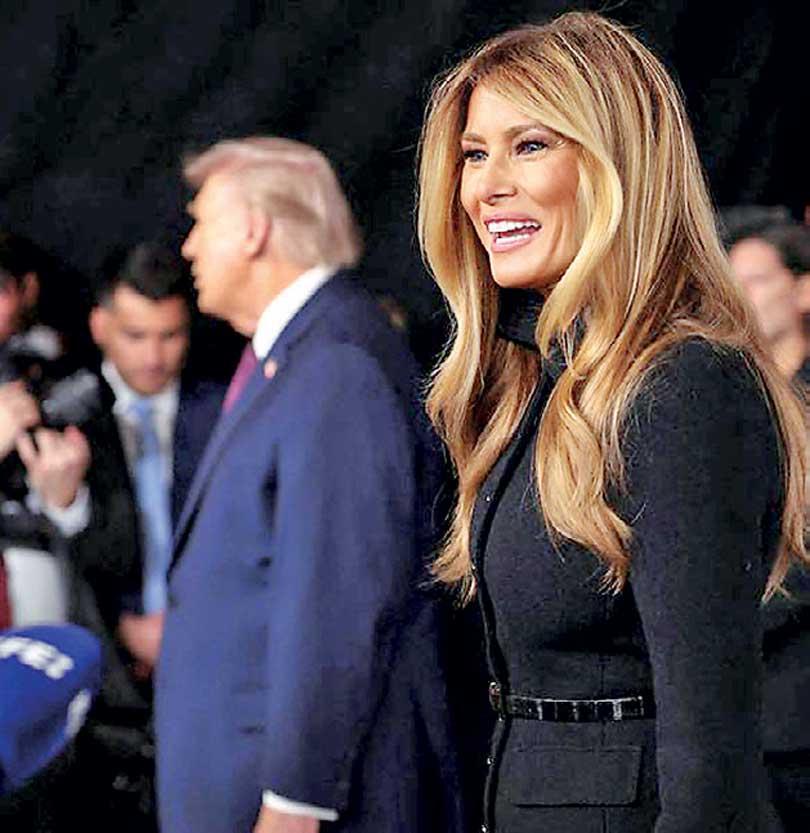
The marketing campaign itself became a flashpoint. Promotional posters and billboards were vandalized in several cities, prompting debate about the appropriateness of such a high-profile campaign for a politically charged documentary. Late night television hosts and satirists seized on the disconnect between the scale of the promotion and the apparent lack of audience demand, further embedding the film into the cultural battleground it seemed eager to avoid.
Yet it would be inaccurate to dismiss Melania as irrelevant. Its very existence raises important questions about power, media, and authorship. The film represents a new model of political documentary, one in which the subject is not merely observed but actively curates her own representation. In an era of fragmented media ecosystems and declining trust in traditional journalism, Melania illustrates how nonfiction cinema can be repurposed as a tool of narrative control.
For scholars of media and politics, the documentary is less interesting for what it shows than for what it withholds. There are no confrontations, no expressions of doubt, no moments of visible vulnerability. The film does not explore Melania Trump’s immigrant background in depth, nor does it meaningfully engage with her public initiatives or controversies from her first tenure as First Lady. Instead, it presents a version of public life stripped of friction, where preparation replaces consequence and image replaces inquiry.
This has led some critics to describe the film as emblematic of a broader trend in political communication, where aesthetic coherence matters more than substantive engagement. In this sense, Melania is not an anomaly but a symptom of a media culture increasingly shaped by branding, loyalty, and selective transparency.
At the same time, the film undeniably succeeds in one respect. It reinforces Melania Trump’s long-standing strategy of opacity. For a public figure often described as unknowable, the documentary does not attempt to resolve that mystery. Instead, it embraces it. Viewers hoping for confession or revelation will be disappointed. Viewers willing to accept distance as the point may find the film strangely consistent and even compelling in its refusal to explain itself.
Ultimately, Melania is not a documentary that seeks to persuade sceptics. It is a document intended for sympathizers, and perhaps more importantly, for history. It records how Melania Trump wishes to be seen during a moment of political return and renewed scrutiny. Whether future audiences will accept that version of events remains an open question.
As a piece of cinema, the film is visually refined but emotionally remote. As a political artifact, it is revealing precisely because of its silences. And as a cultural event, it stands as one of the most controversial nonfiction releases of the decade, not because of what it exposes, but because of how deliberately it conceals.
In the end, Melania does not redefine the documentary form, but it does challenge its assumptions. It asks whether access without interrogation is enough, whether beauty can substitute for truth, and whether control can ever coexist with candour. For better or worse, those questions will linger long after the film’s theatrical run fades, ensuring that Melania remains a subject of discussion even as its subject remains firmly behind the veil she has chosen to maintain.