Geeth Sooriyapura and the UK Social Media Controversy That Exposed the Economics of Online Outrage


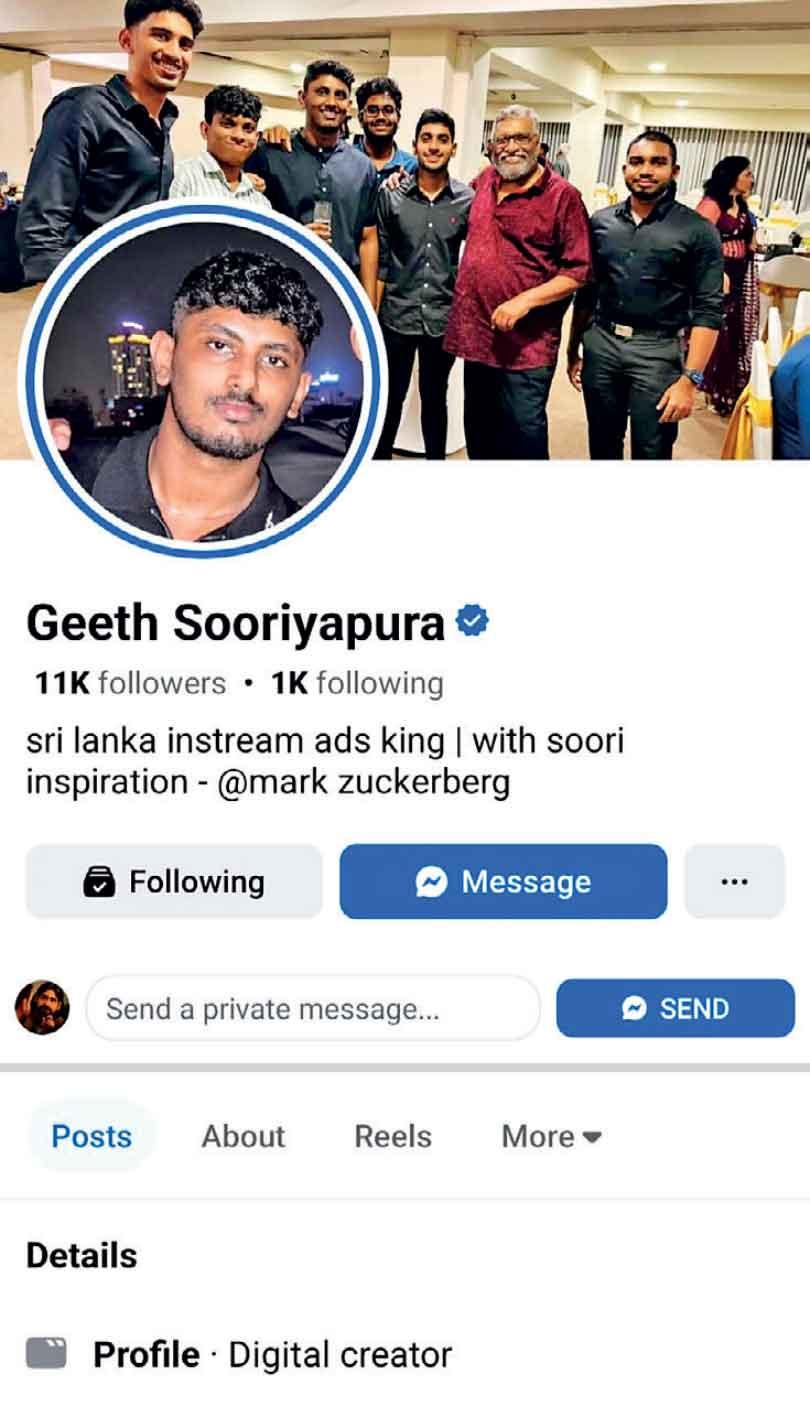
In recent months the name Geeth Sooriyapura has entered public discussion in the United Kingdom through a controversy that has raised wider questions about social media monetisation misinformation and the global nature of digital influence. What began as an investigation into online content farms and engagement driven publishing has evolved into a debate about responsibility platform governance and the ethical boundaries of earning money from attention.
Sooriyapura is a Sri Lankan social media entrepreneur who built a large following by promoting himself as an expert in Facebook monetisation. Through online courses videos and private groups, he taught thousands of followers how to create high engagement pages designed to earn advertising revenue. His message was simple. Content that provokes strong emotion travels further and earns more. For many aspiring digital marketers this promise of fast income proved attractive.
Investigative reporting by UK based journalists later drew attention to the type of content circulating within networks associated with Sooriyapura and his students. A number of Facebook pages aimed primarily at British audiences were found to be publishing inflammatory material focused on immigration, religion and social division. Much of this content used exaggerated headlines misleading captions or artificially generated images to trigger outrage and debate. While such pages often appeared local and organic their administration was traced back to operators outside the UK.
The controversy intensified when journalists connected these practices to the wider problem of disinformation and online harm. At a time when the UK has been grappling with polarised debates around migration housing and national identity the amplification of misleading or emotionally charged content was seen by many observers as irresponsible at best and harmful at worst. Critics argued that regardless of political intent the pursuit of profit through outrage risked undermining public trust and social cohesion.
Sooriyapura has denied that he personally runs disinformation campaigns. In public statements and interviews he has said that his work focuses on teaching technical skills related to Facebook monetisation and that how students apply those skills is beyond his direct control. He has also argued that engagement-based content is a feature of the platform itself and that creators merely adapt to existing incentives rather than inventing them.
However investigative reports suggested a closer relationship between the training materials provided and the outcomes observed. Screenshots videos and archived posts reportedly showed examples where emotionally charged themes were explicitly encouraged because of their higher earning potential. In some cases, pages linked to the network shared content that was later removed by Meta for violating community standards.
Meta confirmed that it had taken action against certain pages identified in the investigation though it did not publicly attribute those pages to any one individual. The company reiterated that it prohibits inauthentic behaviour and content that promotes hate or misinformation and said it continues to invest in enforcement and detection. Critics countered that platform responses often come only after significant damage has already been done.
The UK angle of the story proved particularly sensitive. Although the content originated abroad its social impact was local. Posts about housing shortages crime or religious communities reached millions of British users often without clear context or verification. Media analysts noted that the emotional charge of such posts was precisely what allowed them to spread so effectively within algorithm driven feeds.
This case has become emblematic of a broader structural issue. Digital advertising systems reward attention regardless of accuracy. A creator does not need to persuade an audience of a particular viewpoint only to keep them engaged long enough for ads to appear. In this environment the line between marketing strategy and ethical responsibility becomes blurred.
Academics studying online misinformation have pointed out that intent is not always ideological. Many operators are motivated by revenue rather than belief. Yet the consequences remain political and social. False or misleading narratives can harden attitudes fuel resentment and distort public understanding even when created for profit rather than persuasion.
Within Sri Lanka the story has also sparked debate about the global footprint of local digital entrepreneurs. Some commentators expressed concern that international controversies could damage the reputation of the country’s growing tech and media sectors. Others argued that the focus should remain on platform accountability rather than individual nationality.
For British regulators the case has been cited in discussions around the Online Safety Act and the challenges of enforcement across borders. While the legislation aims to reduce harmful content online its reach is limited when operators and creators are based overseas. Cooperation between platforms governments and investigative bodies remains uneven.
The scandal has also prompted reflection within the digital marketing industry itself. Many practitioners worry that aggressive monetisation tactics risk delegitimising the field as a whole. Ethical marketers have stressed the importance of transparency accuracy and long-term trust rather than short term engagement spikes.
For audiences the episode serves as a reminder to approach viral content with caution. The appearance of familiarity or local relevance does not guarantee authenticity. Pages with British flags street names or accents may in fact be operated thousands of miles away with little understanding of the real-world impact of what they publish.
As for Sooriyapura his public profile has shifted dramatically. Once known primarily within online marketing circles he is now associated in mainstream media with questions about misinformation and online harm. Whether this marks a turning point in his career, or a temporary controversy remains to be seen.
What is clear is that the story extends beyond one individual. It highlights a system in which algorithms monetisation and human psychology intersect in ways that can reward division. Until those incentives change similar controversies are likely to continue emerging from different corners of the digital world.
In the end the Geeth Sooriyapura controversy is less about a single social media entrepreneur and more about the rules of the game he operated within.
As governments platforms creators and users all reassess their roles the challenge will be to balance freedom innovation and profit with responsibility and truth in an increasingly borderless online space.