From Stress to Gratitude Why Meditation Matters More Than Ever

 There was a period in my life when meditation stopped being a wellness practice and became something much more indispensable. The shift occurred at a time when my focus wasn’t on perfecting my routine or maximising productivity, but on getting through days shaped by uncertainty around my daughter’s health. When your child is unwell, it’s near impossible to calm down or make your brain switch off even for a while.
To a casual observer, everything might appear calm, but only you know the chaos brewing inside. Your mind, and by extension your whole body, stays alert, waiting for the next piece of news, the next signal, the next shift. During that time, I noticed something about myself. I could function. I could show up. But my body never fully rested. Sleep was lighter, thoughts were louder, and even moments of stillness carried an undercurrent of tension. Meditation, then, wasn’t about peace, but about survival. It was the one place where my nervous system was allowed to exhale.
Meditation as Way to Regulate, Not Escape
For a long time, meditation has been framed as a way to reduce the mental load. What I’ve now realised is that its real power lies in how it regulates the nervous system. This is supported by neuroscience. Research from Harvard Medical School, led by neuroscientist Dr. Sara Lazar, showed that after just eight weeks of mindfulness practice, participants experienced measurable changes in brain structure. Regions associated with emotional regulation, self-awareness and focus became denser, while the amygdala, the brain’s stress and fear centre, reduced in size. As Dr. Lazar explained in her study, “It wasn’t just that people felt less stressed. We actually saw changes in brain structure.” That insight reframed meditation for me. It isn’t about becoming calm. It’s about training the brain to respond differently to stress.
When Body Stays on High Alert
Modern stress doesn’t always announce itself dramatically. Often, it settles into the background. The body stays slightly braced, even when nothing is immediately wrong. A 2018 review published in Frontiers in Psychiatry highlighted strong links between chronic stress, nervous system dysregulation, and changes in brain regions linked to mood and emotional processing. Over time, this makes it harder for the body to return to a baseline state of safety. During periods of prolonged emotional strain, I felt this first-hand. Meditation became less about clearing my thoughts and more about grounding my body. Feeling my breath. Bringing awareness back into my legs, my feet, my heart. Reminding my system that, in that moment, I was safe.
Grounding Body to Support Brain
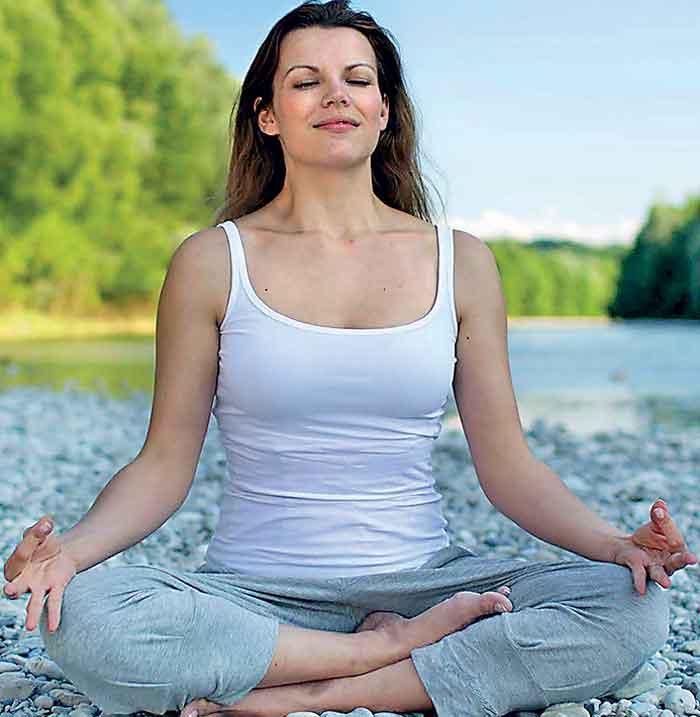
Grounding isn’t symbolic or abstract, it’s something the body responds to in a very real way. When attention gently moves into the body, into the breath, the feet, the feeling of being supported by the ground beneath us, the nervous system begins to settle almost on its own.
When the body feels supported, the mind doesn’t have to work so hard to protect us, and that’s often when emotions can be processed rather than pushed aside. Thoughts lose some of their urgency, reactions slow down, and there’s space to notice what’s actually present rather than what we’re bracing for.
Brain’s Capacity to Heal
One of the most powerful elements of meditation is visualisation. Neuroscience shows that the brain does not clearly distinguish between real and vividly imagined experiences. A study published in NeuroImage demonstrated that mental imagery activates many of the same neural pathways as lived experience. This explains why visualising emotional states, future moments or meaningful outcomes can influence how the brain prepares for them. When I began visualising not just outcomes, but how I wanted to feel steadier, stronger, more positive, something shifted internally. It wasn't a day’s work, however. To this date, consistency remains the key.
Why Meditation Matters Now
Meditation isn’t about withdrawing from life. It’s about strengthening ourselves to meet it. As we move into 2026, nervous system resilience is becoming as essential as physical health. Meditation offers a way to support the brain, regulate stress, and create space for emotional recovery. For me, it began as a way to cope during a difficult chapter. Over time, it became a way to live more consciously.