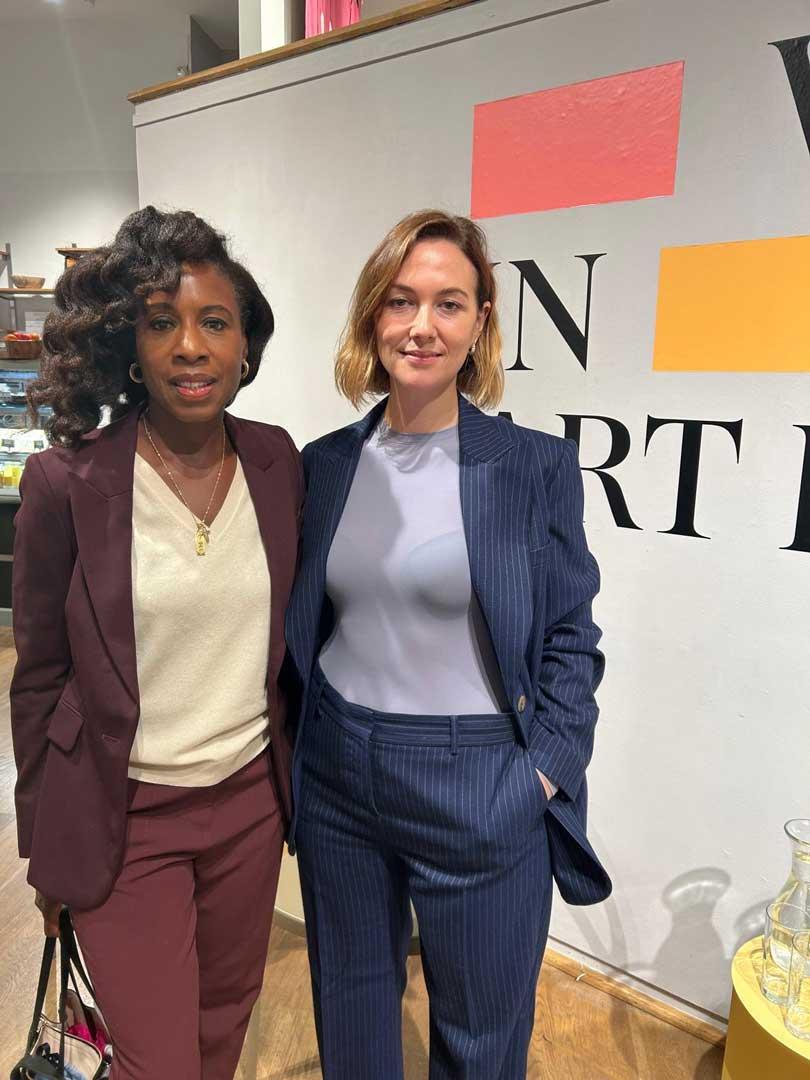
Jacqueline and Eden Mullane
 As conversations around equity in the arts grow louder, meaningful structural change remains slow. Despite decades of progress, women artists continue to face disparities in representation, visibility and market value across galleries, auctions and institutional collections. Against this backdrop, Women in Art Fair has emerged as a vital platform working to rebalance the scales by creating tangible opportunities for women artists within the commercial art world. Returning from 7th to 10th May 2026 at OXO Gallery on London’s South Bank, the fair brings together artists, collectors, curators and cultural leaders for four days of exhibitions, talks, prizes and cross sector dialogue. Founded to move beyond symbolic gestures and into real economic and career impact, Women in Art Fair combines market access with advocacy, mentorship and long-term professional development. In this interview, Founder and Fair Director, Jacqueline Harvey reflects on the fair’s origins, evolution, challenges and ambitions for lasting change in the art world.
What inspired you to create the Women in Art Fair and when did the idea first take shape?
The idea emerged from years of working across art, media and cultural production and repeatedly seeing extraordinary women artists underrepresented in the market. Around 2016 to 2017 it became clear that visibility needed structure, not sentiment. A fair model could bring collectors, galleries and institutions into one place and create real economic opportunity.
Can you describe the journey from the initial concept to launching the first edition of the fair?
The earliest phase was pure advocacy and relationship building. We worked to earn trust from galleries and artists while proving there was collector appetite. Launching the first edition at Mall Galleries in 2023 required resilience, partnerships and a belief that change was both necessary and commercially viable.
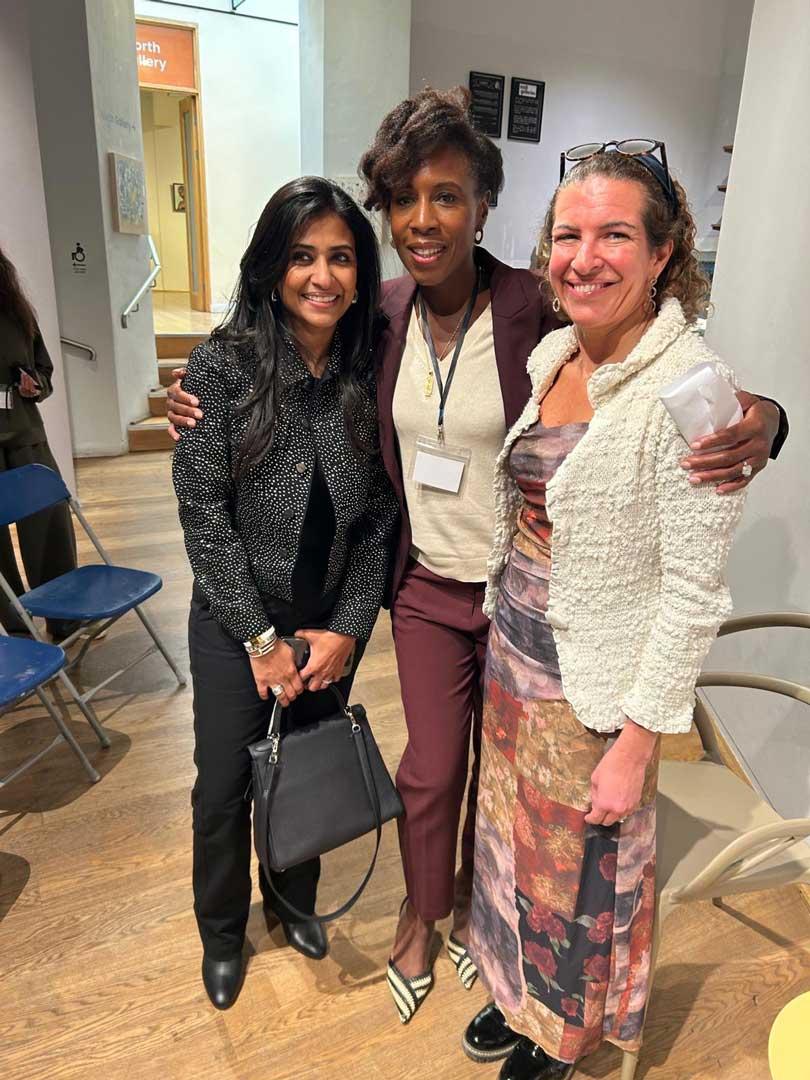
Aparajita Jain, Jacqueline and Melanie Geris
What were the biggest challenges you faced in establishing the fair and getting it off the ground?
Launching the first edition after the shock of Covid was very harsh, especially following the death of both my parents in 2020 and 2022 respectively. Ever since, convincing parts of the sector that a women focused fair is not niche but essential has been a challenge. Funding, venue scale and building an international network from scratch were also major hurdles at a time when the art market itself, especially galleries, faced equally challenging market conditions. We remain focused on our goals with a positive attitude.
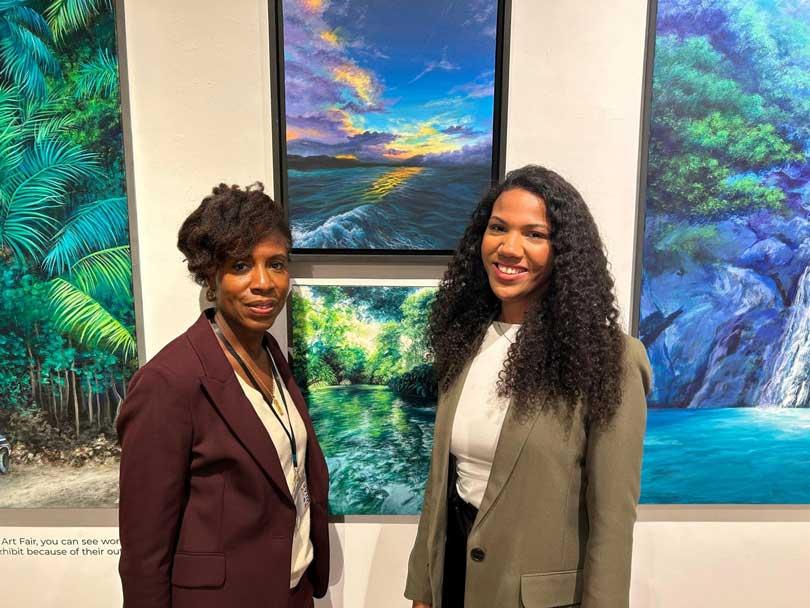
Jacqueline and Basma Al Shulaman
How would you summarise the core mission of the Women in Art Fair?
To rebalance the market by increasing representation, sales, scholarship and long-term support for women artists while creating an inspiring and inclusive environment for both participants and visitors alike.
Why is it still important to have a dedicated platform for women artists today?
Because parity has not yet been achieved. Market data, museum representation and price histories still show significant pay gaps and visibility issues. A focused platform accelerates correction.
How do you think the fair is contributing to changing the gender imbalance in the art
world?
By creating direct commercial outcomes, forging museum partnerships, this year we are partnered with Famm Mougin Museum which is the only female artist museum in France in Cannes, and by building career pathways, supporting research and strengthening collector confidence around women artists’ long-term value.
What are some key differences between the 2023, 2024 and 2025 editions of the fair?
Each year the fair has grown in scale and professionalism. We have expanded programming, strengthened the collector strategy, deepened partnerships and increased international reach as well as engagement with artists. It is a work in progress against a very volatile social and economic background and a technology revolution that continues to reshape how audiences engage with art.
Can you highlight some standout moments, works or artists from previous fairs that
have stayed with you?
Encounters between emerging artists and senior collectors that resulted in mentorship and sales. Seeing careers tangibly move forward is unforgettable. The beauty and expression of the artists’ work is priceless.
The 2026 fair has introduced a new prize; can you tell us more about its purpose and
selection process?
The prize is designed to create legacy impact by offering visibility, professional endorsement and pathways beyond the fair through respected jurors and partners. The Collector and Museum Owner of Famm, Christian Levett Prize will allow his selected artist to visit the museum in Cannes, France, with promotion on his personal Instagram page. Hunger magazine, owned by Rankin, will offer a photography prize for an artist to photograph and design the front cover of the magazine with their team. Cynthia Corbett Gallery will offer the Young Masters Prize, which includes mentorship over the year.
How can artists apply to participate in the 2026 fair, and what’s the selection process?
Applications are made through the Open Call. A selection committee of art world professionals assesses quality, rigour and alignment with the fair’s mission. All details are on the website or social media accounts. The selection committee includes museum partner Famm represented by Christian Levett, esteemed curator Virginia Damtsa, collectors Batia Ofer and Brigitta Freund, artist Vanessa Raw and gallerist Cynthia Corbett.
Today’s data shows women artists receive a disproportionately small share of auction sales and gallery representation; how do you address that context at the fair?
We focus on market access, education and advocacy by connecting artists to buyers, encouraging institutions to look again and demonstrating demand. Our show attracts thousands of visitors in person and digitally reaches millions of views.
Do you see change happening in the wider art market, and if so, how?
Yes, but unevenly. Awareness is higher, yet sustained structural commitment is still required. There is more awareness in the art world than when we started and a big improvement within auction sales, but the general public still do not know enough about this inequality in the history of Western art.
What do you think galleries and institutions could be doing better to support women artists outside of events like Women in Art Fair?
Galleries are doing a lot and trying to balance the artists they represent, but women probably need longer term representation and stronger commitment to parity in programming. There also needs to be more encouragement of women collectors. You can never have enough support for women who are gifted and talented artists.
How do you balance showcasing established names with emerging voices in the fair’s
programming?
It is essential to have both. Established names bring authority and attention, while emerging artists represent the future and deserve early support.
What themes or trends are you seeing from women artists right now that excite you?
Interdisciplinary practice, renewed interest in material histories and artists connecting personal narrative with wider social healing.
How do you curate or shape the narrative of the fair while maintaining openness to diverse artistic practices?
We set a framework around excellence and equity, then allow diversity of medium, culture and perspective to flourish within it.
What kind of support structures does Women in Art Fair offer beyond the exhibition itself?
We offer talks, mentoring, collector introductions, partnerships, awards and professional development opportunities.
How has the response been from galleries, collectors and critics to your mission?
Increasingly positive. We have seen strong return participation and growing institutional engagement.
As someone with a background in art, business and media, how has your personal journey shaped your leadership of the fair?
Working across creative industries and wellbeing has made me collaborative, solutions driven and focused on sustainable ecosystems rather than one off events.
What is your long-term vision for the Women in Art Fair and the legacy you hope it
will leave?
To normalise parity so thoroughly that the existence of a women focused intervention becomes part of history because the wider system has evolved.
DETAILS
- Website: www.womeninartfair.com
- Open Call For Artist Submission closes: 27th March 2026
- Instagram: @womeninartfairofficial
- LinkedIn: Women In Art Fair