The Mountain of Miracles Inside Montserrat Monastery
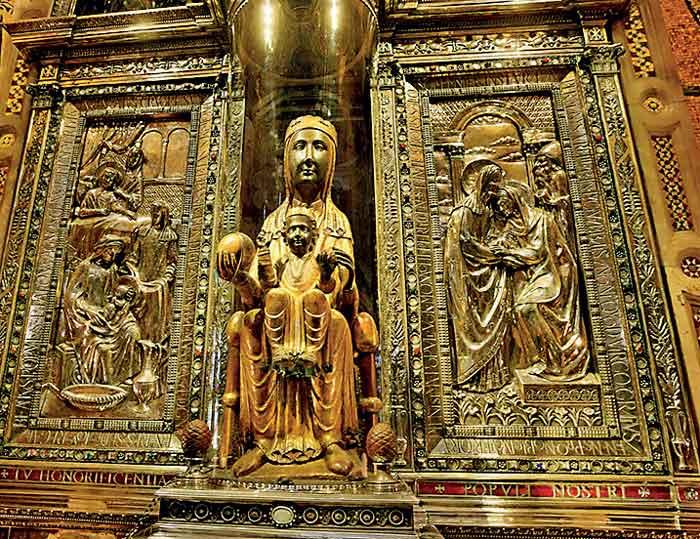
The Black Madonna, Our Lady of Montserrat
They rose around the basilica like ancient giants, standing in silent devotion, as though they were worshipping and guarding the sanctuary at their feet. The mountain is called Montserrat, meaning serrated mountain, a name inspired by its distinctive saw-toothed rock formations that dominate the skyline. From a distance, the peaks resemble a procession of stone figures, frozen in prayer. The sight alone feels spiritual, as if the land itself has chosen to bow before the sacred.
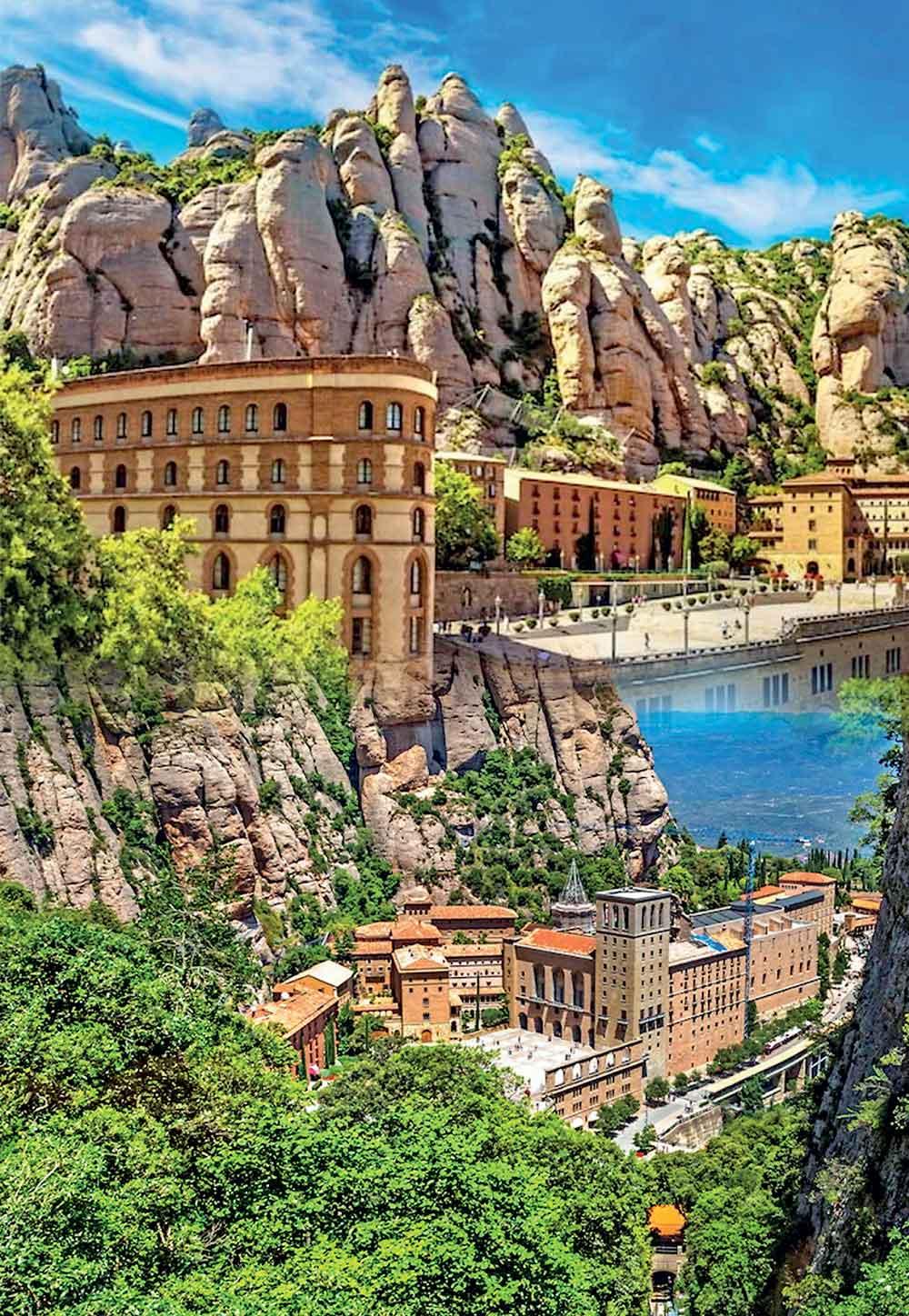
Montserrat Monastery rises from the heart of one of Catalonia’s most extraordinary landscapes, perched dramatically among jagged peaks that seem to defy gravity. An hour from Barcelona, this sacred complex appears almost carved from the mountain itself. When I visited recently, the first thing that struck me was not the scale of the monastery but the presence of the mountains. They rose around the basilica like ancient giants, standing in silent devotion, as though they were worshipping and guarding the sanctuary at their feet. The mountain is called Montserrat, meaning serrated mountain, a name inspired by its distinctive saw-toothed rock formations that dominate the skyline. From a distance, the peaks resemble a procession of stone figures, frozen in prayer. The sight alone feels spiritual, as if the land itself has chosen to bow before the sacred.
Montserrat Monastery rises from the heart of one of Catalonia’s most extraordinary landscapes, perched dramatically among jagged peaks that seem to defy gravity. An hour from Barcelona, this sacred complex appears almost carved from the mountain itself. When I visited recently, the first thing that struck me was not the scale of the monastery but the presence of the mountains.
Montserrat is not only a religious centre but a powerful meeting point of nature, legend, spirituality, and Catalan identity. The moment I stepped onto the monastery plaza, a calmness settled over me. The air felt lighter. The sounds of the modern world faded into a quiet hum, replaced by birdsong, soft footsteps, and the echo of bells. It felt like crossing an invisible threshold from the everyday into something older, gentler, and deeply sacred. The monastery seems to belong to the mountain rather than sit upon it. It is anchored into the rock, as if it grew naturally from the stone. The basilica does not compete with the peaks behind it. Instead, it rests in their embrace, protected and humbled by their presence.
The mountain of Montserrat was formed millions of years ago through a slow geological process. It is composed largely of conglomerate rock, a natural cement of pebbles and stones fused together over time. As softer surrounding material eroded away, wind and water sculpted the remaining rock into tall, rounded spires and narrow pillars. These unusual formations give Montserrat its surreal appearance. The highest peak, Sant Jeroni, rises more than 1,200 metres above sea level and offers sweeping views across Catalonia on clear days. Even without climbing far, I could feel the vastness of the landscape pressing gently against the senses. The entire massif is protected as a natural park and is a haven for hikers, climbers, and nature lovers. Paths wind through forests, cliffs, and caves, revealing quiet chapels, secluded viewpoints, and moments of silence that feel sacred even to those without religious belief. Walking these paths feels like a form of prayer. Each step carries you deeper into stillness.
Montserrat, Barcelona
Human presence on the mountain stretches back many centuries. Early hermits chose the caves and high ledges of Montserrat as places of solitude and prayer, drawn by the mountain’s remoteness and its natural sense of sanctuary. The formal history of the monastery begins in the early eleventh century when Abbot Oliba of Ripoll and Bishop of Vic founded the Benedictine monastery of Santa Maria de Montserrat. Over time, it became one of the most important pilgrimage destinations in the Iberian Peninsula. Pilgrims came not only to honour the Virgin Mary but also to experience the spiritual power believed to flow from the mountain itself. Montserrat was seen as a place where heaven felt closer to earth. Standing there, surrounded by stone giants and endless sky, I understood that feeling. The landscape itself lifts your thoughts upward.
The monastery complex seen today reflects centuries of change, destruction, and renewal. It has been damaged by war and rebuilt with devotion and care. The modern complex blends older architectural elements with later additions, forming a broad open square framed by stone buildings that cling to the mountainside. The sense of arrival is deeply emotional.
Visitors emerge from the cable car, mountain train or private taxi into a vast space of light and stone. Behind the basilica, the cliffs rise steeply, as if the mountain itself is standing guard. The monastery does not impose itself on the land. It feels like a guest that has been welcomed and protected by the mountain for centuries.
At the heart of Montserrat stands the basilica, a space of quiet reverence filled with candlelight, incense, and hushed voices. Entering the basilica felt like stepping into a different rhythm of time. The world outside faded. The air was heavy with stillness. The focal point of the basilica is the image of the Virgin of Montserrat, affectionately known as La Moreneta, the Black Madonna. This small statue is one of the most revered religious images in Spain and the patron saint of Catalonia. Carved in the Romanesque style in the twelfth century, the Virgin sits enthroned with the Christ Child on her lap. The figures are formal and symmetrical, radiating quiet authority. The Virgin holds a sphere in her hand, symbolising the universe and spiritual sovereignty, while the child raises his hand in blessing.
Standing before the Black Madonna was an intensely personal moment for me. There was a gentle stillness in the way pilgrims approached her. Some walked slowly. Some closed their eyes. Some reached out to touch the sphere in her hand. Others simply stood in silence, letting their thoughts rise and fall. The dark colour of the Madonna has fascinated visitors for generations. Some see deep symbolism in her darkness, connecting her to ancient traditions of the earth and maternal protection. Others believe her colour is the result of time, candle smoke, and centuries of devotion. Whatever the reason, her darkened face feels timeless and deeply human. There is a quiet compassion in her expression. You do not feel judged before her. You feel seen.
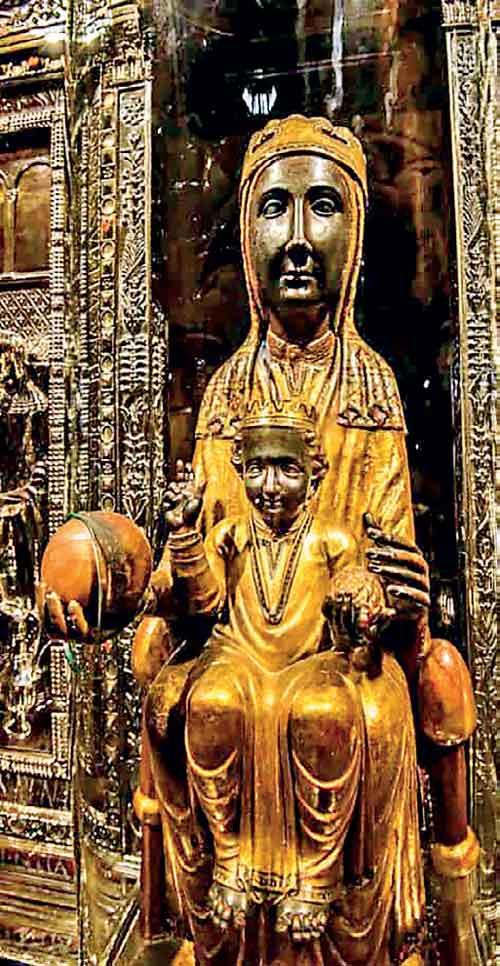
La Moreneta
The Black Madonna has long been associated with miracles and answered prayers. Over centuries, pilgrims have travelled to Montserrat seeking healing, guidance, and comfort. Some come with desperate hopes. Others arrive with gratitude for prayers already answered. The miracles of Montserrat are not always dramatic. They are often quiet transformations. A sense of peace after grief.
A moment of clarity in times of confusion. A softening of the heart after long held pain. As I stood in the basilica, I felt a calm I had not realised I was searching for. It was not overwhelming or emotional. It was gentle, like a deep breath. The kind of peace that feels like being held without being touched.
One of the most enduring legends of Montserrat tells of the discovery of the Virgin in a cave in the late ninth century. Shepherd children are said to have seen mysterious lights and heard heavenly music coming from the mountain. When they followed the sounds, they found an image of the Virgin hidden in a cave. Attempts to move the statue failed, as it became impossibly heavy. This was understood as a sign that the Virgin wished to remain on the mountain. A small chapel was built on the spot, and over time this sacred site grew into the great monastery of Montserrat. Whether read as literal history or spiritual metaphor, the legend binds the Virgin to the mountain. The sacred image does not simply rest at Montserrat. It belongs to it. The mountain feels like her home.
Music adds another layer of spirituality to Montserrat, even in its absence. The Escolania de Montserrat, the boys choir of the monastery, is one of the oldest choirs in Europe, and although they did not perform on the Saturday I visited, their presence is deeply felt within the basilica. The vast stone arches seem to hold the memory of their voices, as if the walls themselves have learned to sing. In the stillness, I found myself imagining how the music must rise into the heights of the basilica and blend with the quiet of the mountain outside.
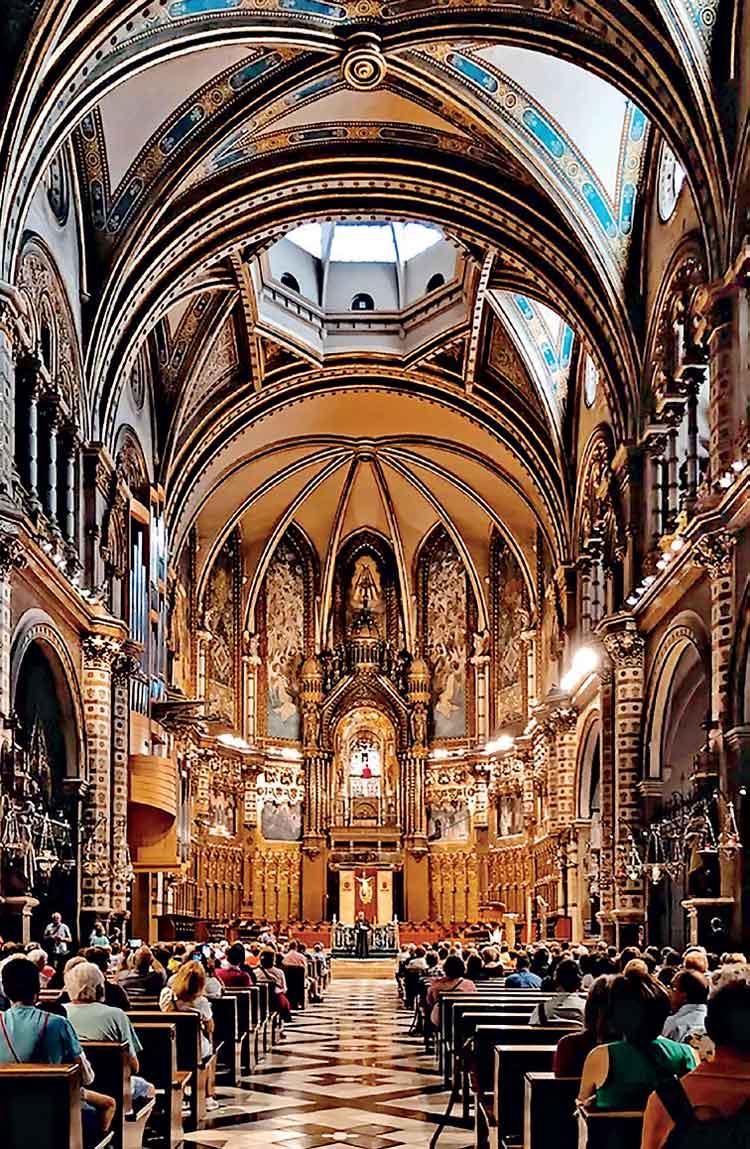
Montserrat Monastery
Even without hearing the choir, there was a sense that the basilica remembered centuries of song and prayer. The silence felt layered rather than empty, carrying echoes of devotion from generations before. In that quiet, the space felt alive in a different way. It was as though the absence of sound made room for reflection, allowing the basilica to breathe and speak through stillness alone.
Beyond the basilica, Montserrat invites quiet wandering. Narrow trails drift from the main square into forests, cliffs, and hushed corners of the mountain, where each step feels like an extension of prayer. The rock formations rise like ancient guardians, their bowed silhouettes circling the monastery in a natural ring of shelter. In the rhythm of walking and stillness, Montserrat offers its deepest gift; space to breathe, to reflect, to feel small in a gentle, grounding way. The monastery endures through living devotion. Benedictine monks still pray within its walls, keeping centuries-old rhythms alive, while pilgrims arrive bearing hope, grief, gratitude, and longing. Time and weather have shaped the mountain, yet its presence remains steady and unyielding. To stand at Montserrat is to feel humbled by stone and sky, yet comforted by the knowledge that countless souls have stood here before. The Black Madonna watches in quiet witness. Together, mountain and monastery form one sacred presence; an experience of stillness, reverence, and enduring peace.
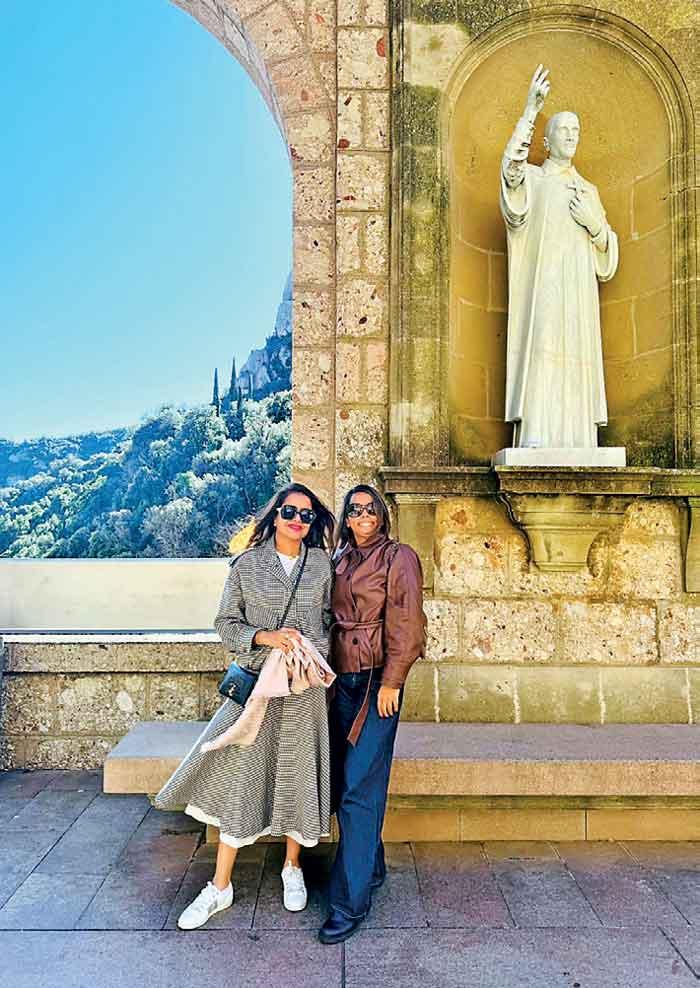
Rishini and Hasini
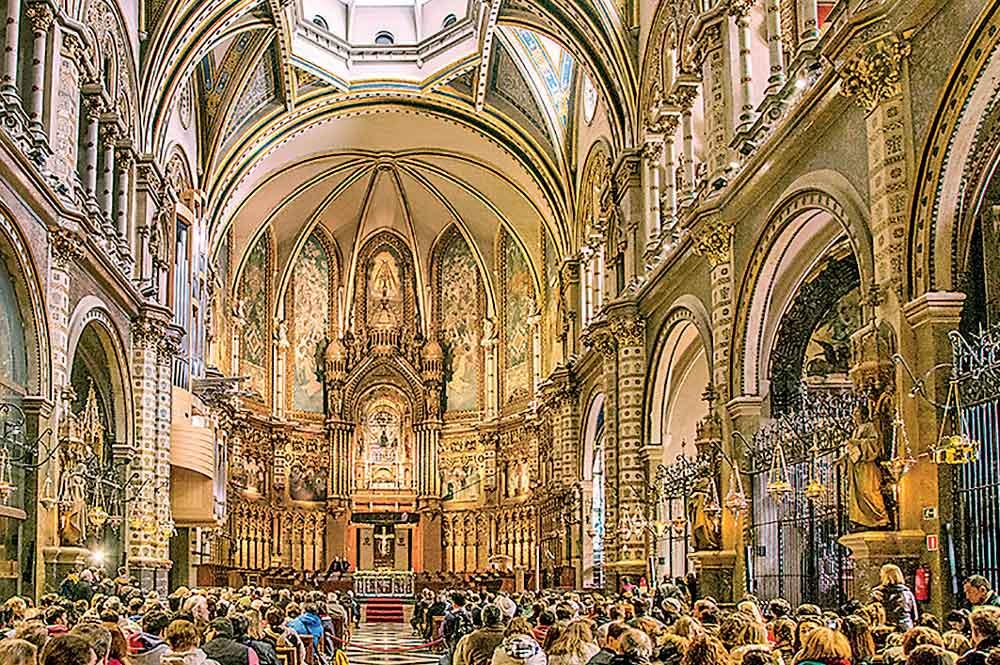
Montserrat