BEYOND LOVE, PART II THE LOVE WE BRING AND THE LOVE WE WITHHOLD

 If love can quietly turn into possession, it can just as easily be shaped by what we carry into it. Every relationship begins not only with attraction, but with history – our own personal history with beliefs about worth, habits formed in childhood, and unexamined fears about being enough. What we bring into love often determines not just how we give affection, but how much of it we are capable of receiving.
On the surface, the idea that one could be anything other than one’s “real self” seems strange. And yet, from early childhood, we learn to adapt in order to be accepted. We soften opinions, suppress instincts, and mould ourselves to please those whose approval we seek. In romantic relationships, this tendency intensifies. We fear that honesty may cost us love, so we offer a version of ourselves we believe will be easier to keep.
The story of a young woman illustrates the long-term consequences of these patterns. She grew up constantly criticised, never once hearing the words “I’m proud of you.” Subconsciously, she learned to believe that she was always at fault, and apologising became second nature. She later married a man who, having never experienced genuine care or affection in his own childhood, had no framework for showing love. Over time, his frustration and inability to express care became controlling, even bullying. The result was devastating: her confidence eroded, and the patterns of blame she had learned as a child continued into her adult life. What made matters even more complicated was the unspoken expectation of a kind of unconditional love that no human being is capable of giving. The problem was not a lack of love; it lay in the difficulty of accepting it openly.
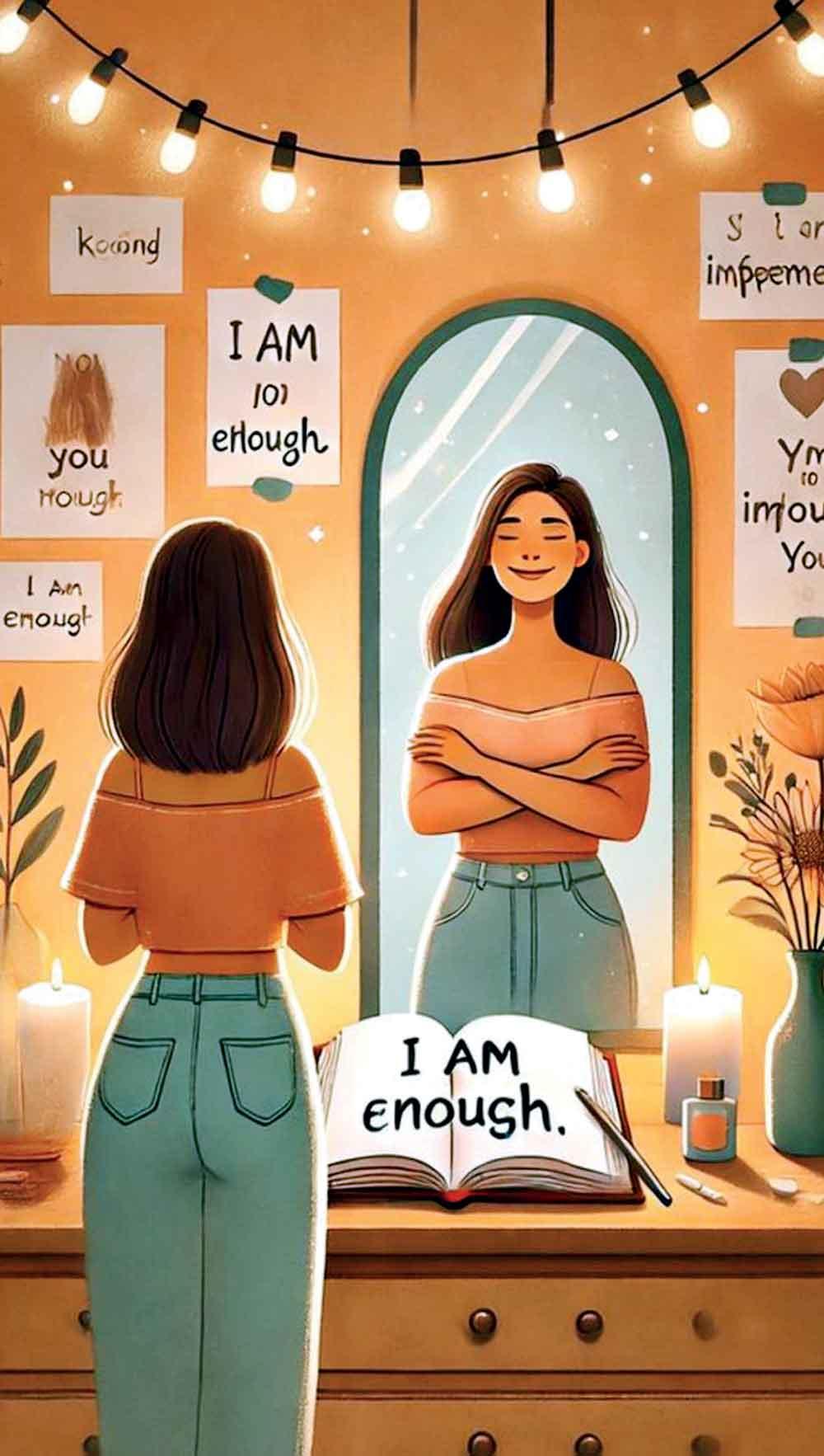
This is why the relationship we have with ourselves matters so deeply. Without self-respect, love becomes dependency. Without self-worth, affection becomes validation. When a person does not believe they are enough, they struggle to accept love without suspicion, fear, or selfsabotage. Emotional wounds carried from childhood, be it neglect, abandonment, or constant criticism, often surface in adult relationships, quietly shaping behaviour. Such individuals may struggle to express love, not because they lack feeling, but because vulnerability feels unsafe.

Authenticity also matters in how relationships begin. During courtship, effort is abundant. Gestures are thoughtful. Romance is carefully performed. Yet once commitment is secured, the performance often ends. Flowers stop arriving. Dates become rare. The question then arises: why choose to be someone you are not simply to win someone over? Love built on performance inevitably disappoints, because no one can sustain an act forever.
This disconnect often becomes most visible after marriage. Many people spend years together before marrying, only to unravel within months of formal commitment. The reason is not that marriage changes people, but that it removes the need to perform. When relationships are built on carefully edited versions of the self, marriage exposes what was hidden. Compromise is essential, but it cannot mean self-erasure. Entering a new relationship does not require abandoning family, friendships, or identity; it requires integrating them. When compromise is mistaken for surrender, resentment follows, and commitment becomes fragile.
Conflict, too, is inevitable. What determines a relationship’s survival is how conflict is handled.
Too often, both parties wait for the other to apologise, convinced that saying “sorry” first implies defeat. Pride delays healing. Silence replaces dialogue. Gradually, distance forms, not because the issue was severe, but because neither person was willing to soften first. Many relationships end not with betrayal, but with two people refusing to let go of ego.
Love survives not through intensity, but through commitment. Through the decision to stay present when circumstances are unkind, to choose understanding over escape, and humility over pride. In a culture that celebrates quick exits and instant gratification, this may seem outdated. But love, if it is to mean anything at all, must be more than a feeling. It must be a practice - one shaped by honesty, sustained by courage, and strengthened by the willingness to remain.