
Somewhere in the quiet evolution of modern life, being okay stopped being something we felt and became something we were expected to perform. It turned into a social reflex, a polite answer, a way of reassuring others that nothing complicated was happening beneath the surface. When someone asks how you are, the words arrive before the truth has time to catch up. You say fine, busy, good, or tired in a light-hearted way. You say anything that keeps the conversation moving. Even when you are overwhelmed or lonely or barely holding yourself together, you still say you are okay. It is not because it is true. It is because it feels safer than trying to explain what you do not fully understand yourself.
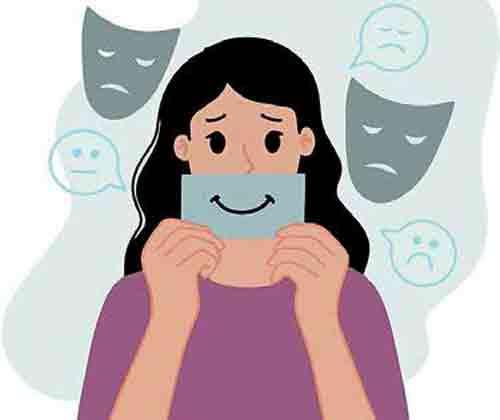
We live in a culture that celebrates strength and endurance. People who keep going no matter how difficult things become are praised. We are taught to admire resilience, productivity, and emotional control. Vulnerability is often spoken about but rarely welcomed in real life. So, we learn how to package our feelings in ways that are easy for others to accept. We keep our sadness quiet, our fears subtle, and our exhaustion hidden. We show up to work, school, family dinners, and social events wearing the same invisible mask that says everything is under control even when it is not.
Holding that mask in place takes effort. It requires energy that most people do not realise they are spending. Being okay all the time is not natural. It is something we train ourselves to do. We push our emotions into small corners of ourselves and tell them to wait until later. But later rarely comes. Life moves on and the feelings stay trapped, quietly growing heavier. Many of us learned early that strength meant silence. We were praised for being easy, for not making a fuss, for handling things on our own. We learned that crying was something to be done in private and that asking for help was something to be avoided. Somewhere along the way, independence became a form of emotional isolation. We told ourselves that we should be able to cope, no matter what.
Over time, this version of strength becomes a burden. You stop talking about what hurts because you do not want to worry anyone. You stop sharing your doubts because you do not want to seem dramatic. You remind yourself that others have it worse and that your struggles do not deserve attention. You become the one people rely on. You listen to their stories, offer advice, show up when they need you. Meanwhile, no one sees how much you are carrying. You become good at being okay even when you are not. The pressure to appear fine comes from many places. It comes from families that value composure. It comes from workplaces that reward constant productivity. It comes from social media where everyone else seems to be thriving. It also comes from within.
We compare our private pain to other people’s public happiness and wonder why we cannot keep up. We assume that if we are struggling, it means we are doing something wrong. Pretending to be okay does not make anything easier. It only makes it quieter. The stress and sadness do not disappear. They move inward. They settle into the body and the mind in ways we do not always recognize. Unspoken tension can turn into constant fatigue, headaches, trouble sleeping, or a feeling of emotional numbness. You may find yourself snapping at small things or withdrawing from people you care about. These are not signs of weakness. They are signs that something inside you has been asking for attention for a long time.
The body remembers what the mind tries to ignore. When we do not give our emotions space to exist, they find other ways to express themselves. Over time, this kind of emotional suppression can lead to burnout, anxiety, and a deep sense of disconnection from yourself and from others. You may go through your days feeling detached, as if you are watching your own life from a distance. Everything looks fine on the outside but inside something feels empty or strained. What makes this even harder is that we rarely talk about this side of coping. We talk about ambition, achievement, and self-improvement. We celebrate those who push through exhaustion and keep working. We admire people who seem to have everything under control. We do not talk enough about the quiet cost of holding yourself together without support. We do not talk about how lonely it can feel to always be the strong one.
Being okay becomes something you perform. You are expected to show up cheerful or at least functional. You are not supposed to pause or fall apart unless there is a reason that feels acceptable to others.
Even grief and stress are often given unspoken deadlines. You are allowed to struggle for a while but not for too long. Eventually, people expect you to move on and get back to normal, whatever that means. In a world that measures success by progress and productivity, struggling feels like falling behind. We are told that if we do the right things, work hard, stay focused, and make good choices, we should be fine. So, when we are not fine, we turn the blame inward. We assume something must be wrong with us.
We tell ourselves that we are weak for feeling tired or lost. We judge ourselves for being overwhelmed. We think we should be grateful and that feeling unhappy means we are unappreciative. These beliefs keep people silent. They stop us from saying I am not okay because we fear being seen as incapable or ungrateful or broken. But struggling is not a failure. It is a human response to pressure, change, uncertainty, and emotional weight. Life is complex. People go through things that cannot be solved by positive thinking or hard work alone. Feeling overwhelmed does not mean you are doing life wrong. It means you are human.
There is something deeply healing about being allowed to not be okay. About being able to say I am tired, or I am overwhelmed, or I do not know what I am doing right now without feeling like you need to explain or justify it. When we give ourselves permission to be honest, something softens inside us. The constant tension of pretending begins to ease.
Real connection does not come from pretending everything is fine. It comes from being real. It comes from allowing yourself and others to exist in that in between space where you are not broken but not perfect either. Just human, trying to get through the day. Being open does not mean telling everyone everything. It does not mean losing control or oversharing. It means recognizing your limits and respecting them. It means understanding that you do not have to carry everything alone. Asking for help is not a sign that you have failed. It is a sign that you are paying attention to your own needs.
Redefining what it means to be okay can change the way we live. Being okay does not have to mean that everything is sorted and stable. It can mean that you are doing the best you can with what you have. It can mean that you are allowed to have hard days and still consider yourself okay. It can mean resting when you need to instead of pushing through until you break. Maybe being okay is not about having all the answers. Maybe it is about being gentle with yourself while you search for them. Maybe it is about setting boundaries and saying no when you are tired. Maybe it is about letting your emotions exist without rushing to fix them or explain them away. When we let go of the pressure to always appear fine, we make room for something more honest. We make room for real conversations, for deeper understanding, and for genuine support. We create a world where people do not have to hide their struggles to be accepted.
It is okay to not be okay. It is okay to have days when everything feels heavy. It is okay to admit that you need a break, that you feel lost, that you are trying but it is hard. What is not okay is believing that you have to pretend otherwise. When we stop pretending, we give ourselves the chance to heal, to connect, and to live more truthfully.