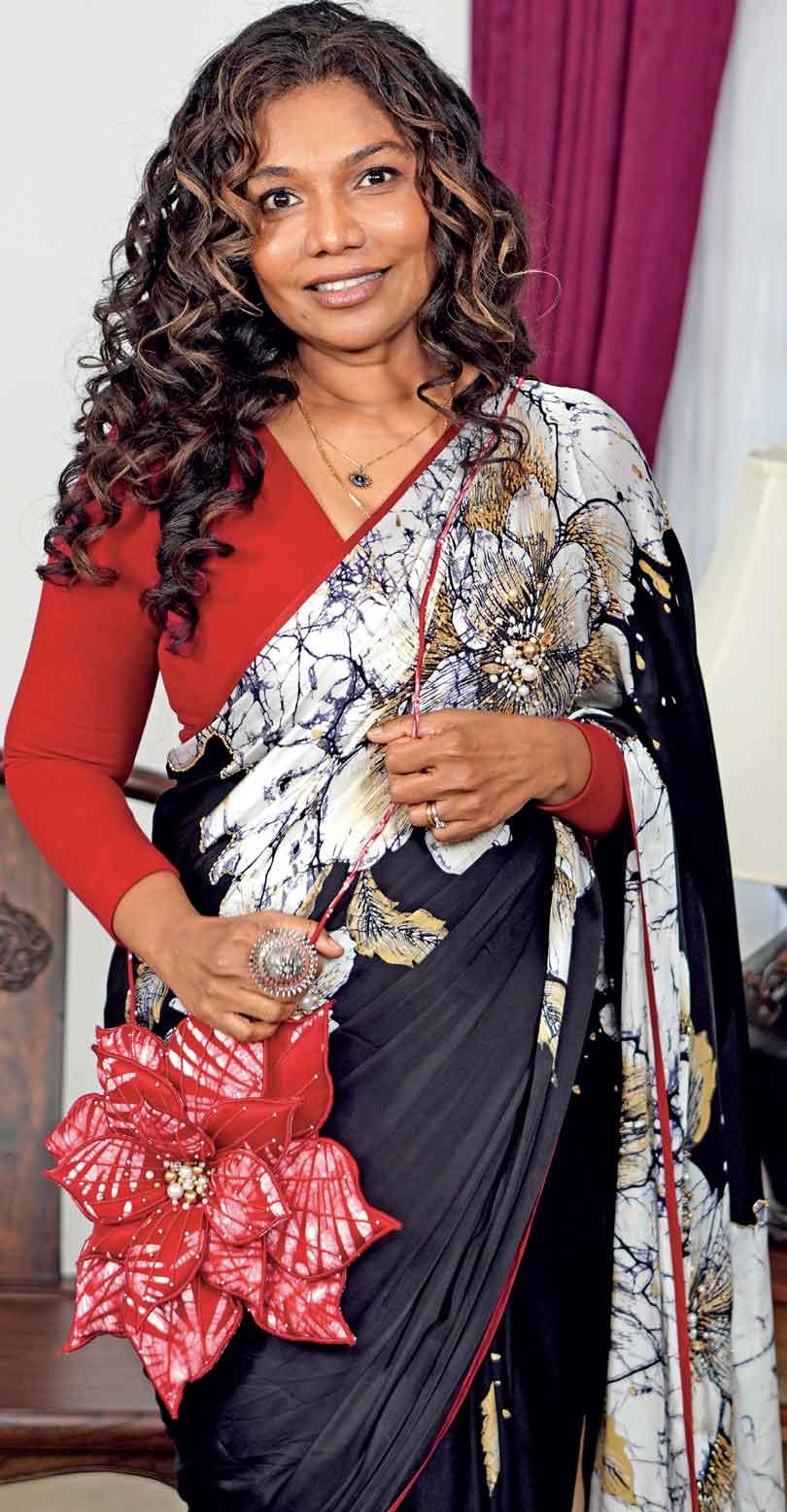
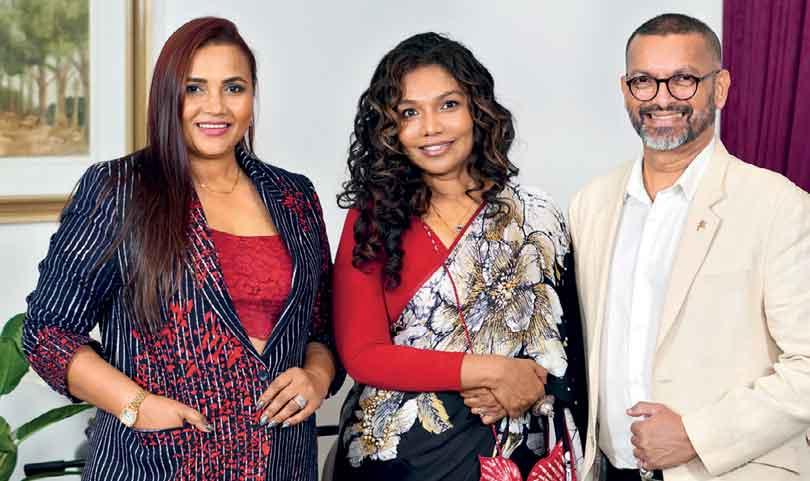
 At the dawn of a new year shaped by reflection, resilience, and the quiet anticipation of renewal, Fame Game opened its doors to a voice seldom heard beyond the world of craft and creation. Fashion designer and Creative Director of Buddhi Batiks, Darshi Keerthisena, stepped into the conversation with a rare openness, joining hosts Kumar de Silva and Rosanne Diasz for a thoughtful and far-reaching dialogue. What unfolded was more than an interview. It was an intimate exploration of heritage, artistry, sustainability, and the deeply personal choices that have defined her path. With honesty and grace, Darshi reflected on batik as a living art form, the weight and gift of her family legacy, and her unwavering commitment to slow fashion and a more mindful way of living.
Q: Welcome to the show, Darshi. You are someone who has consciously avoided the camera for years. Why did you choose to stay away from television appearances?
A: I am much more comfortable creating than being in front of a video camera. I enjoy photography, but video is different. I prefer to stay behind the scenes and focus on the work itself, even though my father and brother have appeared on television many times.
Q: Your father was a globally recognized cultural figure, and your brother is a filmmaker known for his voice and expression. You seem very different from them.
A: They are natural speakers. They can talk for hours about almost anything, and they do it very well. I always felt they were more comfortable expressing themselves verbally. I express myself through design, colour, texture, and craft. My mother is also quiet in that sense, so perhaps that balance comes from her.
Q: Let us go back to the beginning. How did Buddhi Batiks come into existence?
A: Buddhi Batiks began around 1970, shortly after my parents got married. It started as a very personal and romantic gesture. My mother wanted to create a batik shirt for my father. She commissioned someone in our village of Koswadiya to make it, but the shirt was never delivered on time. At that point, my father, who was a journalist and also a natural artist, suggested that they make it themselves. They experimented together, and the result turned out beautifully. Soon, people began asking where the shirt came from and whether they could have similar ones. That single piece became the foundation of Buddhi Batiks.
Q: Did your parents have any formal knowledge of batik at that time?
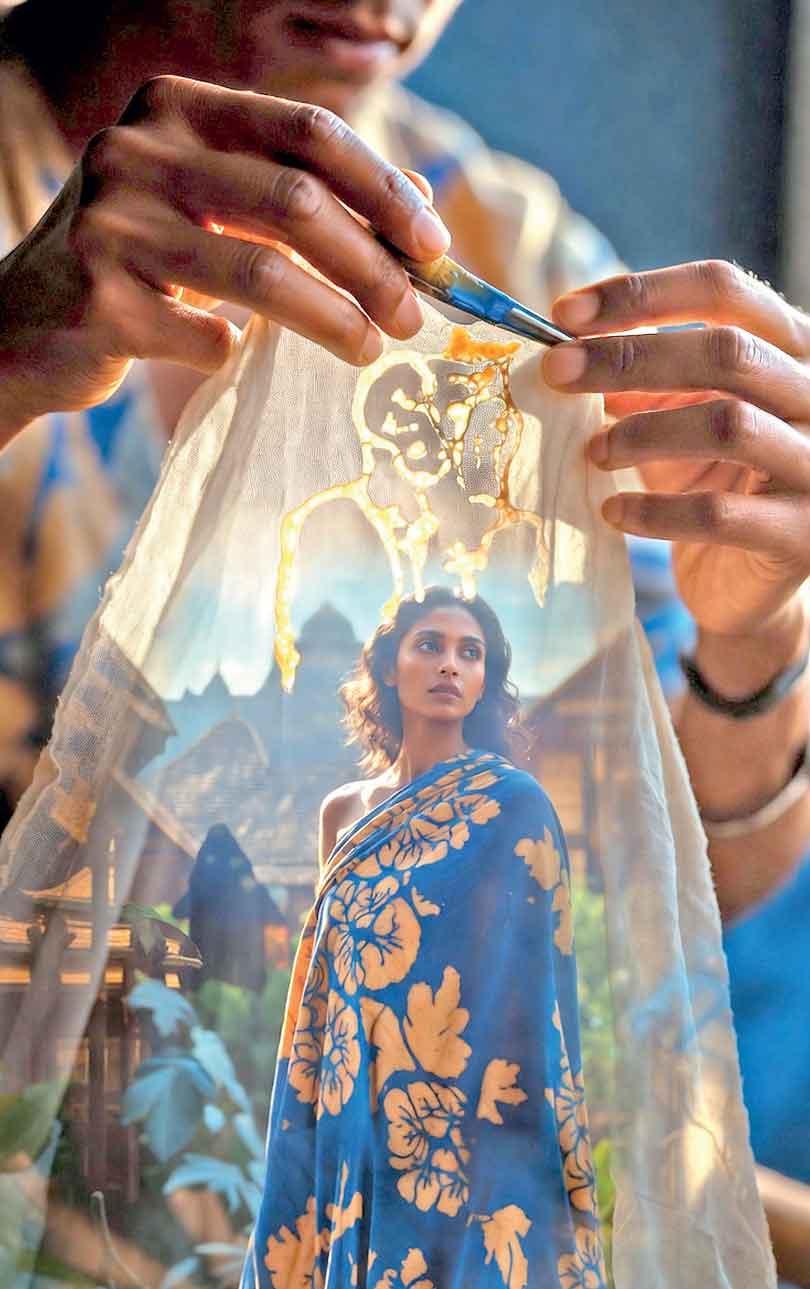
A: Not formally. Batik is quite an accessible craft if you understand the basics. It is a wax resist dyeing technique. If you can draw, you can do batik. Melted wax is applied using a tool or brush, and the fabric is then dyed. Wherever the wax is applied, the dye does not penetrate. Once the dyeing is complete, the wax is boiled off.
It is similar to a childhood activity many of us remember, drawing with candle wax on paper and then applying colour. Batik is more intricate, but the principle is the same.
Q: How is batik different from tie and dye, which is often confused with it?
A: Tie and dye also resists dye, but through tying rather than drawing. While it produces beautiful results, it does not allow for the same level of intricate detail. Batik allows freehand drawing, shading, and detailed motifs. Every artisan brings their own approach, depending on how much wax they use, the pressure they apply, and the way they draw. That is why I like to describe batik as a wearable work of art.
Q: You grew up surrounded by batik. How did that influence you?
A: I was born into Buddhi Batiks. It was literally my backyard. After school, I would go there, eat with the craft artisans, exchange food with them, and play among the fabrics. There were always dogs and cats around because people brought their pets, knowing they would be cared for. I even dressed the dogs in batik outfits, sometimes as bridal couples. Looking back, that playful interaction with batik shaped me more than I realized at the time.
Q: Was it always expected that you would continue the family legacy?
A: Not at all. My parents were very progressive and supportive. They never forced us into the family business. When I said I wanted to study fashion design, the only question my father asked was whether I would consider interior design instead. When I said no, he simply accepted it. The same applied to my brother, who was among the first Sri Lankans to formally study filmmaking. We were encouraged to follow our interests rather than expectations.
Q: You later worked at Brandix. How did that experience shape your approach to fashion?
A: Working at Brandix as a product developer taught me a great deal about fabrics, production processes, and global standards. It gave me technical knowledge that my parents’ generation did not have access to. However, my understanding of batik itself came from my parents and the craft artisans at Buddhi Batiks. The combination of industrial garment manufacturing and traditional craftsmanship gave me a broader perspective.
Q: How did you personally revive your involvement with batik?
A: At one point, my parents had moved away from batik due to the decline of tourism during the civil war and changing global trends. While working at Brandix, I wanted to create a batik dress for myself. I searched for fabrics in Maradana and found a bright white silk satin fabric that nobody wanted. It was very inexpensive, costing only 100 rupees a yard. Inspired by orchids from the garden we grew up with, I experimented with batik on the fabric, and the result was beautiful. When I returned to buy more, the shop owners told me the fabric was usually used as coffin lining. It was shocking at the time, but it also showed how overlooked materials could be transformed through creativity.
Q: Today, Buddhi Batiks is widely recognized. How do you deal with imitation and duplication?
A: Initially, it was difficult. We invest a great deal of time and research into each collection, and seeing others copy designs can be disheartening. Over time, however, we changed our perspective. If others are drawing inspiration from us, it means we are setting trends. That understanding helped us focus on continuous innovation. We compete with ourselves and keep pushing boundaries.
Q: How do you structure your collections?
A: Previously, we released three collections a year. Now we create two. Batik is slow fashion, and each piece takes time, from research and design to trials and execution. We do not strictly follow trends, but we remain aware of global movements in fashion. At the same time, Sri Lanka has over 2,500 years of history, culture, and visual inspiration, which provides endless creative material.
Q: You have expanded beyond clothing into accessories and lifestyle products. Why was that important?
A: It was a natural extension of our design language. Today, we create handbags, belts, slippers, notebooks, umbrellas, and rainwear. Some products involve batik, while others use digital prints inspired by our designs. Experimentation keeps creativity alive. Anyone who walks into our store can see that we are constantly exploring new ideas.
Q: If you had to choose one garment that best represents batik, what would it be?
A: The saree, without question. A batik saree allows the art to be fully appreciated and gives space for the design to breathe. I personally repeat my sarees often because I believe in investing in quality and wearing what you truly love.
Q: Sustainability is a key concern today. How does Buddhi Batiks address environmental responsibility?
A: After consulting for MAS, I gained a deeper understanding of environmental management. With the income I earned, I invested in a water purification unit for our batik workshop. We treat wastewater before releasing it back into the environment. We are also working on reusing water and minimizing fabric waste. While we are not perfect, we are committed to continuous improvement and transparency throughout this journey.
Q: Your workshop is based in Koswadiya. How important is the village to your work?
A: It is everything. Most of our craft artisans are from the village. Many have worked with us for decades, and some even before I was born. Others are relatives or neighbours. We hope to expand opportunities within the village through responsible practices in the future. Supporting the local economy is a responsibility we take seriously.
Q: You are also known for your vegan lifestyle. How did that choice come about?
A: I was a vegetarian for over 30 years, like my mother and brother. About eight years ago, I became vegan. It was a conscious decision rooted in compassion for animals. It is easier than people think, especially in Sri Lanka, where many traditional dishes are naturally plant based.
Q: Finally, how would you describe your journey so far in one thought?
A: It has been a journey of patience, learning, and purpose. Batik teaches you to slow down, respect craft, respect people, and respect the environment. If I can continue doing that while creating meaningful work, I feel fulfilled.
-----------------------
This conversation on Fame Game offered a rare glimpse into the life and philosophy of Darshi Keerthisena, a creator who chooses substance over spotlight and heritage over haste. As the new year begins, her story serves as a reminder that resilience, creativity, and care can coexist beautifully.