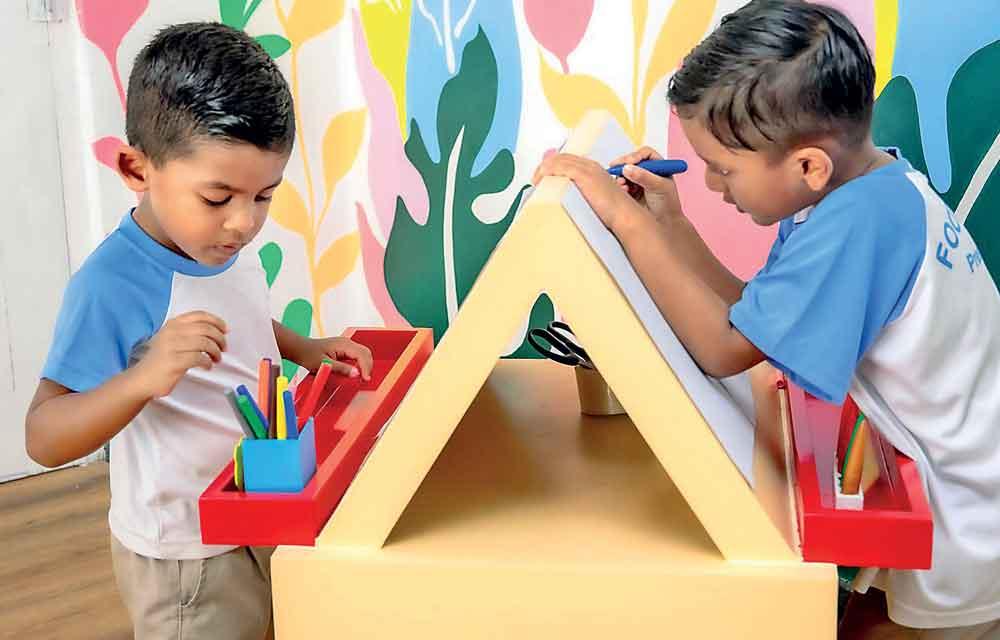
You’ve likely heard the mantra, repeated in parenting forums, trendy Instagram posts, and even some educational circles: “Just let them play. Academics can wait until seven.” It’s a seductive notion, promising a childhood free from pressure, where joy and exploration reign supreme. In our hyper-competitive, hurried world, the idea of gifting children years of unstructured play feels like a radical act of protection. But as we embrace this philosophy with the best of intentions, we risk oversimplifying a profoundly complex issue. The critical question isn’t if children should learn before seven, but how. And in failing to ask that “how,” we may inadvertently widen the very gaps we hope to close
LET ME EXPLAIN
The research underpinning the “wait-until-seven” advice is often misunderstood. Studies show that some kids who aren’t forced to read early can catch up just fine later on. But here’s the part we often miss. Those kids were almost always playing in homes packed with books and words. Their parents had the time to talk, read, and answer a million “why” questions. For them, playtime was also learning time - they just didn’t know it. Building a block tower? That’s physics and math. Pretending to run a restaurant? That’s storytelling and social skills. Now, think about a child who doesn’t have those things at home. Maybe their parents are working multiple jobs and are exhausted. Maybe there aren’t many books. Maybe complex conversations are rare. For that child, a preschool might be their only chance to get that foundation. It might be the only place they hear a rich story, learn what a letter is, or count how many apples are needed for snack. Telling everyone to “just play until seven” assumes every child starts from the same place. They don’t. If we delay all learning for everyone, the kids who already have a head start will keep racing ahead, their play at home is already teaching them. The kids who are behind may just stay behind. That gap doesn’t close by itself. It gets wider. This isn’t about making kindergarten like Harvard. No one wants a child stressed over worksheets at age four. Good teachers hate that idea, too. The real solution isn’t choosing between “play” and “learning.” That’s a false choice. The best early learning is play; it’s just play with a little nudge. Experts call it “guided play” or “intentional play.”
LET ME SHOW YOU WHAT I MEAN
- A teacher sees kids playing with toy cars. Instead of just watching, she rolls out a long piece of paper and draws a “road.” She asks, “Who has the longest car? Who has the shortest?” She’s not giving a test. She’s just playing along. But she just snuck in important math words.
- Kids are splashing in water tables. A teacher hands them different cups—a tall skinny one and a short fat one. “Which one holds more?” she wonders out loud. The kids guess and pour and discover. That’s a science experiment, wrapped in a game.
- During a story, a teacher points to the words as she reads.
“Look, the word ‘dog’ starts with the letter D, just like David!” She’s not drilling phonics. She’s just pointing something out, building a connection.
This is the secret. It’s not pressure. It’s presence. It’s a caring adult paying attention and adding a little sprinkle of “what if?” to the child’s own game. When we say, “just play,” without this gentle guidance, we’re asking teachers and parents to be hands-off. For a child who gets a lot at home, that might be okay. For a child who doesn’t, it’s a missed opportunity. We’re not “protecting” their childhood; we might be accidentally holding them back.
SO, WHAT SHOULD WE DO?
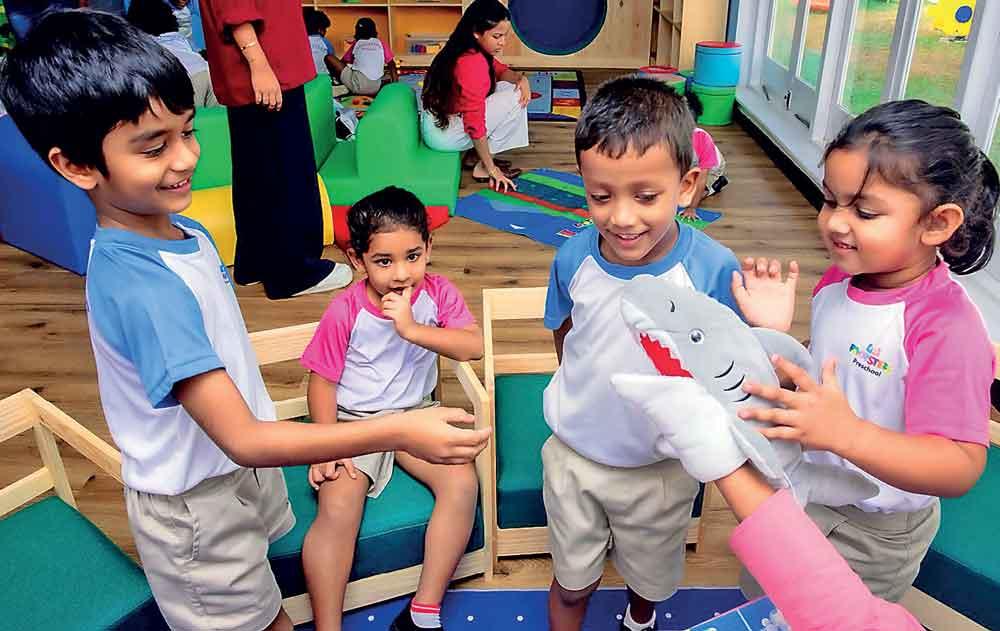
We need to change the question. Instead of asking “Play or learning?” we should ask: “Is this play helping build the skills every child needs?” We need to give all our early educators the training, time, and respect to do this delicate work. It takes real skill to teach through play. We need to help all parents in a way that doesn’t make them feel judged, see how powerful their everyday moments are. Counting socks from the laundry, reading a cereal box, talking about the shapes of street signs, that’s the real “early curriculum.” Every child deserves a childhood full of play, joy, and discovery. But they also deserve a fair shot. By marrying the magic of play with a mindful eye on the foundations every kid needs, we can give them both. We don’t have to choose. Play and learning can co-exist.