What Will Define Fashion in 2026

BEYOND THE SEAMS BY SHRI AMARASINGHE
Every new year in fashion arrives with predictions. Colours are announced, silhouettes are crowned, and trend reports confidently declare what we should be wearing next. These forecasts once carried authority, shaping not only wardrobes but identities. Yet by 2026, it has become clear that fashion is no longer defined by hemlines, seasonal palettes, or the velocity of trend cycles. It is defined by intention, restraint, and meaning. Fashion in 2026 is not louder than before. It is quieter, slower, and more deliberate. It asks better questions. Not what is new, but what lasts. Not what is trending, but what feels true. The industry is undergoing a philosophical shift, one that reflects broader cultural fatigue with excess and a growing desire for depth, authenticity, and accountability. This moment is not about minimalism as an aesthetic, nor about nostalgia for a romanticised past. It is about recalibration. Fashion is learning how to exist responsibly in a world shaped by climate anxiety, economic instability, and emotional burnout. The result is a new definition of relevance, one rooted in care rather than spectacle.
 The End of Fashion as Noise
For decades, fashion thrived on excess. More collections, more drops, more speed, more consumption. Brands competed not only with one another but with time itself, racing to remain visible in an overcrowded digital landscape. Relevance was measured by novelty, and novelty was measured by how quickly something could be replaced. By 2026, that illusion has fractured. Consumers are fatigued by constant choice and relentless persuasion. Designers are exhausted by impossible production schedules and creative burnout. Landfills are overflowing with garments that were never truly worn, only briefly owned. The industry has been forced to confront a sobering truth: there are already enough clothes on this planet to dress the next six generations. Fashion can no longer justify itself through volume. It must earn its place through value. This is not the death of fashion, but the end of fashion as noise. In its place is a quieter language, one that values craftsmanship over convenience and longevity over viral moments. Collections are fewer, messages are clearer, and the most compelling designs are those that do not beg for attention but reward it.
Sustainability as the Baseline, Not the Bonus
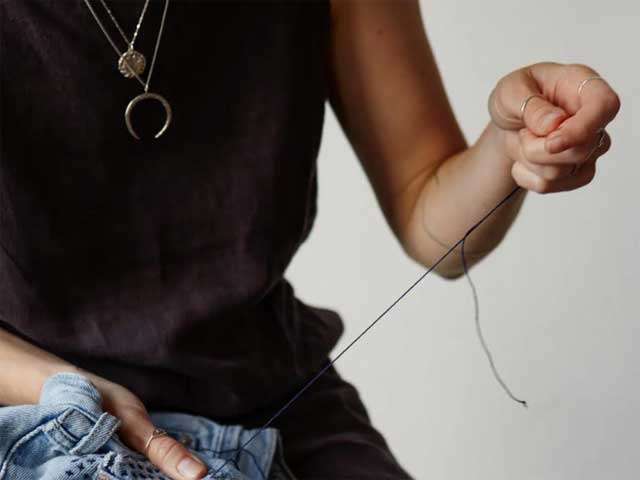
Sustainability was once treated as an optional extra. A capsule collection made from recycled fabric. A green hangtag. A carefully worded marketing promise. These gestures were once enough to signal responsibility. In 2026, they are not. Consumers now recognise greenwashing with ease. They understand that recycled materials alone do not offset overproduction, exploitative labour practices, or planned obsolescence. Awareness has matured into expectation. Sustainability is no longer a differentiator; it is the baseline. The most sustainable garment, as many industry voices now emphasise, is the one already in your wardrobe. Extending the life of a garment by just nine months can reduce its carbon, water, and waste footprint by up to thirty percent. These figures are no longer abstract statistics. They function as instructions. Repair. Rewear. Restyle. Choose fewer pieces and choose them well. In practice, sustainability in 2026 looks less like slogans and more like systems. Resale platforms are fully integrated into brand ecosystems. Repair services are offered alongside new purchases. Limited production replaces endless restocking. Materials are selected not only for their environmental impact but for their ability to age beautifully rather than deteriorate quickly. Durability, both physical and emotional, has become the new measure of responsibility.
Quiet Luxury and the Crisis of Trust
Luxury, it turns out, was never truly about being seen. It was about being understood. For much of the past decade, however, luxury became increasingly performative. Logos grew larger, prices rose sharply, and exclusivity was often manufactured through scarcity rather than substance. By 2026, that model is under strain. After years of raising prices without corresponding improvements in quality, creativity, or transparency, luxury brands are facing a growing trust deficit. Consumers are no longer willing to accept inflated pricing without explanation. They are asking harder questions. Why does this cost more. Who made it. What makes it exceptional. According to industry reports, including the State of Fashion 2026 analysis, this erosion of trust is one of the most significant challenges facing the luxury sector. The unspoken contract between brand and consumer, once based on assumed excellence, now demands proof. In response, luxury is being recalibrated. Logos continue to lose their power, replaced by cultural literacy and an appreciation for fabric, construction, and provenance. Brands are being pushed to demonstrate value through better materials, fewer but stronger collections, and a renewed commitment to craft. The era of effortless mark ups is over. True luxury in 2026 lies in heritage fashion, in carefully made pieces designed to last both emotionally and physically. Trust, once lost, must be rebuilt stitch by stitch.
Technology, Applied with Restraint
Technology has not disappeared from fashion, but its role has evolved. The early fascination with spectacle has given way to a more mature, measured integration. Smart textiles quietly enhance comfort, breathability, and durability without announcing themselves. Artificial intelligence supports designers behind the scenes, helping to forecast demand more accurately, reduce waste, and streamline production. Digital tools are used to refine fit and improve efficiency rather than to generate novelty for its own sake. In 2026, the most successful fashion technology is invisible. It exists to serve the wearer, not distract from them. Innovation is judged not by how futuristic it appears, but by how seamlessly it integrates into everyday life. This shift reflects a broader cultural move away from performative futurism toward practical intelligence. Fashion technology has learned to listen.
Silhouettes Designed for Real Life
The body has reasserted itself as fashion’s central reference point. After years of rigid tailoring, exaggerated proportions, and garments designed primarily for digital consumption, fashion in 2026 favours balance. Silhouettes are relaxed yet intentional, structured yet fluid. They are designed to move, to sit, to live. This is not clothing created solely for the camera or the runway. It is clothing for real bodies navigating real days. Comfort is no longer synonymous with casualness or compromise. It has become a design principle in its own right. Waistbands stretch discreetly. Fabrics respond to movement. Tailoring accommodates variability rather than enforcing uniformity. The result is clothing that supports the wearer rather than demands performance from them.
Romanticism, Reclaimed
Softness is returning to fashion, but without fragility. Lace, sheer fabrics, and delicate details are reappearing, grounded by strong tailoring and confident silhouettes. This new romanticism is neither nostalgic nor ornamental. It is intentional, self-possessed, and quietly powerful.
Fashion in 2026 allows space for emotion without sentimentality. For memory without regression. For tenderness that coexists with strength. These garments do not seek to idealise the past, but to humanise the present. Romance becomes a language of care, a way of dressing that acknowledges vulnerability while refusing weakness.
Personal Uniforms Over Trends
Perhaps the most defining shift of 2026 is the gradual move away from trends altogether. Instead of constant reinvention, individuals are curating personal uniforms. Wardrobes are built around identity rather than seasons, around clarity rather than aspiration. People are no longer dressing to become someone else. They are dressing to support who they already are. This does not mean uniformity. On the contrary, it signals a deeper form of individuality. When trends lose their authority, personal taste gains power. Style becomes less about novelty and more about coherence. Fewer pieces, chosen with care, worn with intention. A wardrobe that feels aligned rather than performative. Fashion becomes a companion to life rather than an interruption.
Redefining Fashion Beyond the Seams
- Fashion in 2026 is defined not by speed, but by slowness.
- Not by excess, but by intention.
- Not by spectacle, but by substance.
It is an industry learning how to listen, how to pause, how to repair what has been broken. Fashion is remembering its original purpose. To clothe the body with dignity. To express identity with honesty. To create beauty that endures. Perhaps the most radical act in fashion today is not buying something new, but choosing something meaningful, and wearing it well, again and again.