Conscious Reminders as We Begin 2026
As we step into 2026, the fashion industry finds itself at a quiet but decisive crossroads. The conversations are no longer new. Sustainability, ethics, responsibility, these words have circulated for over a decade, printed on swing tags and repeated in campaign slogans. Yet the urgency has only deepened. The question is no longer whether fashion needs to change, but how honestly we are willing to participate in that change as individuals, brands, and consumers.
This is not a call for perfection. It is a call for consciousness. A reminder that meaningful shifts rarely come from dramatic gestures alone, but from consistent, informed choices made over time. Beyond trends and seasons, fashion is ultimately about what we choose to live with, care for, and pass on.
Below are a few grounding truths worth carrying with us as we begin the year.
There are already enough clothes on the planet to dress the next six generations
This single fact reframes the entire conversation. Overproduction is no longer a hidden issue; it is the foundation of the industry’s crisis. Racks overflow, warehouses sit full, and yet new collections arrive weekly, sometimes daily. The problem is not scarcity, it is excess.
Fashion has been engineered around acceleration. Faster design cycles, cheaper labour, and relentless novelty have trained us to believe that repetition is failure. Wearing the same outfit twice is seen as unimaginative. Repair is inconvenient. Keeping clothes for years is framed as nostalgia rather than wisdom.
But abundance without intention becomes waste. When we produce more than we can meaningfully use, value collapses. Clothing becomes disposable not because it lacks utility, but because it lacks perceived worth.
To acknowledge that we already have enough is radical in an industry built on wanting more. It challenges the idea that progress equals production, and invites us to redefine progress as care, longevity, and restraint.
Extending the life of a garment by nine months can reduce its carbon, water, and waste footprint by up to 30%
Sustainability is often discussed at the point of production, organic fibres, ethical factories, recycled materials. While these matter, the greatest environmental impact often occurs after a garment is purchased.
How long we keep something determines its true cost.
A dress worn five times before being discarded carries a vastly heavier footprint than one worn fifty times, regardless of how “eco” it claims to be. Extending a garment’s life by even a few months significantly reduces its overall environmental burden, simply by slowing the demand for replacement.
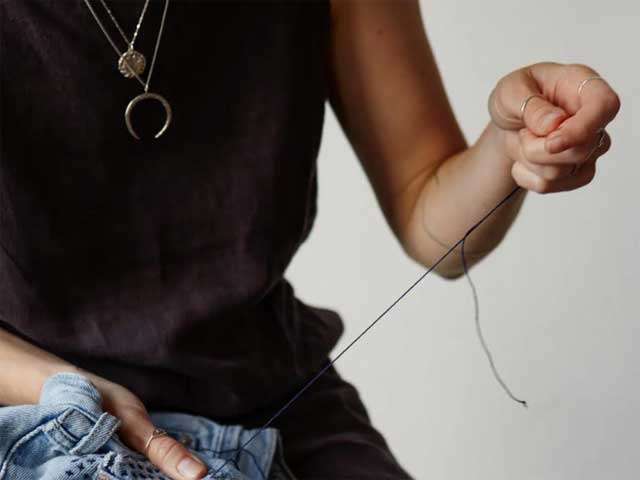
This is where care becomes a climate action. Washing less frequently. Air drying. Repairing small damages before they become reasons to discard. Storing clothes properly. Choosing timeless silhouettes over trend-led pieces that feel dated within a season.
Longevity is not passive. It is a practice. One that asks us to form a relationship with our clothes rather than treating them as short-term purchases.
An estimated 92 million tons of textiles go to landfill globally each year as clothes are rapidly produced, consumed, and discarded
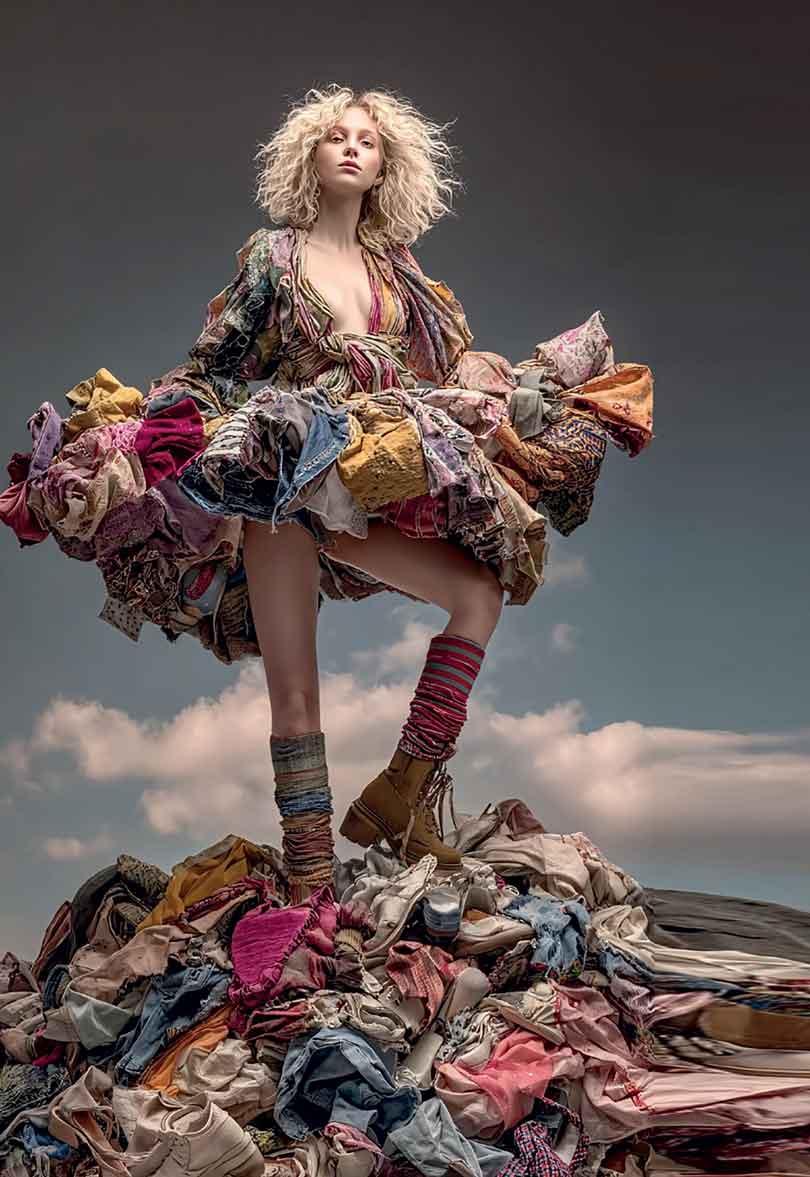
Landfill is the final, uncomfortable truth of fast fashion. What leaves our wardrobes does not disappear, it accumulates. Mountains of textiles, many synthetic and non-biodegradable, sit decomposing slowly, releasing microplastics and methane into the environment.
Donation is often seen as a moral offset, but the reality is more complex. A large percentage of donated clothing never finds a second home. Instead, it is shipped across borders, overwhelming local markets, or redirected to landfill when resale is not viable.
This is not a failure of consumers alone. It is the result of a system that prioritises volume over viability, speed over responsibility. But acknowledging the scale of waste forces us to ask harder questions before we buy.
Do I truly need this?
Will I wear it at least thirty times?
Can I imagine myself caring for it years from now?
These questions are not restrictive. They are clarifying.
The most sustainable garment is the one already in your wardrobe
This idea cuts through the noise of green marketing. No new purchase, however ethical, recycled, or certified, can compete with the sustainability of something already owned.
Rewearing, restyling, and rediscovering what we have is one of the most powerful acts of resistance against overconsumption. It shifts creativity from the act of buying to the act of styling. It values imagination over acquisition.
A jacket worn differently across seasons. A sari blouse paired unexpectedly. A scarf passed down, altered, or reinterpreted. These acts reconnect us to clothing as living objects with evolving stories.
True style has never been about excess. It has always been about discernment.
Rewearing what you own reduces demand for new production, cuts emissions, and keeps clothing out of landfill
Every time we choose to wear what we already have, we quietly interrupt the cycle. Demand slows. Pressure on resources eases. Waste is delayed, sometimes indefinitely.
This does not mean rejecting newness entirely. It means being selective. Conscious. Willing to pause.
Luxury, in its truest sense, was never about volume. It was about time, time taken to make, to choose, to care. A well-made garment earns its place through repeated wear, not instant novelty.
When clothing becomes something we build a life around rather than cycle through, its value multiplies, emotionally, culturally, and environmentally.
Small actions can speak meaningful change
It is easy to feel insignificant in the face of global systems. Individual choices can seem trivial compared to corporate scale. But culture shifts when behaviour shifts, and behaviour shifts one person at a time.
Choosing to repair instead of replace. Supporting small-scale makers. Asking brands difficult questions. Teaching younger generations to value care over constant consumption. These are not loud actions, but they are durable ones.
Fashion does not need more heroes. It needs more participants willing to slow down.
While systemic reform is essential, each of us has the power to make a difference by rethinking how and what we consume
There is no denying the need for policy, regulation, and accountability at an industry level. Without systemic reform, individual action has limits. But waiting for systems to change before we do risks complacency.
Personal responsibility is not about guilt; it is about agency. It is the understanding that our wardrobes are not separate from the world we live in. They reflect our values, our habits, our willingness to look beyond convenience.
As we begin 2026, perhaps the most conscious reminder is this: fashion is not just something we wear. It is something we participate in.
Every purchase is a vote.
Every rewear is a statement.
Every repaired seam is a quiet commitment to a different future.
Change has already begun. The question is whether we are willing to continue it, deliberately, thoughtfully, and together.