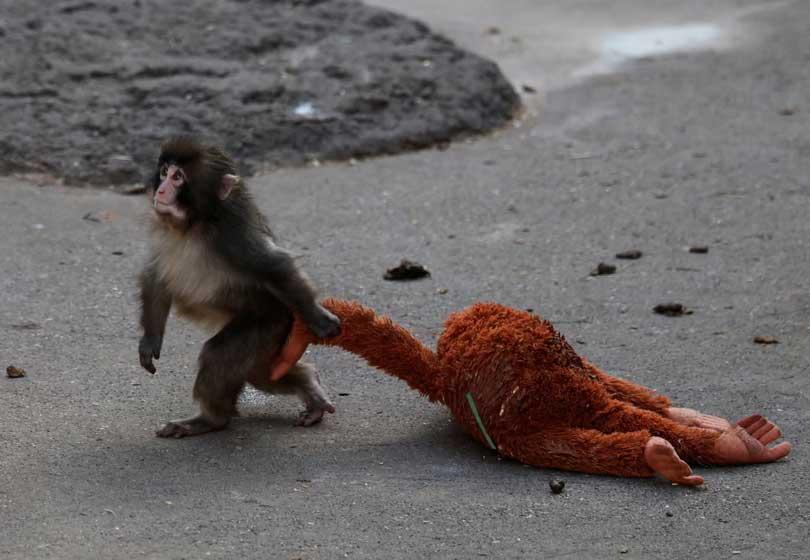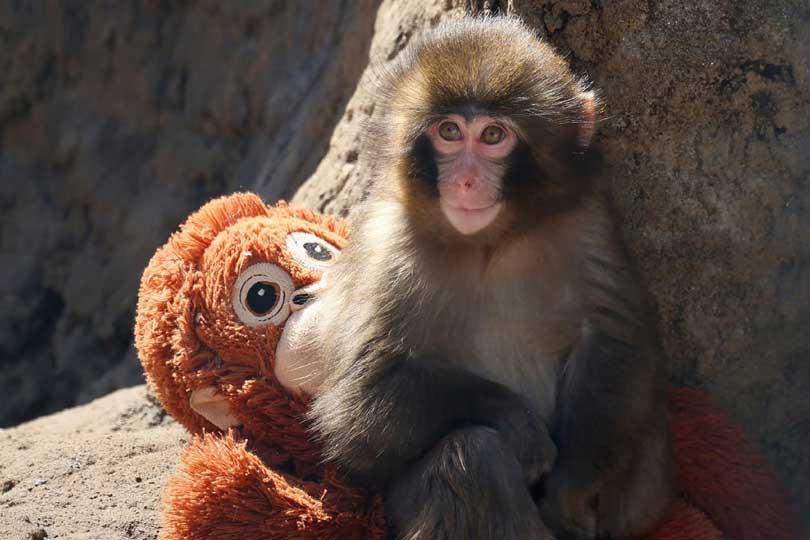
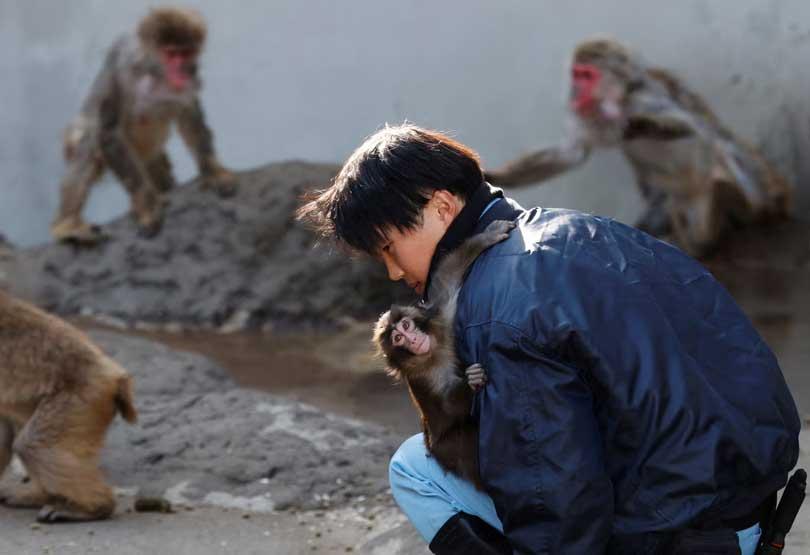
Seven months old. No mother to cling to. No clear place in the group. Punch, a young macaque at Ichikawa City Zoo outside Tokyo, did not set out to become a symbol. He was simply born during a heatwave, abandoned shortly after birth, and hand-raised by zookeepers. When he was reintroduced to the troop at “monkey mountain,” he struggled. Without a mother to guide him socially, he was swatted away, ignored, left to figure things out alone. What he did cling to, however, was a stuffed orangutan toy dragging it across rocks and holding it tightly when frightened. The internet saw those images and responded not just with sympathy, but recognition.
Why We Saw Ourselves in Him
Punch’s story went viral under the hashtag #HangInTherePunch. Thousands of people from around the world followed his progress. Visitor numbers to the zoo doubled. Strangers rooted for a baby monkey as though he were a child learning to walk into a classroom for the first time. Why? Because his story is not only about animal behavior. It is about belonging. From infancy, attachment is survival. For macaques like human babies cling to their mothers for warmth, protection and strength. Without that anchor, the world feels unpredictable. Social learning becomes harder. Confidence falters. Punch’s stuffed toy was not just enrichment. It became what psychologists would call a transitional object something that provides emotional security when primary attachment is absent. Children use blankets. Teenagers use headphones. Adults use routines, relationships, or sometimes even work. We all reach for something when we feel unmoored.
The Courage to Re-Enter the Group
What makes Punch’s story compelling is not just the abandonment. It is the reintroduction. In January, he was returned to the troop. Without a mother to model social cues, integration was rocky. Adult macaques pushed him away. He often played alone. Recently, a video circulated showing a larger monkey dragging him before he ran back to his toy. And yet there were other videos too. Footage shows him being groomed. Sitting closer to adults. Climbing onto another monkey’s back. Even receiving what looked like a brief hug. Zoo officials noted that he is gradually acclimating and has developed an “active and fearless personality.” That detail matters. Belonging is rarely instant. It is negotiated. Learned. Risked. Every attempt Punch makes to approach another monkey even after being swatted is a small act of courage.
The Internet’s Emotional Investment
People online expressed outrage at the bullying, questioned enclosure management, and demanded protection. But beneath the anger was something softer: protectiveness. In turbulent global times, a small vulnerable creature trying to make friends became a rare focal point for collective tenderness. Punch was described as a “bright spot” amid heavy headlines.
It reveals something about us. We crave stories of resilience. Of the underdog finding footing. Of someone once excluded slowly earning acceptance. Punch’s plush companion now reportedly a best seller across several countries became symbolic. Not because of branding, but because it represented coping. A soft buffer between fear and the world.
Loneliness in a Crowd
There is a particular kind of loneliness that stings more than isolation: being alone while surrounded by others. Punch lived within a troop yet initially existed at its margins. That mirrors a modern paradox. Many people today live in densely populated cities, scroll through endless digital interactions, attend meetings and gatherings yet still feel unseen. Belonging is not proximity. It is acceptance. The small scenes of Punch finally sitting near other monkeys, being groomed, or initiating contact are powerful because they signal movement from outsider toward insider. Integration does not erase early rejection. But it can rewrite the ending.
The Larger Lesson
Punch’s story should not be simplified into sentimental projection. Macaque social hierarchies are complex and sometimes harsh. But empathy does not require anthropomorphism. It requires recognition. Across species, young beings seek safety. They reach for warmth. They practice social cues. They falter. They try again. The most meaningful detail may not be the viral toy or the visitor numbers. It is the gradual shift: a wary infant becoming braver. Belonging is rarely given freely. It is built through repeated exposure, small victories, and resilience after setback. Punch may one day drop the stuffed orangutan entirely not because it failed him, but because he no longer needs it. And perhaps that is why so many people are watching. Not to witness helplessness. But to see a lonely beginning slowly transform into connection.