Engagement Rings Are Getting Bolder and Coloured
 For decades, the appeal of an engagement ring followed a straightforward formula; the larger and more flawless the diamond, the stronger the statement. A crisp white stone, ideally as close to “perfect” as possible, became the universal symbol of status, success, and timeless luxury. Bigger meant better, and perfection meant rarity. But in 2026, that logic feels increasingly outdated. When a five-carat, internally flawless diamond can be grown in a lab and delivered with just a few clicks, perfection no longer signals exclusivity. Instead of representing something scarce and extraordinary, it becomes accessible; and even expected. Lab-grown diamonds haven’t erased the diamond fantasy, but they have disrupted the hierarchy that once made size and clarity the ultimate indicators of value. What used to feel unattainable now feels standard, and the old rules of luxury have started to lose their power. As a result, the message of the modern engagement ring has shifted. Not toward bigger. Not toward brighter. But toward bolder. Today’s most compelling rings aren’t about ticking off the traditional checklist, carat, cut, colour, clarity, they’re about perspective and personality. Couples are choosing pieces that feel intentional, expressive, and reflective of who they are, rather than rings that simply follow tradition. Instead of asking, “How big is it?” the new question is, “What does it say?” Warm-toned diamonds, antique cuts, distinctive settings, and coloured gemstones are replacing the one-size-fits-all solitaire. The engagement ring is no longer just proof of commitment; it has become a statement of identity; a kind of personal branding worn on the hand.
The Return of Vintage and ‘Candlelight’ Diamonds
Sarah Ysabel Dyne
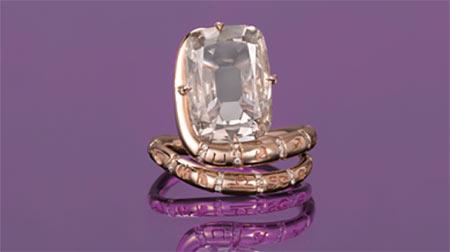
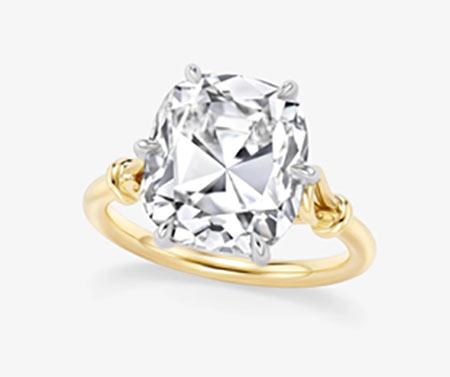
One of the most refined responses to the lab-grown diamond boom is the growing revival of vintage and antique stones. As lab-created diamonds make size and technical perfection more accessible than ever, many couples are looking elsewhere for something that feels rarer; character. Old-cut diamonds, ranging from Art Deco emerald cuts to Edwardian cushions, offer a kind of beauty modern stones often can’t replicate. Their charm lies in their slight irregularities, their hand-cut history, and the soft romance of a glow that feels more intimate than engineered. Unlike today’s precision-cut diamonds, which are designed to maximise brilliance under bright lighting, antique diamonds were shaped for a different world. They were cut to sparkle under candlelight rather than spotlights, producing a warmer, gentler shimmer. Often called “candlelight diamonds,” these stones prioritise depth, mood, and movement over sharp, icy dazzle. The result is less disco ball and more old-Hollywood glamour, an understated radiance that feels timeless rather than trendy. Beyond their visual appeal, vintage rings also carry emotional resonance. They feel discovered instead of ordered, collected rather than manufactured. There’s something meaningful about wearing a piece that has already lived a life, even if you don’t know its full story. It brings a sense of continuity and sentiment that a freshly produced ring can’t always match, no matter how perfectly it’s made. In a world where almost anything can be customised instantly and delivered quickly, choosing something that already exists feels like a quiet form of luxury. Vintage rings resist the speed and sameness of modern consumption. They offer individuality without trying too hard, and beauty that isn’t dependent on perfection. More than a style choice, they represent a shift in values: away from mass-produced ideals and toward pieces that feel personal, storied, and enduring.
Jessica McCormack
Champagne and the New Neutrals
If white diamonds once symbolised bridal purity, today’s engagement rings are embracing a richer, warmer spectrum. Champagne diamonds, honey hues, soft browns, and smoky greys are fast becoming the new neutrals; subtle, modern, and undeniably stylish. These tones complement every skin tone, photograph effortlessly, and feel far more fashion-forward than the traditional icy white stone. Warm diamonds don’t demand attention. They radiate it. Their beauty is softer, moodier, and more nuanced, offering a glow that feels intimate rather than showy. More importantly, choosing a warm-toned diamond signals discernment. It’s less about chasing what’s popular and more about selecting something with personality and depth. The result is a ring that feels thoughtfully curated, not simply “bigger” or “better.” It looks intentional; like a piece chosen for its character, not its checklist.
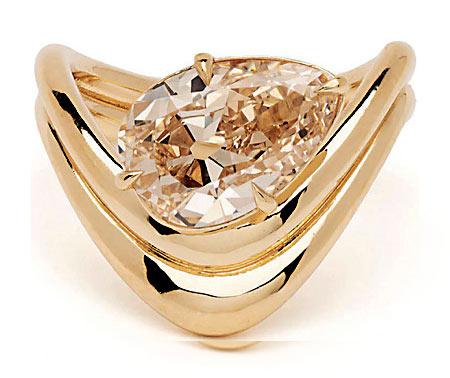
Sofia Kaman
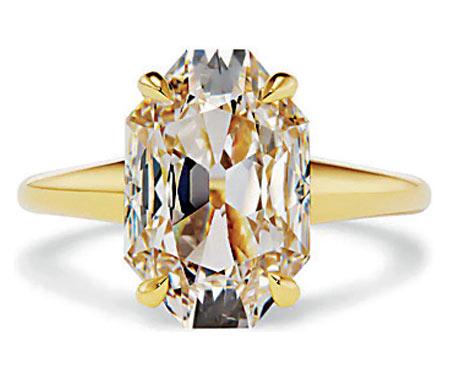
Arielle Ratner
Coloured Diamonds: Rarity with Character
For those who still love the idea of a diamond but want something less predictable, coloured diamonds offer a fresh kind of luxury. Fancy yellows, rich cognacs, and salt-and-pepper stones bring a sense of individuality that traditional white diamonds often can’t. Many of these diamonds are naturally rarer than classic colourless stones, which makes them feel inherently more distinctive, and far less mass-market. The beauty is in their variation. No two-coloured diamonds look exactly alike, whether it’s the warmth of a golden hue, the smoky depth of a brown tone, or the striking inclusions that give salt-and-pepper diamonds their signature edge. That uniqueness becomes the point: the stone isn’t trying to meet an ideal, it’s celebrating its own character. Coloured diamonds feel less like a “bridal template” and more like a personal signature. They shift the focus from tradition to self-expression, adding mood, texture, and personality to a category that was once defined by uniformity. Instead of blending in, they stand out, quietly, confidently, and completely on their own terms.
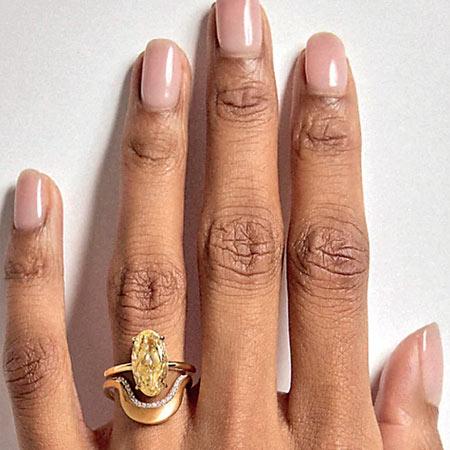
AaryahJewellery
The Rise of Coloured Gemstone Rings
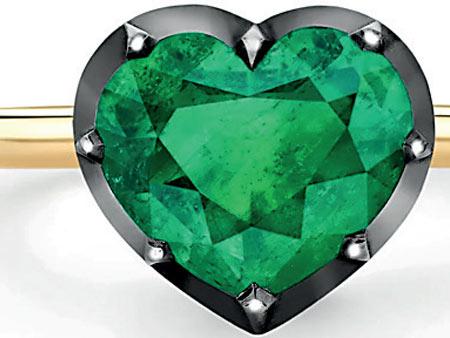
Perhaps the biggest shift of all is the rise of coloured gemstone engagement rings, not as alternatives, but as main characters. Sapphires, rubies and emeralds are now mainstream engagement stones, while less obvious choices like spinel, tourmaline and alexandrite are gaining traction for those seeking something truly unique. Coloured gemstones offer three things modern buyers care about:
- Individuality - no two stones look the same
- Symbolism - colour and meaning matter
- Design freedom - fewer rules, more creativity
Teal sapphires feel cool and contemporary. Rubies feel powerful and bold. Emeralds feel iconic and emotional. Morganite offers soft romance, while opals and moonstones bring an ethereal, almost spiritual quality. The ring becomes less about tradition and more about personal resonance.
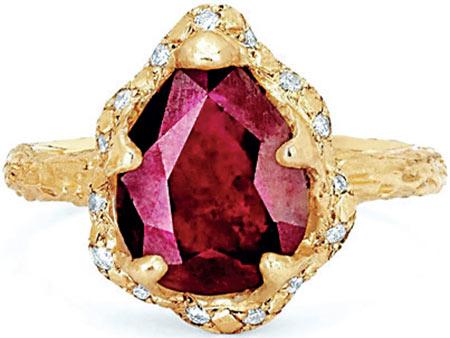
Logan Hollowell
Jessica McCormack
Why This Shift Is Happening
The irony is that as diamonds become more accessible, perfection becomes less impressive. When almost anyone can own “the dream ring,” the dream inevitably evolves. What once felt rare and aspirational can now feel expected, even ordinary. In response, luxury is shifting away from scale and toward story. Away from price tags and toward personality. Away from flawless stones and toward pieces that feel personal, intentional, and meaningful. People still want something special; they just want it to say something about them, not simply reflect what tradition or the industry once defined as desirable.
The New Engagement Ring Aesthetic
Today’s engagement ring isn’t ruled by a checklist. It’s guided by emotion, identity, and point of view. The modern statement isn’t about meeting standards; it’s about making choices that feel true. That ring might be:
- a champagne diamond that glows like skin
- an antique cut that shimmers softly in candlelight
- a heart-shaped emerald for a sharp, contemporary twist
- a coloured diamond chosen for mood, not market value
What matters now isn’t how impressive the ring looks on paper, but how it feels on the hand; how it fits into someone’s life, style, and sense of self. In an era where perfection can be produced on demand, the boldest form of luxury is individuality. And in 2026, colour isn’t just a trend. It’s becoming the new classic.