In Conversation with Malki Jayakody
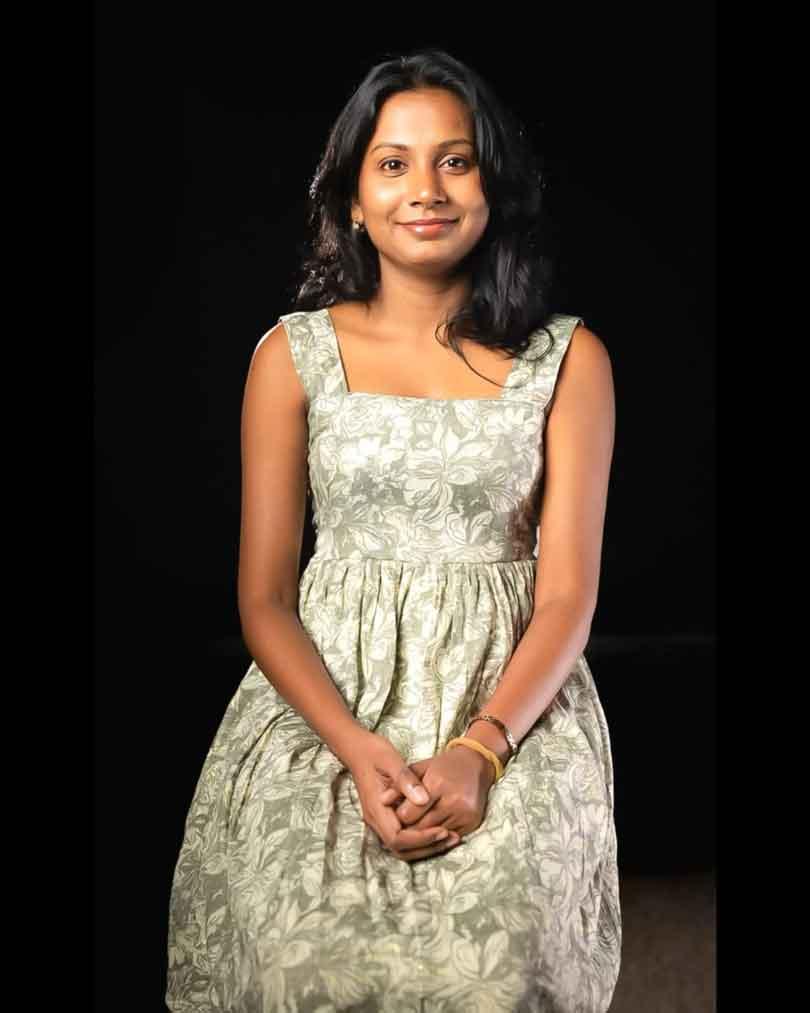
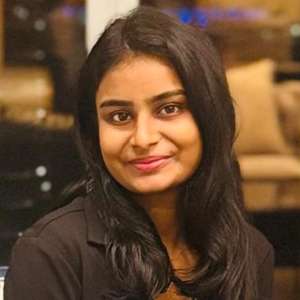
From childhood memories of watching her mother knit to creating layered contemporary artworks that question beauty standards and identity, Malki Jayakody has built an artistic practice deeply rooted in personal reflection and social observation. Currently pursuing her Masters in Fine Arts at the University of Kelaniya, the emerging visual artist uses portraiture, mixed media, and textured materials to explore themes of colourism, womanhood, memory, and self-acceptance. Featured at Take a Chill Pill at Radicle Gallery, Malki speaks to The Sun about experimentation, emotional expression, and transforming lived experiences into thought-provoking contemporary art.
Q: Can you tell us about your journey into visual arts and how your artistic identity has evolved over the years?
Since I was around four or five years old, I naturally became interested in art by observing my mother. She used to do knitting as a hobby, and while watching her, I began drawing as a way of imitating her creative process. That early connection with making things by hand became the beginning of my artistic journey. My parents gave me the freedom to follow my passion rather than forcing me into conventional social expectations. Because of their support, I was able to pursue Fine Arts academically and professionally. I completed both my Bachelor’s and Master’s degrees in Fine Arts at the University of Kelaniya. Throughout my academic journey, I remained deeply committed to continuing my artistic practice, and over the years my artistic identity has evolved through research, experimentation, and personal reflection.
Q: Your work often explores the concept of “Colourism.” What inspired you to develop this ongoing collection and theme?
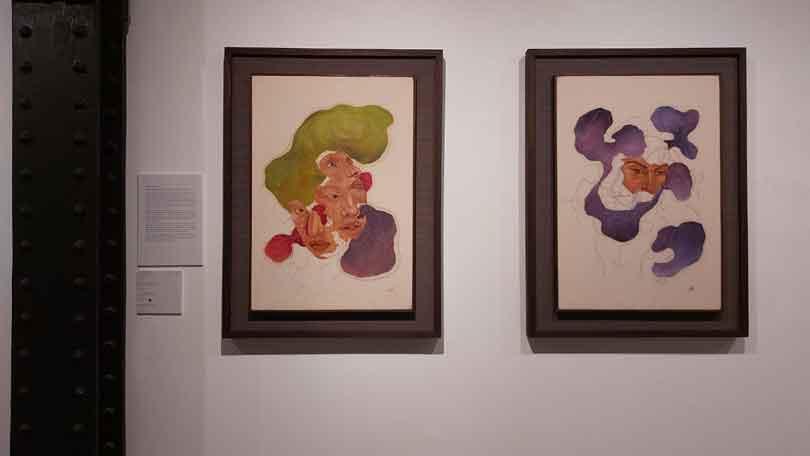
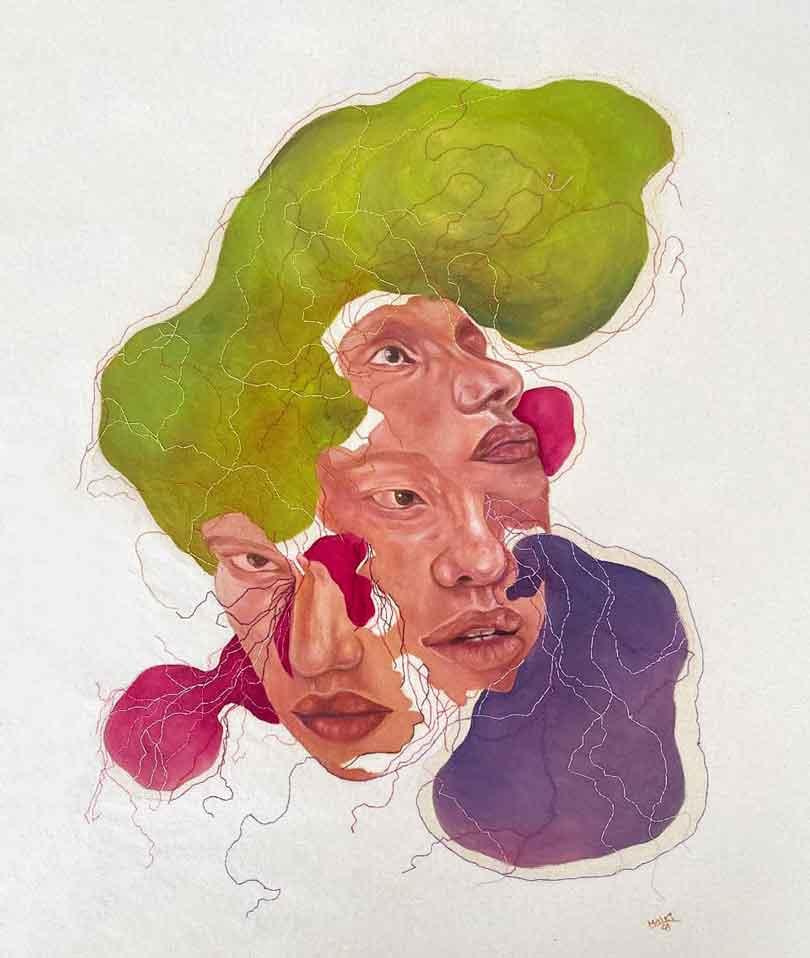
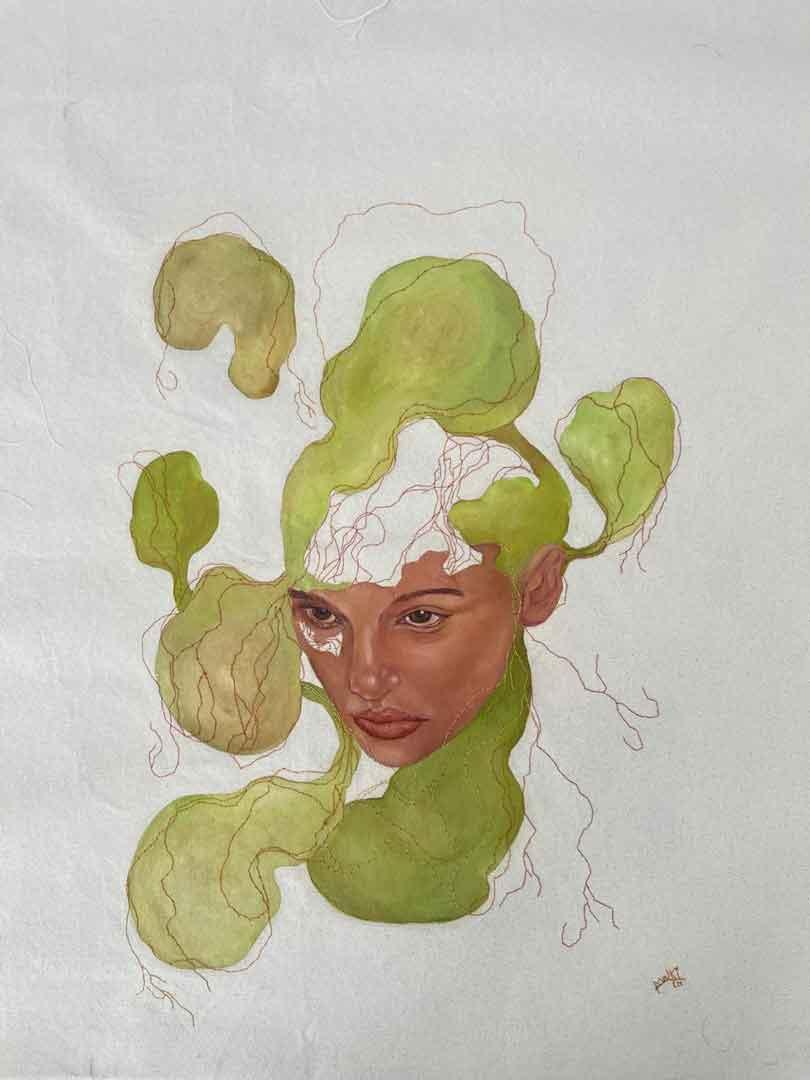
The foundation of this theme began during my undergraduate studies, when I was conducting research connected to memory and personal experience. Through exploring childhood memories within deeper social, political, and economic contexts, I started questioning the beauty standards imposed on Sri Lankan women. I became particularly interested in how colonial influence shaped ideas of beauty, especially the preference for fair skin over darker native skin tones. Since my undergraduate years until now, I have continuously explored the hidden social and political structures behind these beauty standards. I often ask questions such as: What is the real difference between melanin? Is it fair to measure human value based on skin colour? In the Sri Lankan social context, I feel these standards are still deeply rooted in colonial history and continue to influence society even today. Through my work, I aim to speak about these hidden social issues as a silent witness. I want audiences to reflect on self-acceptance and reconsider socially constructed beauty standards. This is why I frequently use portraits of women around me, including self-portraits. At the same time, I draw inspiration from biological studies such as skin cells, body organs, and medical imagery, because internally all human bodies function in the same way. I am interested in looking beyond the surface and exploring what exists underneath external appearance.
Q: How does your work featured at Take a Chill Pill connect with your exploration of beauty, contrast, and human differences?
For me, the concept of Take a Chill Pill connects deeply with the themes I usually explore in my practice. Many of the artists involved in the exhibition were speaking about women’s identities and personal experiences in different ways, and I felt strongly connected to that collective conversation. My own work reflects ideas of beauty, identity, emotional experience, and the contrasts that exist within society. Through portraiture and layered materials, I try to express the complexity of human differences, and the emotional experiences women often carry silently.
Q: The exhibition title Take a Chill Pill suggests reflection and emotional release. What does the concept personally mean to you as an artist?
For me, the exhibition represented a collective expression of women’s experiences. As women, we often carry emotional burdens that are rarely spoken about publicly. This exhibition created a space where those hidden feelings and personal struggles could be expressed through art. I see the exhibition as a form of reflection and emotional release, where unspoken experiences could finally become visible through artistic expression.
Q: You work with mixed media to create layered textures and contrasts. How important is experimentation in your creative practice?
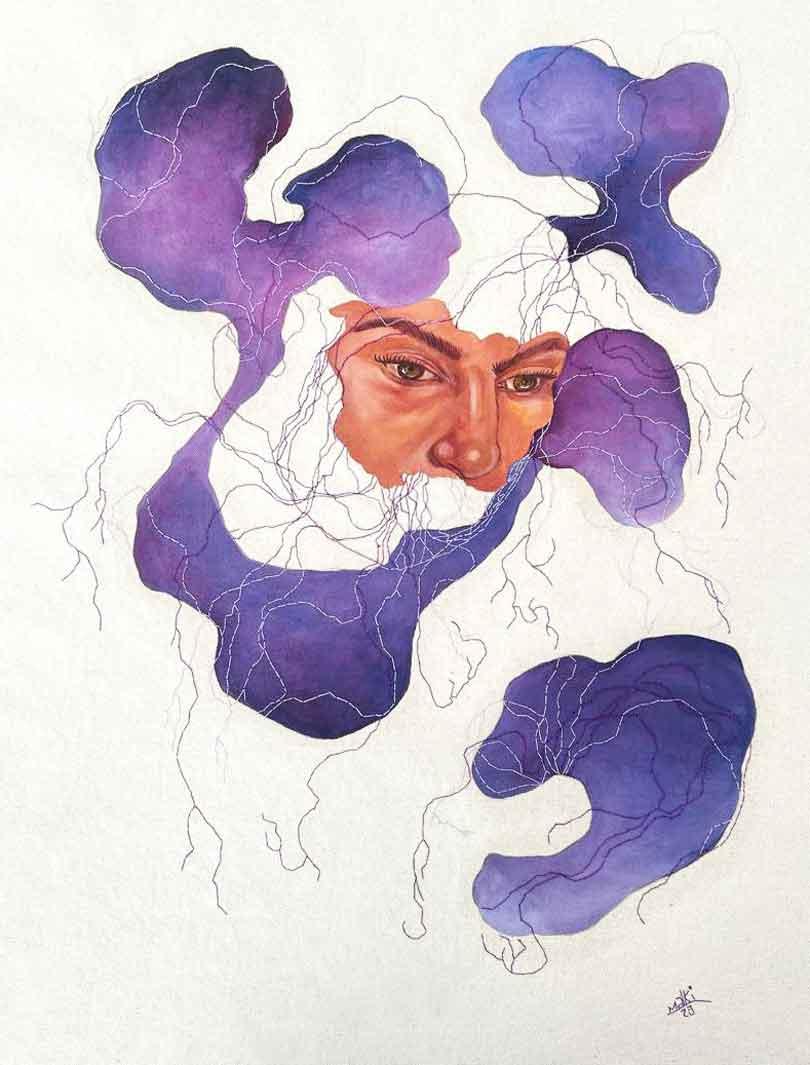
Experimentation is extremely important in my creative practice. I feel that artworks naturally emerge through experimentation rather than through rigid planning or fixed expectations. Since my undergraduate years, I have worked with many different materials including fabrics, embroidery, beads, dry leaves, and other found materials. Each texture communicates something different to me emotionally and conceptually. For example, fabrics often carry personal memories, while embroidery reminds me of colonial heritage and traditions that are deeply connected to my work. I believe these materials help bring my artworks to life by adding both physical and emotional layers.
Q: Your art transforms negative experiences into something visually beautiful. How do personal observations influence your work?
I think this depends on the perspective of the viewer. Personally, I do not always see painful experiences as purely negative. Instead, I see them as part of life’s memories. Some memories may be joyful while others may be difficult, but together they create the full beauty of human experience. Through this series, I realized that experiences society labels as “negative” can also become important life lessons. These experiences have helped me observe myself more deeply and understand my identity with greater honesty and reflection.
Q: What was your experience like being part of a contemporary group exhibition alongside other Sri Lankan artists at Radicle Gallery?
It was truly a great pleasure and honour for me. I had the opportunity to exhibit alongside artists such as Anoli Perera, Anoma Wijewardene, and Iromi Jayawardane, whom I consider highly influential figures in Sri Lankan art history.
As an emerging artist, being able to share an exhibition space with such respected artists was a very meaningful and inspiring experience for me.
Q: Having showcased work at platforms such as the Galle Literary Festival Art Trail, how do you think audiences respond to socially reflective contemporary art today?
I feel that today there is a growing audience that is open to engaging with socially reflective contemporary art. More people are willing to view art not only as something aesthetic, but also as a way of understanding social realities and personal experiences. From my experience, audiences have responded very positively to these conversations, especially when artworks connect with contemporary social issues and emotional truths.
Q: Are there any new concepts, materials, or artistic directions you are currently exploring for your upcoming projects?
At the moment, I am planning a solo exhibition, hopefully for next year, while also preparing for future group exhibitions. I am continuing to experiment with materials and concepts, and I hope to expand my practice into even more experimental directions in the future.
Q: As you continue your Masters in Fine Arts, what future exhibitions or artworks can audiences look forward to from you?
I think audiences can expect more experimental works from me in the future. I want to continue pushing my practice further by exploring new materials, concepts, and ways of presenting socially engaged contemporary art.